Guar Gum vs Carrageenan: Stabilizer Selection Guide 2026
Carrageenan and Guar Gum are often combined, not substituted. Learn when each works best — dairy, plant-based milk, meat, and the kappa/iota/lambda synergy with galactomannans.
Last updated:
Quick Answer
How do I choose between Guar Gum and Carrageenan?
Pick Guar Gum when the goal is cold-water thickening, suspension and freeze-thaw stability at low cost — sauces, beverages, ice cream and dressings. Pick Carrageenan when the goal is dairy-protein binding or thermo-reversible gelling — chocolate milk, flans, jelly toppings and processed meats. The two are routinely combined, with Guar providing economical viscosity and Carrageenan providing protein interaction and gel structure.
Guar Gum and Carrageenan are two of the most widely used food hydrocolloids in the world, yet they belong to completely different chemical families and were designed by nature to do completely different jobs. A formulator who treats them as interchangeable thickeners will produce inconsistent products and inflate ingredient costs. Understanding what each one actually does — and where they reinforce each other — is the foundation of a robust stabiliser strategy in the 2026 clean-label and tariff-shifted ingredient market.
Research Overview
This guide compares the botanical and chemical origins of Guar Gum and Carrageenan, their cold and hot solubility, gelling behaviour, interaction with milk proteins, regulatory standing under recent EU and US scrutiny, and their cost positions in 2026. Each section is anchored to a real product category so formulators can map the decision directly onto their own portfolio.
Two Different Plant Worlds
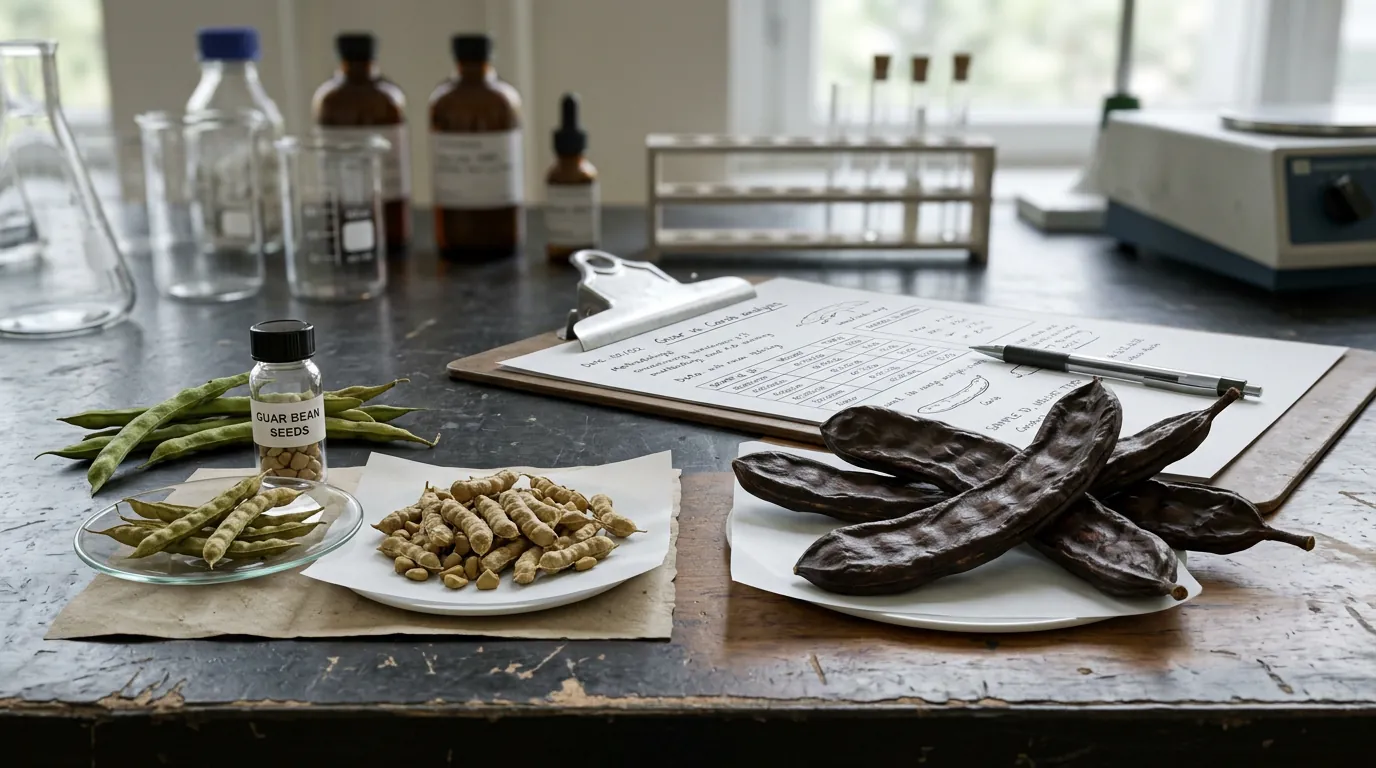
Guar Gum is a galactomannan extracted from the endosperm of the cluster bean, a drought-tolerant terrestrial legume grown predominantly in India. Carrageenan is a sulfated polysaccharide extracted from red seaweeds of the Rhodophyta family — primarily Eucheuma, Kappaphycus and Chondrus crispus harvested off the coasts of the Philippines, Indonesia and Chile. One ingredient comes from a farm, the other from an aquaculture or wild-harvest operation. That origin alone shapes every conversation about traceability, certification and supply continuity.
Molecular Structure
Guar Gum is a non-ionic, neutral polymer built from mannose and galactose. Carrageenan is an anionic, sulfated polymer built from D-galactose and 3,6-anhydro-D-galactose, and its functional behaviour is dictated by the position and number of those sulfate groups. The three commercial types — kappa, iota and lambda — differ in sulfate count and gelling behaviour. Kappa forms firm brittle gels, iota forms soft elastic gels and lambda is purely a thickener without gel formation. Guar Gum's behaviour does not change between varieties; the variability sits in molecular weight and substitution.
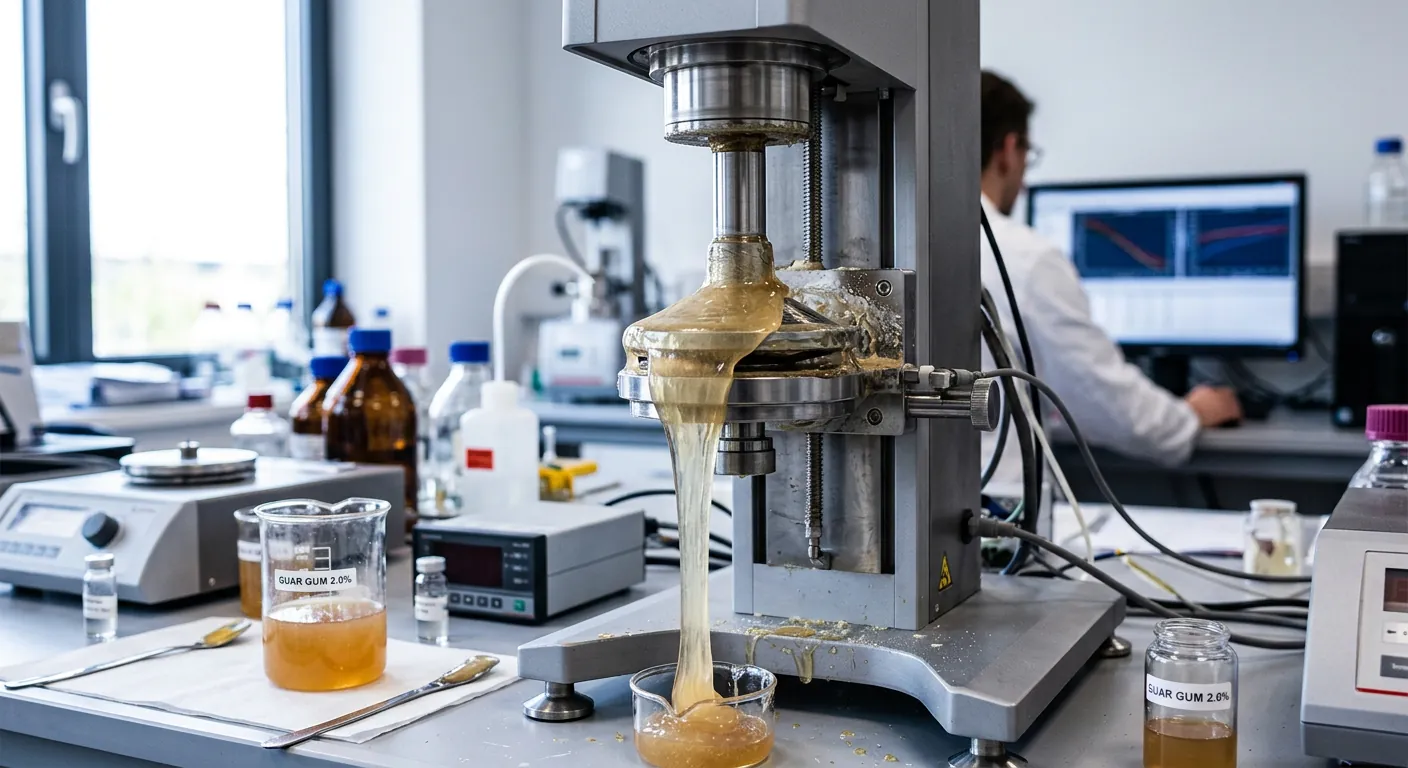
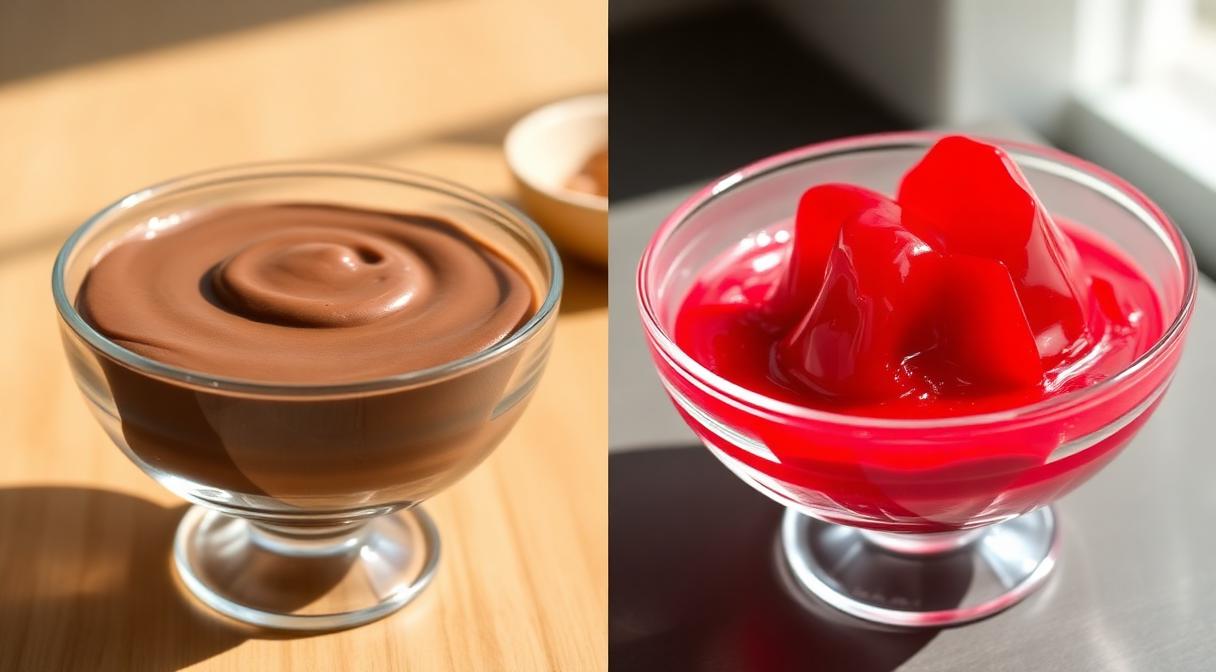 Functional contrast — Guar Gum delivers a smooth creamy pudding texture, while Carrageenan produces a firm sliceable jelly. The two polymers solve different formulation problems.
Cold versus Hot Hydration
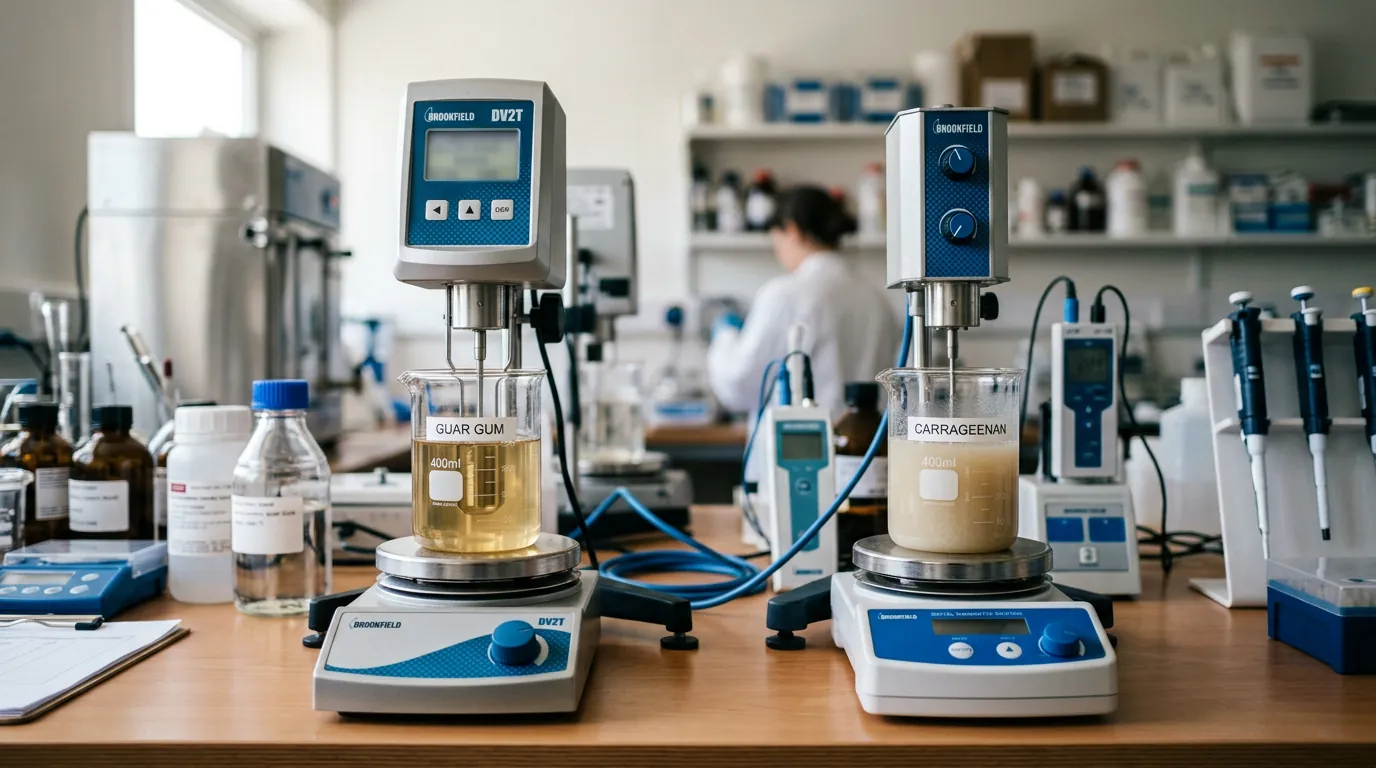
Guar Gum hydrates fully in cold water and is ready to thicken almost immediately, which makes it ideal for cold-processed beverages, instant mixes and cold-blended dressings. Carrageenan, in contrast, requires a heating step above 70 °C to fully dissolve and develop its gel network. Manufacturers running continuous cold lines therefore default to Guar; those running pasteurisation or UHT stages can take advantage of Carrageenan's behaviour without an extra heating step.
Interaction with Dairy Proteins
This is where Carrageenan justifies its higher price. Kappa-carrageenan binds electrostatically to the κ-casein on the surface of milk casein micelles, suspending cocoa particles in chocolate milk, stabilising whey in dairy desserts and preventing protein settling in evaporated milk. Guar Gum has no equivalent specific affinity for milk proteins — its stabilisation effect is purely viscometric. Where the product is dairy-based and protein settling is the failure mode, Carrageenan is irreplaceable; where the product is non-dairy or where the failure mode is sedimentation rather than protein separation, Guar Gum is the more economical choice.
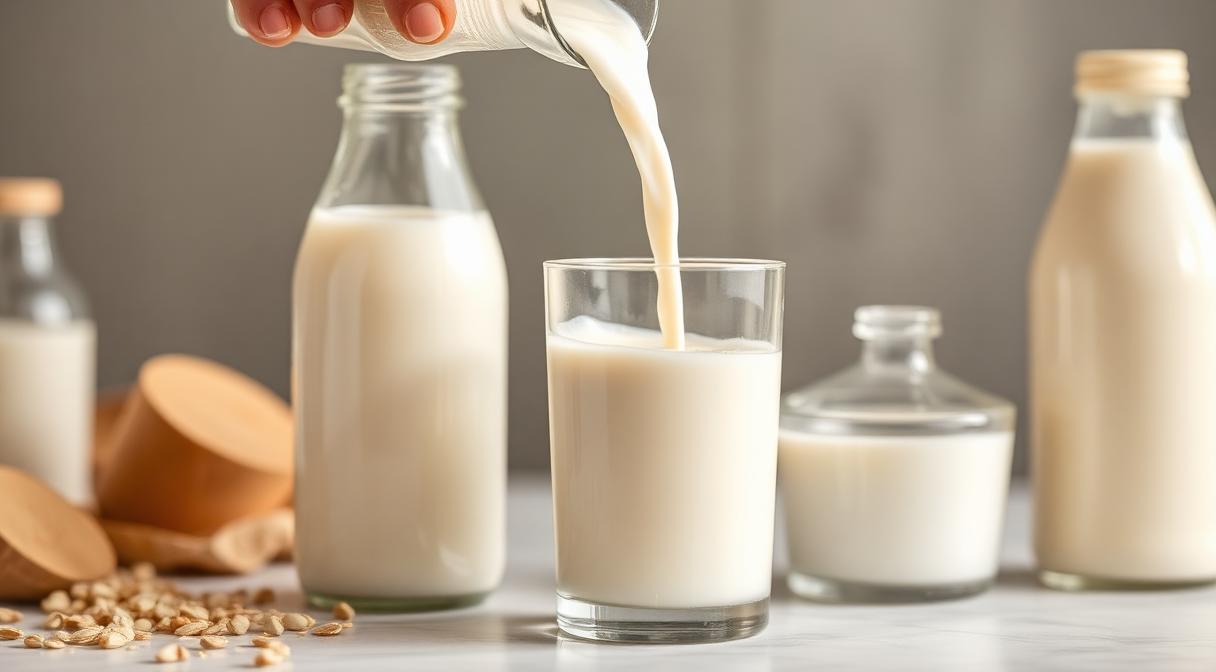 Plant-based dairy alternatives stabilised with Guar Gum — smooth, separation-free pour without the dairy-protein dependence of Carrageenan systems.
Regulatory and Consumer Sentiment in 2026
Carrageenan has faced sustained scrutiny in some markets over the past several years, with regulators and consumer groups debating its role in gut inflammation studies and the distinction between food-grade carrageenan and degraded poligeenan. EFSA and JECFA continue to authorise food-grade carrageenan within established acceptable daily intake limits, but several major brands in the US and EU have reformulated to remove it from infant and clean-label products. Guar Gum, classified as a soluble dietary fibre, has not faced equivalent pressure and is widely used in organic, non-GMO and clean-label launches. For brands rebuilding ingredient panels around 2026 transparency expectations, Guar Gum is often the lower-friction choice.
Cost and Supply Chain
Guar Gum trades at a substantial discount to refined kappa or iota Carrageenan, with the gap widening when Carrageenan supply is squeezed by typhoon damage in Southeast Asian seaweed farms. Guar's land-based, multi-region cultivation gives it a structurally more resilient supply curve, especially under the reciprocal-tariff conditions reshaping 2026 ingredient trade flows. Many manufacturers are reducing Carrageenan inclusion and replacing the lost viscosity with Guar Gum, while keeping a smaller Carrageenan dose where its dairy-protein interaction is essential.
When to Use Both
In practice, the two polymers are often combined in a single stabiliser system. A typical dairy dessert may use 0.02% kappa-carrageenan for protein stabilisation, 0.1% LBG for elasticity and 0.15% Guar Gum for cold-water viscosity and freeze-thaw protection. Treating the choice as either-or rather than additive leaves performance and cost on the table. The full Guar Gum grade comparison shows the viscosity targets available across our portfolio.
Frequently Asked Questions
Is Carrageenan natural like Guar Gum?
Both are natural in the sense that they are extracted from plants without synthetic synthesis. Guar Gum comes from a terrestrial legume seed, Carrageenan from red seaweed. Both are subject to refining and standardisation steps before reaching food-grade specification.
Can I replace Carrageenan with Guar Gum in chocolate milk?
Not fully. Guar Gum will raise viscosity and slow cocoa settling but it lacks Carrageenan's specific interaction with casein. A combination of low-dose Carrageenan and Guar Gum is usually the most stable approach.
Which is better for clean-label launches?
Guar Gum currently faces less consumer scrutiny than Carrageenan and is widely accepted on organic and non-GMO panels. For products that need a gelling agent, pectin and agar are alternative clean-label options to consider alongside.
How do the prices compare in 2026?
Food-grade Guar Gum is typically three to five times less expensive per kilogram than refined Carrageenan, with the spread widening under recent tariff and supply disruptions. Always request current quotes — see our contact page.
Are both vegan and vegetarian?
Yes. Both are plant-derived and contain no animal inputs. Halal and Kosher certified versions of each are available; see our certified sourcing guide for details.
For technical datasheets, side-by-side stability charts and pricing for your 2026 reformulation projects, contact the B D Guar applications team at /contact or browse the full product catalogue.