Guar Gum vs Locust Bean Gum: Complete Hydrocolloid Comparison 2026
Detailed comparison of Guar Gum and Locust Bean Gum (LBG) — galactomannan ratio, hydration temperature, synergy with xanthan and carrageenan, food applications, and price differential.
Last updated:
Quick Answer
What is the practical difference between Guar Gum and Locust Bean Gum?
Guar Gum hydrates fully in cold water and delivers very high viscosity at low cost, while Locust Bean Gum (LBG) requires hot water, costs roughly five times more and forms firm thermo-reversible gels when combined with carrageenan or xanthan. In 2026 formulations the two galactomannans are increasingly used together — Guar for economical viscosity, LBG for elasticity and freeze-thaw stability — rather than treated as direct substitutes.
Procurement managers comparing Guar Gum and Locust Bean Gum are really comparing two close cousins from the same chemical family. Both are galactomannans, both come from leguminous plants and both have served the food industry for decades. Their differences in solubility, gelling behaviour, cost and geographic supply are large enough to drive completely different formulation decisions. With 2026 tariff repositioning making LBG even more expensive in major markets, getting this comparison right has direct margin implications.
Research Overview
This comparison covers the botanical sources, molecular structure, solubility, viscosity and synergy behaviour of Guar Gum and Locust Bean Gum, with a focus on the categories where formulators are actively switching: dairy desserts, plant-based alternatives, bakery, sauces and frozen confections. Cost, certification and supply-chain considerations for 2026 are addressed at the end.
Two Beans, Two Climates
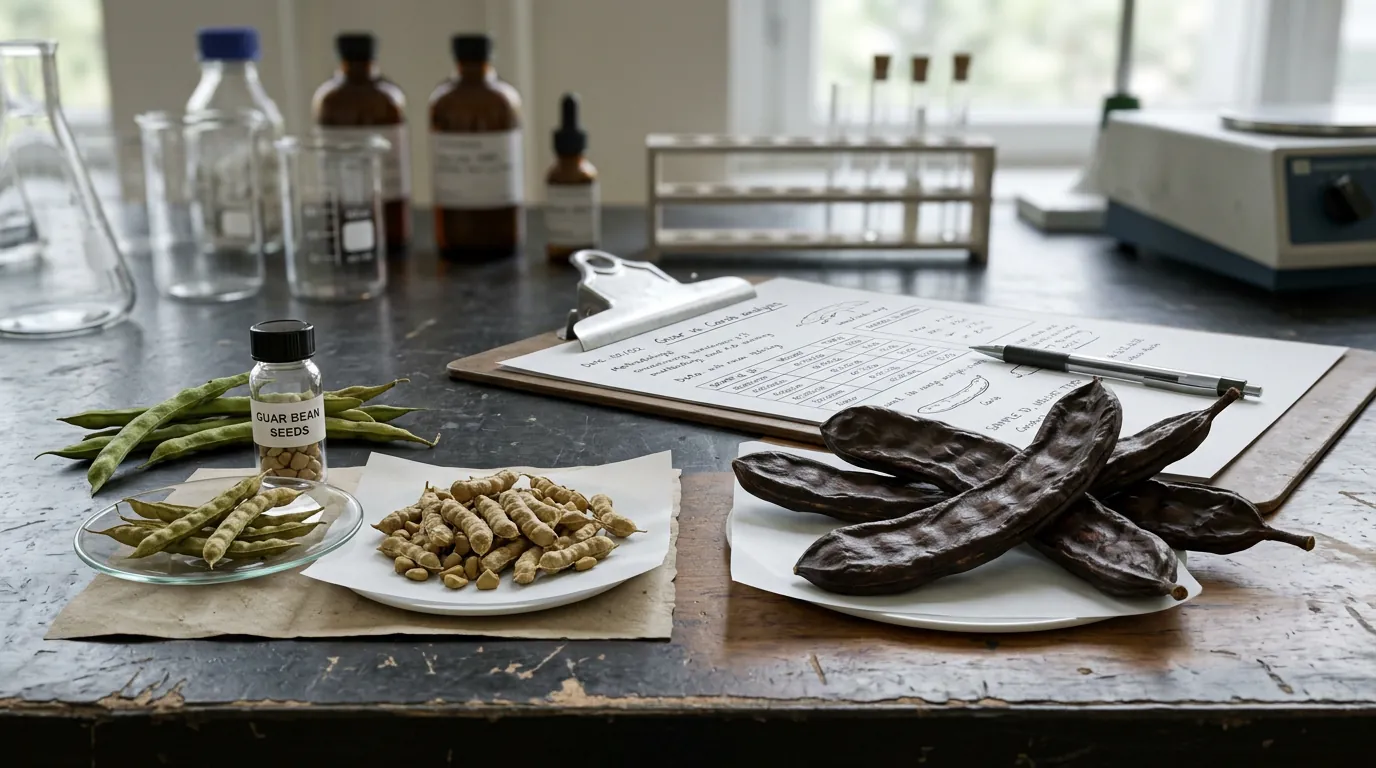
Guar Gum is harvested from the seed of Cyamopsis tetragonolobus, a drought-tolerant annual legume grown almost exclusively in the arid plains of Rajasthan, Gujarat and parts of Pakistan. A single rain-fed cycle produces a crop, and the bean's nitrogen-fixing roots improve soil rather than depleting it. Locust Bean Gum comes from the carob tree Ceratonia siliqua, an evergreen native to the Mediterranean basin. A carob tree takes fifteen years to reach full bearing, produces a single annual harvest and is concentrated in Spain, Portugal, Italy, Morocco and Cyprus. This basic agricultural reality — annual herb versus slow-growing tree — explains nearly every commercial difference that follows.
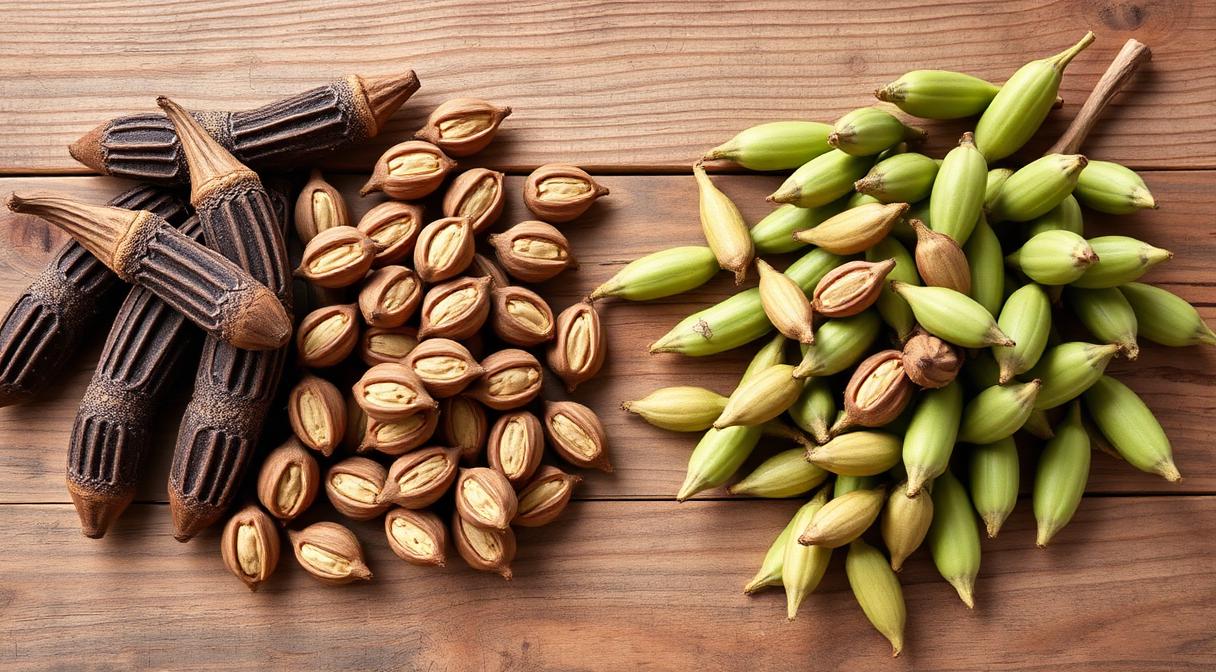 Raw plant sources side by side — slow-growing Mediterranean carob pods on the left, fast-cycling Indian cluster bean pods on the right.
Molecular Structure — Same Family, Different Ratio
Both polymers are built from a β-(1→4)-linked D-mannose backbone with α-(1→6)-linked D-galactose side chains. The decisive difference is how often the galactose units appear. Guar Gum has a mannose-to-galactose ratio of around 2:1, meaning roughly half of all mannose units carry a galactose substituent. Locust Bean Gum has a ratio closer to 4:1, leaving long stretches of bare mannose. Those bare regions can associate with themselves or with helices of other hydrocolloids, and that is precisely what gives LBG its gelling and synergistic powers — and what removes its cold-water solubility.
Solubility and Hydration
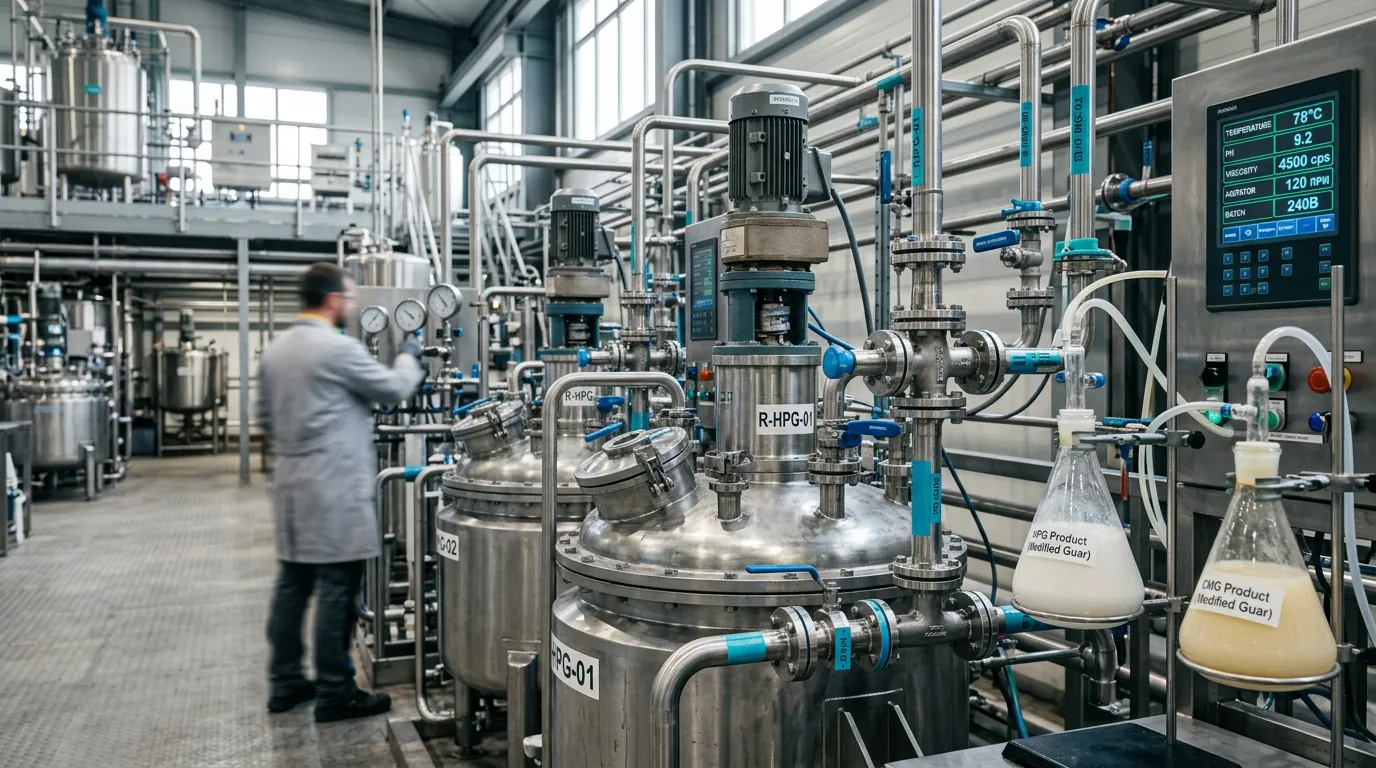
Guar Gum hydrates rapidly in cold water and reaches roughly 95% of its final viscosity within minutes. This is a major manufacturing advantage. Mix tanks, in-line dispersers and ambient-temperature processes all benefit. Locust Bean Gum requires heating to at least 80 °C for full hydration, which adds energy cost and limits its use in cold-blended products. In practice, many food manufacturers run Guar at 0.2 to 0.5% as the workhorse thickener and reserve LBG for the specific stages where its gel-forming character is non-negotiable.
Synergy with Other Hydrocolloids — Where LBG Earns Its Premium
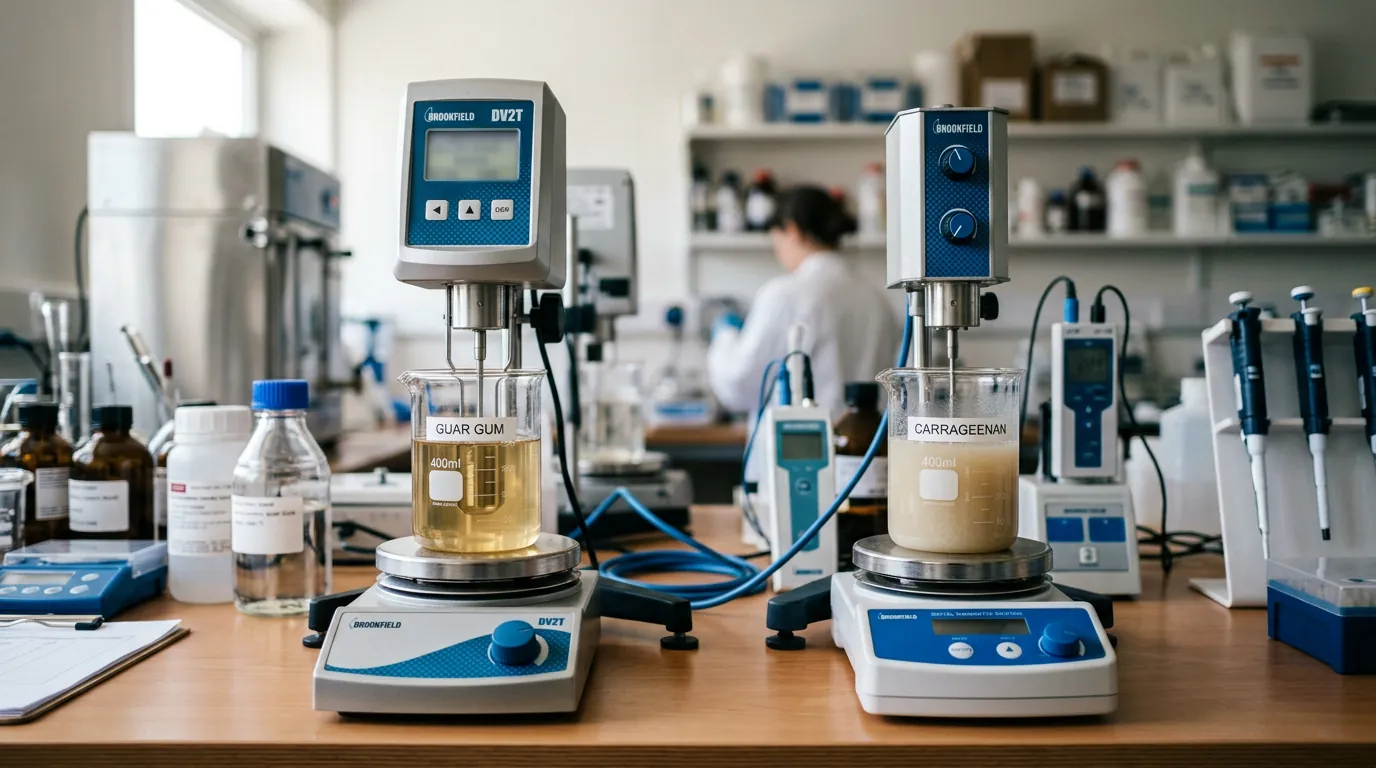
LBG's commercial value is concentrated in its synergistic gelation. Combined with xanthan gum or κ-carrageenan, the unsubstituted mannose regions interact with helices of the partner hydrocolloid to form firm, elastic, thermo-reversible gels. This is the foundation of premium dairy desserts, jelly toppings and many soft cheese analogues. Guar Gum, with its denser galactose coverage, does not show meaningful gel synergy; it remains a viscosity builder. Formulators selecting a stabiliser for an elastic, sliceable dessert will choose LBG-carrageenan; for a pourable viscous beverage stabiliser they will choose Guar Gum.
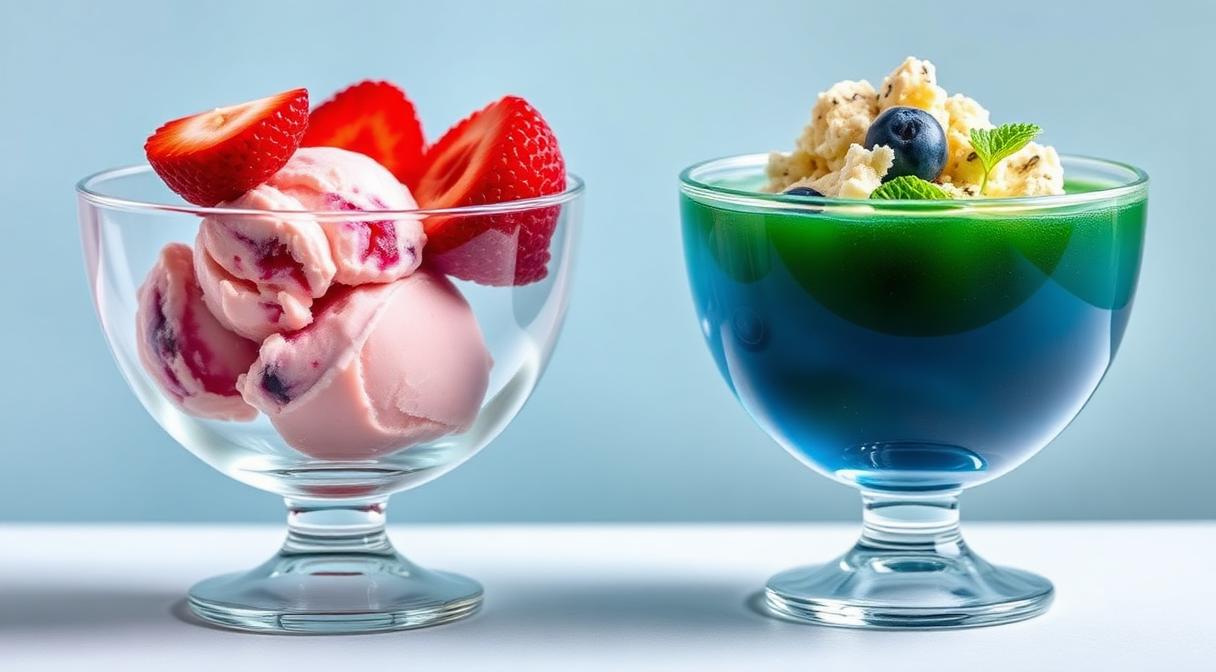 Functional differences in finished products — Guar Gum delivers smooth scoopable creaminess on the left, while LBG enables a firm elastic gelled dessert on the right.
Freeze-Thaw and Syneresis Control
Frozen and refrigerated products test a hydrocolloid's ability to control ice crystal growth and prevent water release. Guar Gum's high water-binding capacity slows the migration of water during freeze-thaw cycles, which is why it dominates ice cream and frozen dough. LBG complements it by preventing small ice crystals from coarsening during temperature fluctuations in retail freezers — the slight surface elasticity it adds is what keeps a premium ice cream feeling creamy after weeks on the shelf. Combining a small percentage of LBG with a larger percentage of Guar is, for many manufacturers, the most cost-effective stabilisation strategy.
Cost, Supply Chain and 2026 Tariffs
The price gap between the two gums is the largest single decision driver. Guar Gum trades at roughly one-fourth to one-fifth the cost of food-grade LBG. India produces around 80% of global Guar supply, and the 2026 reciprocal-tariff environment has further compressed margins for buyers depending on European LBG. As ETO-free, traceable and clean-label specifications harden, B D Guar's Superior cold-water Guar Gum has become the default choice for formulators reformulating LBG-heavy products to defend their cost base. Where LBG synergy is truly essential, partial replacement with Guar is a documented industry strategy.
Frequently Asked Questions
Can Guar Gum fully replace Locust Bean Gum?
Not in applications that depend on LBG's gel synergy with carrageenan or xanthan. In simpler viscosity-building applications such as sauces, dressings and beverages, Guar Gum can replace LBG entirely and usually at a fraction of the cost.
Why is Locust Bean Gum so expensive?
Carob trees take fifteen years to bear full crops, produce one harvest annually and are limited to a small Mediterranean geography. Single-year drought or fire moves prices substantially, while Guar is a fast-cycle rain-fed annual crop with a much larger acreage.
Do Guar and LBG dissolve at the same temperature?
No. Guar Gum hydrates fully in cold water, while LBG requires temperatures of at least 80 °C for full hydration. This is one of the most important practical differences in factory selection.
Which has higher viscosity at 1%?
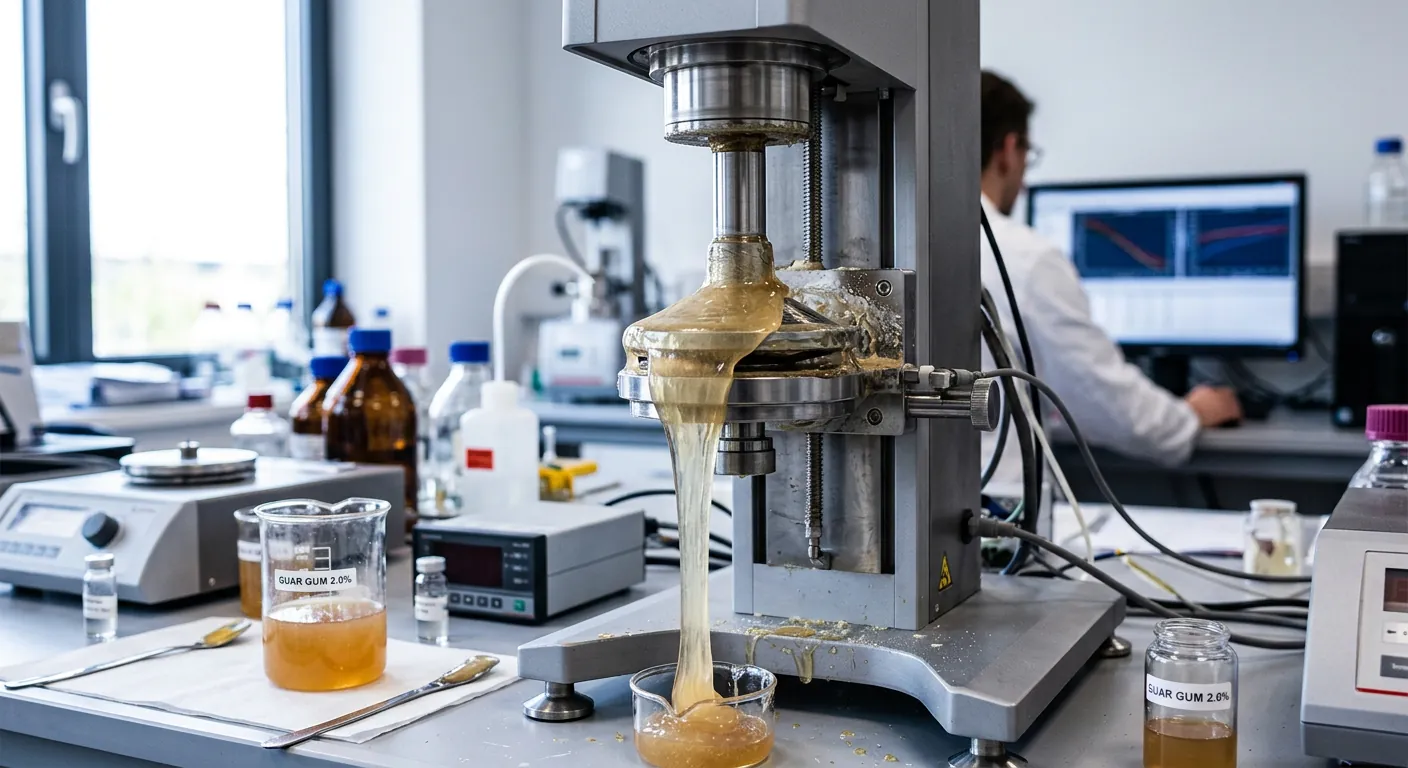
A 1% cold-water solution of Guar Gum typically reaches 5,000 to 6,000 cP. A 1% LBG solution at the same temperature is much lower because the polymer has not fully hydrated; only after heating does it approach comparable values.
Is Guar Gum more sustainable than LBG?
Both are well-established food-grade hydrocolloids with similar safety profiles. From a sustainability standpoint, Guar's nitrogen-fixing root system and low water requirement give it a strong environmental case, particularly when sourced from verified rain-fed farms.
For specification sheets, side-by-side viscosity tables and ETO-free certificates of analysis, browse the Guar Gum grade comparison or speak with our application team at /contact.