Guar Gum as a Thickening Agent: Rheology and Formulation Guide
Why Guar Gum is the most cost-effective natural thickener. Shear-thinning rheology, viscosity grades, comparison with xanthan and CMC, and industrial dosage charts.
Last updated:
Quick Answer
How does Guar Gum thicken liquids?
Guar Gum is a high-molecular-weight polysaccharide whose long entangled chains create huge hydrodynamic volume in water. At just 0.1 to 1.0% concentration it produces viscosities of hundreds to thousands of centipoise, with strong pseudoplastic behaviour — the apparent viscosity drops under shear and recovers at rest. This combination of high cold-water viscosity, low-cost dosage and shear-thinning rheology makes it the most efficient natural thickening agent in industrial use.
Thickening is one of the most universal functions in food, pharmaceutical and industrial formulation, and Guar Gum is the most efficient natural ingredient available for the job. A small percentage delivers dramatic viscosity increases, the resulting solutions handle shear gracefully, and the cost per unit of viscosity is lower than any synthetic alternative on the market. Understanding the rheology behind this behaviour gives formulators the tools to specify the right grade, dose correctly and avoid the common pitfalls that produce inconsistent batches.
Research Overview
This guide covers the molecular basis of Guar Gum's thickening behaviour, the shear-rate-dependent viscosity profile (pseudoplastic flow), the effect of temperature, pH and electrolytes on viscosity, dosage selection across food and industrial applications, and the role of fast-hydrating and partially hydrolysed grades for specialised process conditions in 2026 manufacturing.
Why Guar Gum Builds So Much Viscosity
The polymer has a weight-average molecular weight of approximately 1 to 2 million daltons, making it one of the largest natural polysaccharides used commercially. When dispersed in water, each chain unfolds into an extended random coil that occupies a very large hydrodynamic volume. As the chains entangle and interact through hydrogen bonding, the apparent viscosity of the solution rises sharply with concentration. A 1% Guar Gum solution typically reaches 5,000 to 6,000 centipoise, far higher than equivalent doses of starch, gum arabic or maltodextrin.
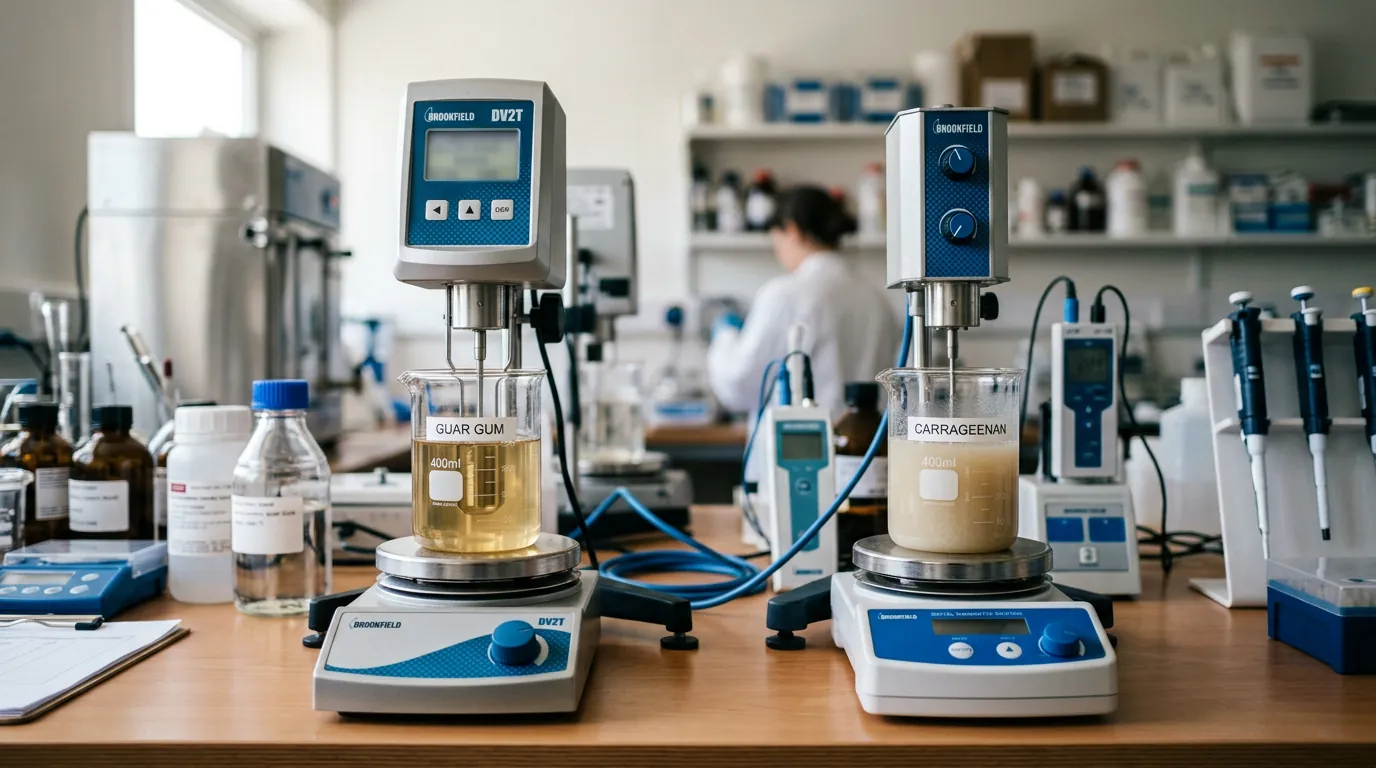
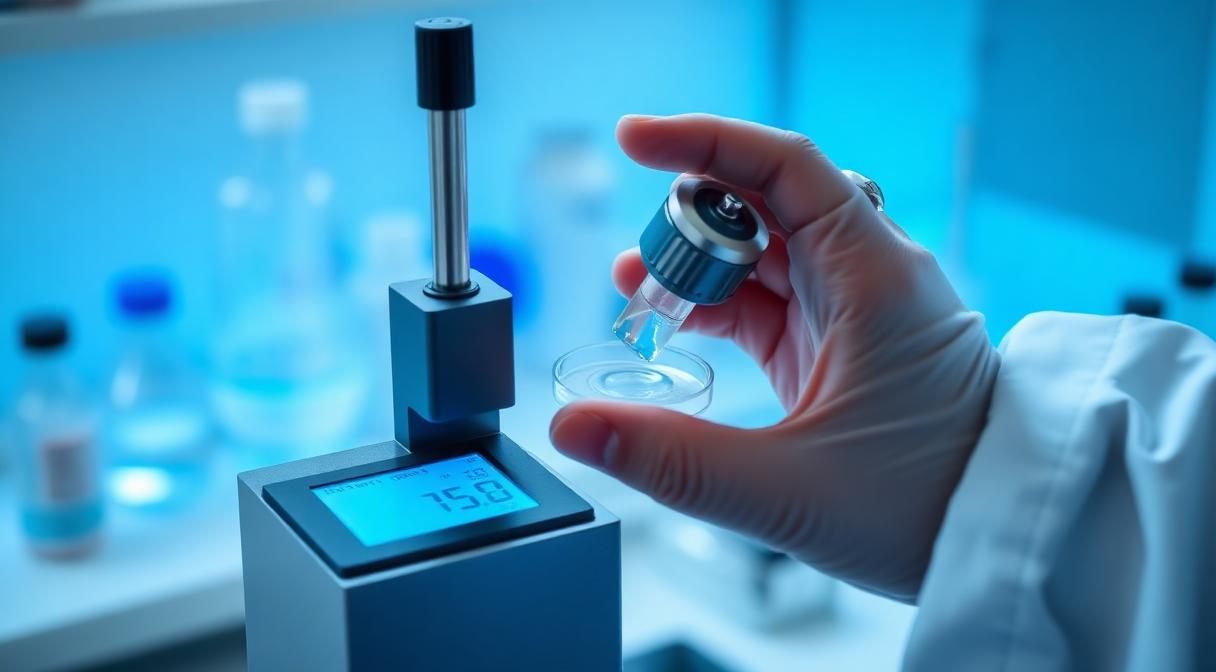 Brookfield viscometer measurement of a 1% cold-water Guar Gum solution — viscosity is verified at multiple shear rates to characterise the pseudoplastic flow behaviour.
Pseudoplastic (Shear-Thinning) Behaviour
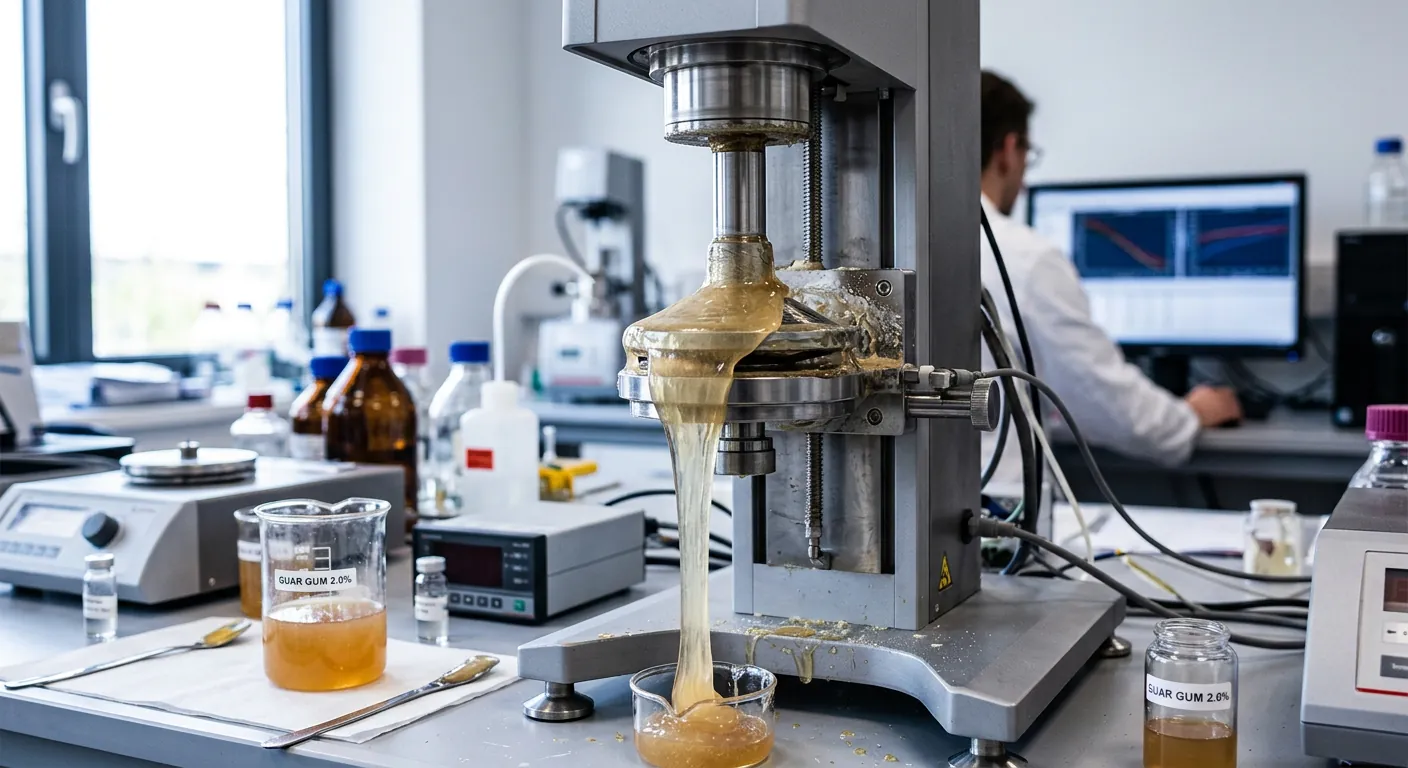
Guar Gum solutions are pseudoplastic, meaning apparent viscosity decreases as shear rate increases and recovers when shearing stops. At rest, the entangled polymer chains create high viscosity that suspends particles and prevents settling. Under high shear (pouring, pumping, mouth-shearing), the chains align with flow direction and viscosity drops, allowing the liquid to flow easily. When shear stops, the chains re-entangle and viscosity returns. This behaviour is why a Guar-thickened sauce pours nicely from a bottle but coats food on the plate, and why a Guar-stabilised drilling mud can be pumped through long pipelines yet still suspend cuttings.
Effect of Temperature
Guar Gum's viscosity decreases moderately with temperature in the normal processing range. At 80 °C, viscosity is typically 60 to 70% of the room-temperature value, and most of this loss is recovered on cooling. Prolonged heating above 90 °C can cause irreversible chain degradation and permanent viscosity loss, so processes requiring sustained high temperatures should use heat-stable derivatives such as hydroxypropyl Guar. Cold processing fully preserves the polymer's molecular weight and viscosity profile.
Effect of pH and Electrolytes
Native Guar Gum is non-ionic, which gives it remarkable stability across a wide pH range (4 to 10). Unlike anionic polymers such as carboxymethyl cellulose, it does not lose viscosity in acidic conditions, making it suitable for fruit-juice, dressing and yoghurt applications. Monovalent salts (NaCl, KCl) have minimal effect on viscosity, and divalent salts cause only modest reduction at industrial concentrations. This salt tolerance is one of the reasons Guar dominates oilfield drilling and fracturing applications where brines are unavoidable.
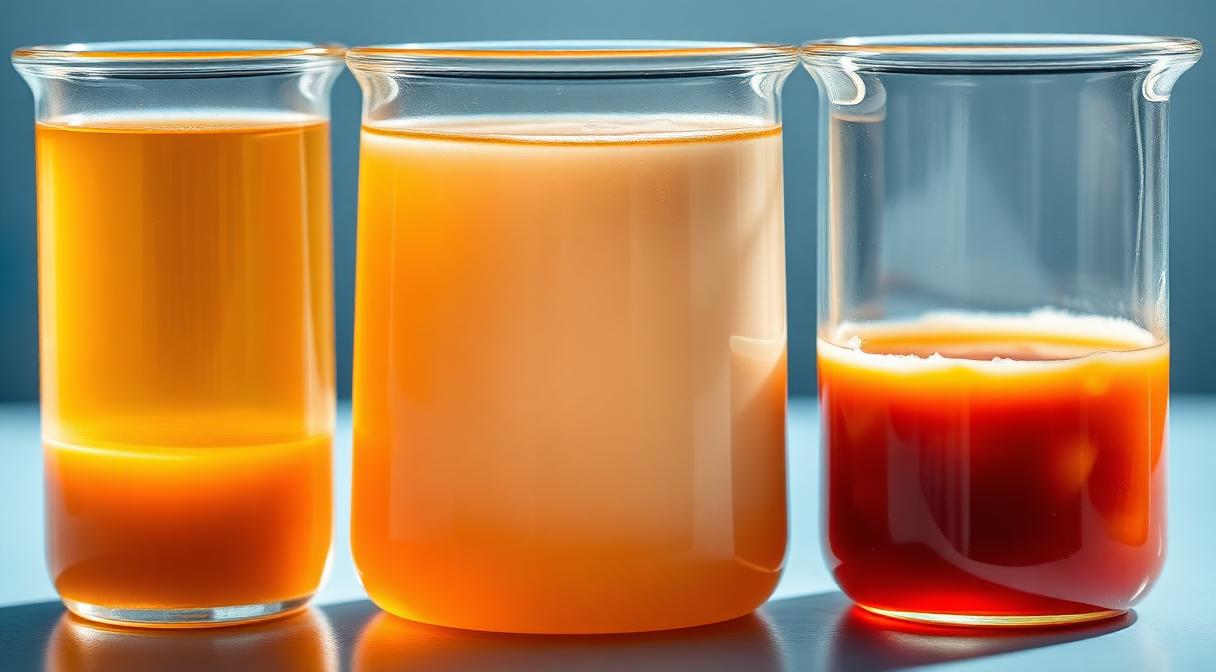 Viscosity range achievable with Guar Gum at 0.25%, 0.5% and 1.0% inclusion — formulation control is achieved through dose rather than chemical modification.
Dosage Across Application Categories
Working ranges by category, useful as starting points for development trials:
- Beverages and juices: 0.05 to 0.15% for suspension and body
- Sauces, dressings and gravies: 0.2 to 0.5% for pourable to spoonable consistency
- Ice cream and frozen dairy: 0.1 to 0.25% combined with LBG or carrageenan
- Baked goods (gluten-free): 0.1 to 0.5% of flour weight
- Pharmaceutical syrups: 0.2 to 0.8% for body and suspension
- Cosmetic lotions and creams: 0.2 to 1.0% for body and slip
- Oilfield drilling fluids: 0.5 to 1.5% for cutting suspension
Choosing the Right Grade for Your Process
Three grade attributes drive the selection: viscosity (low, medium, high), hydration rate (standard or fast-hydrating) and mesh size (typical 200 mesh for general use, finer for instant dispersion). Standard-hydration grades take 30 to 60 minutes to reach full viscosity; fast-hydrating grades reach full viscosity in 5 to 10 minutes and are essential for short-residence-time processes such as oilfield fracturing. For controlled low-viscosity fibre delivery in nutritional applications, partially hydrolysed Guar Gum (PHGG) provides the same soluble fibre benefit with much lower viscosity. The full grade matrix lives in the Guar Gum grade comparison.
Frequently Asked Questions
How do I avoid lumps when dispersing Guar Gum?
Pre-blend the powder with sugar, salt or another dry carrier at a 5:1 to 10:1 carrier-to-Guar ratio before adding to water, or use a high-shear inline disperser. Slow addition into a swirling vortex also works for smaller batches.
Does Guar Gum thicken in cold water?
Yes — and this is one of its key advantages over Locust Bean Gum or some starches. Full hydration is achieved at ambient temperatures within minutes for fast-hydrating grades and 30 to 60 minutes for standard grades.
What viscosity should I specify when ordering?
Specify the viscosity of a 1% solution measured on a Brookfield viscometer at 25 °C with a stated spindle and rotational speed (typically Spindle 4 at 20 rpm). Common commercial grades range from 2,500 to 6,000 cP at this measurement.
Does the viscosity stay stable over shelf life?
Yes, in finished products preserved against microbial attack and protected from prolonged high temperatures. Cellulase or pectinase contamination can degrade the polymer over time, so antimicrobial preservation in liquid products is essential.
Can Guar Gum form a true gel?
No. Pure Guar Gum produces a viscous solution rather than a gel. Combining it with borate ions or with helical hydrocolloids such as xanthan or carrageenan can produce a gel, but native Guar alone is a thickener.
For Brookfield viscosity certificates of analysis, grade selection guidance and free samples for rheology testing, contact the B D Guar applications team at /contact or browse the technical product catalogue.