Halal and Kosher Certified Guar Gum: 2026 Sourcing Guide
Why Guar Gum requires Halal and Kosher certification despite being a plant ingredient, and how B D Guar's HICOL series meets GCC, Indonesian, and US Kosher requirements.
Last updated:

Quick Answer
Why does Halal and Kosher certified Guar Gum matter in 2026?
Halal and Kosher certified Guar Gum is now a baseline requirement for global food, pharmaceutical and cosmetic brands selling into Muslim-majority markets, the United States and the European Union. Certification confirms that the processing facility, equipment cleaning and supply chain are free of non-permitted contaminants — a verification step that 2026 retailers increasingly demand even from non-religious clean-label launches because it proves rigorous audit discipline.
Religious certification has quietly become one of the most important commercial filters in global ingredient sourcing. Halal and Kosher certified Guar Gum is no longer a niche export feature; it is the default specification for any manufacturer with ambitions in the Middle East, Southeast Asia, North Africa, Israel, the kosher segment of the US market and the increasingly faith-aware European Union. As 2026 supply chains rebuild around traceability and verification, these certifications also serve as proof of facility discipline that benefits every customer.
Research Overview
This guide explains what Halal and Kosher certification actually verifies for a natural plant-derived ingredient like Guar Gum, which certifying bodies are recognised in the major export markets, what documentation a buyer should request and audit, and why the certification process has commercial value beyond the religious-compliance question itself.
What Certification Verifies for Guar Gum
Guar Gum is a plant-derived polysaccharide with no inherent Halal or Kosher concern at the agricultural stage — the cluster bean is permissible under both dietary laws. Certification therefore focuses on processing. Auditors verify that the milling, sieving, drying and packaging facility does not share equipment with animal-derived ingredients, that cleaning agents and process aids are themselves permitted, that no alcohol-based extraction or non-Halal carrier solvents are used, and that storage and transport are segregated from forbidden categories. For Kosher certification, additional attention is paid to seasonal Passover restrictions and the documentary chain from raw seed to packaged powder.
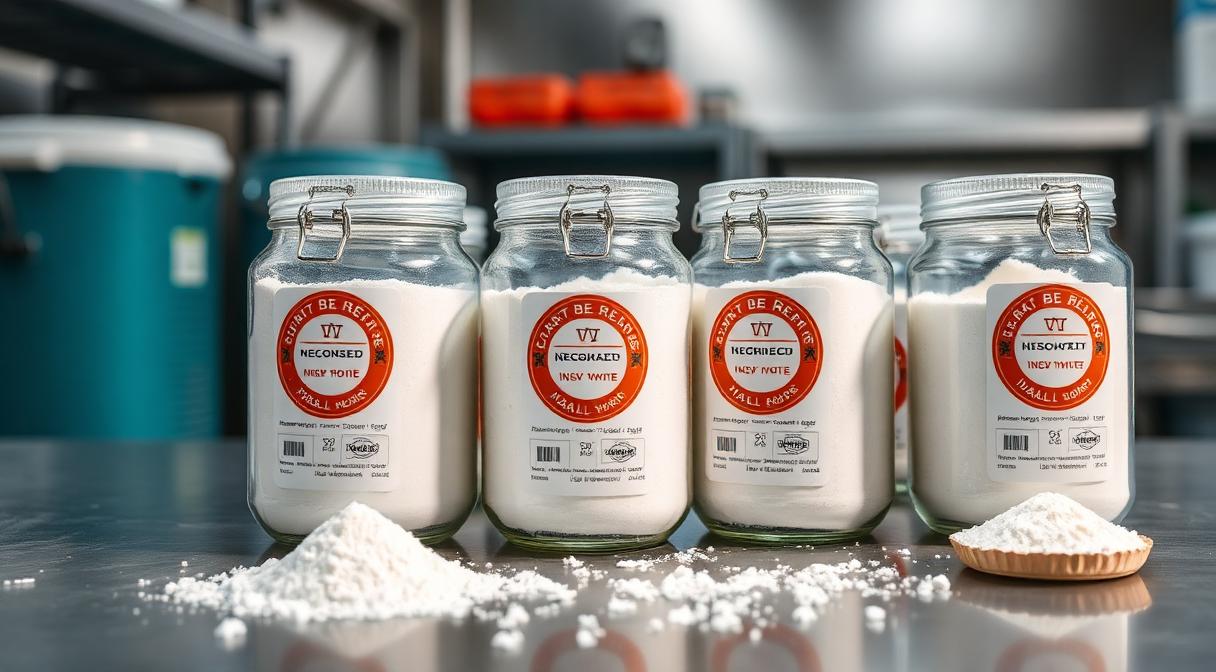 Certified Halal and Kosher Guar Gum is packaged on dedicated lines with documented cleaning protocols separating it from any animal-derived materials.
Recognised Certifying Bodies
For Halal certification, the major globally recognised authorities include JAKIM (Malaysia), MUI (Indonesia), GCC Halal Accreditation Centre (Gulf states), and HFCE (Halal Food Council of Europe). Several Indian Halal certifiers — JUH Halal Trust and Halal India — are accepted across South Asia and the Middle East. For Kosher certification, the Orthodox Union (OU), OK Kosher, Star-K and KOF-K are the most widely accepted bodies for export to the US, Israel and Europe. Reputable Guar Gum suppliers maintain current certificates from at least one major Halal body and one major Kosher body, and they provide unique batch certificates of analysis that reference the certification.
What to Verify as a Buyer
A claim of certification means nothing without verifiable documentation. Buyers should request the original certificate (not a generic supplier statement) with the certifying body's letterhead, certificate number, expiry date and product scope. The product scope must explicitly cover Guar Gum and the specific grades being purchased. Certificates are typically valid for one year and renewed after an annual on-site audit. Cross-check the certificate number against the certifying body's online registry — most major authorities publish active certificates on their websites. For high-value contracts, a customer-led audit of the facility's segregation, cleaning records and supplier inputs adds an additional layer of confidence.
 On-site audit by an accredited certifying body — Halal and Kosher certification depends on annual facility verification, not just paperwork.
Commercial Value Beyond Religion
The discipline required to maintain Halal and Kosher certification produces ancillary benefits that every customer enjoys. Segregated lines reduce cross-contamination risk, documented cleaning protocols improve overall hygiene, and the rigour of annual external audits forces a level of operational maturity that translates into more consistent product quality. Many large multinational food companies now specify Halal or Kosher certified suppliers for non-religious product lines purely because the certification correlates with low contamination incidents and reliable documentation.
Geographic Demand in 2026
Halal-certified Guar Gum is essential for export to Saudi Arabia, the UAE, Indonesia, Malaysia, Pakistan, Turkey, Egypt and the rest of the OIC member states, and is increasingly requested by importers in France, the UK and Germany serving their Muslim consumer base. Kosher certification is essential for US and Canadian food manufacturers, Israel and a growing segment of European retailers. The combined certification opens essentially the entire global ingredient market without further qualification. For more on the geographic strategy, see our comparison page and quality and certifications overview.
Sustainability and 2026 Tariff Considerations
The certification conversation increasingly overlaps with sustainability and traceability. Several large food retailers now bundle Halal, Kosher, organic, non-GMO and ETO-free into a single audit framework. Suppliers who can deliver all five with documented batch traceability to specific farm cooperatives in Rajasthan and Gujarat win contracts that non-certified or partially-certified competitors cannot access. The 2026 reciprocal tariff environment further rewards single-source suppliers with full documentation, because importers need certification to claim preferential trade treatment in several jurisdictions.
Frequently Asked Questions
Is Guar Gum automatically Halal and Kosher because it is plant-derived?
The cluster bean itself raises no concern, but the processing facility must be verified. Without a current certificate, buyers cannot legitimately claim certification on their finished products.
How long is a Halal or Kosher certificate valid?
Most certificates are valid for twelve months and renewed after an annual on-site audit. Verify the expiry date on every batch document.
Can a single certificate cover all Guar Gum grades?
Often yes, if the facility processes all grades on certified lines. Some certifiers issue scope-specific certificates — confirm that the certificate explicitly covers the grade you are buying.
Are organic, non-GMO and Halal-Kosher certifications independent?
Yes. Each certification has its own auditor and process. Major suppliers maintain all four in parallel and provide a consolidated documentation pack for each batch.
Does certification add to the cost?
Minimally. Annual certification fees and audit costs are spread across very large production volumes. Certified Guar Gum trades within one to three percent of uncertified grade pricing at industrial scale.
For consolidated certification documentation, batch traceability and current Halal and Kosher certificates for B D Guar product grades, contact the quality team at /contact or review our quality and certifications page.