Wet-End Paper Manufacturing: Boosting Dry Strength with Guar Gum
Discover how cationic and modified Guar Gum boosts dry strength, lifts fines and filler retention, and cuts fiber cost at the paper wet end.
Last updated:
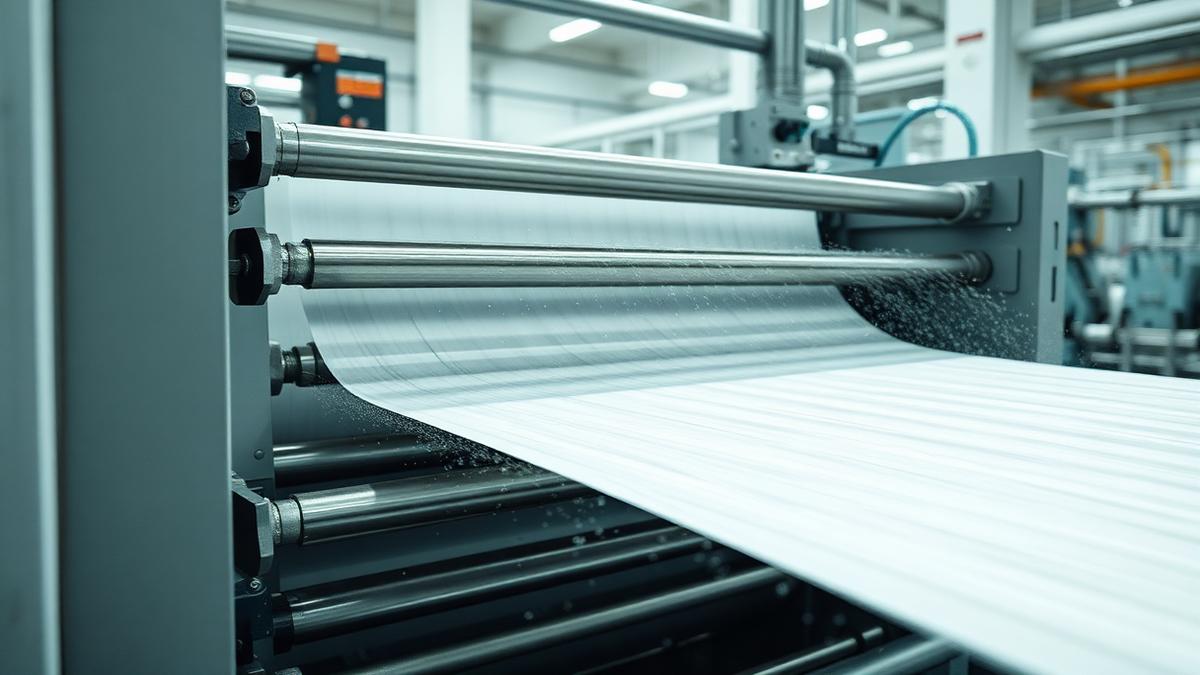
In the 2026 papermaking landscape, mills face rising fiber costs, tighter sustainability mandates, and relentless pressure to run faster machines without sacrificing sheet quality. Guar Gum has re-emerged as a Superior wet-end additive precisely because it addresses all three challenges at once. Added at the wet end, this plant-derived galactomannan strengthens the fiber network, improves retention of fines and fillers, and enables higher mineral loading — allowing production superintendents to defend margins while meeting strength specifications on lightweight, high-filler grades.
Research Overview
Guar Gum is a non-ionic galactomannan whose long polymer chains adsorb onto cellulose fibers through extensive hydrogen bonding. In its cationic and modified forms, it also carries a positive charge that bridges negatively charged fibers, fines, and filler particles. Industry studies indicate that this dual mechanism raises dry tensile and burst strength while improving first-pass retention, the two levers that most directly govern wet-end efficiency and finished-sheet cost.
How Guar Gum Builds Dry Strength at the Wet End
Dry strength in paper is fundamentally a function of inter-fiber bonding. As the sheet dewaters and dries, hydrogen bonds form between adjacent cellulose surfaces; the more bonding area available, the stronger the sheet. Guar Gum acts as a molecular bridge, its mannose backbone and galactose side chains presenting abundant hydroxyl groups that hydrogen-bond simultaneously to multiple fibers.
Because Guar Gum hydrates rapidly and distributes evenly in the thin stock, it reinforces bonding uniformly across the sheet rather than in localized clusters. This translates into measurable gains in tensile index, burst strength, and internal bond (Scott bond) without adding basis weight. For superintendents running lightweight liner, packaging, or printing grades, that means holding strength targets while trimming fiber.
- Tensile and burst gains: improved inter-fiber bonding raises dry tensile and burst index at constant basis weight.
- Internal bond improvement: stronger z-direction bonding reduces delamination and ply separation in board grades.
- Runnability: a stronger wet and dry web reduces web breaks, supporting higher machine speeds and fewer sheet-off events.
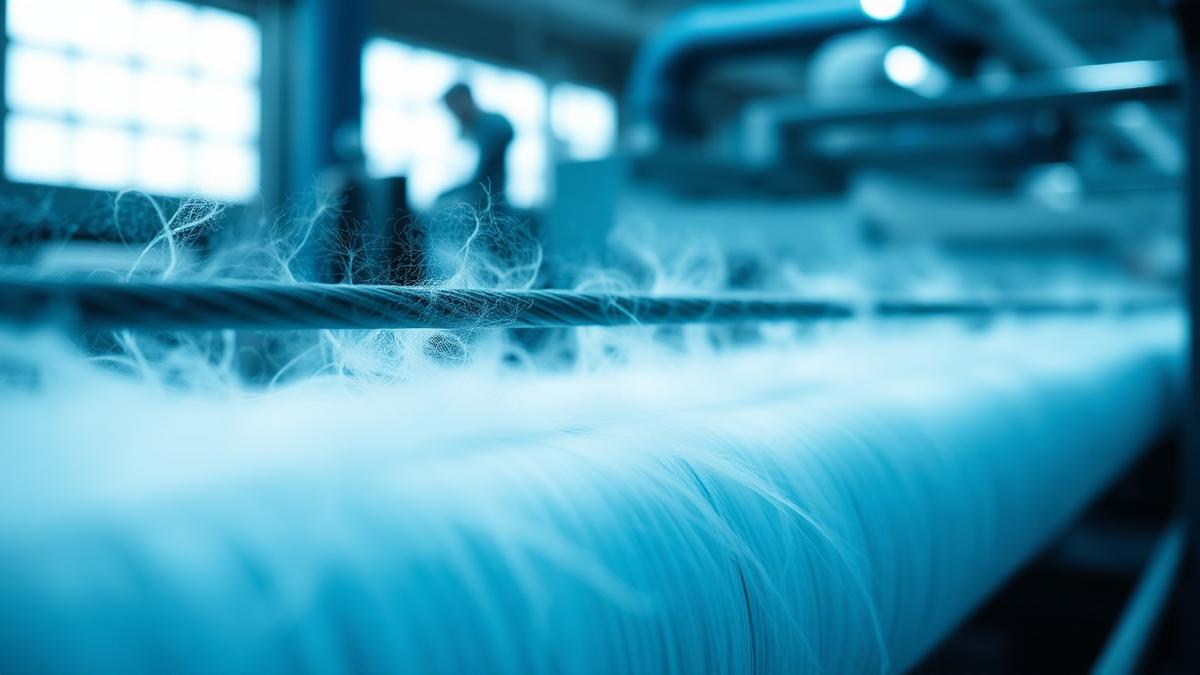 Guar Gum reinforces inter-fiber bonding as the sheet forms and dewaters on the wire.
Cationic and Modified Guar for Retention of Fines and Fillers
Modern paper contains substantial mineral filler — typically calcium carbonate or clay — to improve opacity, brightness, and printability while reducing fiber demand. The challenge is that fillers and fines are small, negatively charged, and easily lost through the wire into the white water, hurting both economics and effluent load. Cationic Guar Gum solves this by neutralizing surface charge and flocculating fines and filler onto the fiber mat.
The positively charged cationic groups attach to anionic fiber and filler surfaces, drawing them together into retainable flocs. The result is higher first-pass retention and first-pass filler retention, cleaner white water, and a more stable wet end. Because retained filler stays in the sheet rather than recirculating, formation becomes more consistent and drainage more predictable.
- Cationic Guar Gum adsorbs onto negatively charged fibers and filler particles.
- Charge neutralization and polymer bridging aggregate fines and fillers into flocs.
- Flocs are captured in the forming fiber mat, raising first-pass retention.
- White water solids drop, stabilizing the approach system and reducing deposits.
Enabling Higher Filler Loading to Reduce Fiber Cost
Fiber is the single largest variable cost in most paper mills. Every percentage point of filler that can replace fiber — while still meeting strength and optical targets — flows directly to the bottom line. The obstacle is that filler is a bonding inhibitor: minerals occupy space between fibers and interfere with hydrogen bonding, so naive filler increases erode strength.
Guar Gum breaks this trade-off. By restoring the inter-fiber bonding lost to added mineral, it lets mills push filler content higher without dropping below strength specification. Industry studies indicate that dry-strength additives such as Guar Gum can support meaningful increases in filler loading at constant tensile strength, converting expensive fiber into lower-cost mineral while preserving sheet performance.
- Fiber substitution: higher retained filler displaces costly virgin or recycled fiber.
- Optical benefits: more filler improves opacity and brightness, valuable for printing and writing grades.
- Strength preservation: Guar Gum offsets the bonding penalty of mineral loading, protecting tensile and burst specs.
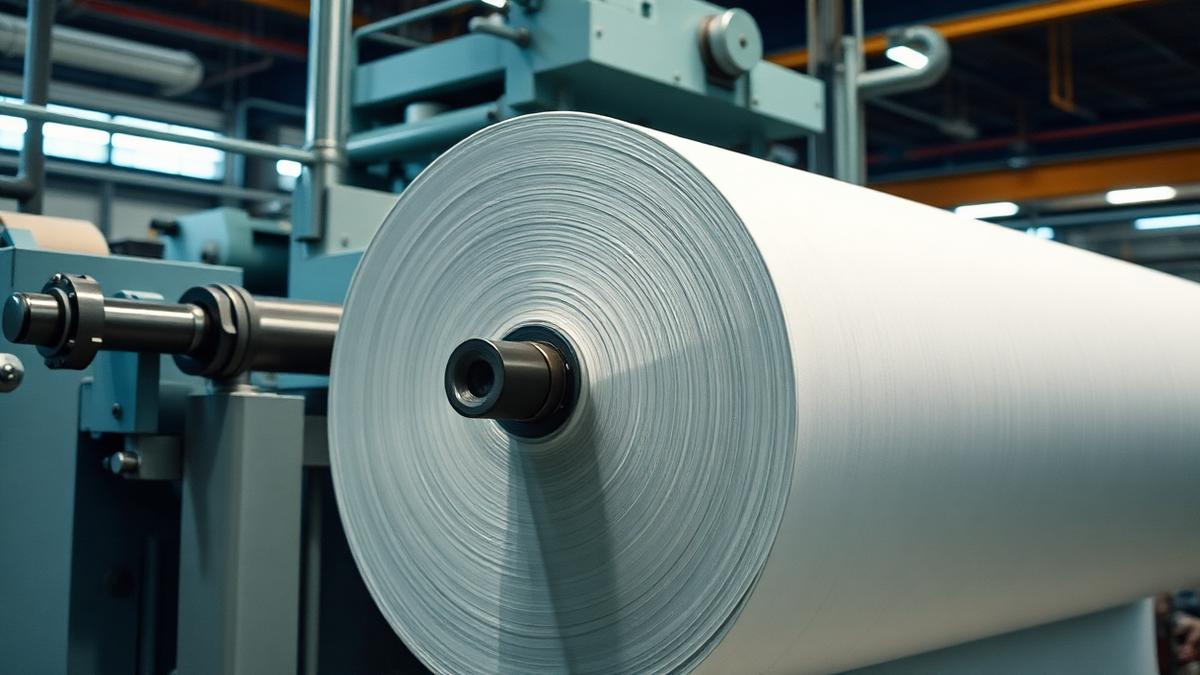 Higher filler loading, enabled by Guar Gum strength recovery, lowers fiber cost per tonne.
Practical Application Guidance for the Wet End
Guar Gum is typically dosed as a dilute solution added to the thin stock ahead of the headbox, where it can interact with fibers and fillers before sheet formation. Correct make-down is essential: the powder should be added slowly into the vortex of well-agitated water to avoid lumping, then allowed adequate hydration time before metering. B.D. Guar supplies custom-milled mesh grades so mills can match dispersion speed and hydration to their approach-system residence time.
Dose optimization is best established through trials that track first-pass retention, drainage, and finished-sheet strength together, since the three interact. Charge demand of the furnish, water hardness, and the presence of other wet-end chemistry all influence the optimal grade and addition point. B.D. Guar's technical team supports mills with grade selection, trial design, and troubleshooting to secure consistent, repeatable results.
- Make-down: disperse into a vortex; allow full hydration before dosing to prevent fish-eyes.
- Addition point: meter into thin stock ahead of the headbox for even fiber and filler interaction.
- Optimization: trial dose against retention, drainage, and strength simultaneously.
Key Takeaways
- Dual-action additive: Guar Gum simultaneously builds dry strength and improves retention at the wet end.
- Strength without weight: enhanced inter-fiber bonding raises tensile, burst, and internal bond at constant basis weight.
- Cleaner wet end: cationic Guar Gum flocculates fines and fillers, lifting first-pass retention and clarifying white water.
- Lower fiber cost: restored bonding lets mills raise filler loading, substituting mineral for expensive fiber.
- Sustainable and plant-derived: a biodegradable, renewable galactomannan that aligns with 2026 ESG commitments.
- Application support: custom mesh grades and technical guidance ensure consistent, repeatable machine performance.
Frequently Asked Questions
How does Guar Gum improve dry strength in paper?
Guar Gum is a galactomannan rich in hydroxyl groups that hydrogen-bond to cellulose fibers. Added at the wet end, it acts as a molecular bridge between adjacent fibers, increasing inter-fiber bonding area. As the sheet dries, this yields higher dry tensile, burst, and internal bond strength without any increase in basis weight.
What is the difference between cationic and standard Guar Gum in papermaking?
Standard Guar Gum is non-ionic and works mainly through hydrogen bonding to boost strength. Cationic Guar Gum carries a positive charge that also neutralizes the negative charge on fibers and fillers, flocculating fines and mineral so they are retained in the sheet. Mills often select cationic grades when retention and filler loading are the priority.
Can Guar Gum really reduce fiber costs?
Yes. Because Guar Gum restores the bonding lost when mineral filler is added, mills can increase filler content while holding strength specifications. Since filler is significantly cheaper than fiber, and fiber is the largest variable cost, higher filler loading enabled by Guar Gum lowers cost per tonne while maintaining or improving opacity.
How should Guar Gum be added to the wet end?
Prepare a dilute solution by dispersing the powder slowly into a well-agitated vortex to prevent lumping, then allow full hydration. Meter the hydrated solution into the thin stock ahead of the headbox so it can interact with fibers and fillers before formation. B.D. Guar's technical team advises on grade, dose, and addition point for each furnish.
Ready to strengthen your sheet and lower fiber cost? Explore B.D. Guar's paper-grade galactomannan portfolio on our products page, review our batch-to-batch consistency standards on the quality page, and contact our technical team to design a wet-end trial for your machine.