Stabilizing Oil-in-Water Lotions with Natural Hydrocolloids
Guar Gum thickens the continuous water phase of oil-in-water lotions, arresting creaming and coalescence while delivering a smooth, non-tacky skin feel.
Last updated:
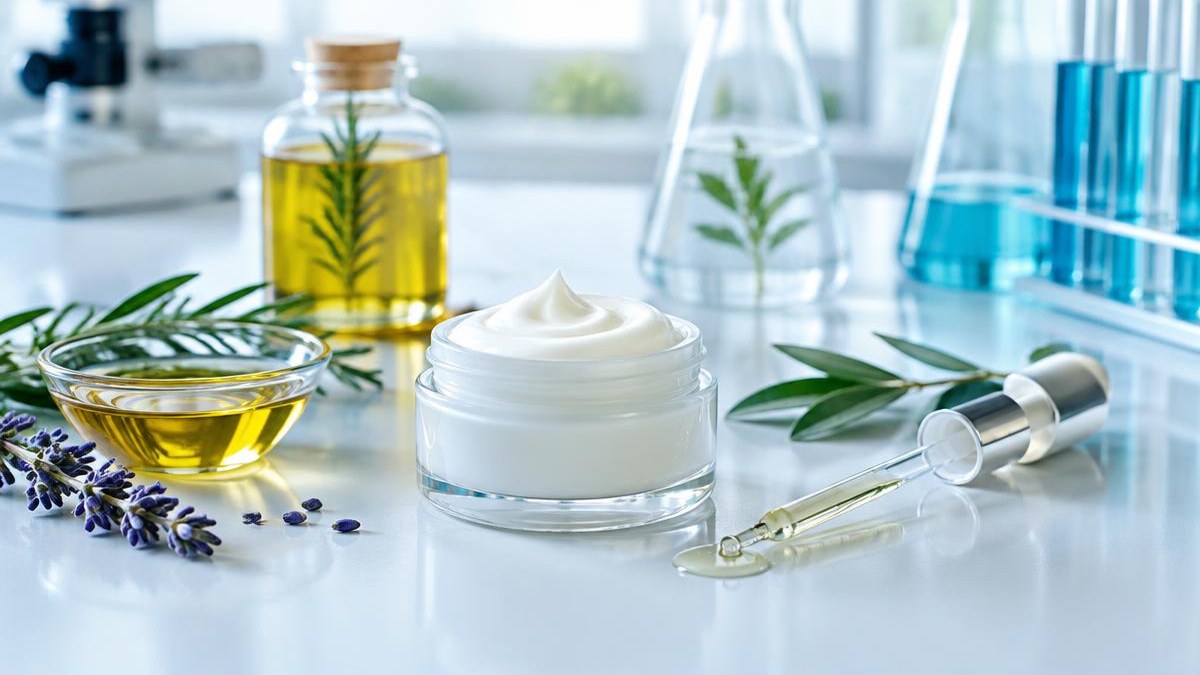
Natural hydrocolloid stabilization of oil-in-water lotions has become a defining priority for cosmetic formulation chemists and brand owners in 2026, as consumer rejection of synthetic acrylic polymers and microplastic restrictions under European chemical regulations accelerate demand for plant-based stabilizers. High-purity, clarified Guar Gum thickens the continuous water phase, prevents oil droplet coalescence, and delivers a smooth, easy-spreading, shelf-stable sensory profile that satisfies modern clean skincare mandates.
Research Overview
The global clean skincare market in 2026 is shifting decisively toward sustainable, plant-derived functional ingredients. Market analyses from IMARC indicate that demand for natural, vegan, and microplastic-free cosmetic formulations continues to expand at a compound annual growth rate above 8%. Regulatory pressure from the European Chemicals Agency targets crosslinked polyacrylates (carbomers) and other non-biodegradable synthetic polymers, pushing formulators toward bio-based rheology modifiers.
Oil-in-water (O/W) emulsions are the chassis for facial moisturizers, body lotions, barrier creams, and serums. Thermodynamically, they are unstable colloidal dispersions in which lipid droplets (vegetable oils, squalane, fatty esters, ceramides) sit within a hydrophilic continuous phase. Over time, phase separation proceeds through gravitational creaming, flocculation, droplet coalescence, and Ostwald ripening.
For decades, formulators relied on synthetic carbomers to build low-shear yield stress and immobilize oil droplets. Carbomers, however, carry environmental liabilities, require synthetic neutralizing bases, and lack natural clean-beauty certification. Natural Guar Gum, extracted from the seed endosperm of Cyamopsis tetragonoloba, is a 100% plant-based polysaccharide (molecular weight roughly 1.5 to 2.2 million Daltons) built on a linear beta-(1→4)-D-mannopyranose backbone with single alpha-(1→6)-D-galactopyranose side branches at an approximate 2:1 ratio. Studies in Carbohydrate Polymers and the Journal of Food Science describe how the abundant hydroxyl groups on this backbone hydrogen-bond with water, forming a continuous three-dimensional viscoelastic network. Consistent with clean-label frameworks referenced by FAO, USDA, EFSA, and CODEX Alimentarius, Guar Gum offers a non-toxic, readily biodegradable rheology modifier for long-term emulsion stability. Further background is available in the Guar Gum glossary.
Colloidal Thermodynamics: Preventing Creaming, Coalescence, and Phase Separation
The primary job of a rheology modifier in a cosmetic lotion is to overcome gravitational separation and droplet collision kinetics governed by classical colloidal physics.
- Counteracting gravitational creaming: Under Stokes' Law, creaming rate rises with the density difference between phases and the square of droplet diameter, and falls as continuous-phase viscosity rises. Guar Gum raises low-shear micro-viscosity of the water phase by several orders of magnitude, arresting upward droplet migration.
- Low-shear yield stress: Permanent suspension requires a yield stress, a threshold below which the fluid behaves as an elastic solid. Fully hydrated Guar Gum builds an entangled macromolecular mesh that traps micron-sized lipid droplets in place and prevents droplet-to-droplet contact during 24-month room-temperature and accelerated thermal storage.
- Steric barrier formation: Although non-ionic and mostly resident in the bulk aqueous phase, Guar Gum chains interpenetrate the interfacial surfactant layer, creating steric hindrance that repels approaching droplets and limits surface oil separation.
- Temperature resilience: Commercial lotions must survive freeze-thaw cycles and warehouse temperatures of 45°C to 50°C. Unlike synthetic emulsifiers that can phase-invert under heat, Guar Gum maintains structured hydrogen bonding across broad temperature regimes, limiting lipid sweating and preserving uniform opacity.
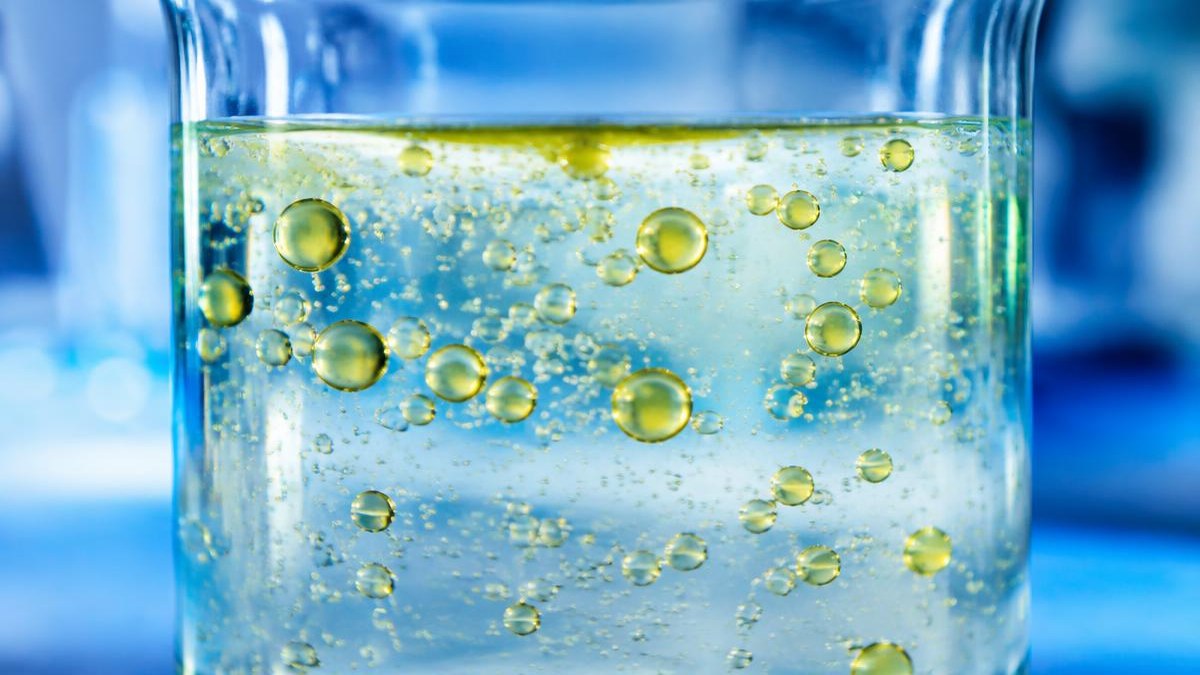 Oil-in-water lotion emulsions undergoing stability evaluation in a cosmetic formulation laboratory.
Sensory Rheology: Pseudoplastic Shear-Thinning, Spreadability, and Skin After-Feel
Consumer perception of lotions depends on dynamic sensory attributes: dispensing from the container, skin glide, absorption rate, and residual after-feel. Rheology design therefore determines commercial success as much as physical stability does.
- Pseudoplastic flow: At rest, the high viscosity of a Guar Gum lotion maintains stability and prevents running. During rubbing (shear rates of roughly 1,000 to 10,000 s⁻¹), the coiled galactomannan chains uncoil and align with the flow direction, and apparent viscosity drops instantly.
- Effortless glide: This shear-thinning response gives easy spreadability without tugging at delicate facial skin and supports uniform delivery of actives across the epidermal surface.
- No tacky residue: Cosmetic-grade, highly refined Guar Gum with controlled molecular weight distribution and purified endosperm splits absorbs cleanly, avoiding gummy feel, pilling, or roll-up under sunscreens and make-up.
- Velvety after-feel: As water evaporates, hydrated Guar Gum leaves a flexible, breathable polysaccharide film that supports the skin barrier, reduces trans-epidermal water loss, and imparts a soft, cushioned finish valued in luxury skincare.
Formulation Versatility: pH Tolerance, Electrolyte Resilience, and Clean Active Compatibility
Modern formulations combine alpha-hydroxy acids, vitamin complexes, botanical extracts, and mineral electrolytes, all of which frequently destabilize synthetic polymers.
- Non-ionic backbone independence: Carbomers are polyanionic and lose thickening capability in the presence of dissolved mineral salts such as zinc PCA, sodium hyaluronate, or magnesium sulfate. Native Guar Gum has no ionizable carboxyl or sulfate groups, so its viscosity is unaffected by polyvalent electrolytes.
- Broad pH stability: Low-pH exfoliants (pH 3.0 to 4.0 for lactic, glycolic, and salicylic acids) cause carbomers to fail below pH 5.0 without specialized modification, while Guar Gum remains stable from roughly pH 3.5 to 9.0 without precipitating or hydrolyzing.
- Green surfactant synergy: Guar Gum is compatible with polyglyceryl esters, alkyl polyglucosides, cetearyl alcohol, and lecithin, stabilizing non-ionic lamellar gel networks without triggering phase inversion.
- Solvent tolerance in serums: In lightweight serums containing plant alcohol, glycerin, or propanediol, Guar Gum and Hydroxypropyl Guar derivatives remain soluble and stable, preventing syneresis and haze in clear-gel emulsions.
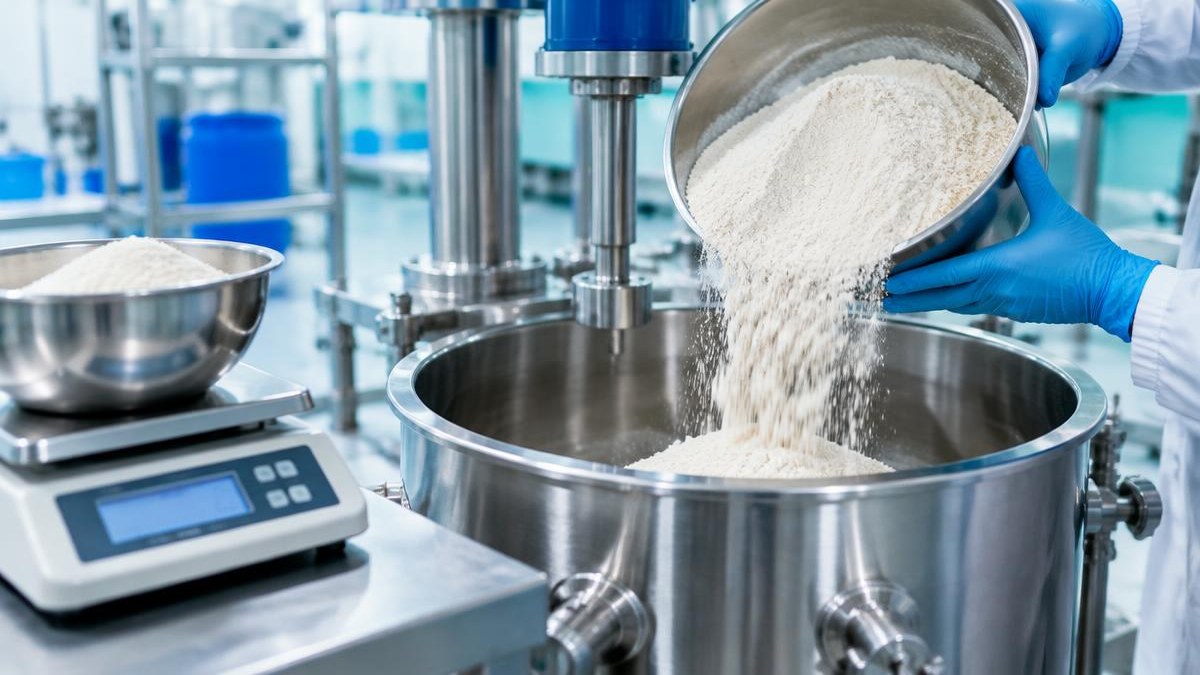 Cosmetic-grade Guar Gum powder prepared for dispersion into a humectant pre-slurry.
Manufacturing Protocols, Cold-Water Hydration, and Quality Standards
Integrating natural hydrocolloids into commercial personal care production requires standardized compounding protocols that prevent clumping and maximize plant efficiency. Quality documentation is summarized on the quality page.
- Cold-process hydration: Standard 200 mesh cosmetic Guar Gum hydrates efficiently in ambient or cold water (15°C to 25°C) without pre-heating or alkaline neutralization, shortening batch cycles and lowering carbon footprint.
- Avoiding fish-eyes: Adding powder too quickly forms a gel membrane that traps dry powder in agglomerates. Formulators pre-disperse the powder in glycerin, propylene glycol, or butylene glycol at a 1:3 ratio, or use high-shear in-line venturi induction.
- Clarified and cationic grades: Clarified low-viscosity grades, processed by centrifugation and micro-filtration, suit crystal-clear gel lotions and essence serums. Cationic Guar Gum (Guar Hydroxypropyltrimonium Chloride) provides skin substantivity for rinse-off cleansing lotions and post-shave conditioning emulsions.
- Purity assurance: Sourcing from ISO 9001:2015 and GMP-certified manufacturers supports microbiological limits (below 500 CFU/g total viable count, absent pathogens), heavy metals below 10 ppm, and residual ash below 1.0%.
Key Takeaways
- Superior emulsion stabilization: High-purity Guar Gum raises continuous-phase micro-viscosity and builds resting yield stress, arresting creaming and coalescence over a 24-month shelf life.
- Sensory elegance: Pseudoplastic shear-thinning gives effortless spreadability followed by a velvety, non-tacky after-feel.
- Electrolyte and acid resilience: The non-ionic galactomannan backbone holds viscosity in high-electrolyte and acidic active systems where carbomers fail.
- Clean-label compliance: A renewable, non-GMO, microplastic-free, readily biodegradable alternative to synthetic acrylates, aligned with European regulatory direction. See the sustainability commitments.
- Cold-process energy savings: Hydration in ambient water removes the need for boiling or chemical neutralizers, streamlining compounding.
Frequently Asked Questions
How does Guar Gum stabilize oil-in-water cosmetic emulsions compared to synthetic carbomers?
Carbomers build yield stress through neutralized polyacrylic acid crosslinks but collapse with mineral salts and carry microplastic concerns. Guar Gum is a natural, non-ionic galactomannan that forms an entangled, hydrogen-bonded network in the water phase. The network suspends oil droplets and stays stable at high electrolyte levels and acidic pH without chemical neutralizers.
Can Guar Gum be used in cold-process personal care formulations?
Yes. Unlike starches or certain synthetic polymers that need thermal cooking, cosmetic-grade Guar Gum hydrates readily in ambient and cold water (15°C to 25°C). Cold processing protects heat-sensitive botanical extracts and cold-pressed oils while reducing energy costs and cycle times.
What is the recommended inclusion level of Guar Gum in cosmetic lotions and creams?
In standard lotions, facial moisturizers, and body milks, 200 mesh cosmetic-grade Guar Gum is typically used at 0.10% to 0.50% by weight. Levels of 0.10% to 0.25% provide stabilization, slip, and light body, while heavier barrier creams and balms use 0.30% to 0.60% for richer, cushioned textures.
How can formulators prevent Guar Gum clumping during water phase preparation?
Dry powder should never be dumped into stagnant water, since a gel shell forms around dry cores ("fish-eyes"). The recommended practice is to pre-slurry the powder in liquid humectants such as glycerin, propanediol, or butylene glycol at a 1:2 or 1:3 ratio before adding the water phase under moderate agitation, or to use a high-shear powder induction funnel or vacuum disperser.
To elevate cosmetic lotion and emulsion formulations, eliminate synthetic polymer dependencies, and secure a reliable global supply of Superior, cosmetic-grade, and clarified Guar Gum, partner with B.D. Guar Pvt. Ltd. Contact the personal care applications and technical sales team at sales@bdguar.com to request technical data sheets, formulation guidelines, and sample kits.