Swine Nursery Feed: Highly Digestible Diets for Weaning Piglets
Roasted Guar Korma delivers 52-55% digestible protein with inactivated trypsin inhibitors, supporting piglet gut health and lowering nursery feed costs.
Last updated:
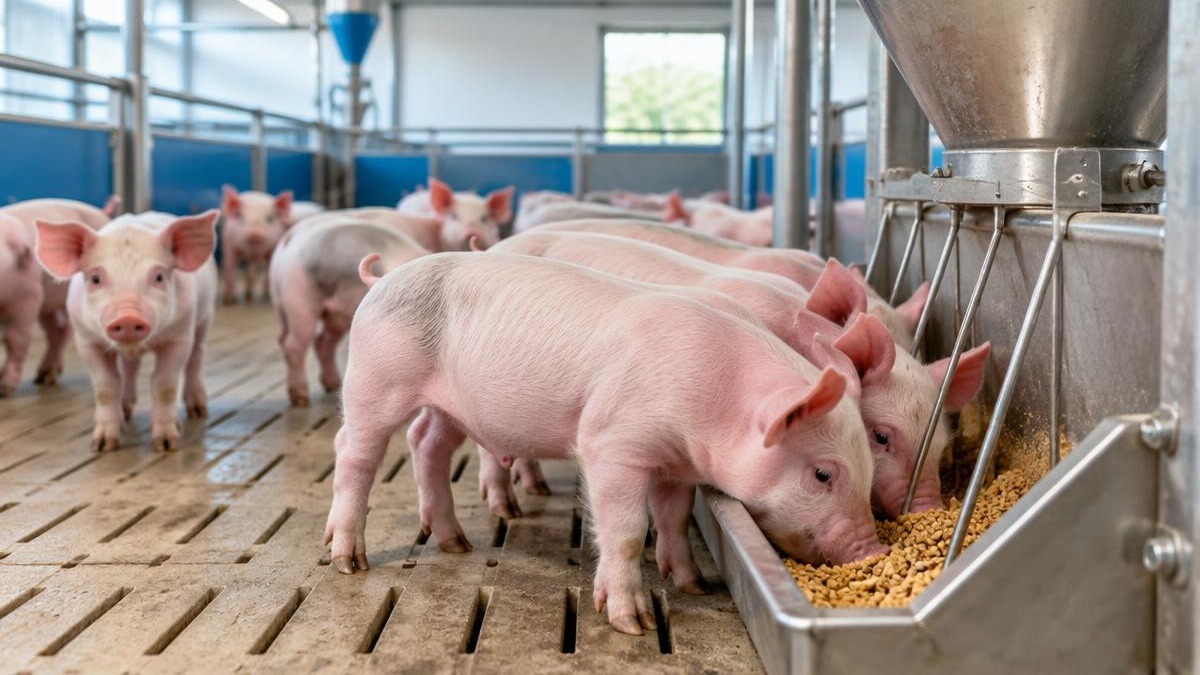
In 2026, swine nursery feed formulation with roasted Guar Korma has become a practical priority for nutritionists balancing antibiotic-free weaning programs, volatile protein meal prices, and tight margins. Weaning piglets need protein that is highly digestible and free of active anti-nutritional factors. Thermally roasted Guar Korma, the high-protein germ fraction of the guar seed, delivers 50 to 56 percent crude protein, inactivated trypsin inhibitors, and a cost profile that eases dependence on expensive animal proteins across all nursery phases.
Research Overview
The post-weaning transition, typically between 18 and 28 days of age, is the most physiologically stressful event in commercial pig production. Pancreatic trypsin and gastric pepsin output is limited, so poorly processed plant proteins pass undigested into the hindgut. Industry studies indicate that controlled roasting inactivates the trypsin inhibitors and lectins in guar germ while preserving amino acid availability, positioning roasted Guar Korma as a Superior plant protein for nursery rations under FAO, USDA, EFSA, and CODEX feed safety frameworks.
Why Weaning Piglets Need Highly Digestible Protein
At weaning, piglets shift abruptly from highly digestible sow milk to solid, plant-based diets while also coping with maternal separation, mixing, and a new environment. The immature gastrointestinal tract cannot yet secrete enough digestive enzymes to break down complex or poorly processed proteins.
When undigested protein reaches the distal ileum and cecum, it becomes substrate for proteolytic bacteria such as Escherichia coli and Clostridium perfringens. The consequences are well documented in commercial nurseries:
- Post-weaning diarrhea (scours) and higher medication costs
- Intestinal villous atrophy and reduced nutrient absorption
- Systemic inflammation that diverts energy away from growth
- Growth depression that carries through to finishing weight
Spray-dried porcine plasma, fishmeal, and dried whey have traditionally filled this gap, but they are among the most expensive ingredients in any swine ration. Roasted Guar Korma, separated during the mechanical milling of Cyamopsis tetragonoloba seed for Guar Gum production, offers a plant-based alternative rich in lysine, arginine, and glutamic acid. Explore the full range of guar-derived feed ingredients on the B.D. Guar products page.
Thermal Processing: Deactivating Trypsin Inhibitors and Anti-Nutritional Factors
Raw guar germ contains natural seed defense compounds that impede monogastric digestion. Precise thermal processing is what converts it into a safe nursery ingredient, and process control determines whether the protein ends up under-cooked, correctly cooked, or damaged by over-toasting.
- Trypsin inhibitor inactivation: Controlled roasting at roughly 110 to 130 degrees Celsius for 20 to 30 minutes denatures trypsin inhibitor proteins, reducing trypsin inhibitor activity by more than 92 to 98 percent without destroying essential amino acids.
- Lectin and hemagglutinin denaturation: Raw legume lectins bind to intestinal epithelial glycoproteins and damage microvilli. Steam roasting denatures these proteins so roasted Guar Korma does not trigger mucosal inflammation.
- Reduced residual gum: High levels of unextracted soluble galactomannan raise digesta viscosity. Splitting and roasting reduce residual soluble Guar Gum to negligible levels, commonly below 2 to 3 percent.
- Biosecurity benefit: Thermal treatment also reduces fungal spores and storage pathogens such as Salmonella and E. coli in seed fractions.
For a deeper look at how galactomannan behaves in water and digestive systems, see the Guar Gum glossary.
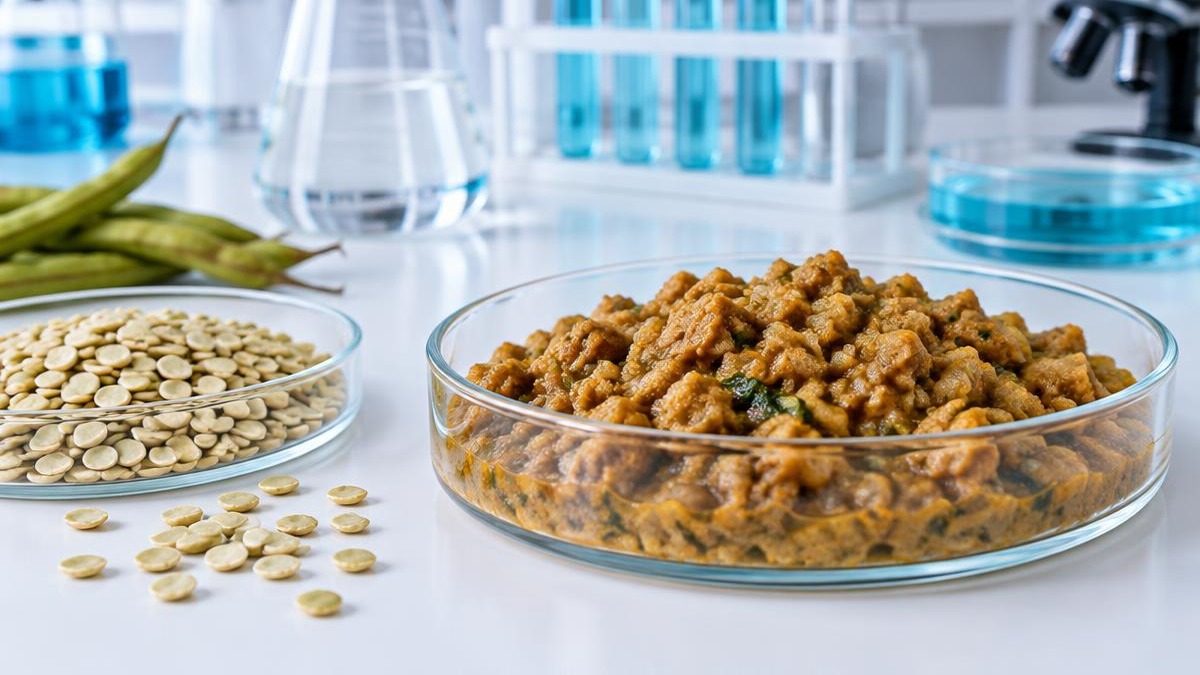 Thermally roasted Guar Korma provides a highly digestible plant protein for weaning piglet diets.
Amino Acid Digestibility and Intestinal Health
Protein quality in nursery diets is judged by standardized ileal digestibility (SID) of essential amino acids and by how the ingredient affects gut architecture. Roasted Guar Korma performs well on both counts when processing is controlled.
- Amino acid profile: Crude protein of 52 to 55 percent, with an essential amino acid pattern that complements corn and soybean meal diets. It is particularly rich in arginine, which supports mucosal repair, and glutamic acid, a primary energy source for enterocytes.
- Digestibility: Crude protein digestibility in nursery pigs commonly exceeds 85 to 88 percent.
- Villus architecture: Industry studies indicate that replacing high-ANF raw plant proteins with roasted Guar Korma helps preserve villus height to crypt depth ratios during post-weaning stress.
- Barrier function: Easily digested peptide fragments support tight junction integrity, limiting the passage of bacterial endotoxins into circulation.
Because more nitrogen is absorbed in the small intestine, less protein reaches the large intestine for pathogenic fermentation. Nursery managers typically see the effect in improved fecal consistency and fewer scour treatments.
Performance Economics: Inclusion Rates and Feed Cost Reduction
The economic case for roasted Guar Korma rests on replacing part of the most expensive protein sources without sacrificing Average Daily Gain (ADG) or Feed Conversion Ratio (FCR). Industry experience indicates that formulators can substitute roughly one third to one half of costly animal proteins, with diet cost reductions in the range of 25 to 45 US dollars per metric ton depending on local ingredient prices.
Inclusion should rise as the digestive system matures:
- Phase 1 (weaning to 7 kg): 3 to 5 percent of the total ration
- Phase 2 (7 to 15 kg): 5 to 8 percent
- Phase 3 and early grower (15 to 25 kg): 8 to 12 percent
Roasting also reduces the raw, beany off-notes of unprocessed guar germ and develops a mild toasted aroma, which supports early voluntary feed intake and helps prevent post-weaning anorexia. Pairing roasted Guar Korma with exogenous beta-mannanase enzymes further lowers residual viscosity, while organic acidifiers such as formic and propionic acid lower gastric pH and improve pepsin activation. Compare ingredient options on the comparison page.
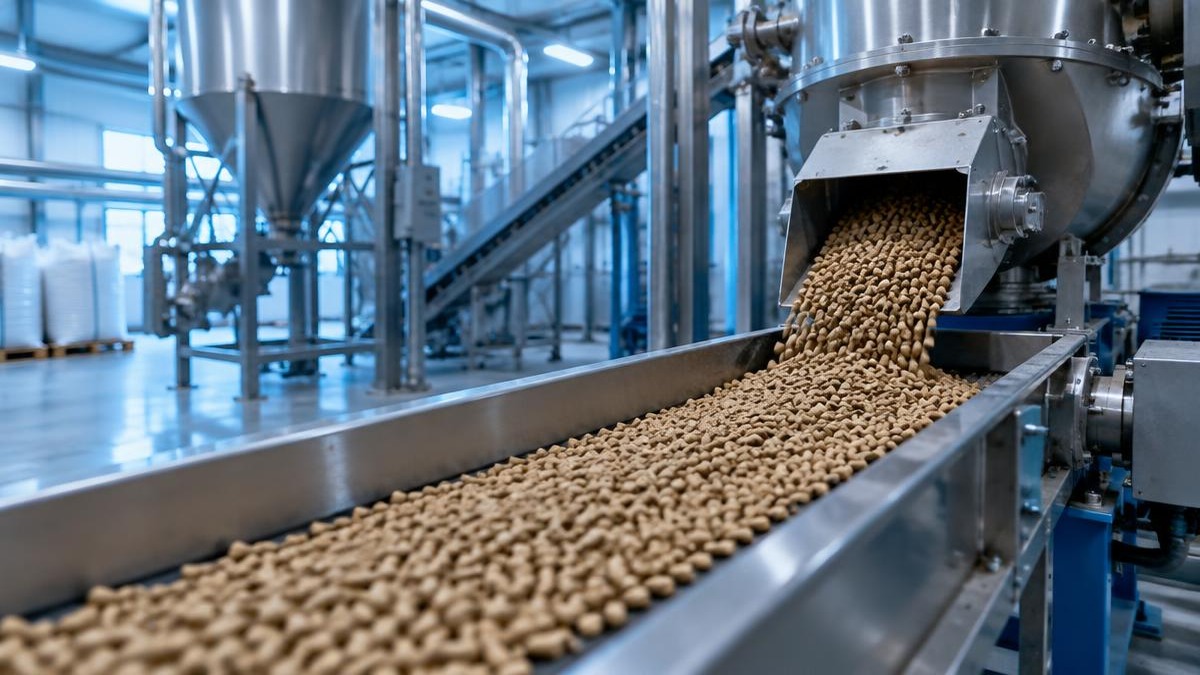 Phase-specific inclusion of roasted Guar Korma helps lower nursery diet costs while supporting growth.
Quality Assurance and Feed Mill Integration
Consistent nursery performance depends on consistent raw material. Feed mill laboratories should verify every incoming lot against clear specifications that confirm complete processing without heat damage.
- Trypsin inhibitor activity: Verified using standard AOCS and ISO methods, with targets typically below 2 to 4 mg per gram of sample.
- Protein solubility: A Protein Dispersion Index of about 15 to 25 percent and KOH protein solubility above roughly 75 to 82 percent indicate adequate cooking without lysine damage from over-toasting.
- Physical handling: Free-flowing meal passing 30 to 60 mesh screens, with bulk density around 550 to 650 kg per cubic meter, supports gravity flow, uniform mixing, and durable pellets after steam conditioning.
- Traceability: Guar is a naturally non-GMO legume grown in crop rotation systems, which simplifies sourcing for programs with GMO or deforestation restrictions.
Details on laboratory testing and certifications are available on the quality page.
Key Takeaways
- Effective ANF deactivation: Controlled roasting inactivates more than 92 percent of trypsin inhibitors and denatures lectins, making guar germ safe for nursery diets.
- High-quality protein: Roasted Guar Korma supplies 52 to 55 percent crude protein rich in arginine, glutamic acid, and lysine, with digestibility above 85 percent.
- Gut health support: High small-intestinal digestibility limits pathogenic hindgut fermentation and helps reduce post-weaning scours.
- Lower feed cost: Partial replacement of plasma, fishmeal, and whey can reduce nursery diet cost by an estimated 25 to 45 US dollars per metric ton.
- Phase-based inclusion: Start at 3 to 5 percent in Phase 1 and increase to 8 to 12 percent by the early grower stage.
Frequently Asked Questions
Why must guar meal be roasted before feeding to nursery piglets?
Raw guar germ contains heat-labile trypsin inhibitors and lectins. In weaning piglets with limited enzyme capacity, active trypsin inhibitors block protein digestion and can cause diarrhea and growth depression. Controlled high-temperature roasting inactivates the large majority of these factors, making roasted Guar Korma safe and highly digestible for nursery diets.
How does roasted Guar Korma compare to soybean meal and fishmeal?
Roasted Guar Korma contains 52 to 55 percent crude protein, higher than standard 44 or 48 percent soybean meal. Compared with fishmeal and spray-dried plasma, it is a more economical source of digestible amino acids, allowing nutritionists to replace part of the animal protein while maintaining ADG and FCR.
What inclusion rates are recommended in nursery diets?
Typical guidance is 3 to 5 percent in Phase 1 (weaning to 7 kg), 5 to 8 percent in Phase 2 (7 to 15 kg), and 8 to 12 percent in Phase 3 and early grower feeds (15 to 25 kg). Final levels should be set against the full amino acid balance of each formulation.
Does residual Guar Gum in Guar Korma affect piglet digestion?
High residual soluble gum can raise digesta viscosity, but in well-processed roasted Guar Korma it is reduced to negligible levels. At recommended nursery inclusion rates it does not meaningfully increase viscosity, and beta-mannanase enzymes can be added for further assurance.
To build more digestible, cost-efficient nursery diets with a reliable supply of Superior roasted Guar Korma, contact the B.D. Guar animal nutrition team or email sales@bdguar.com to request technical specification sheets, amino acid data, and trial samples.