Noodle Elasticity: Tensile Strength and Cook Yield with Guar Gum
Adding 0.2-0.5% Guar Gum to wheat flour strengthens noodle strands, cuts packaging breakage, lifts cook yield, and lowers oil uptake in fried instant noodles.
Last updated:
In the 2026 convenience food landscape, Guar Gum for noodle elasticity has become a core formulation lever for instant noodle and pasta manufacturers. Consumers expect an authentic springy bite, clean ingredient labels, and lower fat, while high-speed lines demand doughs that sheet, slit, steam, and fry without failure. Incorporating food-grade Guar Gum at 0.2% to 0.5% of flour weight improves water absorption, reinforces the gluten network, raises tensile strength and cook yield, and delivers a Superior, firm, non-sticky texture.
Research Overview
Guar Gum is a high-molecular-weight galactomannan from the endosperm of Cyamopsis tetragonoloba, with a mannose backbone carrying galactose side branches at roughly a 2:1 ratio. Research published in Carbohydrate Polymers and the Journal of Food Science describes how its abundant hydroxyl groups hydrogen-bond with gluten proteins and starch granules, forming a cohesive interpenetrating network. Approved as E412 / INS 412 under CODEX, EFSA, and USDA frameworks, it offers a natural route to stronger, better-yielding noodles.
Gluten Network Reinforcement: Tensile Strength and Dough Extensibility
Industrial noodle processing subjects dough to intense mechanical stress: high-speed kneading, compound sheeting, multi-stage roller reduction, and slitting. Weak or variable flour produces uneven hydration, ragged strand edges, and low tensile strength. In dried and fried products, poor cohesion yields brittle cakes that shatter during packaging and distribution.
When flour is hydrated, gliadins supply extensibility and glutenins supply elasticity. The long Guar Gum chains interpenetrate this forming gluten matrix and bridge weak domains through intermolecular hydrogen bonds, giving a dough that tolerates mechanical load without tearing.
- Higher breaking force: Industry studies indicate that 0.2% to 0.5% Guar Gum can raise the breaking force and tensile elongation of cooked strands by roughly 18% to 32% versus untreated controls.
- Less packaging breakage: Greater flexibility in dried and fried noodle cakes reduces edge cracking and fines generated by vibration in pillow pouches, cups, and bowls.
- Reduced snap-back: Balanced viscoelasticity limits elastic rebound during roller reduction, giving smoother ribbon edges and uniform strand thickness.
Hydration Kinetics and Cook Yield
Water management during batching directly determines line throughput, cooking time, and the finished serving weight. Guar Gum swells rapidly in cold water and binds many times its own weight, so a small inclusion has an outsized effect on dough hydration.
- Greater water absorption: At 0.3% to 0.4%, dough water absorption typically rises by 2% to 4% on a flour basis, supporting complete, homogeneous wetting during short vacuum-mixing cycles.
- Higher cook yield: By immobilizing water in the swollen starch-protein matrix, cooked noodle yield can increase by around 5% to 8%, and instant cup rehydration times can be shortened.
- Overcooking tolerance: A thermo-stable boundary moderates moisture ingress, so strands stay firm and springy when held in hot broth.
- Lower cooking loss: Encapsulation of gelatinized starch reduces amylose leaching, with industry studies indicating cooking-loss reductions of 25% to 40% and noticeably clearer broth.
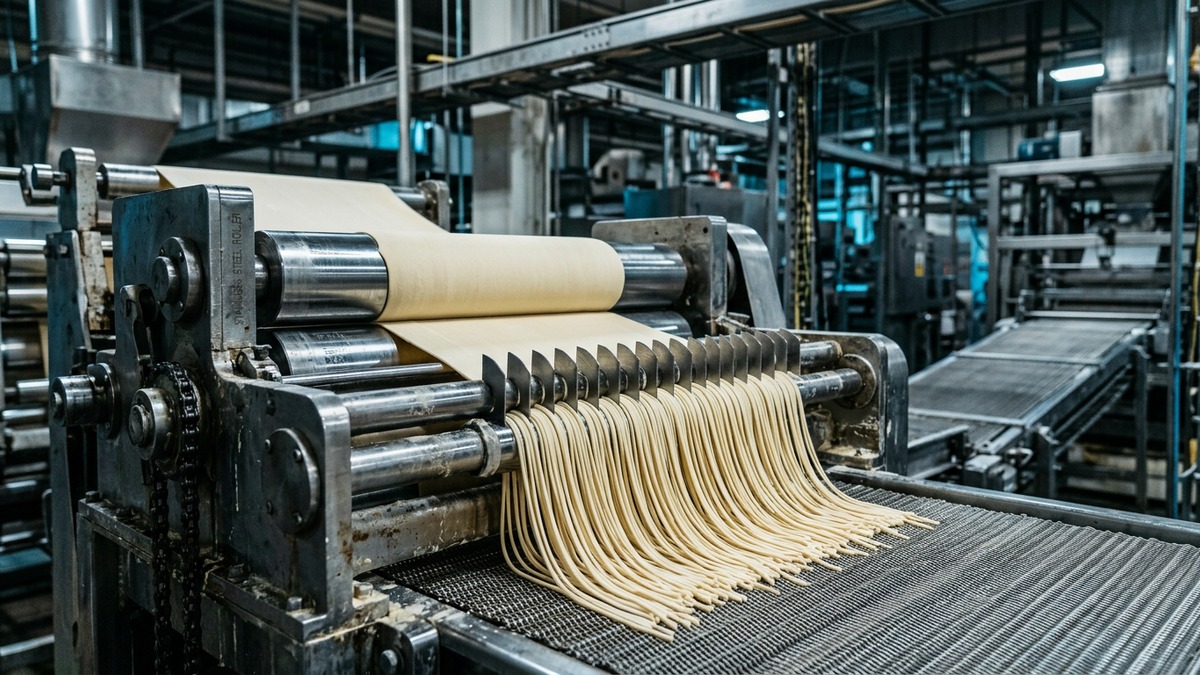 Guar Gum reinforces the gluten network so noodle dough survives high-speed sheeting, reduction rolling, and slitting.
Oil Barrier Mechanics in Fried Instant Noodles
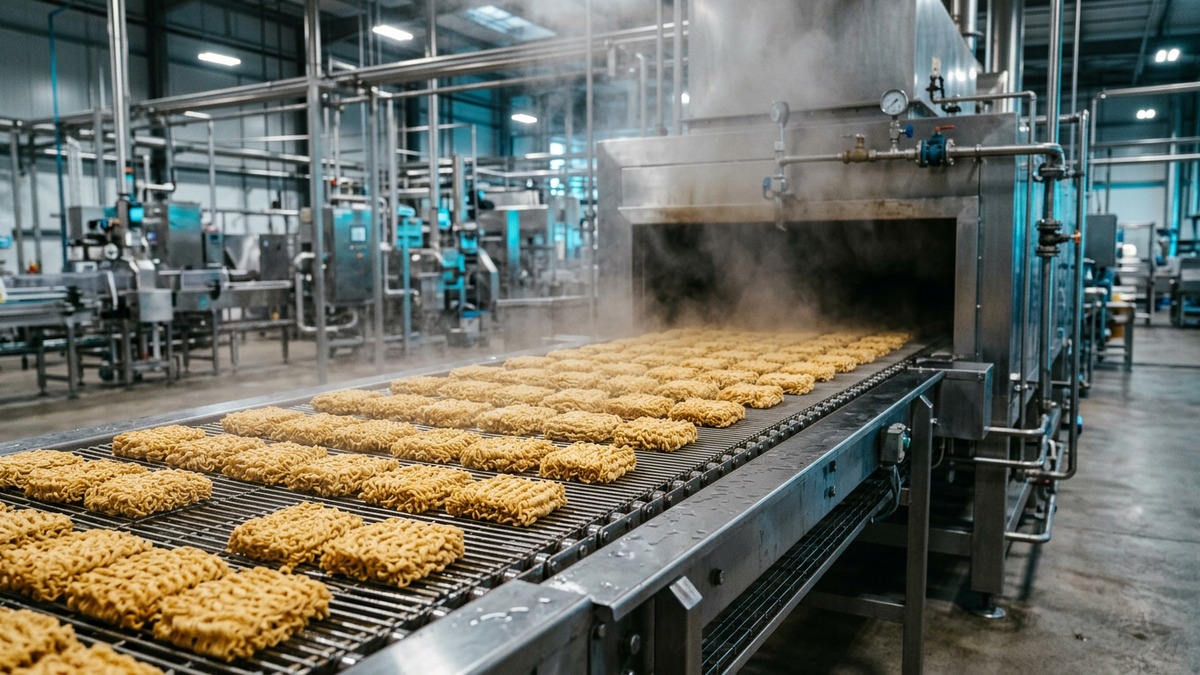
Reducing fat while preserving a crisp, porous cake is a central challenge for health-positioned instant noodle brands. Before frying, fresh strands pass through a steam chamber at about 100°C for 90 to 120 seconds. During steaming, hydrated Guar Gum forms a continuous, elastic polysaccharide film over each strand.
When steamed cakes enter frying oil at 140°C to 160°C, internal moisture flashes off. In conventional noodles, violent steam escape leaves coarse capillary channels that draw in oil. The Guar Gum film regulates evaporation and produces uniform micro-pores instead.
- Lower finished fat: Industry studies indicate that 0.3% to 0.5% Guar Gum can reduce oil absorption in fried noodle cakes by roughly 12% to 22% without slowing rehydration.
- Better oxidative stability: Less surface oil slows lipid oxidation and rancidity, supporting longer sensory shelf life in ambient storage.
- Lower frying oil consumption: Reduced uptake translates directly into lower raw oil cost per tonne produced.
Sensory Texture and Manufacturing Protocols
Consumers judge noodles on springiness and chew, often described as Q-texture or al dente. Texture profile analysis shows Guar Gum raises hardness, resilience, and springiness, giving a firm, lively bite. By limiting amylose exudation, it also keeps cooked strands glossy, smooth, and free of clumping.
- Instant fried noodles: 0.25% to 0.45% of flour weight.
- Fresh refrigerated noodles and extruded pasta: 0.20% to 0.35% to optimize extrusion pressure and elasticity.
- Gluten-free noodles (rice, corn, buckwheat): 0.60% to 1.20% to compensate for the absence of gluten.
- Mesh selection: Fine 200 mesh (under 75 microns) Guar Gum disperses evenly in dry flour and hydrates quickly during short kneading cycles.
- Dry pre-blending: Always blend Guar Gum with flour and salt before adding water or alkaline kansui solution to prevent fish-eyes.
Grade selection matters as much as dosage. Compare viscosity and particle size options on the products page, review how Guar Gum differs from other hydrocolloids at Guar Gum vs Xanthan Gum, and see batch testing standards on the quality page.
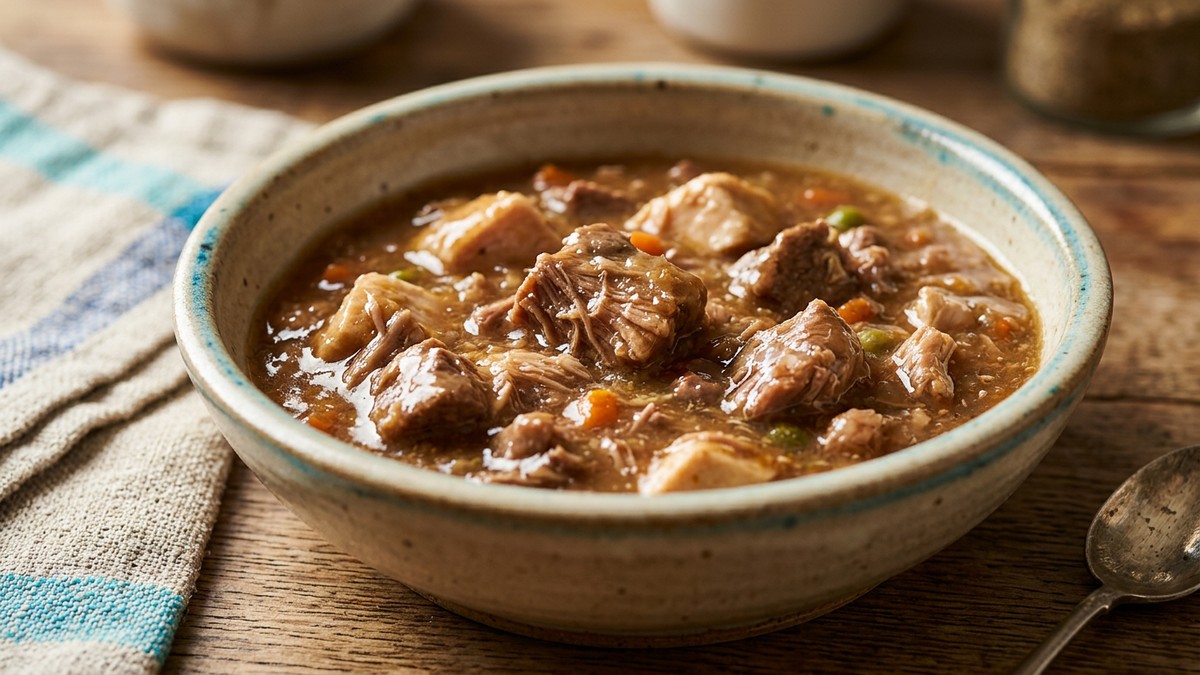
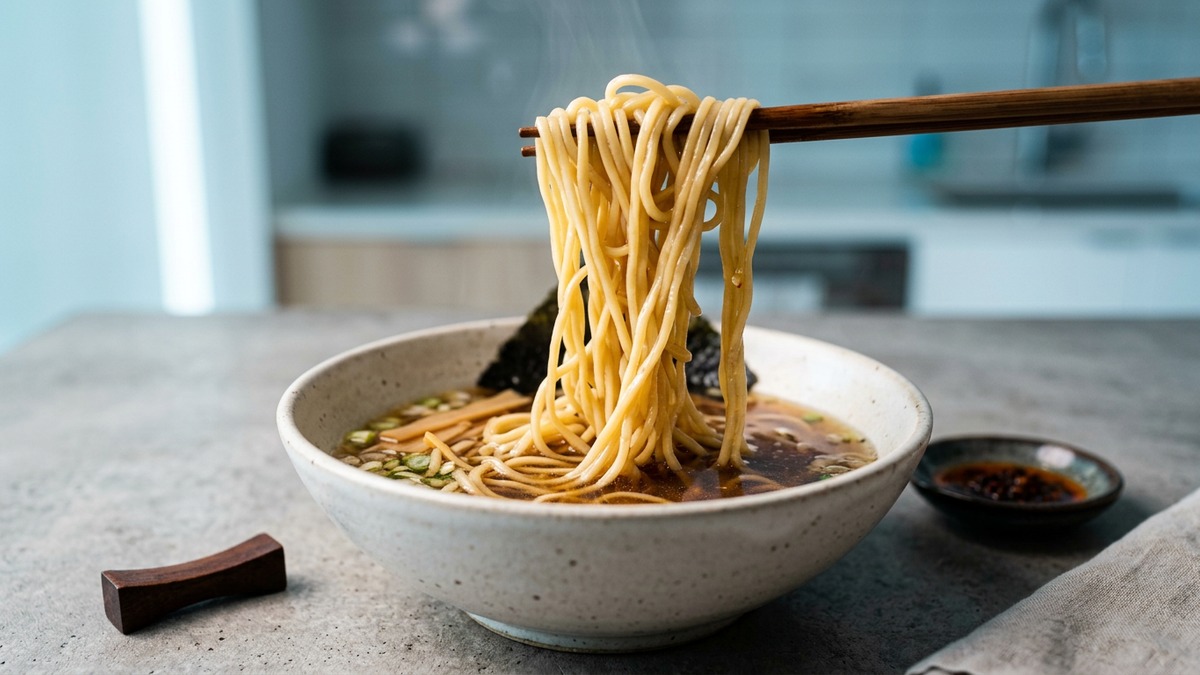 Firm, non-sticky strands with higher cook yield and clear broth are hallmarks of Guar Gum-stabilized noodles.
Key Takeaways
- Superior tensile strength: 0.2% to 0.5% Guar Gum reinforces the gluten matrix, raising strand breaking force and cutting cake breakage in transit.
- Higher cook yield: Improved water binding lifts dough absorption by 2% to 4% and cooked yield by around 5% to 8%.
- Lower oil uptake: A steam-formed polysaccharide film can reduce fat absorption in fried instant noodles by roughly 12% to 22%.
- Firm, non-sticky bite: Reduced amylose leaching keeps strands springy, smooth, and separate in hot broth.
- Clean-label compliance: Plant-derived, non-GMO E412 approved under CODEX, EFSA, and USDA frameworks.
Frequently Asked Questions
How does Guar Gum reduce oil absorption in fried instant noodles?
During steaming at around 100°C, hydrated Guar Gum forms an elastic film over each strand. In the fryer at 140°C to 160°C, this film regulates moisture escape, producing fine uniform pores rather than coarse capillary channels. Fewer large channels means less oil is drawn in as cakes leave the fryer, reducing finished fat content by roughly 12% to 22%.
Why does Guar Gum stop cooked noodles from becoming sticky?
Stickiness comes from soluble amylose leaching out of starch granules and coating strand surfaces. Guar Gum binds swollen starch granules and interpenetrates the gluten network, holding amylose inside the noodle. Industry studies indicate cooking loss can fall by up to 40%, keeping broth clear and strands smooth and separate.
What mesh size of Guar Gum is best for noodle production?
Fine 200 mesh (under 75 microns) is recommended for high-speed noodle plants. It disperses evenly through dry flour and hydrates quickly during short continuous kneading, avoiding unhydrated lumps and dark specks in the dough ribbon. Definitions of mesh and viscosity terms are available in the Guar Gum glossary.
Can Guar Gum be used in gluten-free noodles and pasta?
Yes. Rice, corn, and buckwheat doughs lack gluten and tend to crack during rolling and disintegrate in boiling water. At 0.60% to 1.20%, Guar Gum builds a viscoelastic hydrocolloid network that mimics gluten, providing the cohesion, tensile strength, and firm bite needed for commercial gluten-free noodle production.
Ready to strengthen your noodle and pasta lines, reduce breakage, and lower frying oil uptake? B.D. Guar supplies Superior food-grade 200 mesh HICOL® Guar Gum with full technical support. Contact our food applications team or email sales@bdguar.com to request technical data sheets and pilot formulation assistance.