Natural Water Treatment: Biodegradable Flocculants for Wastewater
Discover how biodegradable Guar Gum flocculants clarify industrial wastewater, cut sludge volumes by up to 40%, and meet strict 2026 discharge standards.
Last updated:
In the rapidly tightening 2026 global industrial landscape, biodegradable Guar Gum flocculants for industrial wastewater have transitioned from a voluntary corporate social responsibility initiative into an essential operational strategy for plant managers and municipal engineers. As regulatory authorities enforce strict Zero Liquid Discharge (ZLD) mandates and stringent discharge standards, facilities face escalating penalties for secondary chemical pollution. Utilizing high-performance, plant-derived biopolymers like Guar Gum provides an advanced, eco-friendly alternative to synthetic polyacrylamide, delivering rapid particle aggregation, lower sludge volumes, and uncompromising regulatory compliance.
Research Overview
Industrial wastewater treatment in 2026 operates under intense environmental, regulatory, and financial pressures. Traditional effluent clarification relies heavily on inorganic salts such as aluminum sulfate (alum) and ferric chloride, or on synthetic petroleum-derived polymers like polyacrylamide (PAM). While these conventional agents effectively destabilize suspended colloidal particles, they introduce elevated residual metal ions into the aquatic environment and generate massive volumes of gelatinous, high-moisture chemical sludge that is difficult to dewater and costly to dispose of in hazardous landfills. Synthetic polyacrylamides also carry trace unreacted acrylamide monomers with potent neurotoxic and carcinogenic properties, posing long-term risks to water tables and aquatic ecosystems.
To resolve these bottlenecks, engineers are turning to advanced natural hydrocolloids. Derived from the seeds of the Cyamopsis tetragonoloba legume, Guar Gum is a non-ionic galactomannan polysaccharide with an immense molecular weight, frequently ranging from 0.1 to 2.8 million Daltons. Research published in Carbohydrate Polymers demonstrates that this high molecular weight enables the polymer chains to stretch extensively across aqueous media, providing the physical architecture necessary for particle bridging. According to industrial market evaluations by IMARC, global demand for sustainable, bio-based water treatment chemicals is expanding rapidly as major sectors strive to meet zero-toxicity effluent benchmarks. Explore the full range of Superior Guar Gum grades engineered for these applications.
Macromolecular Bridging and Flocculation Kinetics
The primary functional mechanism of Guar Gum and its engineered derivatives in industrial wastewater treatment relies on the physical and chemical principles of polymer bridging and charge neutralization. By grafting functional synthetic chains onto the natural galactomannan backbone, such as producing polyacrylamide-grafted carboxymethyl Guar Gum (CMG-g-PAM), chemists create hybrid bio-flocculants that deliver the rapid settling kinetics of synthetic polymers alongside the complete biodegradability of natural polysaccharides.
- Galactomannan molecular architecture: Guar Gum consists of a linear backbone of beta-1,4-linked D-mannopyranose units with pendant alpha-1,6-linked D-galactopyranose side branches in a regular 2:1 ratio. This branching density sterically prevents the chains from tightly packing, allowing rapid hydration and complete solvation in cold water.
- Adsorption onto suspended colloids: Suspended solids such as kaolinite clay, textile dye chromophores, fine mineral tailings, and heavy metal complexes typically carry negative surface charges that keep them in a stable colloidal state. The extended galactomannan chains adsorb simultaneously onto multiple particles through intense intermolecular hydrogen bonding.
- Formation of high-density macro-flocs: As the long polymer chains loop and tail through solution, they form physical bridges between adjacent particles. This loop-and-bridge mechanism rapidly binds micro-flocs into massive, dense macro-flocs with a larger hydrodynamic radius and higher settling velocity than flocs from inorganic coagulants alone.
- pH and ionic synergy: The bridging performance operates across a broad pH spectrum from 3.0 to 11.0. In acidic media, charge patching and electrostatic attraction dominate; in alkaline media, the loop-and-bridge mechanism becomes the primary driver of rapid sedimentation.
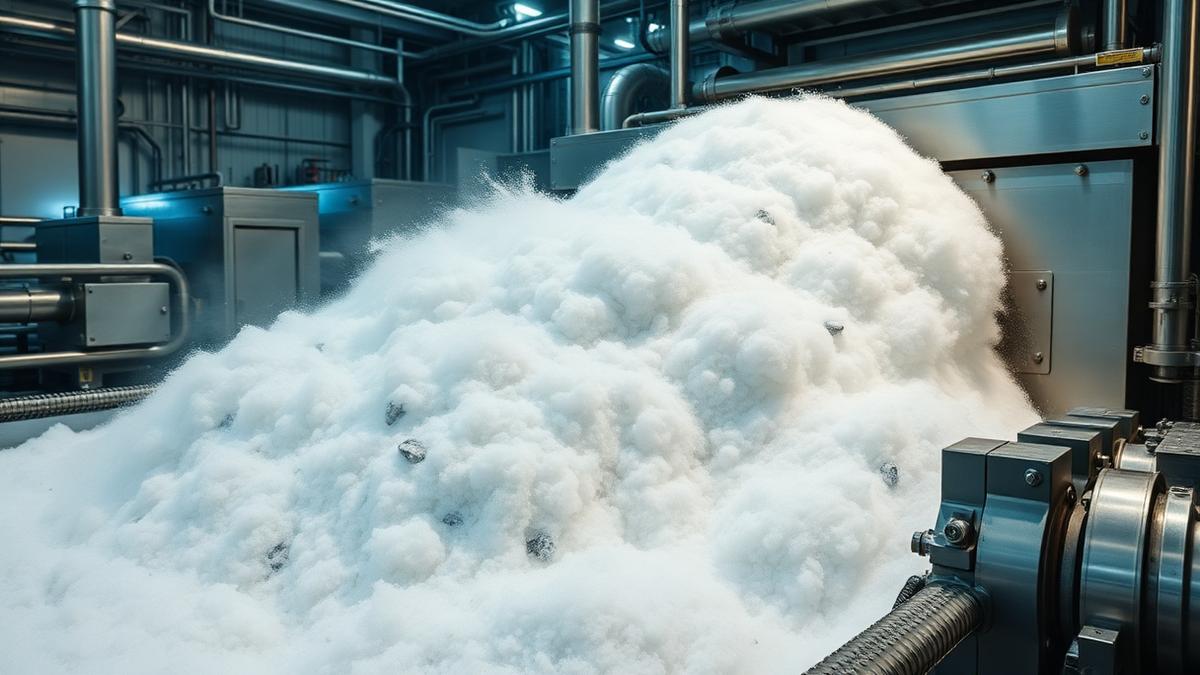
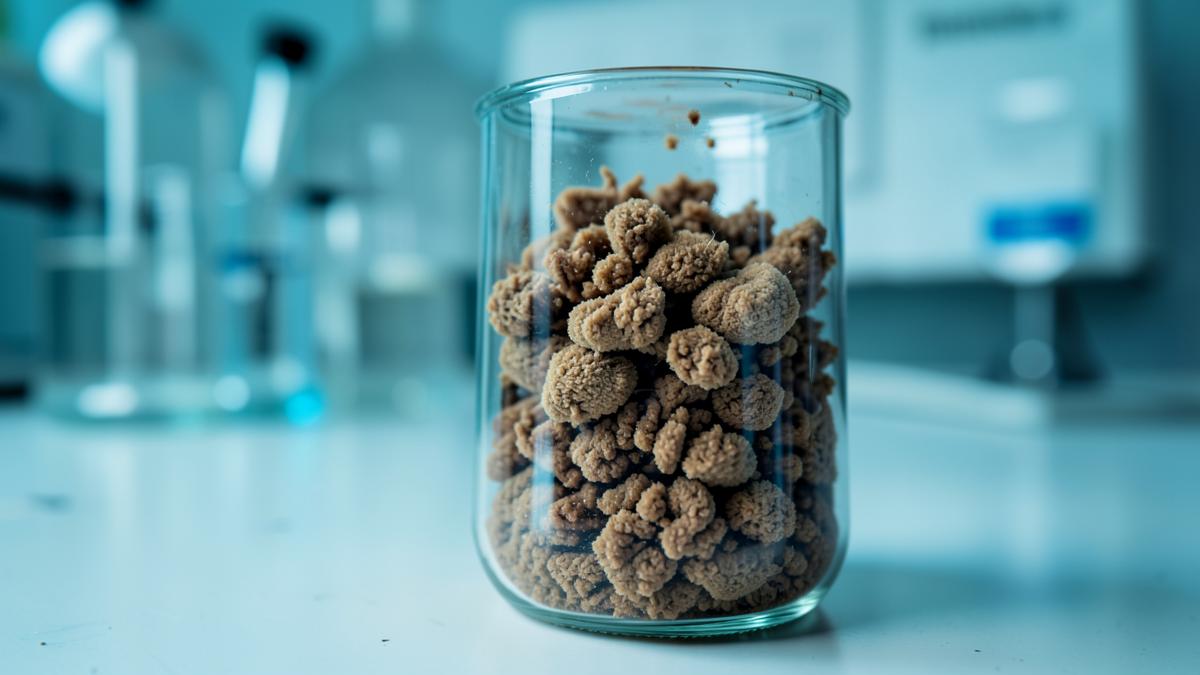 Guar Gum bio-flocculants form dense, rapidly settling macro-flocs in industrial clarifiers.
Superior Performance Over Synthetic Polyacrylamide
While synthetic polyacrylamide has long served as the baseline flocculant across municipal and industrial clarifiers, its long-term environmental persistence and sludge-processing drawbacks make it increasingly unsustainable for 2026 industrial operations. A detailed comparison of hydrocolloid and synthetic thickeners illustrates the operational gap.
- Drastic sludge volume reduction: Sludge dewatering and disposal represent up to 40% to 50% of a modern treatment plant's operating budget. Synthetic PAM produces gelatinous, water-trapping cake; bio-based Guar Gum blends generate compact, shear-resistant flocs that release bound water easily. Industry studies indicate that substituting PAM with Guar Gum-g-PAM matrix blends reduces total sludge cake volume by 30% to 40%.
- Elimination of monomer toxicity: Pure synthetic PAM contains residual unreacted acrylamide monomers that are strictly regulated. Guar Gum provides a 100% biodegradable carbohydrate backbone that breaks down into harmless organic compounds via microbial enzymatic action, eliminating toxic chemical persistence in discharged streams.
- Effective heavy metal and color removal: Research published in Carbohydrate Polymers confirms that modified carboxymethyl Guar Gum formulations achieve up to 83% heavy metal removal and over 75% dye color decolourization at ultra-low dosages (1.25 to 10 mg/L), outperforming traditional alum treatments that require far higher chemical inclusion rates.
Tailored Formulations for Diverse Industrial Effluents
The versatility of Guar Gum allows formulation engineers to tailor specific polymer blends to match the distinct chemical compositions and total suspended solids (TSS) loads of varied industrial wastewater streams.
- Textile and dyehouse effluent: Carboxymethylated Guar Gum derivatives (CMG) allow anionic carboxylate groups to complex directly with dye chromophores, aggregating them into easily filterable flocs without heavy pre-treatment.
- Mining tailings and ore processing: Heavy-duty Guar Gum blends enriched with high-molecular-weight bridging agents deliver rapid sedimentation in thickeners, allowing mines to recycle up to 90% of process water directly back into the circuit.
- Paper and pulp effluent: High-viscosity Guar Gum acts as an exceptional retention and drainage aid, bridging fine cellulose fibers and enabling their full recovery prior to final effluent discharge.
- Municipal and potable-assist applications: Food-grade Guar Gum serves as a certified coagulant assist. Blended with low-dose inorganic coagulants, it accelerates settling in primary clarifiers, helping plants handle peak storm-water surges without expanding tank footprints.
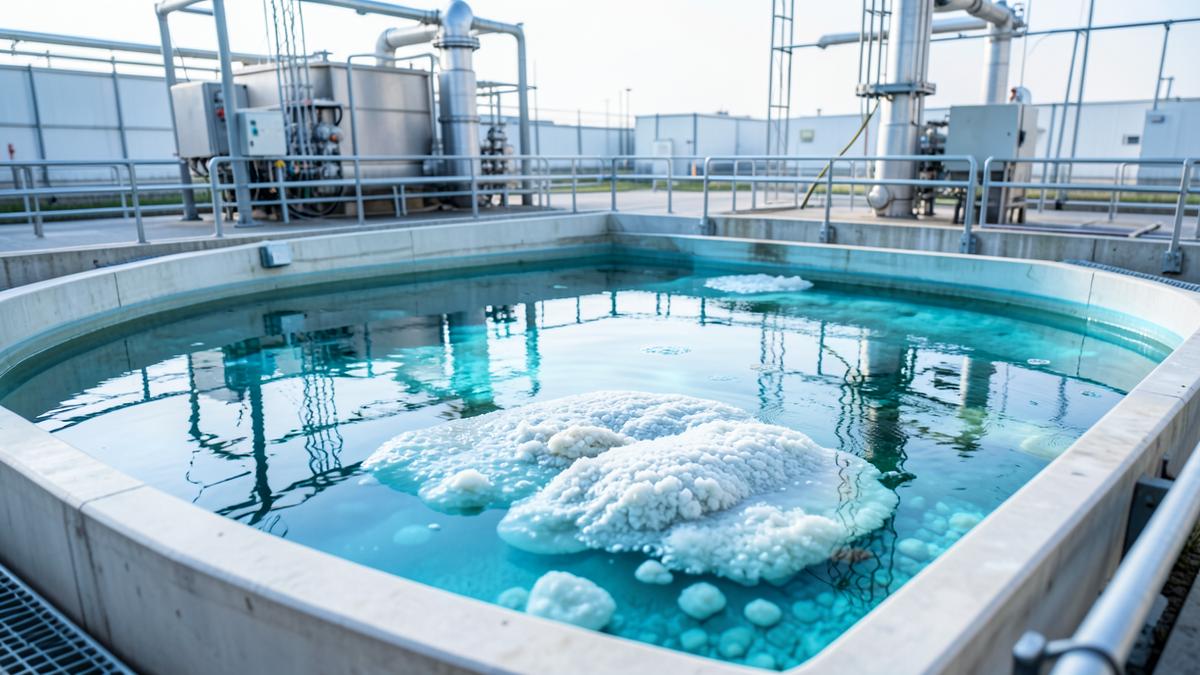
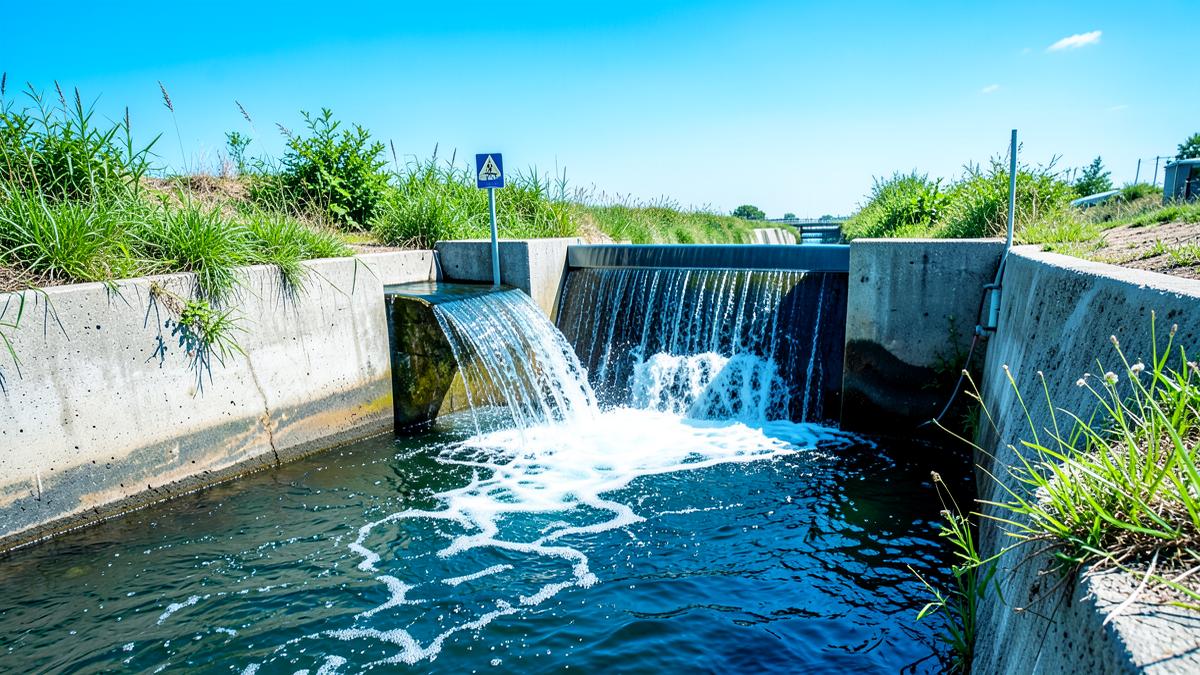 Clarified, compliant discharge water achieved with plant-derived galactomannan flocculants.
Navigating 2026 Regulatory Compliance and ESG Mandates
As global environmental agencies tighten enforcement across international industrial corridors, adopting sustainable water treatment chemistry is essential for regulatory compliance and corporate risk management.
- Meeting Zero Liquid Discharge (ZLD) directives: In manufacturing hubs across Asia, Europe, and North America, agencies enforce strict ZLD protocols requiring facilities to recycle process water and eliminate liquid waste discharge. Guar Gum-based flocculants enable high-clarity water recovery that protects downstream reverse osmosis membranes from bio-fouling and organic scaling.
- Compliance with global chemical safety standards: The non-toxic, plant-derived origin of Guar Gum ensures full compliance with international frameworks, including guidelines set by the Food and Agriculture Organization (FAO) and the Codex Alimentarius (CODEX). Review the company's quality and certification standards for full documentation.
- Advancing corporate sustainability goals: Transitioning from fossil-fuel-derived synthetic polymers to renewably harvested agricultural biopolymers directly supports corporate decarbonization and Scope 3 emission reduction goals, providing verifiable evidence of eco-friendly manufacturing.
Key Takeaways
- Macromolecular bridging mechanism: The high molecular weight and extended galactomannan chains of Guar Gum adsorb onto suspended particles, forming physical bridges that aggregate micro-flocs into large, rapidly settling macro-flocs.
- Significant sludge reduction: Guar Gum-based bio-flocculants generate compact, easily dewatered sludge cakes, reducing total sludge volume by 30% to 40% compared to pure synthetic polyacrylamide.
- Toxic-free discharge: Unlike synthetic polymers that leave persistent residues and toxic monomer traces, Guar Gum is a 100% biodegradable botanical polymer that decomposes safely in natural aquatic environments.
- Versatile effluent remediation: Advanced modified derivatives such as CMG-g-PAM achieve superior removal of heavy metals, reactive dyes, fine clays, and suspended solids across textile, mining, and paper industries.
- 2026 regulatory alignment: Adopting natural biopolymer flocculants ensures seamless compliance with strict Zero Liquid Discharge mandates and international ESG sustainability standards.
Frequently Asked Questions
How does Guar Gum compare to synthetic polyacrylamide in dosage efficiency?
Guar Gum and its modified derivatives operate at highly competitive ultra-low dosages, typically ranging from 1.25 mg/L to 15 mg/L depending on turbidity and suspended solids concentration. While synthetic polyacrylamide achieves high settling rates, modified Guar Gum blends deliver equivalent or superior clarification while generating drier, lower-volume sludge cakes that reduce overall disposal costs.
Can Guar Gum flocculants operate in extreme pH or high-salinity wastewater?
Yes. The natural galactomannan structure is non-ionic and remains structurally stable across a broad pH range from 3.0 to 11.0. For hypersaline or heavy industrial effluents, modified derivatives such as Carboxymethyl Guar Gum (CMG) maintain robust water solubility and bridging capability where synthetic polymers often suffer from charge neutralization and coil collapse.
Which industries benefit most from transitioning to natural water treatment flocculants?
Natural Guar Gum flocculants are widely deployed across textile dyeing CETPs, mining and mineral processing facilities, paper and pulp mills, food processing plants, and municipal wastewater facilities. Any operation facing strict Zero Liquid Discharge regulations or high sludge disposal costs achieves immediate operational and financial benefits.
Is Guar Gum completely safe for discharge into natural water bodies?
Guar Gum is a 100% natural, plant-derived carbohydrate extracted from the endosperm of the guar bean. It is non-toxic, non-carcinogenic, and fully biodegradable. When discharged, it decomposes naturally into harmless organic matter via microbial activity, making it safe for surrounding ecosystems and aligned with global environmental standards.
To optimize industrial clarification, cut sludge disposal costs, and achieve absolute Zero Liquid Discharge compliance in 2026 operations, partner with global hydrocolloid experts. B.D. Guar Pvt. Ltd. provides expertly milled, Superior-grade Guar Gum and advanced bio-based flocculant derivatives engineered for rapid settling, high-density floc formation, and flawless environmental performance. Contact the technical engineering team to request a customized jar test evaluation and discover how naturally derived galactomannan solutions can elevate wastewater treatment operations.