High-Fiber Vet Diets: Prebiotic Soluble Fiber for Pet Digestion
Partially Hydrolyzed Guar Gum delivers prebiotic soluble fiber for pet digestion without altering flavor, texture, or extrusion performance in veterinary diets.
Last updated:
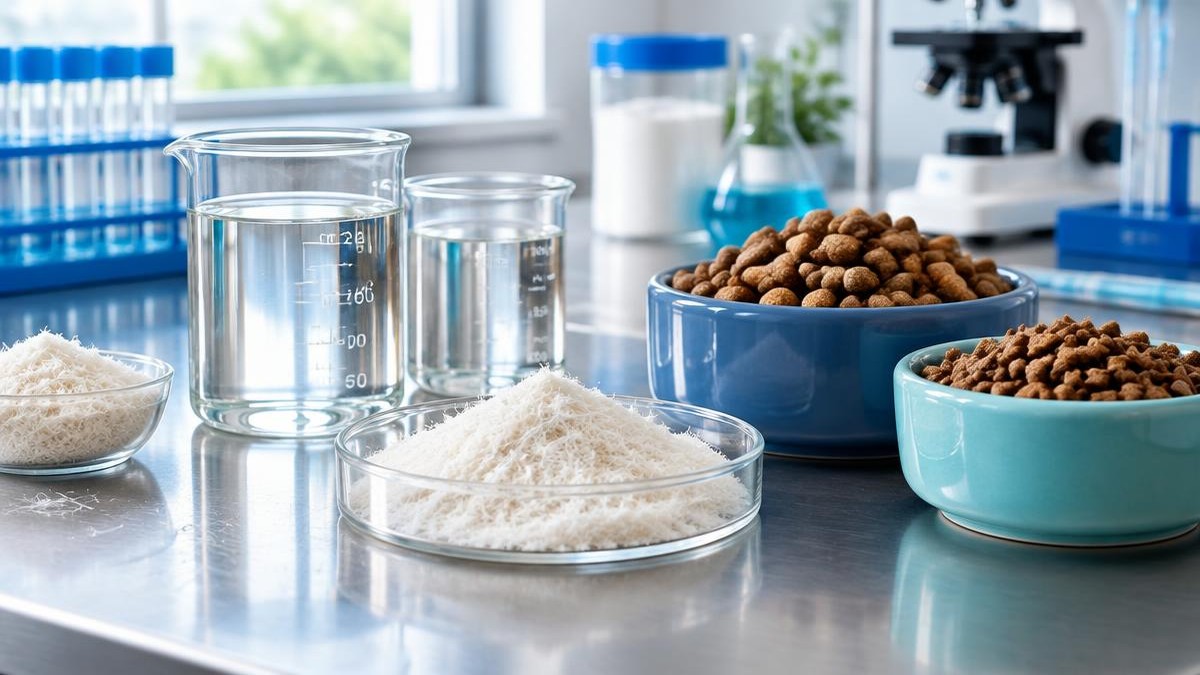
In the rapidly expanding 2026 global veterinary nutrition market, high-fiber vet diets built on prebiotic soluble fiber have become a paramount focus for veterinary diet formulators and pet nutritionists. As companion animal care shifts toward proactive gut microbiome management, demand for highly soluble, non-viscous dietary fibers has accelerated. Partially Hydrolyzed Guar Gum (PHGG) offers a Superior, 100% natural galactomannan solution that delivers prebiotic fermentation benefits and improved fecal consistency without altering viscosity, palatability, or extrusion efficiency.
Research Overview
The global therapeutic pet food sector in 2026 is defined by a clinical focus on the gut-brain-microbiome axis. Industry analysts such as IMARC report sustained growth in diets targeting feline gastrointestinal disorders, canine inflammatory bowel disease (IBD), obesity, and metabolic dysregulation. Research in Carbohydrate Polymers shows that PHGG dissolves completely in water to give a clear, non-viscous, heat-stable solution, making it an ideal soluble fiber for veterinary use. Explore the full Guar Gum product range for related grades.
Why Fiber Type Matters in Companion Animal Nutrition
Dietary fibers are classified by solubility, fermentability, and viscosity. Each class behaves differently in the gut and on the production line.
- Insoluble fibers: Cellulose and peanut hulls add bulk to kibble and speed intestinal transit, but give little energy to beneficial colonic bacteria and can impair nutrient digestibility at higher inclusion rates.
- High-viscosity soluble fibers: Native Guar Gum, pectin, and psyllium form thick gel networks. These suit canned sauces, yet excessive viscosity in dry kibble or liquid supplements causes extruder dough stickiness, reduced palatability, and altered gastric emptying.
- PHGG: Derived from the endosperm of Cyamopsis tetragonoloba through controlled enzymatic hydrolysis, PHGG keeps the galactomannan backbone while sharply reducing chain length, resolving the long-standing trade-off between fiber content and processability.
This balance is why PHGG is increasingly specified in therapeutic diets and liquid veterinary nutrition. Industry studies indicate that formulators value the combination of fermentability and neutral sensory impact.
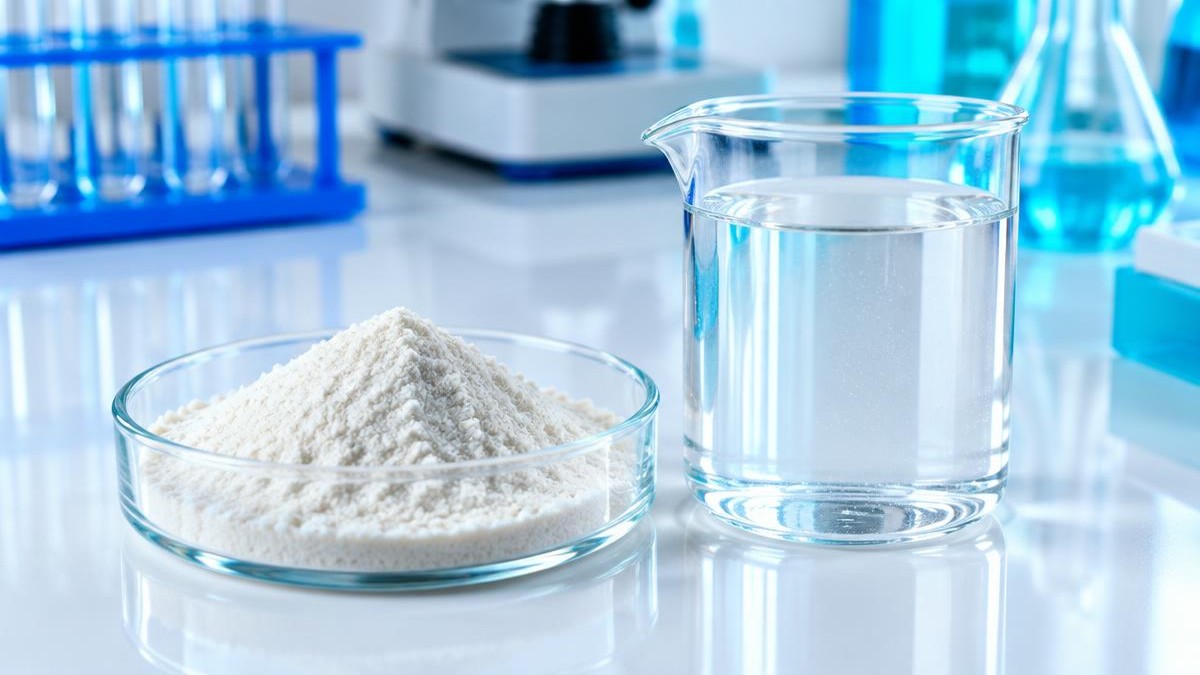 Low-viscosity PHGG supports fiber fortification without changing product texture.
Controlled Enzymatic Hydrolysis: From Native Polymer to Low-Viscosity PHGG
Converting native high-viscosity Guar Gum into a soluble prebiotic fiber relies on precise biotechnological processing.
- Targeted endo-beta-D-mannanase cleavage: Native Guar Gum is a galactomannan of 1.5 to 2.2 million Daltons with a beta-(1-4)-D-mannopyranose backbone and single alpha-(1-6)-D-galactopyranose side branches. Food-grade mannanase hydrolyzes internal glycosidic bonds along the mannose chain without altering the galactose-to-mannose ratio.
- Molecular weight reduction: Average molecular weight falls to a standardized 20,000 to 50,000 Daltons, removing long-chain entanglement and turning a gel-forming hydrocolloid into a soluble dietary fiber.
- Ultra-low viscosity: Native Guar Gum yields 3,000 to 5,000 cP at 1.0% concentration, whereas PHGG stays below 10 cP even at 10.0% concentration, allowing high fiber levels in liquid supplements, gravies, and kibble slurries.
- Complete solubility and stability: PHGG dissolves in cold and hot liquids, remains stable across pH 3.0 to 9.0, and withstands extrusion and retort sterilization without precipitation.
Prebiotic Fermentation Kinetics and Short-Chain Fatty Acid Production
The primary therapeutic value of PHGG lies in its fermentability profile in the canine and feline large intestine. Learn more about related terminology in the Guar Gum glossary.
- Selective microflora nourishment: Industry studies indicate that PHGG acts as a selective substrate for saccharolytic bacteria such as Bifidobacterium and Lactobacillus, while helping suppress organisms such as Clostridium perfringens and enterotoxigenic E. coli.
- Short-chain fatty acid synthesis: Fermentation yields acetate, propionate, and butyrate. Butyrate is the main fuel for colonocytes, supporting proliferation, mucosal blood flow, and tight junction integrity.
- Colonic pH reduction: SCFA accumulation lowers luminal pH, inhibiting pH-sensitive putrefactive bacteria and reducing ammonia, indole, and malodorous fecal volatile sulfur compounds.
- Gradual gas evolution: Unlike FOS or GOS, which ferment rapidly in the proximal colon and can cause flatulence and loose stools, PHGG ferments slowly along the colon, supporting tolerance in sensitive dogs and cats.
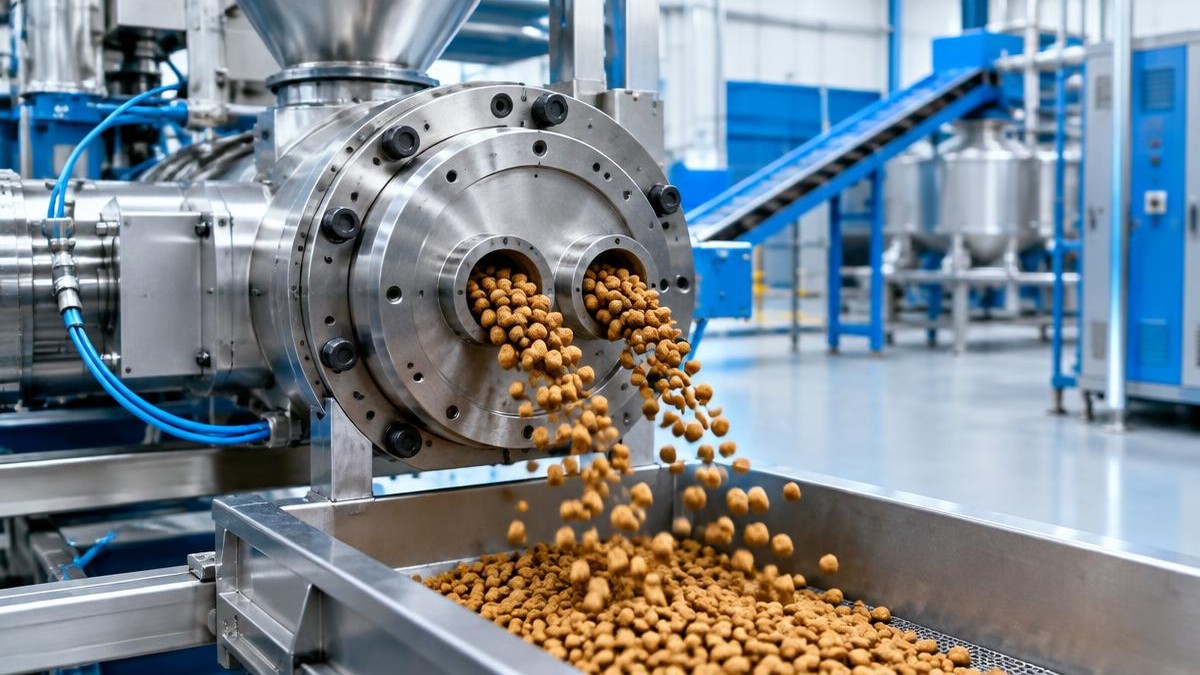 PHGG integrates into dry-mix recipes without raising extruder load.
Formulation Compatibility: Texture, Palatability, and Extrusion Efficiency
Therapeutic ingredients must not compromise manufacturing throughput or feeding acceptance. Quality assurance details are available on the quality page.
- No impact on kibble crispness or density: Because PHGG builds no viscosity during conditioning, it avoids disrupting starch gelatinization and preserves cell structure, crispness, and bulk density.
- Seamless extrusion: In commercial twin-screw extruders, PHGG does not raise barrel pressure, motor torque, or die temperature, and it flows freely through pneumatic conveying and feeders.
- Palatability preserved: PHGG is odorless, tasteless, and color-neutral, blending invisibly into liquid formulas and gravies without a sticky or gummy mouthfeel that could cause food aversion.
- Thermal and shelf-life stability: PHGG tolerates HTST extrusion (120 to 160 degrees C) and retort sterilization at 121 degrees C, and resists acid hydrolysis across a 24-month shelf life.
Clinical Applications: Fecal Quality, IBD, and Metabolic Health
Veterinary diet formulators deploy PHGG across a wide range of nutritional indications.
- Fecal consistency: PHGG shows a dual-action effect, firming loose stools by binding colonic water and promoting SCFA-mediated sodium and water absorption, and softening hard stools through water-holding capacity.
- Canine IBD and colitis: Clinical evaluations indicate that PHGG supplementation can reduce mucosal inflammation in chronic enteropathies, with butyrate supporting mucosal healing.
- Satiety and weight management: Soluble fiber slows gastric emptying slightly and is associated with gut satiety signals, helping overweight pets feel full on energy-restricted diets.
- Glycemic control in feline diabetes: PHGG moderates glucose absorption in the small intestine, helping stabilize postprandial blood glucose curves.
Key Takeaways
- Highly soluble prebiotic fiber: PHGG is an ultra-low-viscosity, cold-soluble dietary fiber derived from native Guar Gum through controlled enzymatic hydrolysis.
- Targeted microbiome support: It selectively feeds Bifidobacterium and Lactobacillus, generating acetate, propionate, and butyrate to nourish enterocytes.
- Zero texture alteration: Viscosity stays under 10 cP at 10% concentration, enabling fortification of kibble, gravies, and liquid supplements.
- Dual-action stool normalization: PHGG supports fecal quality in both diarrhea and constipation.
- Superior processing performance: It remains stable under extrusion, retort sterilization, and low-pH conditions.
Frequently Asked Questions
What is the difference between native Guar Gum and PHGG?
Native Guar Gum is a galactomannan of 1.5 to 2.2 million Daltons used mainly as a thickener. PHGG is produced by enzymatically cleaving it into fragments of 20,000 to 50,000 Daltons, lowering viscosity to under 10 cP and creating a soluble, non-gelling prebiotic fiber.
Does PHGG alter the palatability or flavor of dog and cat food?
No. PHGG is odorless, tasteless, and color-neutral. Because it dissolves fully without a thick or sticky mouthfeel, it does not change the sensory profile of therapeutic diets, supporting high feeding acceptance in dogs and cats.
How does PHGG help pets with IBD or diarrhea?
Colonic fermentation produces short-chain fatty acids, especially butyrate, which nourish epithelial cells, reduce inflammation, and strengthen the mucosal barrier. PHGG also regulates colonic water absorption, firming watery stools and softening hard ones.
Can PHGG withstand extrusion and retort processing?
Yes. PHGG tolerates HTST extrusion up to 160 degrees C and retort sterilization at 121 degrees C without chemical breakdown, retrogradation, or loss of prebiotic activity.
To optimize veterinary diet formulations, enhance companion animal digestive health, and secure a reliable supply of Superior, low-viscosity PHGG for global manufacturing facilities, partner with B.D. Guar Pvt. Ltd. Contact the technical nutrition and sales engineering team at sales@bdguar.com to request product specifications, research dossiers, and trial samples.