Plant-Based Meat Binder: Optimizing Vegan Patty and Sausage Texture
Guar Gum locks in moisture with soy and pea proteins, cutting cooking loss and delivering a juicy, cohesive, clean-label bite in vegan patties and sausages.
Last updated:
In the 2026 global alternative protein market, plant-based meat binder selection is an essential technical focus for food engineers and formulation scientists. As consumer demand shifts toward clean-label meat analogues, replicating the juicy mouthfeel and thermal stability of animal fat remains a major challenge. Natural Guar Gum, used with soy and pea protein matrices, locks in moisture, prevents drying during grilling, and delivers a Superior, cohesive texture without synthetic methylcellulose or artificial binders.
Research Overview
Plant-based burger patties, breakfast sausages, meatballs, and deli slices have moved from niche novelties to mainstream staples. Industry reports from IMARC indicate continued expansion in global demand, which pushes process engineers to solve persistent defects: dryness, crumbly mouthfeel, and excessive cooking loss. Guar Gum, a non-GMO galactomannan, offers a 100% plant-derived route to moisture retention, fat retention, and structural cohesion. Explore the full product range for food-grade options.
Macromolecular Interactions: Guar Gum and Plant Protein Hydro-Matrices
Animal muscle relies on myofibrillar proteins (actin and myosin) that form a heat-induced gel and emulsify fat. Plant proteins such as soy protein isolate, soy protein concentrate, pea protein isolate, and faba bean protein have globular structures and variable solubility, so they tend to lose bound moisture quickly when cooked, giving a rubbery or dry texture.
Guar Gum, extracted from the endosperm of Cyamopsis tetragonoloba, is a high-molecular-weight galactomannan (roughly 1.5 to 2.2 million Daltons) with a beta-(1-4)-D-mannopyranose backbone and single-unit alpha-(1-6)-D-galactopyranose side chains at a 2:1 ratio. Studies in Carbohydrate Polymers and the Journal of Food Science describe how this non-ionic polymer entraps free water and forms a viscoelastic network in protein doughs. It is recognized under CODEX as INS 412 (E412). See the Guar Gum glossary for terminology.
- Hydrogen bonding with globular proteins: hydroxyl groups on the galactomannan backbone bond with hydrophilic residues in soy glycinin and pea vicilin/legumin, creating a reinforced gel matrix that coats extruded protein fibers.
- Immobilization of free water: Guar Gum absorbs 20 to 30 times its dry weight in cold water, raising raw patty water-holding capacity and limiting syneresis during chilled storage.
- Emulsion stabilization: higher continuous-phase viscosity sterically hinders coalescence of coconut, canola, or sunflower oil droplets and prevents fat pooling.
- Cohesive, elastic bite: an interstitial hydro-gel between textured vegetable protein granules resists crumbling under cutting or chewing.
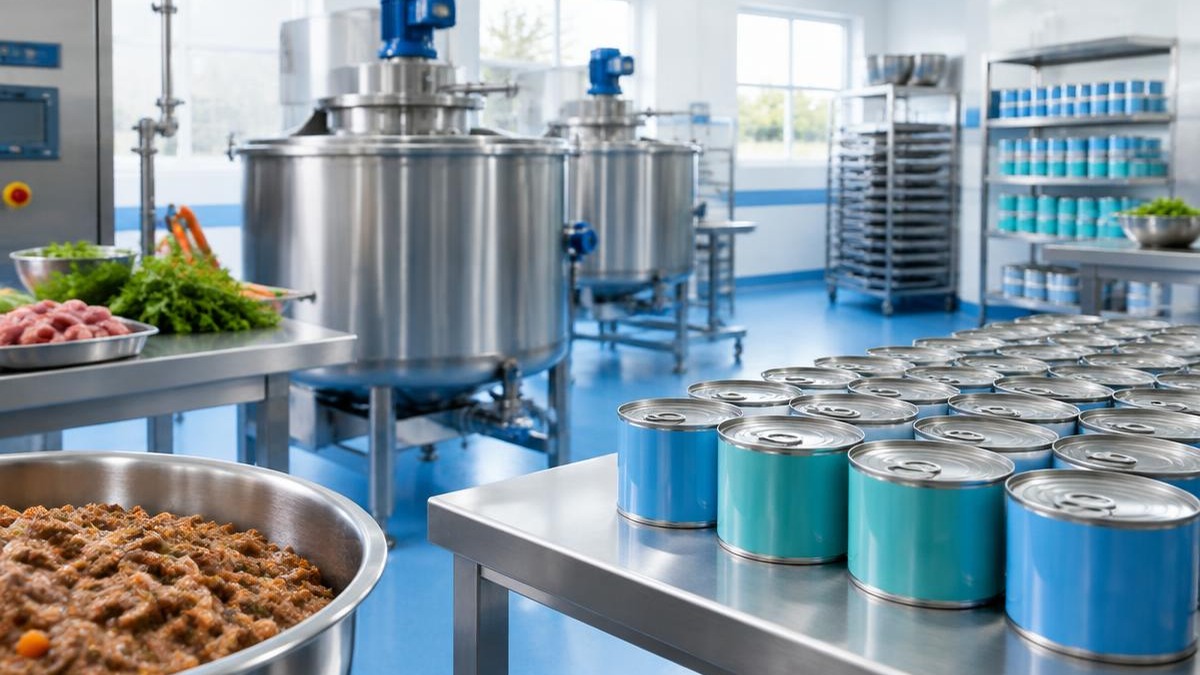
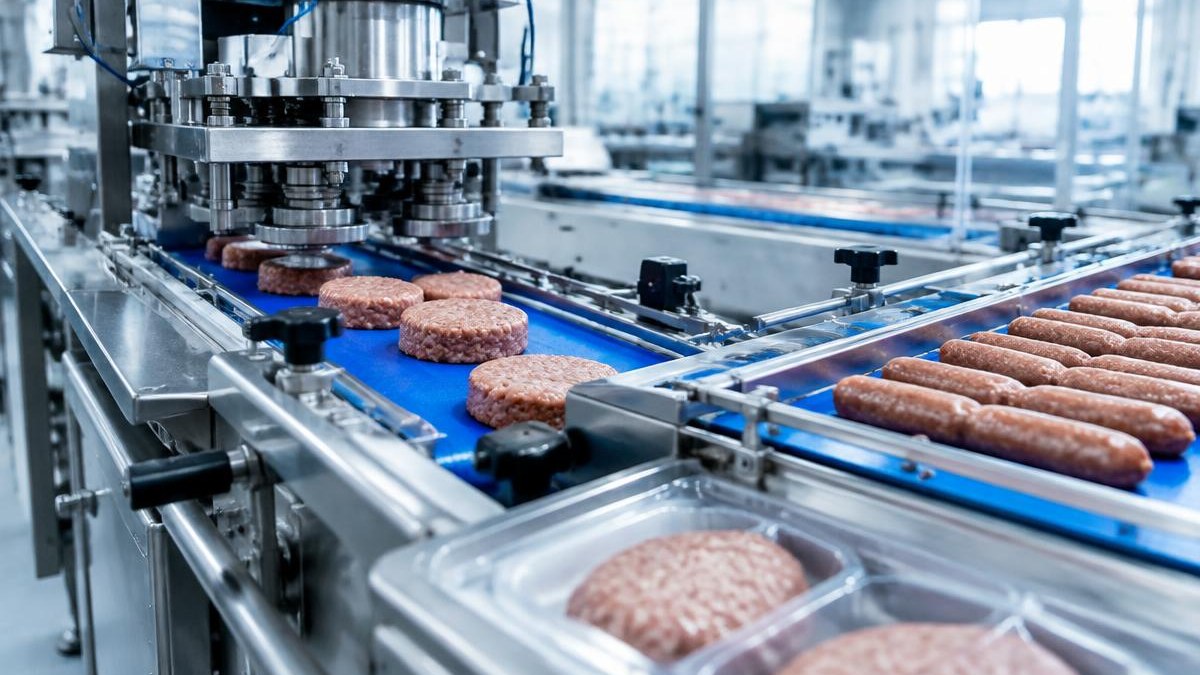 Vegan patties emerging from a forming line, where binder performance determines shape retention and juiciness.
Thermal Stability and Cooking Yields: Preventing Moisture Loss During Grilling and Frying
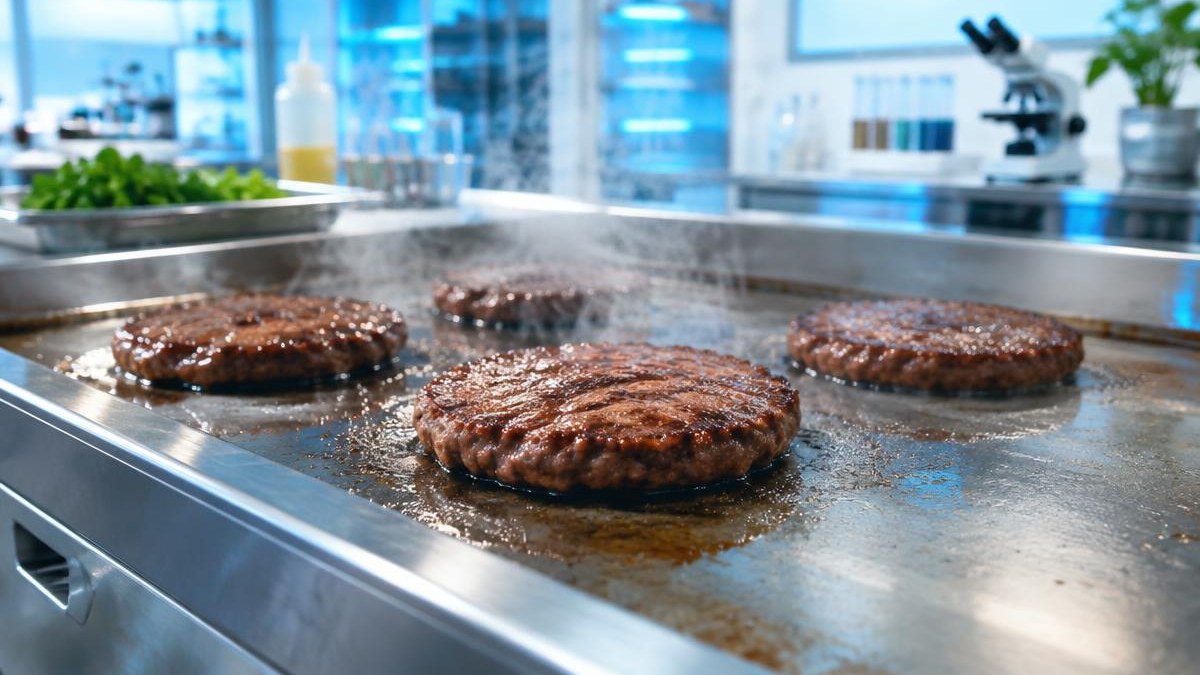
The real test of a binder occurs at high surface temperatures (150°C to 220°C), where moisture evaporates and melted fat is expelled. Unbound plant-based patties often show cooking weight losses of 20% to 30%. Formulations stabilized with 0.3% to 0.8% Guar Gum retain bound water and emulsified fat, bringing cooking loss to roughly 10% to 12% or lower.
- Reduced cooking loss: bound water and emulsified fats stay inside the patty rather than running off on the griddle.
- Less thermal shrinkage: the flexible hydro-gel absorbs stress as proteins denature and contract, keeping patties flat with uniform contact.
- Juiciness and oral lubrication: controlled moisture release under oral shear simulates the lubricity of melting animal fat, a point supported by sensory research in the Journal of Food Science.
- Crust and color: interior moisture is preserved while the surface dehydrates enough for Maillard browning without premature charring.
Rheology, Shear-Thinning Flow, and High-Speed Plant Processing
Binders must also perform on high-throughput mixers, vacuum stuffers, and forming dies. Hydrated Guar Gum is pseudoplastic: viscosity falls under high shear, which reduces pumping pressure and energy use, then recovers quickly when shear stops. Review related grade data on the quality page.
- Shear-thinning flow: lower resistance through forming dies and casing fillers.
- Fast viscosity recovery: molded patties hold shape without slumping or edge feathering.
- 200 Mesh hydration: fine HICOL® Guar Gum hydrates in 2 to 3 minutes during cold bowl chopping or ribbon blending, without fish-eyes or gritty specks.
- Cold-process stability: consistent viscosity at 2°C to 10°C, the range used to avoid lipid melting, supports uniform weight control across thousands of forming cycles per hour.
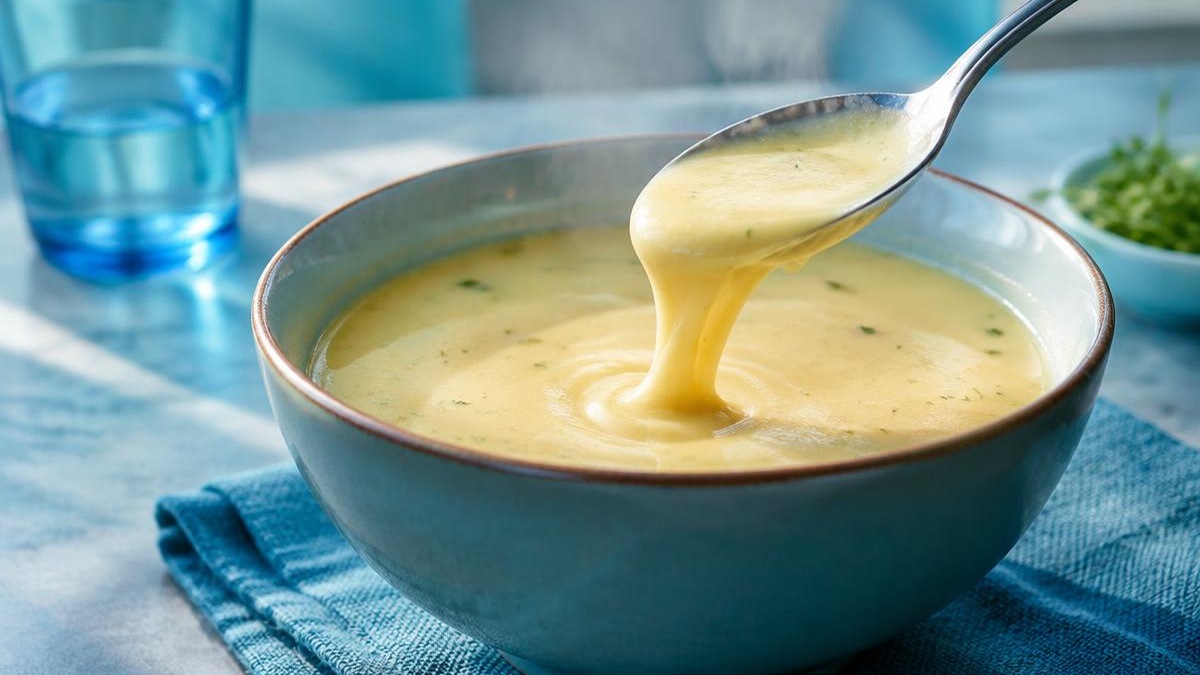
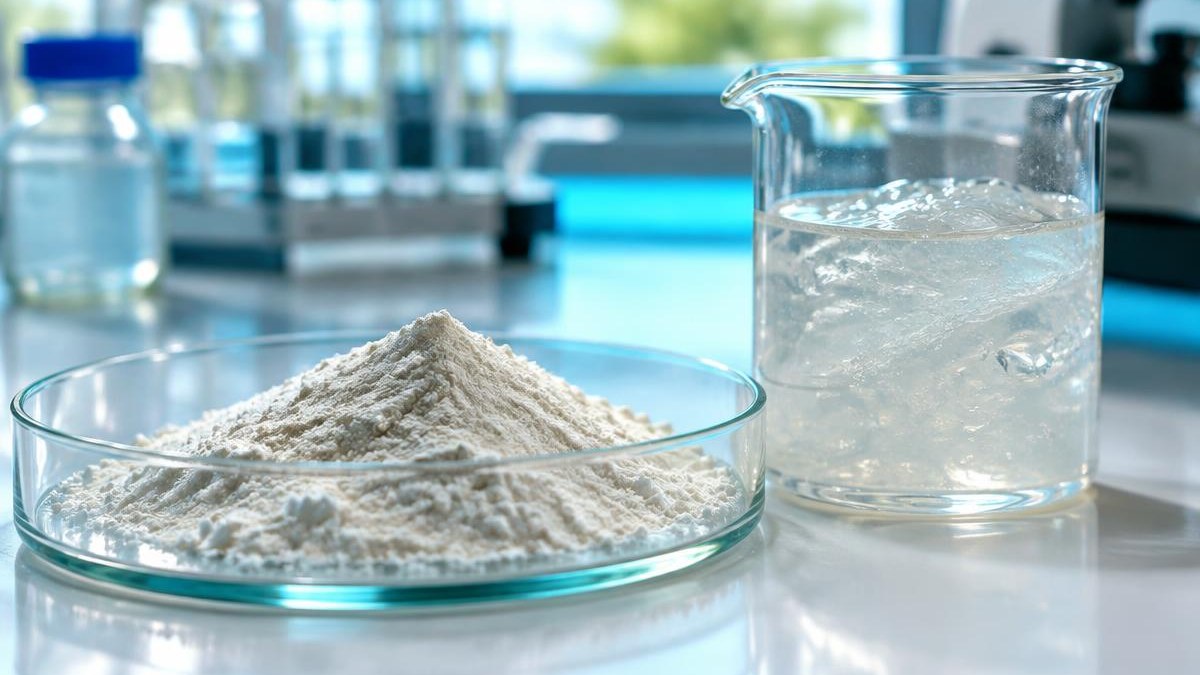 Fine 200 Mesh Guar Gum powder supports rapid, lump-free hydration in cold plant-protein batches.
Clean-Label Formulation and Methylcellulose Replacement Strategies
As clean-label scrutiny intensifies in 2026, removing synthetic additives is a competitive advantage. Methylcellulose (E461) remains the common thermal binder, but formulators increasingly seek recognizable, plant-derived alternatives. For a broader comparison of gums, see Guar Gum vs Xanthan Gum.
- Synergistic blends: Guar Gum supplies cold binding and moisture entrapment while native potato or tapioca starch swells on heating to reinforce patty structure.
- Non-GMO and organic compliance: sourced from mechanically milled legume seeds without chemical modification, aligned with USDA Organic, Non-GMO verification, EFSA, and CODEX requirements.
- Allergen-friendly: inherently gluten-free, soy-allergen-free, and 100% vegan, unlike wheat gluten, egg albumin, or caseinates, which simplifies allergen management in multi-product plants.
Key Takeaways
- Superior moisture lock: Guar Gum holds up to 30 times its dry weight in water, helping cut patty cooking losses from about 25% to roughly 10% during high-heat cooking.
- Juicy, cohesive texture: a viscoelastic hydro-matrix with soy and pea proteins gives a springy bite and gradual moisture release.
- Non-GMO clean-label standard: a 100% plant-derived alternative to methylcellulose, aligned with USDA, EFSA, FAO, and CODEX standards.
- Efficient forming lines: pseudoplastic flow lowers pumping resistance while delivering instant shape retention after molding.
- Fat emulsification protection: steric stabilization of vegetable oils prevents oil pooling in packs and runoff during cooking.
Frequently Asked Questions
How does Guar Gum prevent plant-based patties from drying out during grilling?
Guar Gum is a high-molecular-weight galactomannan with abundant hydroxyl groups that hydrogen-bond with water. This builds a hydrophilic gel network within the protein dough that physically entraps moisture, protecting it from rapid evaporation at 150°C to 220°C and keeping the patty juicy.
Can Guar Gum replace methylcellulose in vegan burgers and sausages?
Methylcellulose has unique thermal gelling behavior, but Guar Gum combined with native starches and plant proteins forms an effective clean-label binding system. It adds cold binding, fat emulsification, and moisture retention, allowing formulators to reduce or remove synthetic cellulose derivatives.
What inclusion rate of Guar Gum is recommended in plant-based meat?
Typical use is 0.3% to 0.8% of total formula weight in patties, sausages, and meatballs. The exact level depends on moisture, fat content, and protein type (soy, pea, or faba bean). Fine 200 Mesh powder is recommended for rapid cold-water dispersion.
Does Guar Gum change the flavor of plant-based meat?
No. High-purity, refined Guar Gum has a neutral flavor, odor, and color, so it does not interfere with spice blends, smoke flavorings, or yeast extracts and lets the savory profile of the protein base come through.
To improve moisture retention and secure a reliable supply of Superior, non-GMO Guar Gum for plant-based meat, partner with B.D. Guar Pvt. Ltd. Contact the technical food application team at sales@bdguar.com to request specifications, samples, and trial support, or browse the full product catalog.