Ceramic Binder Technology: Improving Green Strength in Precision Molding
Discover how Guar Gum improves green strength, plasticity and clean burnout in precision ceramic molding, from extrusion pastes to tape casting.
Last updated:
In the 2026 global advanced materials sector, ceramic binder technology has become a decisive factor for manufacturers of precision-molded components. As technical ceramics expand into electronics, automotive sensors and aerospace parts, unfired green bodies must hold their shape through handling, machining and transfer to the kiln. High-purity Guar Gum is a Superior temporary organic binder and plasticizer that raises paste plasticity and green strength, then burns out cleanly during sintering without ash or impurities.
Research Overview
Demand for precision-molded alumina, zirconia, silicon carbide and silicate ceramics continues to rise in 2026, and market research from IMARC points to growing need for high-performance processing additives. Mineral powders have no native inter-particle cohesion, so unfired compacts are fragile and prone to micro-cracking, edge chipping and deformation. Refined Guar Gum, a high-molecular-weight galactomannan with a 2:1 mannose-to-galactose backbone, offers a natural alternative to synthetic binders that can leave carbonaceous or metallic residues. Its structure is explained in the Guar Gum glossary.
Binder Mechanisms and Green Body Rheology
Green body performance depends on how the binder adsorbs onto sub-micron mineral particles and bridges them. The dense hydroxyl groups along the galactomannan chain interact with oxygen atoms and surface silanol and aluminol sites, forming a flexible three-dimensional network within the aqueous ceramic slurry or paste.
- Hydrogen bonding and surface adsorption: hydroxyl groups bond with Si-OH and Al-OH sites on alumina, silica and clay particles, creating a uniform polymer layer around each grain.
- Steric encapsulation and green yield stress: long, unbranched chains extend into the inter-particle aqueous phase and entangle, building yield stress that limits sedimentation, segregation and density gradients in complex geometries.
- Enhanced green tensile and flexural strength: after drying, polymer bridging between particles markedly increases green modulus of rupture, allowing safe handling, drilling, trimming and green machining.
- Plasticity and lubrication in extrusion: pseudoplastic shear-thinning behavior reduces wall friction and die pressure, giving smooth flow through narrow dies and limiting phase migration between liquid and solids.
Industry studies indicate that these mechanisms allow low addition rates to deliver the shape retention needed for thin walls, sharp edges and fine features.
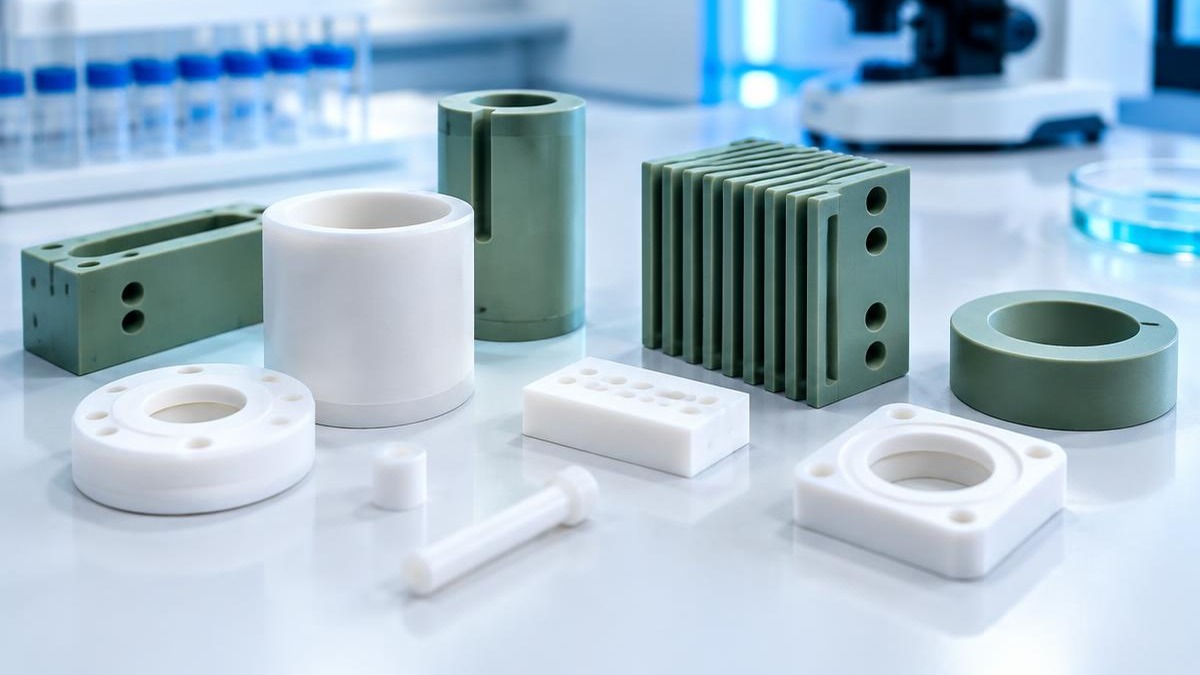
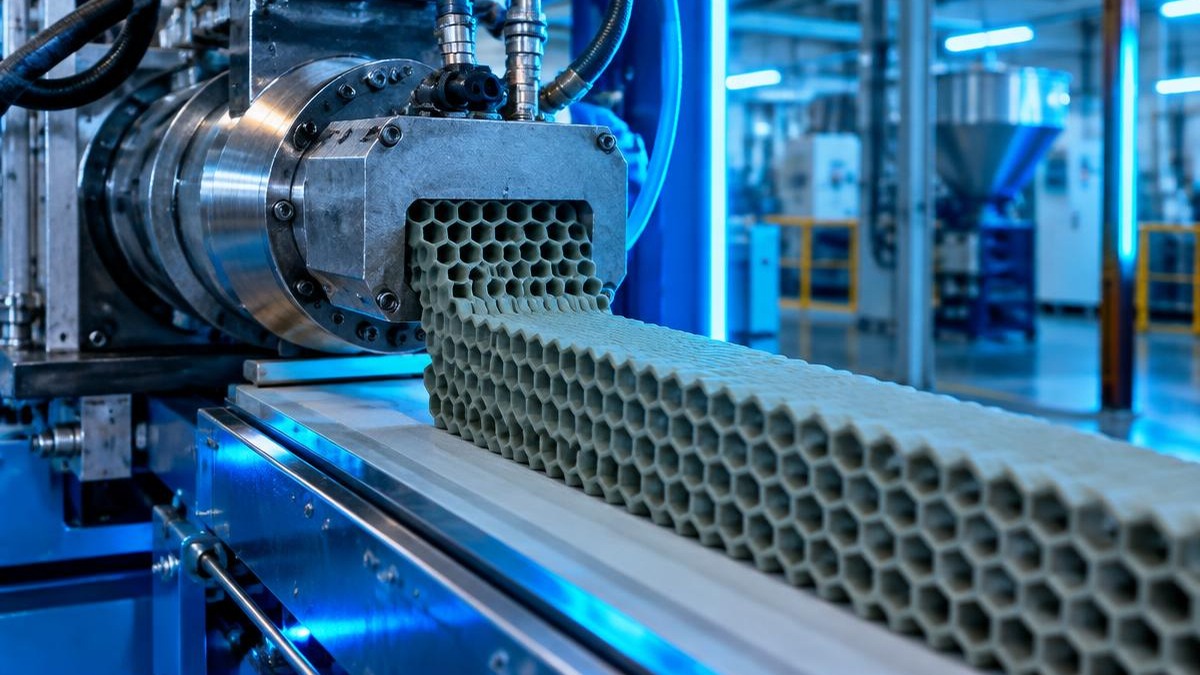 Extruded technical ceramic green bodies retaining sharp geometry after forming.
Rheological Control in Slip Casting, Tape Casting and Dry Pressing
Each molding route demands a different rheological profile to achieve uniform packing density and flaw-free green microstructures. Guar Gum can be tuned to suit each process through dosage and grade selection.
- Slip casting: ceramic slips must pour at low viscosity yet gel quickly inside a porous mold. Low-dose Guar Gum, typically 0.2% to 0.5% by weight, supports thixotropic stability and uniform cake formation against the mold wall.
- Tape casting: for electronic substrates and multilayer capacitors, Guar Gum acts as a binder-plasticizer, giving green sheets flexibility and tear resistance and helping prevent drying cracks and edge curling during doctor-blade casting.
- Dry pressing: in spray-dried granules, the binder provides crush strength for pneumatic conveying yet allows granules to deform plastically under compaction pressures of roughly 50 to 150 MPa, reducing inter-granular voids.
- Moisture retention: because Guar Gum is strongly hydrophilic, it regulates evaporation during drying, limiting differential shrinkage, surface cracking and warping.
Process engineers can review grade and particle size options on the products page and compare hydrocolloids in the comparison tool.
Clean Thermal Burnout and Impurity-Free Sintering
The primary requirement for any temporary ceramic binder is complete removal during the pre-sintering cycle without compromising the final ceramic matrix. Guar Gum is a natural carbohydrate composed of carbon, hydrogen and oxygen, so its decomposition products are water vapor and carbon dioxide.
- Complete volatilization: thermogravimetric studies indicate decomposition beginning near 220 degrees Celsius and completing oxidative volatilization between roughly 250 and 480 degrees Celsius.
- Zero ash residue: high-purity grades contain negligible inorganic minerals, with ash content below 0.5%, preserving insulation resistance, translucency and hardness.
- Controlled gas release: progressive decomposition lets volatile products diffuse through open green pores, reducing internal blistering, delamination and micro-cracking in dense parts.
- Inert and reducing atmospheres: in non-oxide ceramics such as silicon nitride or aluminum nitride sintered under nitrogen or argon, clean thermal depolymerization limits stable carbonaceous residue.
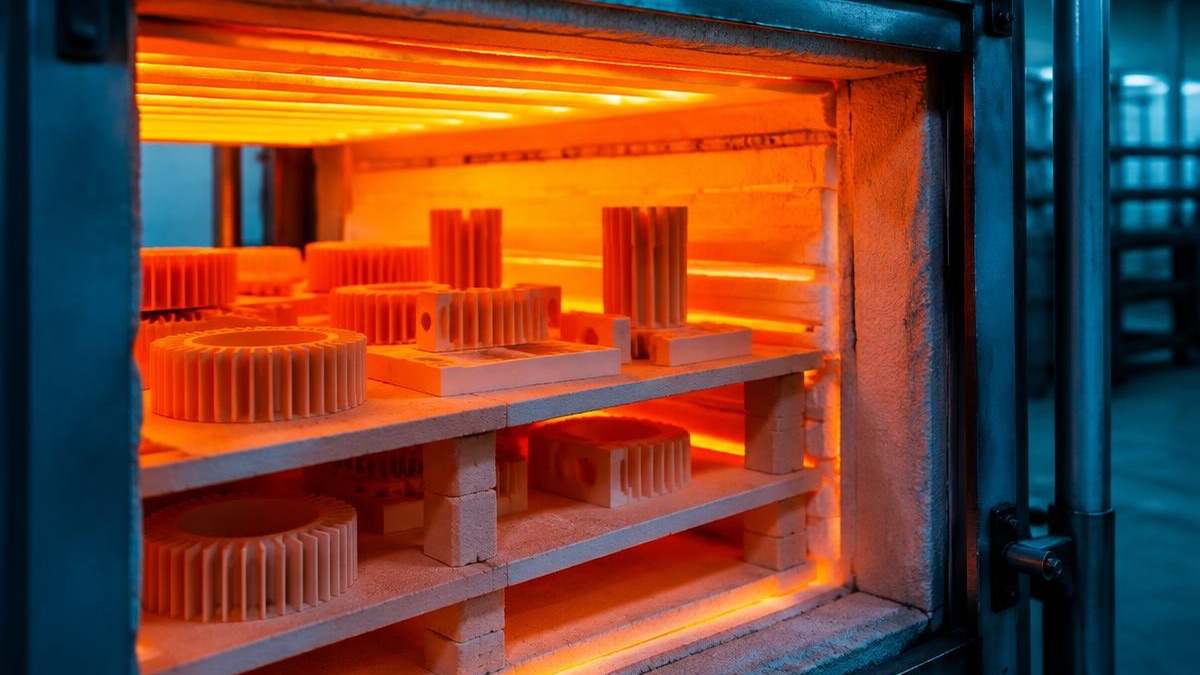 Controlled kiln firing removes the organic binder without leaving ash or impurities.
Economic Value, Dosage and Application Guidelines
Using high-purity Guar Gum delivers efficiency gains alongside technical performance. Quality standards and traceable supply are outlined on the quality page.
- Low cost-in-use: because of its molecular weight and hydrogen-bonding density, target green strength is reached at very low inclusion rates, often at lower material cost than specialty acrylics or PVA resins.
- Co-binder compatibility: the non-ionic polymer is stable across a broad pH range and works with sodium silicate, polyacrylates, lignosulfonates and organic dispersants without premature flocculation.
- Preparation protocol: pre-blend dry powder with ceramic minerals, or disperse into cold water under high-shear mixing before adding deflocculants, for rapid lump-free hydration.
- Consistency: sourcing from certified manufacturers ensures lot-to-lot viscosity control and particle size distribution between 100 and 200 mesh.
Key Takeaways
- Higher green strength: hydrogen bonding and polymer bridging significantly increase green modulus of rupture, edge stability and handling strength in unfired ceramics.
- Clean ashless burnout: pyrolysis between roughly 250 and 480 degrees Celsius leaves no inorganic ash or carbon residue.
- Versatile processing: improves plasticity, lubrication and thixotropic control in extrusion, slip casting, tape casting and dry pressing.
- Low addition rates: effective at roughly 0.1% to 0.8% by dry weight, supporting favorable formulation economics.
- Controlled moisture retention: regulates drying to reduce shrinkage differentials, cracking and warping.
Frequently Asked Questions
Why is Guar Gum preferred over synthetic binders such as PVA or CMC in precision ceramics?
Guar Gum is a 100% natural galactomannan that delivers strong green strength and plasticity at very low dosage. Its ashless burnout avoids trace alkali metals and stubborn carbon residues that can degrade dielectric strength, optical clarity or toughness in fired technical ceramics.
At what temperatures does Guar Gum burn out during firing?
Thermogravimetric studies indicate decomposition begins around 220 degrees Celsius and completes between roughly 250 and 480 degrees Celsius. Progressive decomposition lets gaseous byproducts diffuse through green pore channels without pressure buildup, cracking or surface blistering.
What inclusion rate is recommended in ceramic formulations?
Typical addition rates range from 0.1% to 0.8% by dry weight of the ceramic powder mix. Dry pressing and slip casting generally use lower doses of 0.1% to 0.4%, while extrusion pastes and tape casting use higher levels for plasticity and flexibility.
Does Guar Gum affect slurry viscosity during mixing?
Yes. It raises viscosity and yield stress, but its pseudoplastic behavior means viscosity drops under high mixing or pumping shear for easy pouring and mold filling, then recovers its stabilizing structure once shear is removed.
To optimize ceramic formulations and secure reliable supply of high-purity, ashless Guar Gum binders, partner with B D Guar Pvt. Ltd. Contact the technical team or email sales@bdguar.com for specifications, burnout data and sample evaluations.