Fluid Loss Control: Reducing Fluid Migration into Permeable Formations
Guar Gum builds an ultrathin, low-permeability filter cake that blocks filtrate invasion, protects formations, and holds wellbore pressure in 2026 drilling programs.
Last updated:

In the 2026 global oilfield drilling and completion landscape, fluid loss control is a critical engineering priority for mud engineers and petroleum sourcing executives. As exploration extends into deep, high-pressure high-temperature (HPHT) reservoirs and depleted permeable formations, limiting drilling filtrate invasion is essential. High-purity Guar Gum is a Superior, eco-friendly fluid loss additive that forms a thin, low-permeability filter cake on the wellbore wall, maintains hydrostatic pressure, and protects producing formations from skin damage.
Research Overview
In 2026 the upstream industry balances maximum hydrocarbon recovery against strict environmental standards for drilling fluid additives. Market research from IMARC indicates steady growth for natural galactomannans in oilfield operations, driven by deep-water drilling, horizontal shale completions and depleted reservoir redevelopment. Studies in the SPE Journal and Carbohydrate Polymers describe how galactomannan chains adsorb on the rock face and seal micro-pores. See the B.D. Guar product range for oilfield grades.
Macromolecular Filtration Mechanics and Filter Cake Architecture
The overbalance needed to prevent kicks also drives liquid filtrate into the formation matrix. Without effective control, filtrate invasion causes clay swelling, differential sticking, washouts and permanent permeability impairment known as skin damage.
Guar Gum, extracted from the endosperm of Cyamopsis tetragonoloba, is a high-molecular-weight galactomannan with a beta-(1,4)-D-mannopyranose backbone and single-unit alpha-(1,6)-D-galactopyranose side chains. It hydrates rapidly in water-based muds to form a viscoelastic polymer matrix that, together with fine bridging solids, adsorbs onto the porous rock face.
- Pore throat bridging and adsorption: Flexible galactomannan chains bind to quartz, clay and carbonate grains through hydrogen bonding and van der Waals forces, initiating primary sealing.
- Ultrathin, compressible filter cake: Unlike bentonite, which builds thick, soft cakes, Guar Gum forms a compressible polymer skin that lowers hydraulic conductivity under differential pressure.
- Spurt loss control: A continuous gelled film forms across the rock surface within seconds, followed by a predictable, ultra-low filtration rate.
- Synergy with sized solids: Combined with sized calcium carbonate or sized salt, the hydrated polymer fills the voids between bridging particles to give a tight barrier.
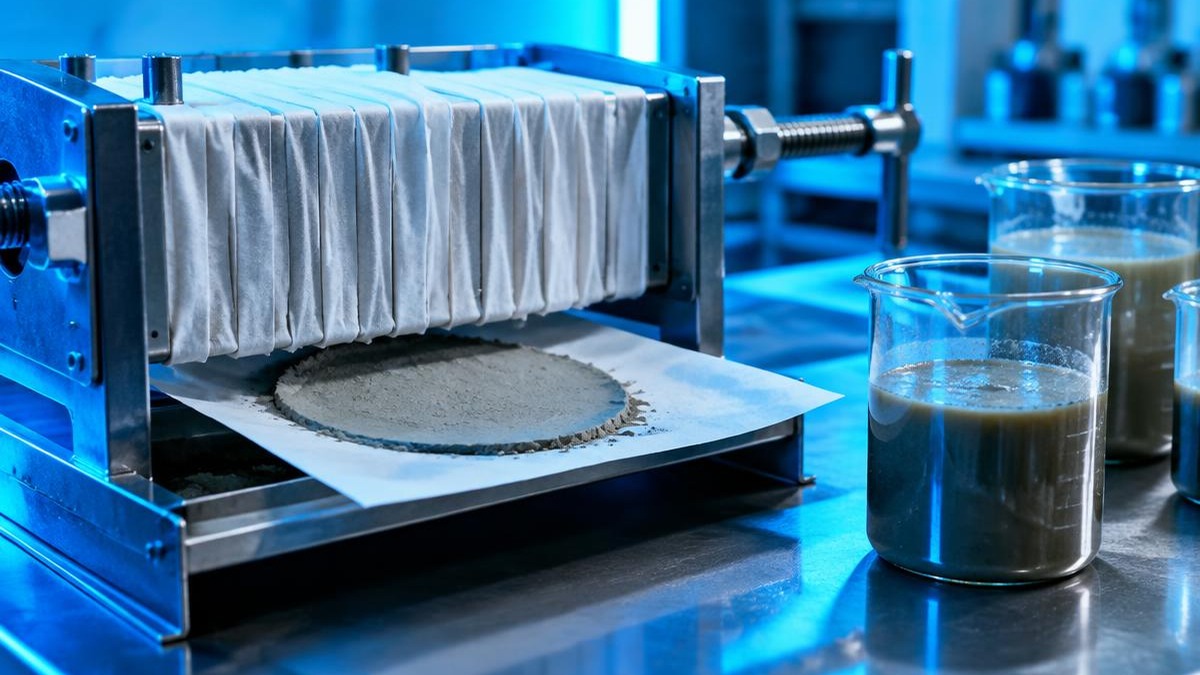 An ultrathin Guar Gum filter cake seals the wellbore face against filtrate invasion.
Maintaining Hydrostatic Pressure and Preventing Downhole Hazards
Controlling filtrate invasion directly affects wellbore stability, drilling hydraulics and safety across challenging formations.
- Differential sticking mitigation: A thin, low-friction cake reduces drill string contact area and the risk of costly stuck pipe.
- Clay swelling and sloughing control: A tight filtrate barrier limits water influx into reactive smectite and illite horizons, preserving gauge and integrity.
- Hydrostatic pressure maintenance: Sealing high-permeability thief zones keeps the mud level and hydrostatic head constant, supporting well control.
- Hole cleaning: Pseudoplastic rheology suspends cuttings during pump shutdowns and lowers circulation pressure losses under bit shear. Related reading: Guar Gum glossary.
Thermal Endurance and Salinity Tolerance in HPHT Muds
Offshore and deep-water programs need fluid loss additives that hold up under thermal and chemical stress.
- Non-ionic stability in brines: Native Guar Gum is non-ionic and resists charge-based precipitation in NaCl, KCl and CaCl2 systems.
- Fast hydration in cold fluids: Fast Hydration Guar Gum (FHGG) grades uncoil quickly in cold brines near 4 C seabed temperatures.
- Thermal options: Native Guar Gum performs to about 200 F (93 C); Hydroxypropyl Guar (HPG) or Carboxymethyl Hydroxypropyl Guar (CMHPG) extend performance in hotter HPHT wells.
- Clean breaker removal: Mild oxidative or enzymatic breakers degrade the cake into water-soluble sugars, restoring formation regain permeability.
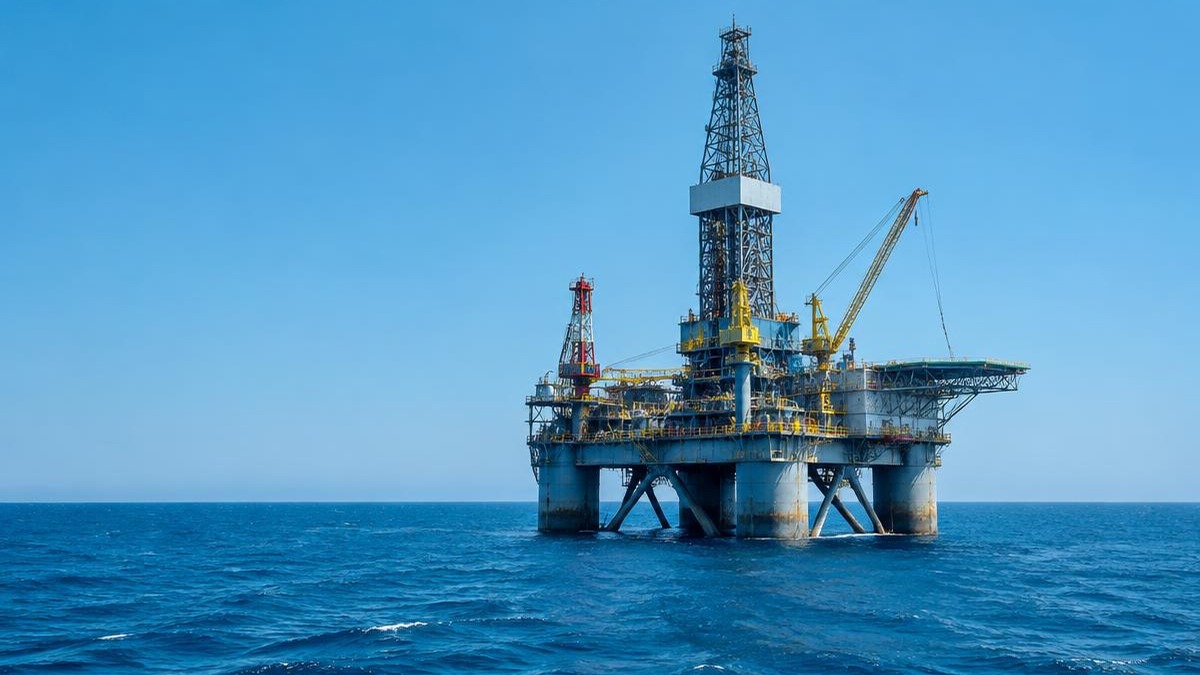 Brine-tolerant Guar Gum fluids support offshore and HPHT drilling programs.
Environmental Compliance, Economics and Sourcing Assurance in 2026
Mud engineers and sourcing executives must balance downhole performance against global environmental regulation and cost.
- Biodegradable, non-toxic profile: Guar Gum helps meet offshore discharge expectations and avoids disposal liabilities tied to synthetic polymers. See our sustainability approach.
- Low addition rates: Typical target filtration control is achieved at roughly 1.0 to 3.0 ppb, reducing chemical consumption, rig storage footprint and mud maintenance cost.
- Quality assurance: Consistent particle size (100 to 200 mesh), controlled moisture and verified viscosity kinetics prevent lot-to-lot variation. See our quality program.
- Star Export House supply: Transparent logistics and export compliance support oilfield hubs in Houston, Rotterdam and the Middle East.
Key Takeaways
- Ultrathin low-permeability barrier: Guar Gum forms a compressible filter cake that restricts filtrate migration into permeable formations.
- Formation protection: Reduced filtrate invasion protects matrix permeability, and breaker cleanup restores regain permeability.
- Downhole hazard prevention: Sealing permeable zones maintains hydrostatic pressure and reduces sticking, swelling and washouts.
- Salinity and cold-water tolerance: The non-ionic backbone keeps its extended conformation in heavy brines and cold seawater.
- Eco-friendly compliance: A biodegradable, non-toxic additive that fits strict offshore environmental mandates.
Frequently Asked Questions
How does Guar Gum form a low-permeability filter cake on the wellbore wall?
Guar Gum chains adsorb onto rock grains and bridging solids at the formation face. Under overbalance pressure the flexible chains compress and entangle across microscopic pore openings, forming an ultrathin, tough gel barrier that seals the wellbore face and limits filtrate loss.
What is the difference between spurt loss and continuous filtration loss?
Spurt loss is the rapid surge of filtrate into the formation before the first filter cake bridges the pore throats. Continuous filtration is the slow, steady loss through the established cake over time. Guar Gum seals pore throats quickly to minimize spurt loss and sustain a low filtration rate.
Is Guar Gum compatible with high-salinity completion brines and seawater muds?
Yes. Native Guar Gum is a non-ionic hydrocolloid, so its chain conformation is largely unaffected by dissolved ions. It hydrates and retains fluid loss control in seawater, saturated NaCl, KCl and CaCl2 fluids without salt-out precipitation.
How is the Guar Gum filter cake removed before production?
Guar Gum cakes degrade with mild oxidative breakers such as ammonium persulfate or hemicellulase enzymes. These cleave the galactomannan backbone into water-soluble sugars, dissolving the cake and restoring regain permeability, unlike bentonite or synthetic polymer cakes that can leave lasting damage.
To optimize drilling fluid performance and secure Superior, fast-hydrating Guar Gum fluid loss additives for global oilfield operations, partner with B.D. Guar Pvt. Ltd. Visit our contact page or email sales@bdguar.com for specifications, filtration test data and freight quotes.