Gluten-Free Baking: Improving Crumb Structure and Volume with Guar Gum
Discover how Guar Gum rebuilds the elastic network gluten leaves behind, giving industrial gluten-free bakeries better volume, softer crumb, and reliable moisture retention.
Last updated:
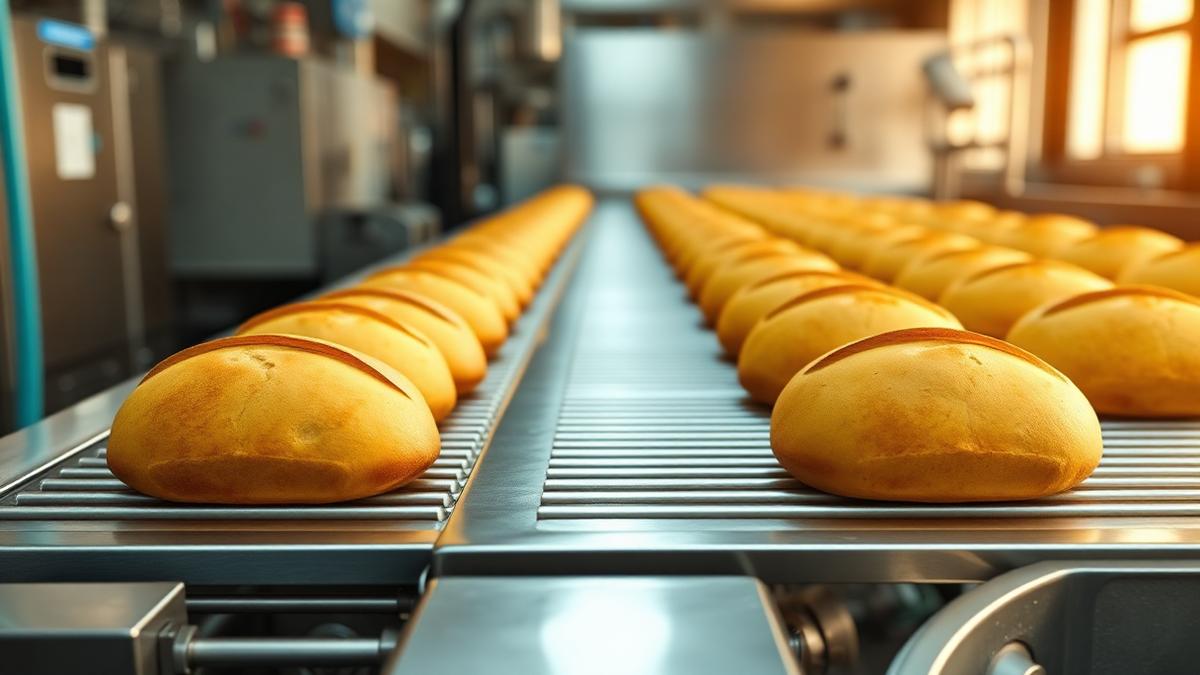
As the 2026 global gluten-free bakery market continues its double-digit expansion, formulators face a persistent technical hurdle: replicating the elastic, gas-holding network that gluten provides. Guar Gum has become one of the most dependable tools for closing that gap, mimicking the viscoelastic behavior of gluten so that gluten-free loaves, buns, and cakes rise higher, hold their shape, and retain a soft, uniform crumb from the first slice to the last day of shelf life.
Research Overview
Guar Gum is a galactomannan hydrocolloid derived from the endosperm of Cyamopsis tetragonoloba. In gluten-free systems it functions as a structural aid: its long polymer chains hydrate rapidly, thicken the aqueous phase, and build a cohesive matrix that traps carbon dioxide during proofing and baking. Industry studies indicate that even small additions materially improve batter viscosity, gas retention, and finished crumb structure across rice-, corn-, and starch-based formulations.
Why Gluten-Free Doughs Fail Without a Hydrocolloid
In wheat baking, hydrated gluten forms an extensible film that stretches around expanding gas cells and sets during the bake. Remove the gluten and that film disappears, leaving batters that are thin, fail to hold gas, and collapse after leavening. The result is a dense, crumbly loaf with poor volume and a gritty mouthfeel.
Guar Gum restores the missing viscoelasticity. By dramatically increasing the viscosity of the continuous phase, it slows the escape of carbon dioxide and steam, allowing gas cells to expand and stabilize before the starch gelatinizes and sets the structure. This is why Guar Gum is a foundational ingredient in most industrial gluten-free formulations.
- Gas retention: higher batter viscosity keeps CO2 trapped through proof and oven spring.
- Volume: stabilized gas cells expand fully rather than coalescing and venting.
- Crumb uniformity: a consistent matrix yields even cell distribution and fewer large voids.
- Structural integrity: loaves hold shape post-bake instead of collapsing on cooling.
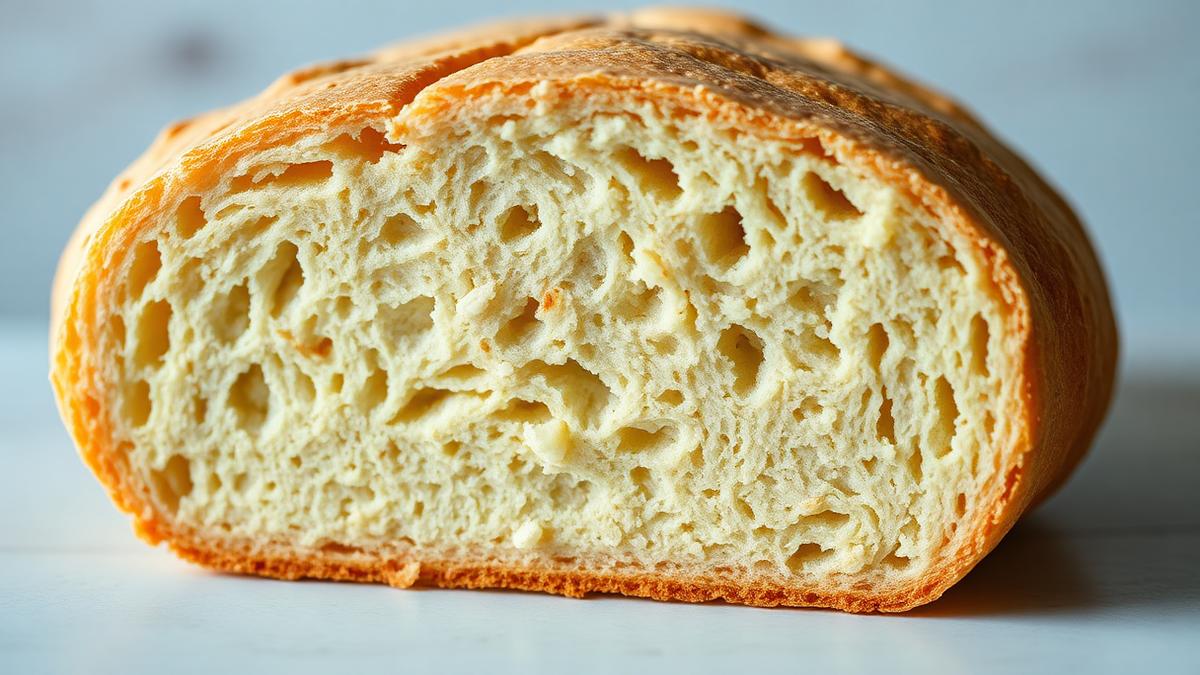 A well-formed gluten-free crumb depends on a hydrocolloid network that mimics gluten's elasticity.
Mimicking Gluten's Elastic Network
The functional value of Guar Gum lies in how its galactomannan chains interact with water and with the starch-protein components of a gluten-free recipe. Once hydrated, the chains form a network held together by extensive hydrogen bonding. This network behaves in a viscoelastic manner: it resists deformation like a gluten film, giving the batter enough elasticity to expand around growing gas bubbles without tearing.
For industrial bakers, this translates into dough that machines more predictably, sheets and deposits more cleanly, and delivers a finished product with the springy bite consumers associate with conventional bread. Guar Gum is frequently combined with other hydrocolloids to fine-tune texture, and formulators comparing options often review the trade-offs between galactomannan and microbial gums when balancing elasticity against firmness.
- Dough elasticity: the hydrated network provides extensibility during mixing and forming.
- Machinability: improved cohesion reduces sticking and tearing on high-speed lines.
- Bite and chew: viscoelastic structure restores a bread-like eating experience.
Locking In Moisture and Extending Freshness
Staling and moisture loss are among the biggest complaints in gluten-free baked goods, which tend to dry out and harden faster than their wheat counterparts. Guar Gum's high water-binding capacity helps address both. By holding free water within the crumb matrix, it slows moisture migration to the crust and the surrounding environment, keeping products softer for longer.
This water management also supports a more tender mouthfeel and reduces the perception of dryness that undermines many gluten-free products. For manufacturers, better moisture retention means a longer effective shelf life and fewer returns, protecting both margin and brand reputation. B.D. Guar's Superior food-grade grades are milled and tested for the consistent hydration behavior industrial lines depend on.
The 200 Mesh Advantage: Rapid, Uniform Hydration
Particle size is a decisive and often underappreciated variable in gluten-free baking. B.D. Guar's 200 Mesh Guar Gum is milled fine enough to hydrate rapidly and disperse uniformly through a batter, which is critical in fast-paced industrial mixing where hydration time is limited.
Coarser powders hydrate slowly and can form partially wetted lumps, or "fish-eyes," that leave dry pockets and uneven texture in the finished crumb. The finer 200 Mesh grade dissolves quickly and evenly, ensuring the hydrocolloid network builds consistently across the entire batch.
- Pre-blend: combine Guar Gum with dry ingredients such as sugar or starch to separate particles before adding water.
- Controlled addition: add the dry blend into the vortex of a high-shear mixer to avoid clumping.
- Uniform result: rapid, even hydration prevents dry pockets and delivers a smooth, consistent crumb.
Formulators who need a different viscosity profile or dispersion speed can select from a range of custom-milled mesh sizes; details are available on the products and quality pages, and technical grade guidance is summarized in the technical glossary.
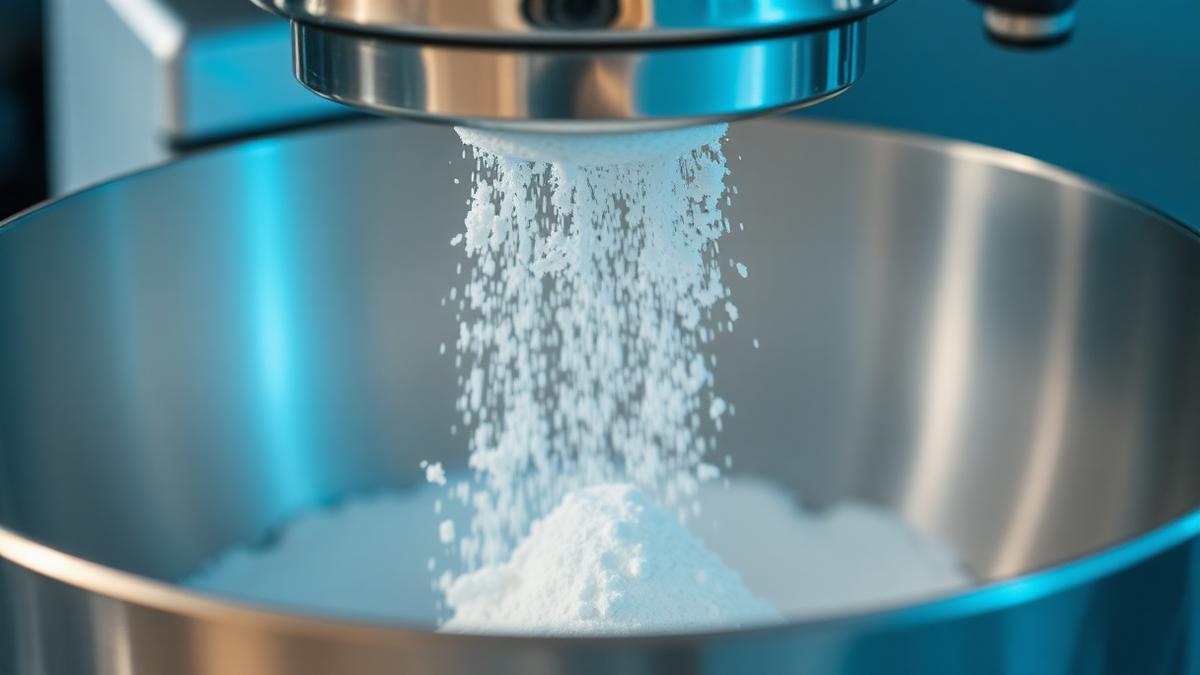 Fine 200 Mesh Guar Gum hydrates rapidly for uniform distribution and a lump-free batter.
Dosage and Formulation Guidance
Effective usage levels for Guar Gum in gluten-free baking typically fall within a modest range of the total flour weight, adjusted to the specific starch blend, hydration level, and desired texture. Because Guar Gum is highly efficient, overdosing can produce a gummy or overly dense crumb, while underdosing leaves the batter unable to hold gas. Bench trials remain the best route to the optimal level for a given recipe, and B.D. Guar's technical team supports customers through that optimization process.
- Start low: begin at a conservative addition and increase incrementally during trials.
- Balance hydration: account for the additional water Guar Gum binds when setting batter absorption.
- Validate on-line: confirm performance at production shear and speed, not just at bench scale.
Key Takeaways
- Structural replacement: Guar Gum mimics gluten's elastic network, restoring gas retention and volume in gluten-free bakes.
- Improved crumb: a cohesive hydrated matrix delivers even cell structure and a softer, more uniform crumb.
- Moisture control: high water-binding capacity locks in moisture, slows staling, and extends shelf life.
- 200 Mesh performance: fine milling ensures rapid, uniform hydration with no dry pockets or fish-eyes.
- Efficient dosing: small, well-optimized additions produce large gains in finished product quality.
Frequently Asked Questions
How does Guar Gum replace gluten in baking?
Guar Gum does not replace gluten's protein chemistry, but it replicates gluten's key physical function. Its hydrated galactomannan chains build a viscoelastic network that thickens the batter, traps carbon dioxide during leavening, and stabilizes gas cells so the product rises and holds its shape, delivering volume and crumb structure comparable to conventional bread.
Why is 200 Mesh Guar Gum recommended for bakery use?
The 200 Mesh grade is finely milled, so it hydrates quickly and disperses evenly through a batter under the limited mixing times of industrial production. This rapid, uniform hydration prevents lumps and dry pockets that coarser powders can cause, producing a smooth, consistent crumb across every batch.
How much Guar Gum should be used in gluten-free recipes?
Usage levels are a small fraction of the total flour weight and depend on the starch blend, hydration, and target texture. Because Guar Gum is highly efficient, formulators should begin at a low addition and adjust upward through bench trials. B.D. Guar's technical team can help identify the optimal level for a specific formulation.
Does Guar Gum affect the flavor of baked goods?
Guar Gum is used at low concentrations and B.D. Guar applies low-aroma processing to reduce volatile compounds, so it contributes structure and moisture retention without imparting off-flavors, making it well suited to delicate gluten-free bakery systems.
Ready to improve the volume, crumb, and shelf life of your gluten-free line? Explore B.D. Guar's Superior food-grade Guar Gum products or contact our technical team at sales@bdguar.com to request samples and formulation support.