Foam Fracturing Muds: Optimizing Liquid Volume and Gas Fractions with Guar Thickeners
How Guar Gum stabilizes N2 and CO2 fracturing foams, slows lamellar drainage and cuts water use by up to 80% in water-sensitive shale formations.
Last updated:
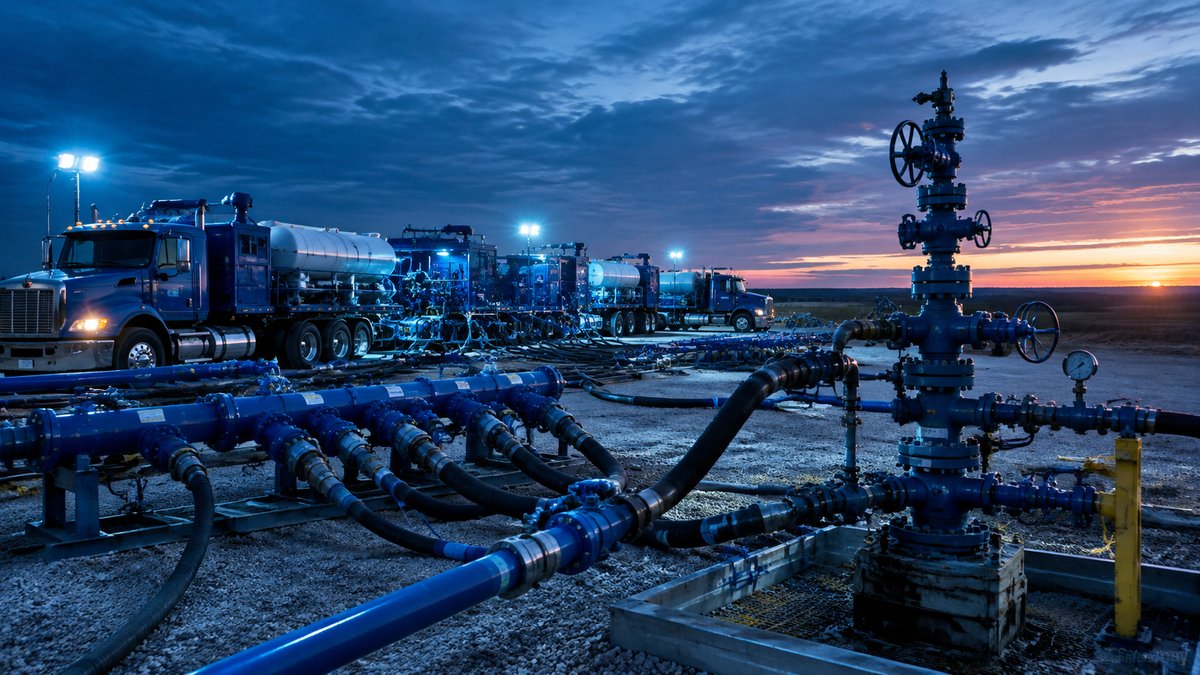
Foam fracturing with Guar Gum thickeners has become a core technique for reservoir stimulation specialists in 2026. Driven by water scarcity and the need to prevent formation damage in water-sensitive shales, operators are expanding energized fluid treatments. High-purity Guar Gum and its hydroxyalkyl derivatives thicken the continuous aqueous phase, stabilize high-quality nitrogen and carbon dioxide foams, arrest liquid drainage and maintain Superior proppant transport while dramatically reducing total water use.
Research Overview
Energized foams are thermodynamically unstable: without continuous-phase viscosification, gravity drains the liquid lamellae between bubbles, causing coalescence, foam collapse and proppant fallout. Natural Guar Gum, a 1.5 to 2.5 million Dalton galactomannan from Cyamopsis tetragonoloba with a 2:1 mannose-to-galactose ratio, provides dense hydroxyl functionality for rapid viscosification. Research in journals such as SPE Journal and Carbohydrate Polymers describes how this hydrogen-bonded network stabilizes foam lamellae under downhole conditions.
Why Water-Sensitive Formations Demand Energized Foams
The 2026 hydraulic fracturing landscape is defined by extended horizontal laterals, high-density stage completions and stringent water-management protocols across tight-gas sands and shale plays. Industry studies indicate that energized and foam-based fluids are gaining share as operators target formations containing reactive smectite and mixed-layer clays.
Conventional slickwater or linear gel treatments can inject 15,000 to 25,000 cubic meters of water per well. Water imbibition into micro-fractures causes clay swelling, pore throat blockage and long-term water trapping, which restricts hydrocarbon relative permeability and reduces initial production rates.
- Gas quality: a fracturing foam disperses 60% to 80% by volume of N2 or CO2 within a low-volume aqueous continuous phase.
- Continuous phase: contains foaming surfactants plus a hydrocolloid thickener such as Guar Gum.
- Core risk: film drainage (syneresis) thins bubble walls, leading to coalescence, viscosity loss and premature proppant settling.
Lamellar Drainage Kinetics and Interfacial Foam Stabilization
Stabilizing energized foam against phase separation requires precise control of the aqueous film surrounding each gas bubble. The rate of liquid drainage between bubbles is inversely proportional to the viscosity of the continuous phase, which makes the thickener the single most important lever for foam persistence.
- Viscosification of the lamellae: dissolving Guar Gum at 0.12% to 0.36% w/v raises continuous-phase viscosity by orders of magnitude, generating hydrodynamic resistance that slows film thinning.
- Coalescence control: hydrated Guar Gum forms a viscoelastic network inside inter-bubble films, a steric buffer that preserves a fine, uniform bubble size distribution under pressure.
- Surfactant synergy: Guar Gum is compatible with cationic, anionic and amphoteric foamers; surfactants lower interfacial tension while the polymer supplies bulk film elasticity and yield stress.
- Extended half-life: static foam half-life, the time for 50% of liquid to drain, can be extended from minutes to several hours, protecting foam integrity during low-flow pumping and shut-in periods.
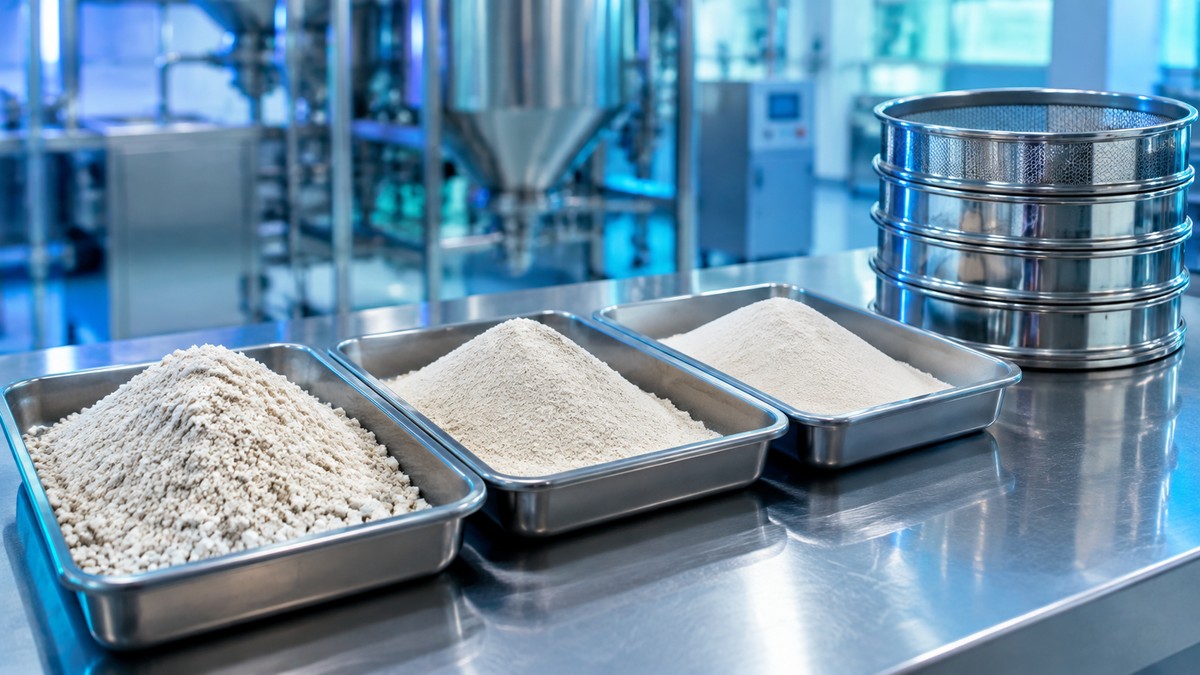
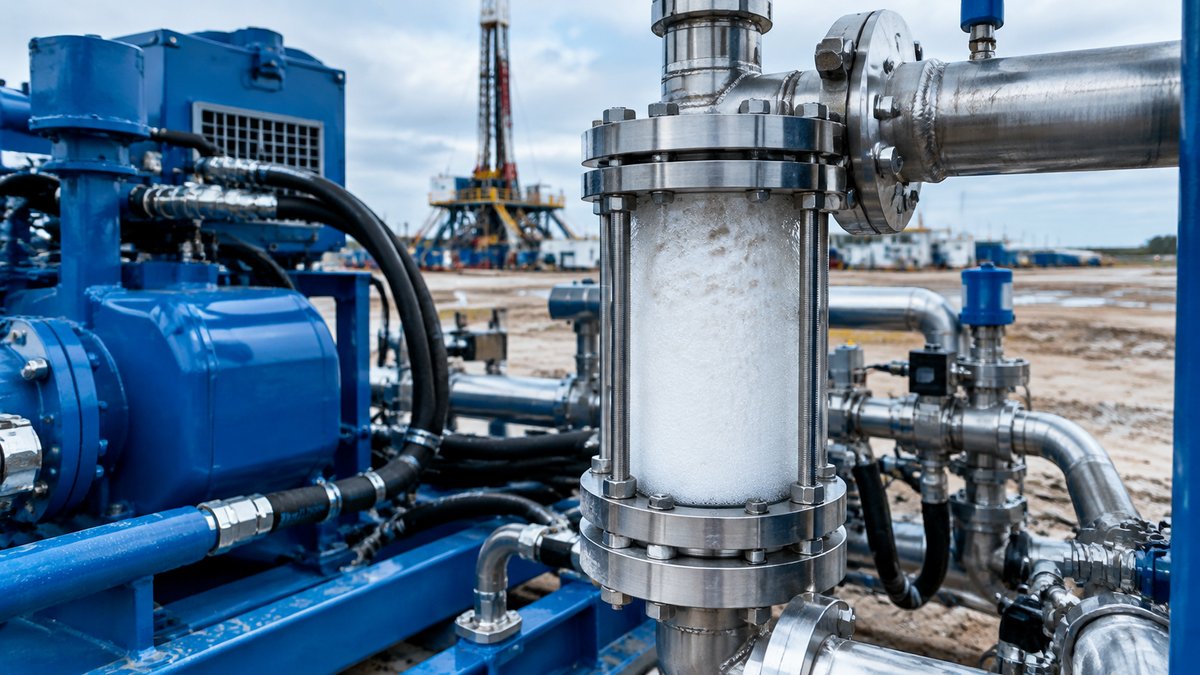 Guar Gum viscosifies the aqueous phase before high-shear N2 or CO2 foam generation at the wellsite.
Rheological Hydraulics: Proppant Transport and Friction Reduction
Foams formulated with Guar Gum exhibit non-Newtonian pseudoplastic flow. At gas qualities between 65% and 80%, tightly packed bubbles combined with a viscosified continuous phase generate high apparent viscosity at low shear, enabling transport of sand or ceramic proppant. The underlying shear-thinning mathematics are explored further in the Guar Gum glossary.
Inside casing and tubulars, shear rates above 5,000 s-1 align the coiled galactomannan chains along streamlines, lowering viscosity and friction pressure. Once the foam enters the fracture, shear drops to roughly 10 to 100 s-1 and the network recovers its elastic yield stress.
- Low pipe friction: shear-thinning response reduces surface hydraulic horsepower requirements.
- Deep proppant placement: viscoelastic support carries proppant into narrow, complex fracture networks without forming settled beds.
- Minimal water load: replacing 60% to 80% of fluid volume with gas prevents clay swelling, eliminates water trapping and preserves matrix permeability at the fracture face.
HPG and CMHPG for High-Temperature and CO2 Foams
For deep, hot reservoirs, chemically modified Guar Gum derivatives extend thermal persistence and enable crosslinked foam systems. Native Guar Gum performs robustly up to about 200°F (93°C); beyond that, derivatives take over.
- Hydroxypropyl Guar (HPG): etherification with propylene oxide improves thermal hydrolysis resistance and alcohol compatibility, maintaining lamellar stability at 250°F to 300°F (121°C to 149°C).
- CMHPG: dual carboxymethyl and hydroxypropyl substitution enables rapid crosslinking with organo-zirconate or borate systems, creating ultra-high-viscosity crosslinked foam gels for high proppant loading.
- Acidic CO2 environments: dissolved CO2 forms carbonic acid and drops pH to 3.5 to 4.5; non-ionic Guar Gum and HPG backbones remain stable without acid-catalyzed precipitation.
- Clean flowback: gas expansion on drawdown, combined with enzymatic (hemicellulase) or oxidative (persulfate) breakers, digests the backbone into soluble sugars, with regain permeability reported above 90%.
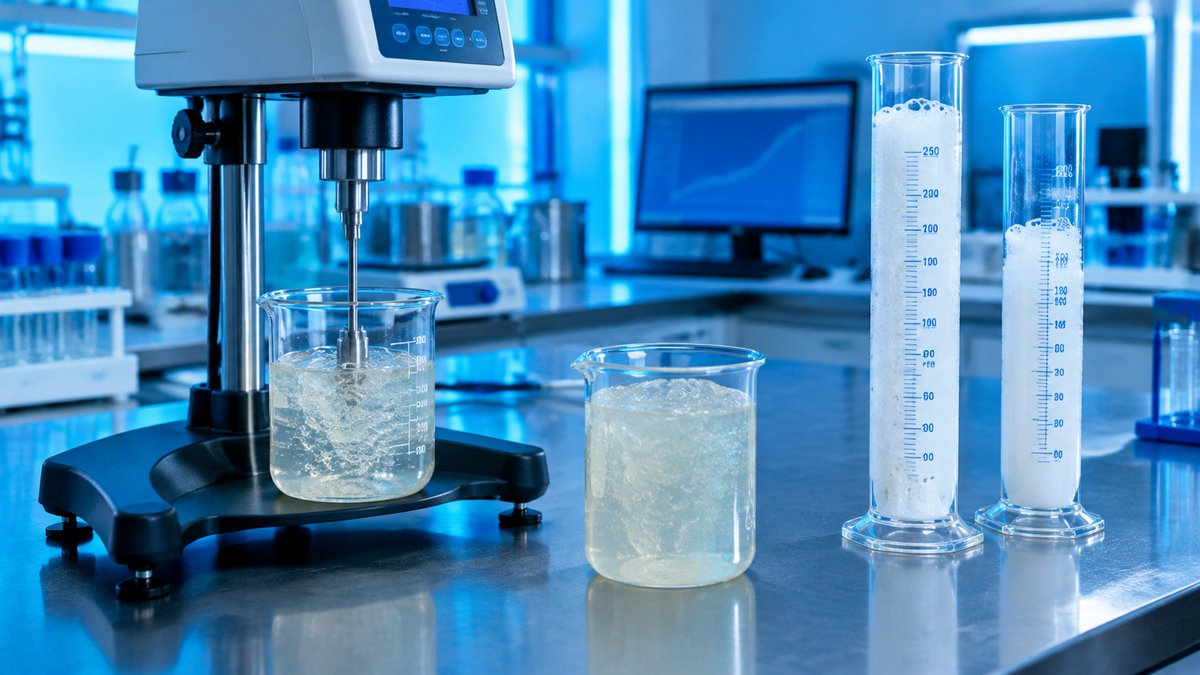 Rotational viscometer testing verifies lot-to-lot consistency of oilfield-grade Guar Gum.
Quality Control, Field Blending and Supply Chain Standards
Continuous onshore and offshore stimulation operations require strict raw material assurance. Fast Hydration Guar Gum (FHGG) grades uncoil rapidly in cold surface water, reaching 85% to 90% of ultimate viscosity within 2 to 3 minutes, so the continuous phase is fully viscosified before entering the foaming manifold.
- Viscometric specifications: technical-grade Guar Gum is evaluated on Fann 35A rotational viscometers (1% solution, 300 rpm, 25°C), with ratings from 3,500 cP to over 7,000 cP, insoluble residue below 8% to 10% and moisture below 10%. See our quality standards.
- Produced water tolerance: non-ionic Guar Gum hydrates and stabilizes foam in high-TDS recycled brines without salting out, supporting 2026 water conservation mandates.
- Traceable supply: bulk packaging from 25 kg bags to 1,000 kg FIBC super-sacks with consistent lot-to-lot performance. Explore the full range on our products page.
Key Takeaways
- Superior lamella stabilization: Guar Gum thickens the continuous phase, slowing gravitational drainage and preventing bubble coalescence in N2 and CO2 foams.
- Dramatic water reduction: 60% to 80% gas-quality foams minimize injected water, preventing clay swelling and water trapping in sensitive shales.
- Efficient proppant hydraulics: high low-shear viscosity in the fracture plus shear-thinning behavior for low pumping friction.
- High-temperature capability: HPG and CMHPG maintain foam stability up to about 300°F (149°C) and enable crosslinked foam gels.
- Rapid gas-driven cleanup: gas expansion and targeted breakers restore over 90% regain permeability.
Frequently Asked Questions
Why is Guar Gum necessary to stabilize N2 and CO2 fracturing foams?
Gravity drains the liquid film between gas bubbles, thinning the walls until they rupture. Guar Gum raises the low-shear viscosity of the continuous aqueous phase, creating hydrodynamic resistance that slows drainage, arrests coalescence and extends foam half-life, so the foam keeps high apparent viscosity under downhole pressure and temperature.
How does foam fracturing prevent damage in water-sensitive shales?
Reactive clays such as smectite and illite swell and migrate when contacted by large volumes of fresh water. Foam treatments replace 60% to 80% of the liquid with compressed gas, so Guar Gum-stabilized foams minimize clay hydration and water trapping near the fracture face, preserving permeability and accelerating fluid recovery.
When should HPG be used instead of native Guar Gum?
Native Guar Gum performs well up to about 200°F (93°C). In reservoirs from 250°F to 300°F, or in acidic CO2 foams at pH 3.5 to 4.5, Hydroxypropyl Guar offers better thermal hydrolysis resistance, salinity and alcohol compatibility, and lower insoluble residue, supporting long-term lamellar stability and cleaner fracture cleanup.
How is Guar Gum prepared for on-the-fly foam blending?
Crews meter Fast Hydration Guar Gum directly into the water stream through venturi eductors. Its fine particle size and rapid hydration deliver 85% to 90% of ultimate viscosity within 2 to 3 minutes, so the liquid phase is fully viscosified before surfactants and pressurized gas are injected under high shear.
To optimize foam fracturing hydraulics, reduce water-sensitivity damage and secure a reliable supply of Superior Fast Hydration Guar Gum, HPG and CMHPG, contact the B.D. Guar technical team or email sales@bdguar.com for technical data sheets and export quotations. Learn more about our company.