Thixotropic Drilling Muds: Enhancing Cutting Transport in Horizontal Wellbores
Guar Gum thins under bit shear and rebuilds gel strength at rest, keeping cuttings suspended and stuck pipe at bay across extended horizontal laterals.
Last updated:

In the 2026 global unconventional oil and gas landscape, thixotropic drilling muds are a core operational priority for directional engineers as extended-reach laterals routinely surpass 10,000 to 15,000 feet. Preventing cuttings bed accumulation and differential sticking is now central to well economics. High-purity Guar Gum and its fast-hydrating derivatives deliver Superior thixotropic rheology, thinning under bit shear for easy circulation and rebuilding gel strength during pump shutdowns to keep drilled solids suspended.
Research Overview
Industry market analysis from IMARC indicates that operators across North American shale plays and deep gas fields continue to drill longer laterals with dense stage completions. In horizontal sections, gravity acts perpendicular to flow, so cuttings settle on the low side of the annulus. Studies in the SPE Journal and Carbohydrate Polymers describe the reversible, time-dependent thixotropic and pseudoplastic behavior of galactomannan networks, which makes Guar Gum a well-suited biopolymer for hole cleaning. See the B D Guar product range for oilfield grades.
Shear-Thinning Hydraulics and ECD Management
Horizontal drilling needs fluids that minimize friction inside the narrow drillstring while maximizing carrying capacity in the wide annulus. Guar Gum, a galactomannan of roughly 1.5 to 2.5 million Daltons with a 2:1 mannose to galactose ratio, hydrates into an entangled viscoelastic matrix that responds sharply to shear.
Inside the drill pipe, mud motors, MWD tools and bit nozzles, shear rates can reach 10,000 to 50,000 reciprocal seconds. Under these conditions the coiled polymer chains uncoil and align with the streamlines, sharply reducing apparent viscosity. The same behavior is explained in more depth in the Guar Gum glossary.
- Molecular alignment: apparent viscosity can fall from several thousand centipoise at rest to roughly 25 to 40 cP at the bit.
- Lower standpipe pressure: reduced parasitic losses allow higher flow rates within surface pressure ratings.
- Controlled ECD: low annular friction keeps equivalent circulating density inside the safe operating window.
- Efficient bit hydraulics: low viscosity at the nozzles transfers more hydraulic horsepower to the rock face and sweeps cuttings off bottom immediately.
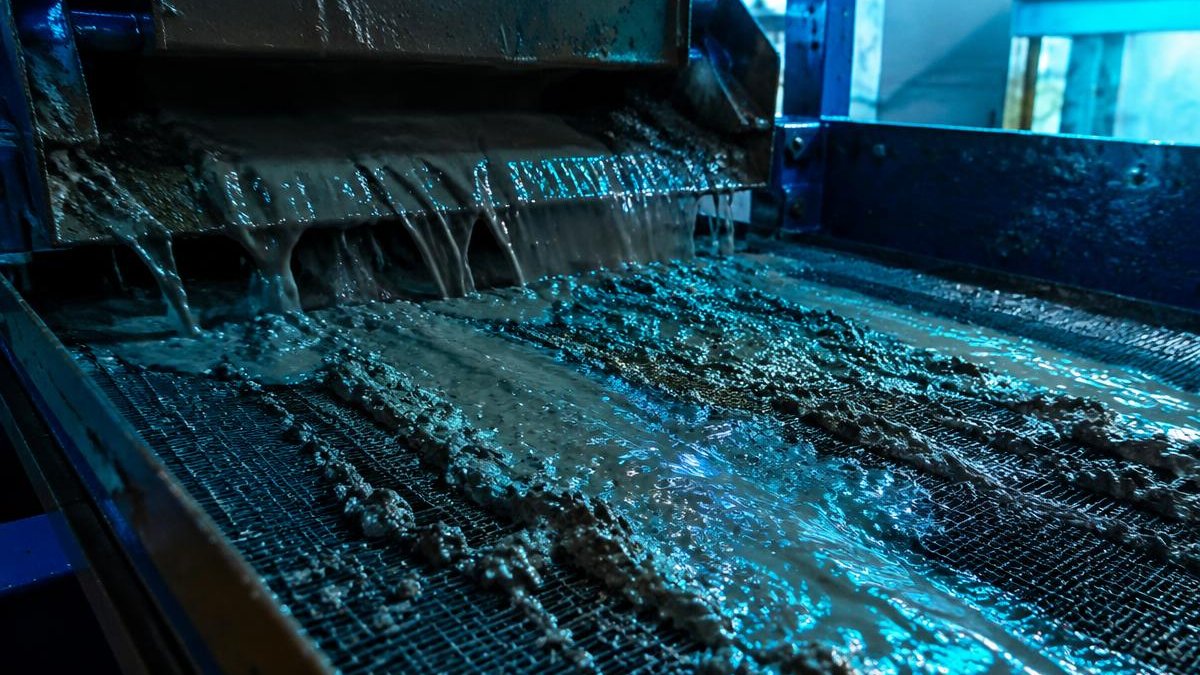 Circulating drilling fluid on a horizontal rig, where shear-thinning rheology governs pumping efficiency.
Thixotropy and Static Gel Strength During Pump Shutdowns
The defining attribute of a high-performance horizontal mud is the ability to move reversibly between a low-viscosity liquid under shear and a structured gel at rest. Native Guar Gum carries abundant hydroxyl groups along its mannose and galactose rings, and when circulation stops these groups re-form intermolecular hydrogen bonds, rebuilding a continuous three-dimensional network across the wellbore.
- Zero-shear yield stress: hydrated Guar Gum resists the gravitational pull on shale and sandstone cuttings with specific gravity of 2.3 to 2.8, even in 90 degree sections.
- Flat gel strength: the 10-second gel suspends solids instantly, while 10-minute and 30-minute gels plateau instead of climbing progressively.
- Clean restart: the gel breaks at low pump pressure, avoiding surge pressures that can fracture weak formations.
- Weighting agent suspension: the uniform network limits barite sag and preserves homogeneous mud density.
Untreated bentonite muds, by contrast, tend toward progressive gelling, which makes pump restarts riskier. Flat, fragile thixotropy is therefore a key reason directional teams specify Guar Gum systems for long laterals. Additional rheology comparisons are available on the Guar Gum versus Xanthan Gum page.
Preventing Cuttings Beds and Stuck Pipe in Extended Laterals
Differential sticking and mechanical pack-off are among the costliest sources of non-productive time in horizontal shale drilling. Pipe eccentricity slows fluid on the low side of the hole, which is exactly where cuttings accumulate.
- Dynamic bed erosion: elevated low-shear viscosity flattens the annular velocity profile toward plug flow, increasing drag on deposited cuttings and rolling dunes back into the stream.
- Lubricity: reduced metal-to-rock friction lowers torque and drag along long lateral strings.
- Thin filter cake: Guar Gum combined with fine bridging solids forms an ultrathin, low-permeability skin that limits invasion and contact friction across depleted zones.
- Smoother tripping: clean holes reduce overpull and the need for time-consuming back-reaming.
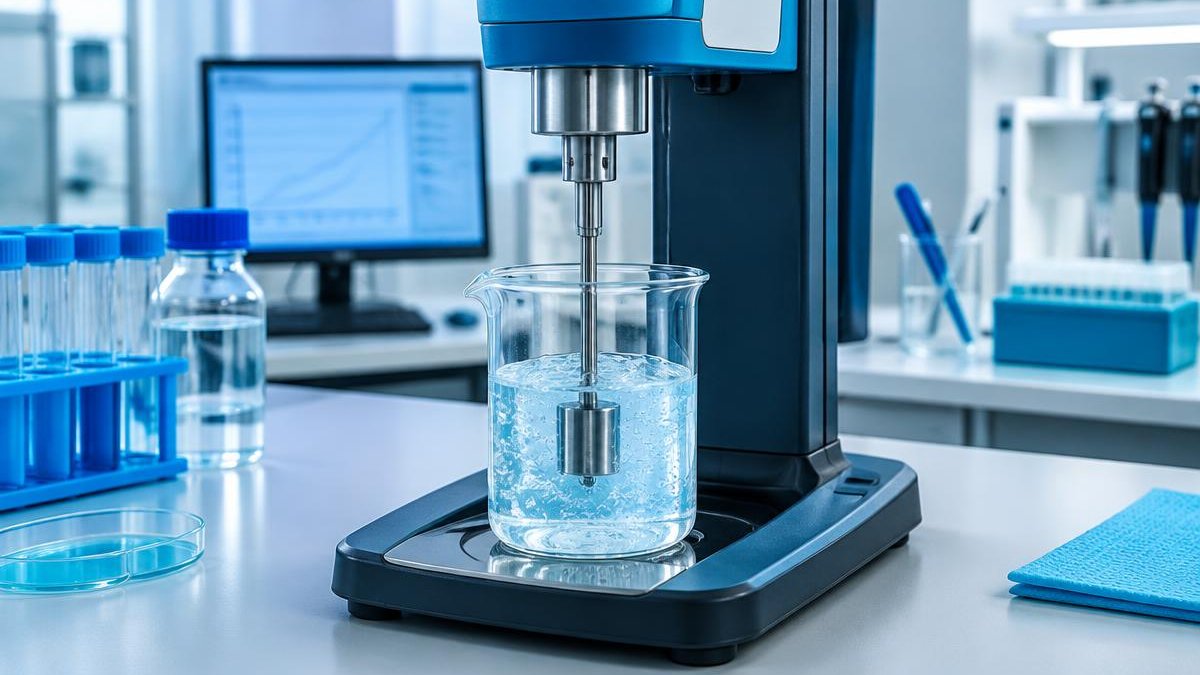 Laboratory rheology testing supports predictable gel strength and cuttings suspension in the field.
Fast Hydration and Formation Protection
Standard Guar Gum needs about 120 minutes of static hydration to reach maximum viscosity, which is impractical for rigs that mix continuously. Fast Hydration Guar Gum (FHGG) grades reach roughly 85 to 90 percent of peak viscosity within 2 to 3 minutes, enabling on-the-fly mixing without large pre-hydration pits.
- Brine compatibility: the non-ionic structure tolerates KCl and NaCl shale inhibition brines.
- Biodegradability: the polymer is fully biodegradable and non-toxic, supporting environmental compliance.
- Breakable gel: enzyme or oxidative breakers digest the galactomannan backbone into soluble sugars, restoring over 90 percent of native reservoir permeability according to industry studies.
- Derivative options: hydroxypropyl guar and carboxymethyl hydroxypropyl guar extend performance to higher temperatures.
Quality consistency matters at this scale, and batch testing practices are outlined on the quality page.
Key Takeaways
- Superior thixotropic balance: strong shear-thinning at the bit and rapid gel recovery at rest suspend cuttings across the full lateral.
- Flat gel strength: gels plateau instead of progressing, so pumps restart without damaging pressure surges.
- Stuck pipe mitigation: lower torque, thinner filter cake and cleaner holes reduce differential and mechanical sticking risk.
- Rapid hydration: FHGG reaches most of its viscosity within minutes, supporting continuous mixing at the rig.
- Biodegradable and breakable: clean breaks protect reservoir permeability and meet environmental expectations.
Frequently Asked Questions
How does Guar Gum improve hole cleaning in horizontal wells compared with vertical wells?
In vertical wells, upward flow lifts cuttings directly. In horizontal wells gravity acts across the flow, so cuttings fall into the narrow low-side annulus. Guar Gum raises low-shear viscosity and yield stress, increasing drag on settled solids and keeping them suspended in the fluid stream.
What is the difference between progressive gelling and flat gel strength?
Progressive gelling, common in untreated bentonite muds, keeps rising over time and makes pump restarts hazardous. Guar Gum muds develop an immediate 10-second gel that stops settling, then plateau at 10 and 30 minutes, breaking cleanly at low restart pressure without shocking weak formations.
Why is Fast Hydration Guar Gum needed for horizontal drilling?
Standard grades require roughly two hours of static hydration. FHGG achieves most of its peak viscosity within 2 to 3 minutes of entering the mud hopper, giving consistent downhole rheology without large storage pits.
How is the pay zone protected from damage?
Guar Gum forms a thin, low-permeability skin that limits filtrate invasion, and it can be fully degraded afterward with enzyme or oxidative breakers, leaving little residue to plug pore throats.
To optimize horizontal drilling fluid hydraulics and secure a reliable supply of Superior, fast-hydrating Guar Gum and HPG derivatives, contact the B.D. Guar Pvt. Ltd. technical team or write to sales@bdguar.com.