Custom Mesh Milled Powders: Matching Particle Sizes to Formulation Needs
Custom-milled Guar Gum from 100 to 300 mesh lets formulators balance easy dispersion against rapid hydration, matching particle size to every process need.
Last updated:
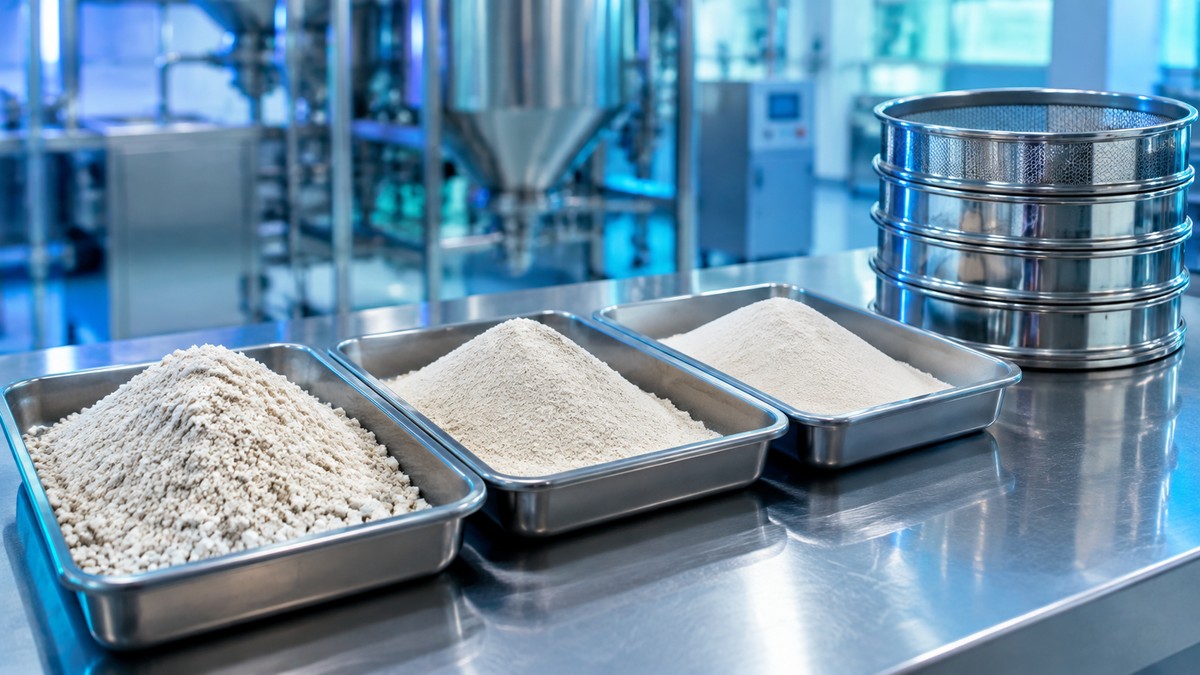
In 2026, as processing lines push higher automation speeds and energy-efficient cold processing, custom mesh milled Guar Gum powders have become a decisive specification for R&D formulation chemists and plant managers. Particle size, not just chemistry, determines how fast a hydrocolloid disperses, hydrates and builds viscosity. Custom milling from coarse 100 mesh to ultra-fine 300 mesh lets processors control dispersion kinetics, prevent agglomeration, tune hydration speed and deliver a Superior, homogeneous final texture matched to their exact process.
Research Overview
The chemical structure of Guar Gum, a 2:1 mannose-to-galactose galactomannan, sets its ultimate solubility and viscosity potential. Physical granulometry, however, governs the rate at which polymer chains hydrate, swell and develop apparent viscosity. Industry studies indicate that smaller particles hydrate faster because of their larger specific surface area, but also clump more readily under low shear. Matching mesh size to plant shear, batch cycle time and target rheology is therefore a core formulation decision.
Particle Granulometry and Specific Surface Area Dynamics
Guar Gum is derived from the seed endosperm of Cyamopsis tetragonoloba. It is a high-molecular-weight neutral polysaccharide, typically in the range of 1.5 to 2.5 million Daltons, built on a linear beta-(1-4)-D-mannose backbone with single alpha-(1-6)-D-galactose side branches. Refined endosperm splits are tough, fibrous platelets; multi-stage impact grinding, pin milling, air classification and precision screening convert them into standardized powders from coarse 80-120 mesh (roughly 125-180 microns) to ultra-fine 200-300 mesh (roughly 45-75 microns). Explore core terminology in the Guar Gum glossary.
Specific surface area scales inversely with particle diameter. Moving from 100 mesh (about 150 microns) to 200 mesh (about 75 microns) roughly doubles the surface area exposed to water per unit mass, which allows water to penetrate the galactomannan matrix more quickly and accelerates swelling and early viscosity development.
- Dissolution kinetics: Finer particles wet and uncoil faster, producing a steeper early hydration curve.
- Agglomeration risk: When ultra-fine powder meets water without adequate dispersion, the outer surface gels instantly and traps dry powder inside, forming unhydrated lumps known as fish-eyes.
- Air classification: Air-swept pulverizers paired with dynamic classifiers separate particles by aerodynamic drag and mass, producing narrow particle size distributions with minimal dust or oversize tailings.
- Grind temperature control: High-speed milling generates frictional heat; controlled cold-air grinding helps preserve native molecular weight, viscosity capacity and clean natural color.
Coarse Mesh Powders (80-120 Mesh): Maximizing Dispersion and Clump Prevention
Coarse Guar Gum powders offer distinct advantages in low-shear mixing environments and dry-blend manufacturing. With a lower surface-area-to-mass ratio, coarse particles absorb water at a controlled rate, allowing them to separate and disperse throughout the tank before surface gelation occurs, even under moderate agitation.
For plants running standard paddle agitators, low-speed anchor mixers or gravity-feed tanks, fine powders tend to clump. Specifying 100-120 mesh Guar Gum can remove the need for costly high-shear homogenizers or vacuum powder eductors, lowering capital expenditure.
- Dry-blend uniformity: Coarse particles match the size and bulk density of salt, sugar, spices, milk solids and feed grains, reducing segregation and settling in hoppers.
- Consistent dosing: Particle size parity ensures uniform gum distribution in dry soup mixes, bakery concentrates and animal feeds.
- Safer bulk handling: Coarse 80-100 mesh powders flow freely through pneumatic conveying, silo dischargers and bag-slitting stations with less bridging and airborne dust.
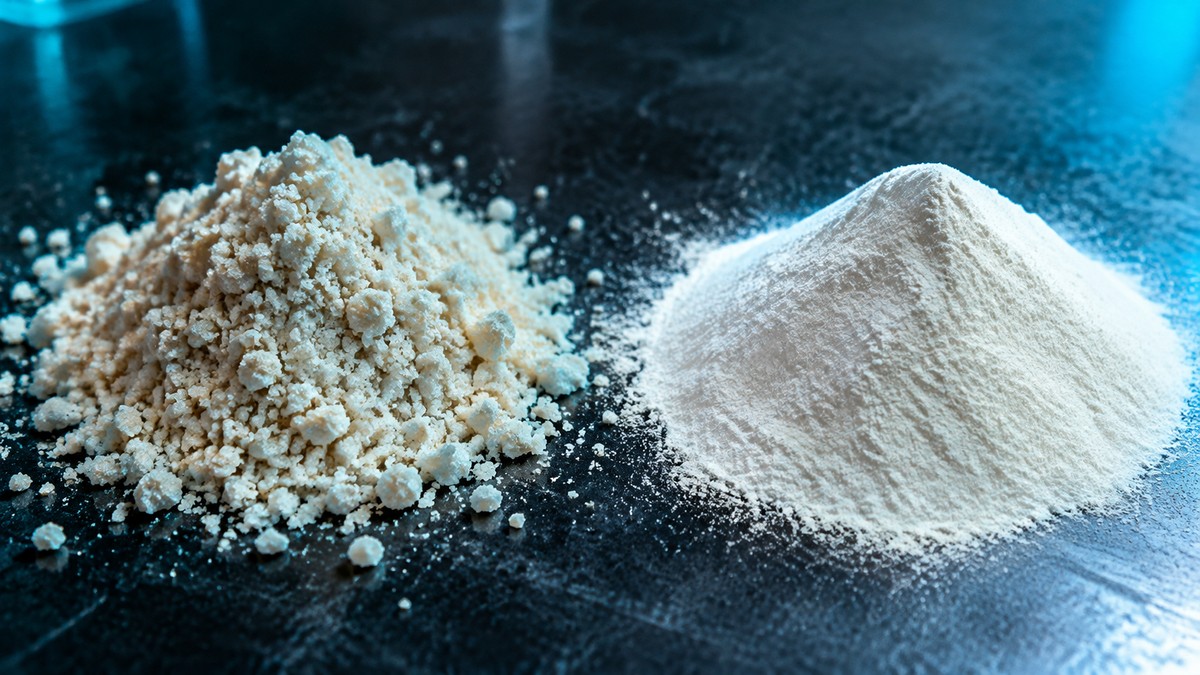 Coarse and ultra-fine Guar Gum grades are milled and classified to match specific dispersion and hydration requirements.
Fine and Ultra-Fine Mesh Powders (200-300 Mesh): Rapid Hydration and Texture Smoothness
Ultra-fine Guar Gum is engineered for high-speed continuous processing, rapid viscosity build and sensory-sensitive applications. In automated lines such as continuous instant noodle production, oilfield blender units and automated sauce compounding, hydration must happen within minutes. Fast-hydrating fine grades can reach roughly 80-90% of ultimate viscosity within 3 to 5 minutes under adequate shear.
In smooth products such as ice cream, low-fat mayonnaise, dressings and cosmetic lotions, coarse particles can be perceived as grittiness. Ultra-fine 250-300 mesh grades dissolve into a seamless hydrogel with a clean, smooth mouthfeel or skin feel. See how grades compare across applications on the comparison page.
- Grit-free texture: Complete dissolution delivers smooth, velvet-like body in delicate foods and personal care systems.
- Film and coating uniformity: Fine particle packing supports continuous films in paper sizing, textile warp sizing and seed coatings with fewer pinhole defects.
- Synergistic co-hydration: Fine Guar Gum blends evenly with xanthan gum, carrageenan and pregelatinized starches, so all components hydrate together and maximize synergistic viscosity. Learn more in Guar Gum vs xanthan gum.
Industrial Process Alignment: Shear Energy, Mixing Equipment and Viscosity Testing
Selecting the optimal mesh size means matching raw material properties to plant infrastructure and laboratory protocols. Facilities with rotor-stator mixers, inline venturi eductors or homogenizers can specify 200-300 mesh powders for maximum hydration speed. Facilities relying on low-shear tanks should generally select 100-120 mesh powders to guarantee lump-free dispersion.
Where ultra-fine powder must be used in low-shear tanks, pre-slurrying in a non-solvent liquid such as vegetable oil, propylene glycol, glycerin or alcohol at roughly 1:2 to 1:3 coats each particle so it separates fully before hydrating. Dry-blending with sugar, salt or starch achieves a similar effect.
- Audit mixing shear: Identify agitator type, tip speed and powder introduction method.
- Define the hydration window: Set the time available between powder addition and filling or downstream processing.
- Specify the mesh band: Choose coarse, standard or ultra-fine based on shear and time constraints.
- Verify with viscometry: Run Brookfield viscosity checks (1% solution, 25°C) at 15 minutes and 2 hours. A 100 mesh and a 200 mesh powder from the same lot typically reach similar 2-hour viscosity, but the 200 mesh grade shows a much steeper 15-minute curve.
- Lock the specification: Record the agreed mesh band, sieve limits and viscosity targets in the purchase specification so every future shipment performs identically.
Every custom-milled batch should be supported by sieve analysis, bulk density, moisture, ash and microbiological data. B.D. Guar quality systems, including ISO 22000 and FSSAI certification, are outlined on the quality page.
 Viscometric hydration curves confirm how each mesh grade performs before scale-up.
Key Takeaways
- Granulometry drives kinetics: Custom milling from 100 to 300 mesh lets processors match particle size to mixing capability and hydration requirements.
- Coarse grades disperse easily: 80-120 mesh powders slow surface wetting, prevent fish-eyes in low-shear tanks and match dry-blend ingredients.
- Fine grades hydrate fast: 200-300 mesh powders build viscosity within minutes and eliminate grittiness in smooth foods, personal care and coatings.
- Ultimate viscosity is similar: Mesh size mainly changes the rate of hydration, not the final viscosity potential of the same lot.
- Process alignment matters: Pre-slurrying, dry-blending and viscometric QC ensure the chosen grade performs consistently at scale.
Frequently Asked Questions
What is the difference between 100 mesh and 200 mesh Guar Gum powder?
Mesh refers to the number of openings per inch in a standard sieve. A 100 mesh powder passes particles below about 150 microns, while 200 mesh passes particles below about 75 microns. The finer 200 mesh grade has higher specific surface area and hydrates faster, whereas 100 mesh disperses more easily in low-shear tanks without forming lumps.
Why does fine Guar Gum powder form fish-eyes in water?
When fine powder contacts water too quickly, the outer particles hydrate instantly and form a gel membrane that traps dry powder inside. Introducing the powder through a high-shear eductor, dry-blending it with sugar or salt, or pre-slurrying it in oil or glycerin prevents these unhydrated lumps.
Does mesh size change the final viscosity of Guar Gum?
Mesh size mainly affects hydration rate rather than ultimate viscosity. With the same purity and molecular weight, 100 mesh and 200 mesh powders reach similar viscosity after about two hours. After 15 minutes, however, the 200 mesh grade delivers a significantly higher share of its final viscosity.
Which mesh size suits dry mixes versus smooth liquids?
Dry soups, bakery mixes and seasonings generally benefit from 100-120 mesh Guar Gum, which matches other dry ingredients and resists segregation. Smooth liquids such as ice cream, sauces, lotions and textile print pastes favor 200-300 mesh grades for rapid hydration and a grit-free texture.
To match exact particle size to your plant and formulation, explore the full range of custom-milled grades on the products page or contact the B.D. Guar technical team at sales@bdguar.com for specification sheets, sieve analysis certificates and trial samples.