Fish Feed Extrusion: Enhancing Pellet Water Stability and Durability
Guar Gum acts as a natural extrusion binder that lifts pellet durability, cuts nutrient leaching, and keeps aquaculture water cleaner and feed waste lower.
Last updated:
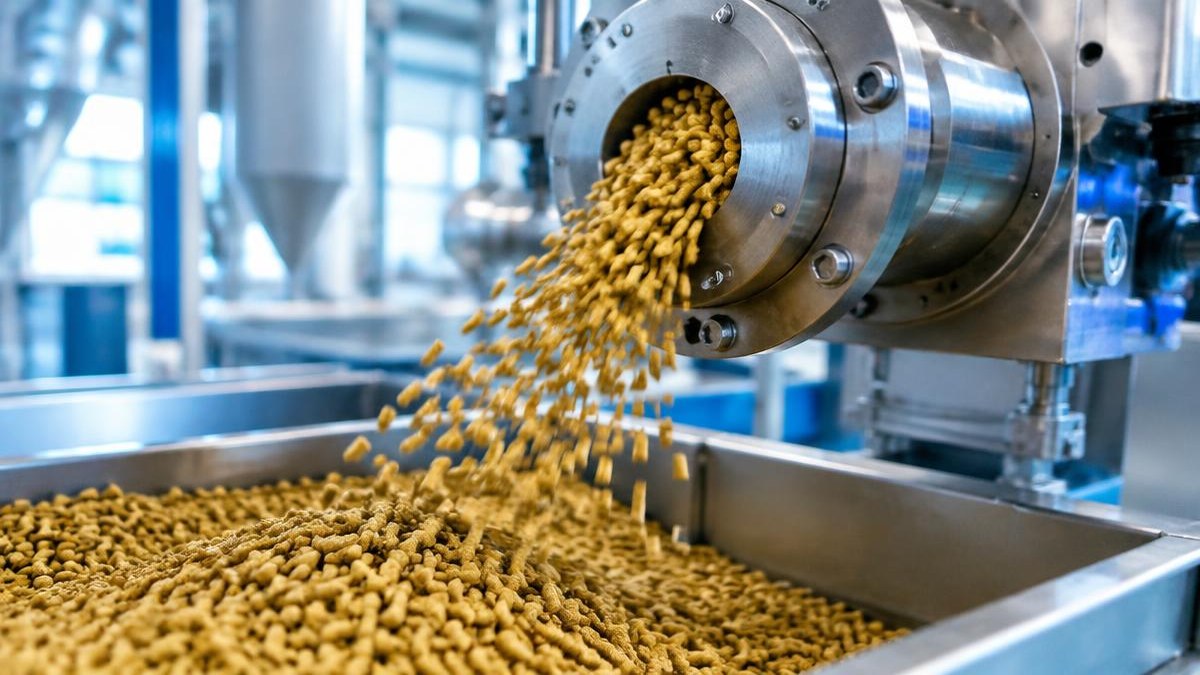
In the expanding 2026 global aquaculture sector, fish feed extrusion performance is defined by how well a pellet survives handling, transport, and hours of submersion. Feed disintegration wastes costly protein, pollutes ponds, and inflates feed conversion ratios. Guar Gum, a natural galactomannan binder, strengthens the extruded matrix, improves water stability, and reduces nutrient leaching, giving commercial fish feed manufacturers a clean-label route to Superior pellet quality.
Research Overview
Industry data from IMARC and the FAO indicate that feed accounts for the largest share of aquaculture operating cost, often estimated at 60 to 70 percent. Most commercial feeds are produced by thermo-mechanical extrusion, so pellet integrity directly determines profitability. This article reviews how Guar Gum functions as an extrusion binder, its effect on durability and leaching, and practical dosing guidance for aquafeed mills.
Why Pellet Disintegration Is Costly in Aquaculture
Intensive finfish and shrimp farming depends on pellets that stay intact until ingestion. When pellets fracture or dissolve early, water-soluble proteins, amino acids, vitamins, and minerals escape into the water column. Industry studies indicate that unconsumed feed fines and leached nutrients can represent a significant share of total feed waste in intensive pond culture.
Leached nitrogen and phosphorus raise Biological Oxygen Demand (BOD), promote algal blooms, and increase ammonia stress on stock. For manufacturers, the consequences appear as customer complaints, poorer Feed Conversion Ratios (FCR), and reputational risk.
- Fines and dust generated during pneumatic conveying, bagging, and shipping.
- Early swelling and breakup of pellets in static or flowing water.
- Loss of crystalline amino acids and water-soluble vitamins before ingestion.
- Higher organic load in ponds and recirculating aquaculture systems (RAS).
Learn more about the ingredient on the B D Guar product range and its technical glossary.
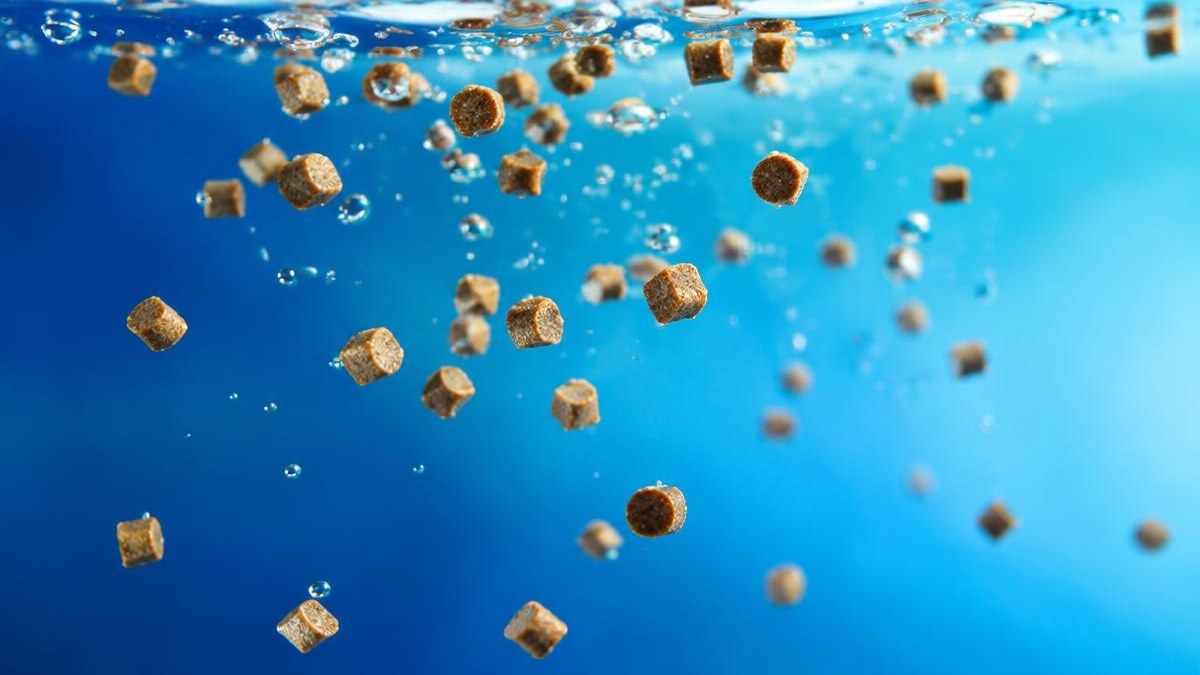 Extruded aquafeed pellets leaving the die of a commercial extrusion line.
How Guar Gum Strengthens the Extruded Matrix
Guar Gum is a galactomannan with a beta-1,4-linked mannose backbone and single galactose side branches at roughly a 2:1 ratio. During extrusion at typical barrel temperatures of 100 to 140 degrees Celsius, these long chains hydrate and hydrogen-bond with gelatinized starch and denatured protein. Research in Carbohydrate Polymers and the Journal of Food Science on galactomannan-starch systems supports this interaction.
The resulting hydro-gel network coats protein fibers and entraps lipid droplets, so the cooled pellet resists water penetration and mechanical abrasion.
- Durability: Industry testing reports Pellet Durability Index (PDI) values above 95 percent when Guar Gum is included at roughly 0.2 to 0.8 percent of the formula.
- Expansion control: Guar Gum modifies melt viscoelasticity and die swell, helping engineers tune bulk density for floating, slow-sinking, or sinking feeds.
- Starch synergy: Wheat, corn, and tapioca starches gelatinize more uniformly in the presence of a hydrated galactomannan network.
Compare binder options on the hydrocolloid comparison page.
Reducing Nutrient Leaching and Protecting Water Quality
A cohesive pellet holds its nutrients until the animal eats it. Notebook-referenced technical data indicate that Guar Gum can reduce nitrogen and phosphorus leaching substantially during the first hours of immersion, with figures in the range of 35 to 60 percent reported for well-bound pellets. Actual results depend on formulation, process conditions, and species.
- Micronutrient protection: The gel network helps retain ascorbic acid, B-complex vitamins, and crystalline lysine and methionine.
- Lower organic load: Reduced fines and silt help limit Total Suspended Solids (TSS) and BOD in earthen ponds.
- RAS performance: Less particulate waste reduces bio-filter clogging in high-density recirculating systems.
- Better FCR: Animals ingest complete, balanced rations rather than fragmented particles, which industry trials associate with improved feed efficiency.
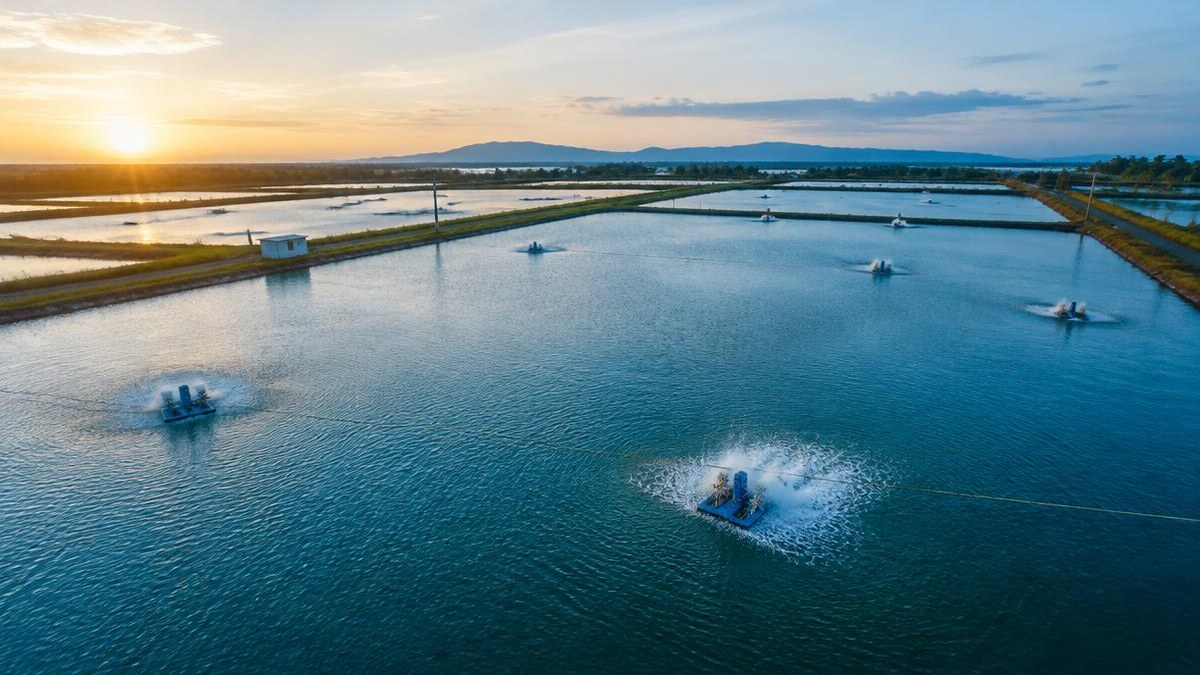 Water-stable pellets support cleaner pond and recirculating system environments.
Digestive Compatibility and Palatability
At typical binder inclusion levels, Guar Gum is a plant-derived, non-toxic polysaccharide. Industry studies indicate that low-dose galactomannans are compatible with endogenous digestive enzymes in fish and can ferment gradually in the hindgut to produce short-chain fatty acids, supporting gut health.
- Neutral taste and odor preserve the effect of fish meal, squid meal, and betaine attractants.
- Soluble fiber contributes a mild prebiotic effect in the hindgut.
- Dosage is kept low, so nutrient dilution is negligible.
Review quality documentation on the quality and certifications page.
Dosage, Processing, and Compliance Guidance
Dosage should be validated in pilot extrusion trials for each recipe. Typical starting ranges used in the industry are shown below.
- Floating finfish feeds: approximately 0.2 to 0.5 percent by weight.
- Slow-sinking feeds: approximately 0.4 to 0.7 percent.
- Shrimp feeds needing extended stability: approximately 0.6 to 1.0 percent.
- Dispersion: Pre-blend 200 mesh Guar Gum with dry meals in the ribbon or paddle mixer before steam and water injection to avoid lumps.
- High plant protein diets: Guar Gum helps rebuild cohesion lost when fish meal is replaced with pea, soy, or guar meal.
Feed-grade Guar Gum from B D Guar is plant-derived and aligned with feed hygiene frameworks referenced by the FAO, USDA, EFSA, and CODEX. Explore the company's sustainability commitments for sourcing details.
Key Takeaways
- Superior water stability: A hydrated galactomannan network helps pellets hold together for hours underwater.
- Higher durability: PDI values above 95 percent are achievable with optimized inclusion and process control.
- Lower nutrient loss: Better binding reduces leaching of nitrogen, phosphorus, vitamins, and amino acids.
- Cleaner water: Less waste feed lowers organic load, BOD, and ammonia pressure in ponds and RAS.
- Formulation flexibility: Supports high plant-protein recipes and tunable floating or sinking behavior.
Frequently Asked Questions
How does Guar Gum improve the water stability of extruded fish feed?
Guar Gum hydrates during extrusion and hydrogen-bonds with gelatinized starch and protein. On cooling, the resulting gel network resists water penetration and abrasion, helping pellets stay intact for hours underwater. Exact stability depends on recipe, process settings, and inclusion rate.
Does Guar Gum change whether pellets float or sink?
Guar Gum is not a buoyancy agent by itself, but it influences melt viscoelasticity and die swell. Combined with moisture, temperature, and screw speed adjustments, it helps engineers tune bulk density for floating or sinking pellets.
What inclusion rate is typical in commercial aquafeed?
Industry practice typically ranges from about 0.2 to 0.6 percent for standard finfish feeds and up to roughly 1.0 percent for slow-sinking or shrimp feeds. Pilot extrusion trials are recommended to confirm the optimum for each formulation.
Is Guar Gum safe for fish and shrimp?
At recommended binder levels, plant-derived Guar Gum is non-toxic and compatible with digestive enzymes. Soluble fiber from Guar Gum can also ferment in the hindgut to produce beneficial short-chain fatty acids.
To strengthen pellet quality and secure Superior, feed-grade 200 mesh Guar Gum, contact the B D Guar technical team or email sales@bdguar.com for specifications, trial guidance, and freight quotes.