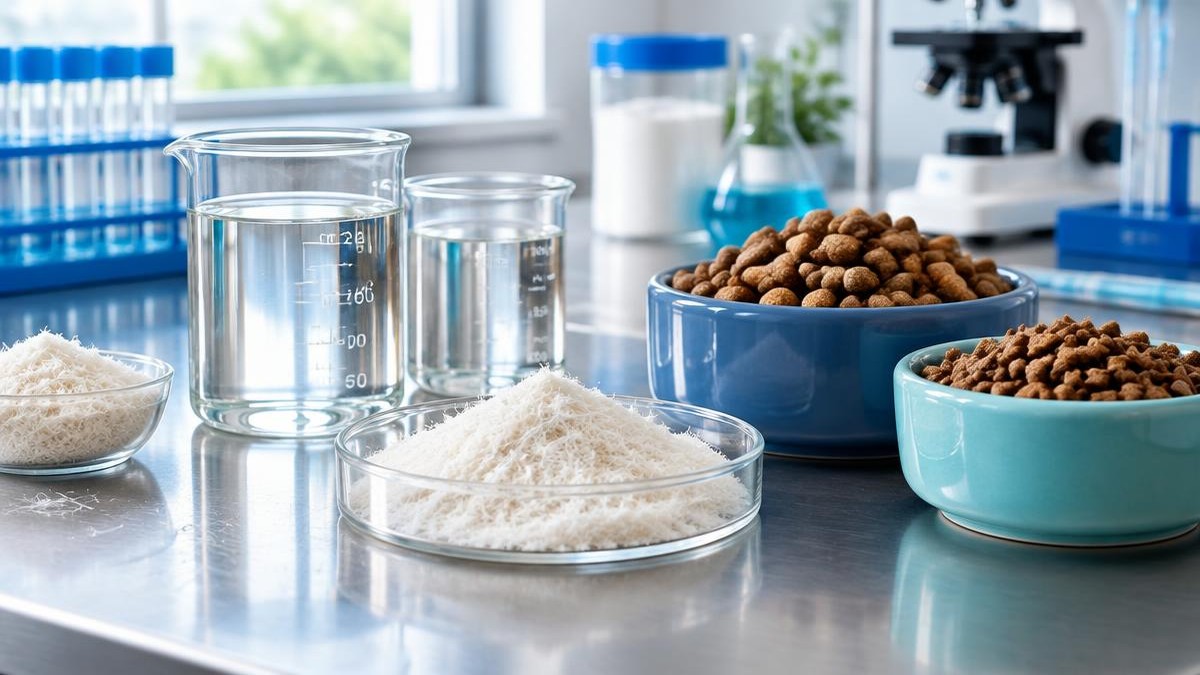
Firefighting Gel Retardants: Minimizing Evaporation and Extending Drop Accuracy
Guar Gum thickens water-retardant mixes so aerial drops stay cohesive in wind, resist evaporation and land accurately on fire-retardant barriers.
Last updated:
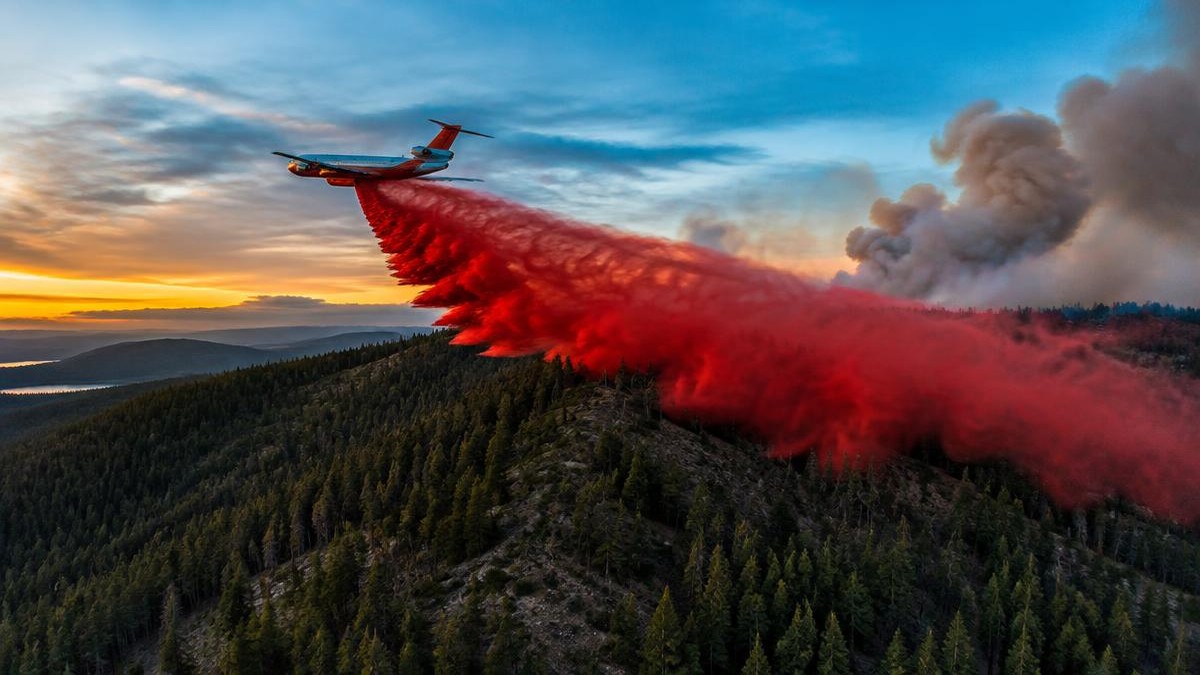
As wildfire seasons grow longer and more volatile across the 2026 global landscape, firefighting gel retardants have become a central tool for forestry fire services that need aerial drops to reach the ground intact. Water alone atomizes in wind shear and evaporates quickly in hot, dry air. Thickening the mixture with Guar Gum, a natural galactomannan hydrocolloid, changes how the liquid breaks up, travels and clings to fuel, giving fire managers a more predictable barrier.
Research Overview
Guar Gum is a plant-derived polysaccharide obtained from the endosperm of Cyamopsis tetragonoloba. In wildland firefighting it acts as a thickener and film-forming agent that keeps moisture and retardant localized at the target site. Industry studies indicate that the same rheology principles used to control spray drift in agriculture apply directly to aerial retardant delivery, where droplet size, cohesion and adhesion decide whether a line holds.
Viscosity and Elasticity of Water-Retardant Mixes
The galactomannan backbone of Guar Gum is a beta-(1-4)-D-mannopyranose chain with single alpha-(1-6)-D-galactopyranose side branches, at a mannose-to-galactose ratio of roughly 1.5:1 to 2:1. In water these chains hydrate and entangle, building viscosity and a degree of elasticity in the continuous phase of a retardant mix.
A standard 1.0% (w/w) dispersion of high-purity Guar Gum typically develops an apparent viscosity of 2,000 to 8,000 cps when measured at 25 degrees C on a Brookfield viscometer at 20 rpm. Above approximately 0.2% w/w the solution becomes pseudoplastic: it thins under high shear, such as pumping and release, and recovers body once the shear stops.
- Shear-thinning delivery: low apparent viscosity during pumping and release, higher viscosity in flight and on impact.
- Elastic cohesion: entangled chains resist stretching and break-up of the liquid sheet.
- Cold-water solubility: hydration needs no heating, which suits field mixing at remote air bases.
 Thickened retardant keeps an aerial drop cohesive as it descends toward the fire line.
Drop Cohesion and Drift Control in Wind Shear
Aerial drops are lost to wind through the formation of fine, driftable droplets. Guar Gum functions as a polymer rheology modifier that alters the wave instabilities in a liquid sheet and therefore the way it atomizes. Wind tunnel work on flat-fan nozzles at 60 psi under coaxial airflow reported that Guar Gum cut the fraction of fine droplets below 150 micrometers by up to 69% compared with a water control.
The same testing showed the Volume Median Diameter rising from about 670 micrometers in water to roughly 820 to 843 micrometers with Guar Gum alone. Larger, heavier droplets carry more momentum and are less easily displaced by crosswinds.
- Fewer fines: less mist drifting away from the intended barrier.
- Larger median droplets: improved penetration through canopy and wind.
- Tunable breakup: blending with oils or surfactants can control the ultra-coarse fraction above 622 micrometers while still suppressing fine mist.
Evaporation Reduction and Surface Adhesion
The hydrophilic network of Guar Gum binds water through extensive hydrogen bonding, lowering the vapor pressure of the liquid and holding moisture inside the retardant matrix at the target site. Slower moisture loss extends the time a treated fuel bed stays wet and keeps chemical retardant in contact with fuel rather than running off or dissipating.
Guar Gum also improves stickiness and clinging, much as it adheres active ingredients to foliage in agricultural sprays. On trees, shrubs and surface fuels this adhesion supports a more continuous retardant film, which is the practical basis of a fire-retardant barrier.
- Moisture retention: a hydrogen-bonded gel matrix slows evaporative loss.
- Localization: thickened liquid stays where it lands instead of running downslope.
- Film formation: a cohesive coating on fuel extends the effective life of the barrier.
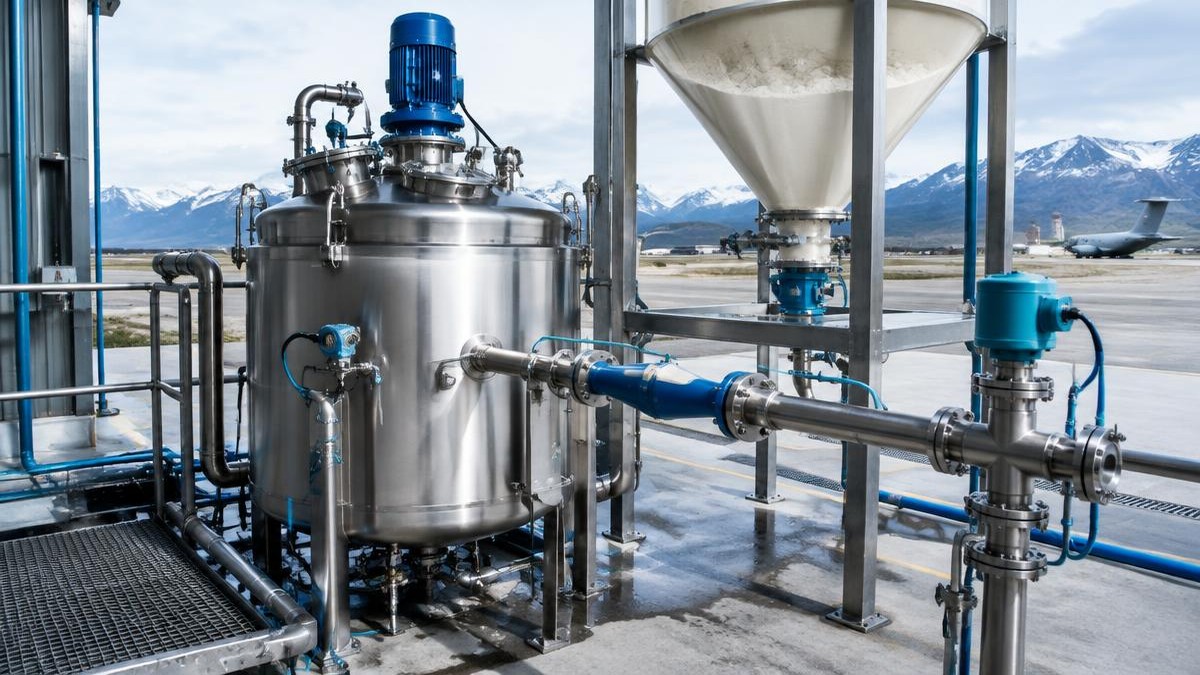 Fast-hydrating grades allow retardant mixing at remote bases without long pre-hydration times.
Dosage, Mixing and Hydration Practice
Guar Gum is effective at low loadings. In diluted spray mixtures, industry studies report effective concentrations of roughly 0.0045% to 0.040% v/v, commonly 0.009% to 0.020% v/v, while concentrated adjuvant products typically carry 1.0% to 6.0% Guar Gum. Friction-reduction duty in high-rate pumping generally sits near 0.1% to 0.2% by weight. Final dosage for any retardant should be validated against the specific salt or ammonium-phosphate chemistry in use.
Standard grades need about 120 minutes at 25 degrees C to reach full viscosity, whereas Fast Hydration Guar Gum reaches 80% to 90% of ultimate viscosity within two to three minutes. For operations that mix on demand, the faster grade removes the need for large pre-hydration tanks. Granulometry matters as well, since commercial powders are milled at 100 to 300 mesh and finer powders hydrate faster but are more prone to fish-eyes.
- Disperse slowly: add powder into the vortex of an agitated tank or through a venturi eductor.
- Pre-blend: mix with dry carrier solids, for example at a 5:1 ratio, to separate particles.
- Match the mesh: choose particle size to the mixing equipment and available hydration time.
Related guidance is available in the Guar Gum glossary and on the products page.
Biodegradability and Regulatory Profile
Guar Gum is a natural, fully biodegradable, soil-safe hydrocolloid that leaves no persistent synthetic residue, an important property for retardants applied across forests, watersheds and grazing land. Acute toxicity is very low, with a documented oral LD50 in rats of 6,770 mg/kg. It holds US FDA GRAS status under 21 CFR 184.1339, FEMA No. 2537 and the E412 designation recognized by EFSA and the international food code. Sustainability credentials are detailed on the sustainability page.
Key Takeaways
- Cohesive drops: Guar Gum raises viscosity and elasticity so aerial drops resist wind-driven break-up.
- Less drift: wind tunnel testing reported up to 69% fewer fine droplets under 150 micrometers than water.
- Slower evaporation: hydrogen-bonded gel structure holds moisture at the target site.
- Low dosage: effective at ultra-low concentrations, commonly 0.009% to 0.020% v/v in tank mixes.
- Fast field mixing: Fast Hydration Guar Gum reaches 80% to 90% viscosity in two to three minutes.
- Environmentally compatible: biodegradable, soil-safe and recognized as GRAS.
Frequently Asked Questions
How does Guar Gum improve aerial drop accuracy?
By raising the viscosity and elasticity of the water-retardant mix, Guar Gum changes how the liquid sheet breaks up in flight. Fewer fine droplets and a larger median droplet size mean less drift in wind, so more of the load lands on the intended fire-retardant barrier.
Does Guar Gum reduce evaporation of retardant mixes?
Its hydrophilic network binds water through hydrogen bonding and lowers the vapor pressure of the liquid. This keeps moisture and chemical retardant localized on fuels for longer, supporting a more durable barrier in hot, dry conditions.
Which grade suits on-the-fly mixing?
Fast Hydration Guar Gum reaches 80% to 90% of its ultimate viscosity within two to three minutes, compared with roughly two hours for standard grades. It suits air bases and remote sites where long pre-hydration is impractical. Disperse it through a venturi eductor or vortex to avoid lumps.
Is Guar Gum safe for forests and watersheds?
Guar Gum is a natural, biodegradable, non-toxic hydrocolloid with GRAS status and no persistent synthetic residue. Compatibility with the specific retardant chemistry and local approval requirements should still be confirmed before field use.
Fire service managers and chemical laboratories can request technical data, samples and grade recommendations from B D Guar through the contact page or at sales@bdguar.com.