Clay Stabilization: Integrating Guar-Based Fluids with KCl Brines
Combining KCl brine with Guar Gum delivers dual-action clay stabilization, curbing shale swelling, bit balling, and costly NPT in reactive shale formations worldwide.
Last updated:
In the demanding 2026 global oilfield sector, clay stabilization with Guar Gum and potassium chloride brines has become a vital technical strategy for completion engineers and drilling superintendents working in water-sensitive shale. As unconventional drilling expands into reactive, smectite-rich geology, preventing shale swelling, bit balling, and wellbore destabilization is essential to holding drilling schedules. Combining biodegradable Guar Gum with inorganic KCl delivers a Superior, environmentally responsible fluid system that preserves wellbore integrity and protects reservoir permeability.
Research Overview
The 2026 oilfield environment is defined by longer horizontal laterals, multi-stage hydraulic fracturing, and stricter rules on drilling fluid disposal. Operators in North America, South America, and the Middle East regularly encounter swelling smectite, mixed-layer illite-smectite, and montmorillonite clays. Industry studies indicate that demand for bio-based drilling fluid additives continues to grow as natural hydrocolloids replace synthetic polymers. Untreated water-based muds allow water into clay interlayers, causing sloughing, bit balling, torque spikes, and formation damage. A dual-action approach, pairing inorganic ion exchange with organic polymer encapsulation, addresses both causes. Explore the full Guar Gum product range for oilfield grades.
Synergistic Mechanisms of Ion Exchange and Galactomannan Encapsulation
Swelling and collapse in clay-bearing formations stem from electro-chemical interactions between water and negatively charged clay platelets. Smectite and bentonite clays have a high cation exchange capacity, so a two-tier defense that acts at the atomic and macromolecular levels is the most effective response.
- Inorganic cation exchange: Osmotic swelling is driven by weakly bound, hydrated sodium ions between silicate layers. Potassium ions, with an ionic radius near 1.33 Angstroms and low hydration energy, fit into the hexagonal cavities of the clay sheet, replace sodium by mass-action exchange, and collapse the interlayer spacing to a stable 10-Angstrom structure.
- Macromolecular encapsulation: Native Guar Gum is a non-ionic galactomannan with a beta-1,4-linked mannose backbone and alpha-1,6-linked galactose branches at roughly a 2:1 ratio. Its hydroxyl groups hydrogen-bond with clay surfaces, wrapping particles in a protective viscoelastic shell. See the Guar Gum glossary for terminology.
- Reduced capillary suction pressure: Together, K+ exchange and polymer film formation lower capillary suction pressure and filtrate invasion. Industry studies indicate that fluids with 3% to 5% KCl and 0.3% to 0.5% Guar Gum cut shale swelling by more than 85% compared with fresh water.
- Shear-thinning rheology: Pseudoplastic flow reduces viscosity at the bit nozzle to save hydraulic horsepower, then recovers in the annulus to suspend cuttings and keep the hole clean.
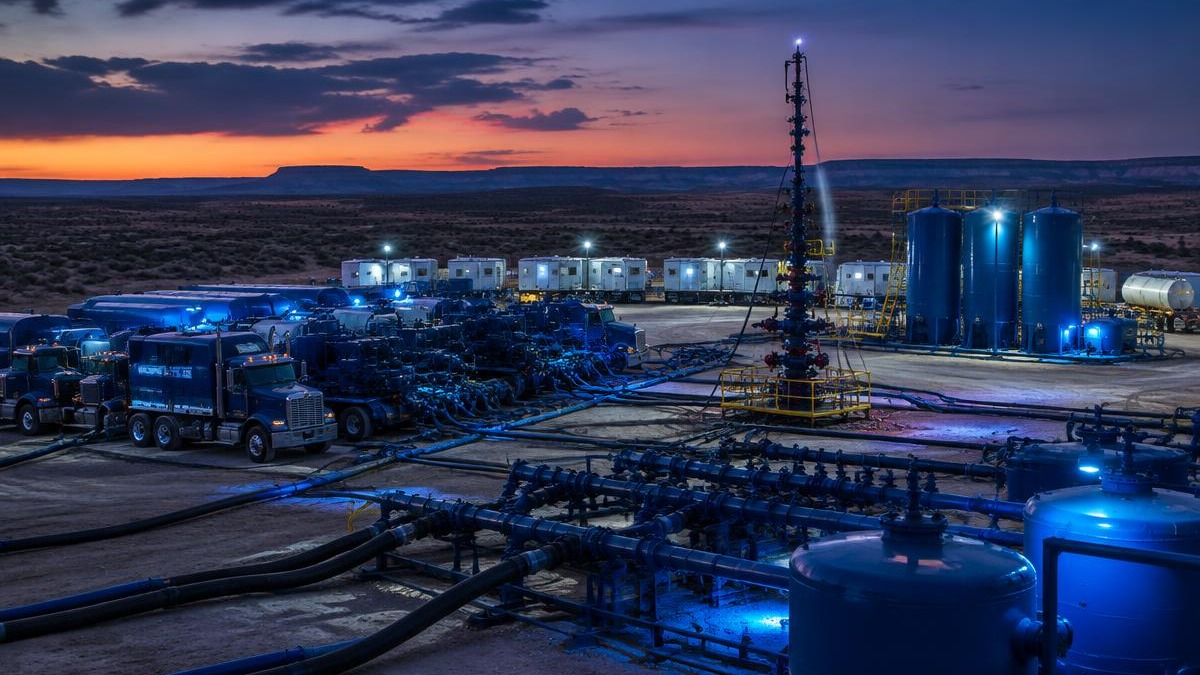
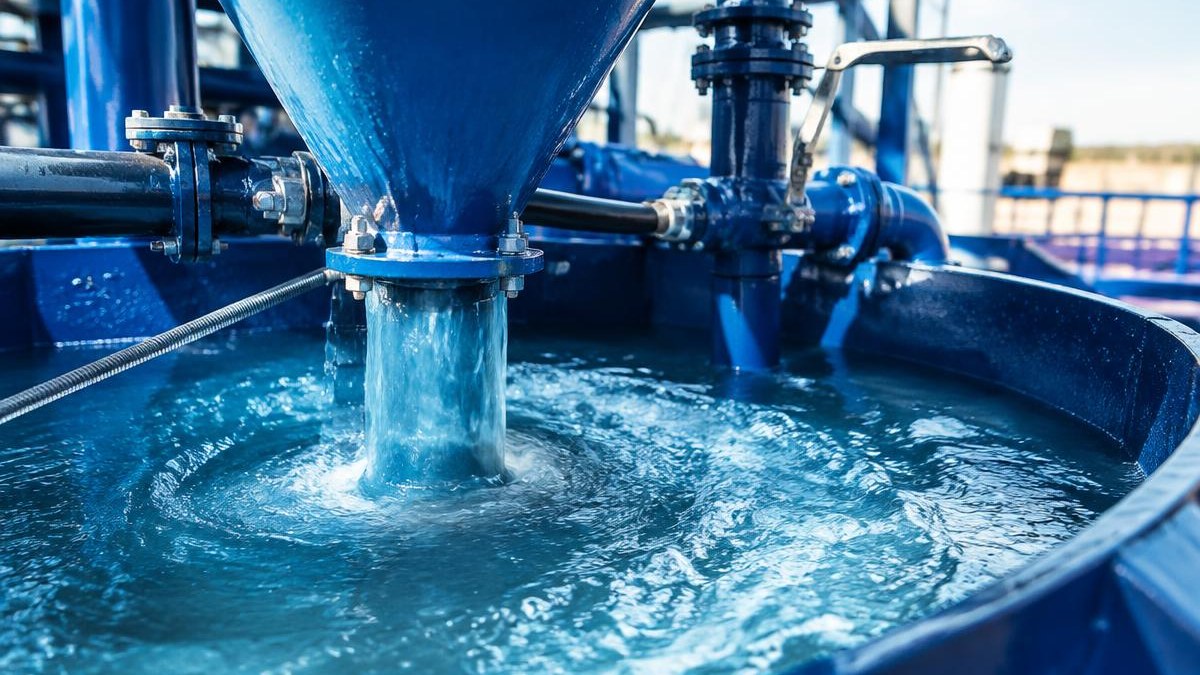 Drilling fluid preparation with Guar Gum and potassium chloride brine at a shale wellsite.
Rheological Stability and Hydration in High-Salinity KCl Brines
Polymers in dense electrolyte solutions can suffer coil collapse, precipitation, or severe viscosity loss. The non-ionic structure of Guar Gum makes it well suited to high-salinity KCl systems, as the following properties show.
- Tolerance to high ionic strength: Ionic additives such as carboxymethyl cellulose and partially hydrolyzed polyacrylamide (PHPA) contract in salt water through charge screening. Guar Gum has no charged carboxylate groups, so it keeps its extended conformation and hydrates across KCl concentrations from 2% to 15%.
- Rapid cold-water hydration: Field mixing often uses cold make-up water under tight time limits. Fast-hydrating grades reach working viscosity quickly, shortening fluid preparation.
- Viscosity and fluid loss control: At 3 to 6 kg per cubic meter, Guar Gum builds low-shear yield point and gel strength to carry cuttings in high-angle wells. Semi-hydrated micro-gels plug shale micro-pores and form a thin filter cake, reducing API fluid loss to below 6 mL per 30 minutes.
- Thermal endurance: Native Guar Gum holds structural viscosity at circulating temperatures up to 220 degrees Fahrenheit (104 degrees Celsius). Above 250 degrees Fahrenheit, derivatives such as Hydroxypropyl Guar (HPG) or Carboxymethyl Hydroxypropyl Guar (CMHPG) add thermal stability and crosslinking capability with zirconium or boron complexes.
Preventing Bit Balling, Wellbore Collapse, and Formation Damage
Drilling reactive shale without effective stabilization triggers mechanical failures that raise non-productive time (NPT) and well construction cost. Encapsulation with Guar Gum, combined with potassium exchange, targets each failure mode directly.
- Bit balling and pipe sticking: Swollen, sticky clay adheres to bits, bottom-hole assemblies, and drill strings. Encapsulated cuttings with a reduced hydration sphere resist clay-to-steel adhesion, preserving rate of penetration and reducing drag.
- Sloughing shales and washouts: The barrier film and K+ exchange seal micro-fissures and suppress pore pressure transmission, maintaining wellbore stability through extended static periods.
- Reservoir permeability: Guar Gum-KCl fluids limit in-situ swelling of authigenic smectite or illite. Oxidative breakers such as ammonium persulfate or hemicellulase enzymes degrade the galactomannan backbone to low-molecular-weight sugars, giving over 90% regain permeability.
- Environmental compliance: Derived from natural seeds, Guar Gum is readily biodegradable and non-toxic, consistent with criteria referenced by FAO, USDA, EFSA, and CODEX. Read more on sustainability at B D Guar.
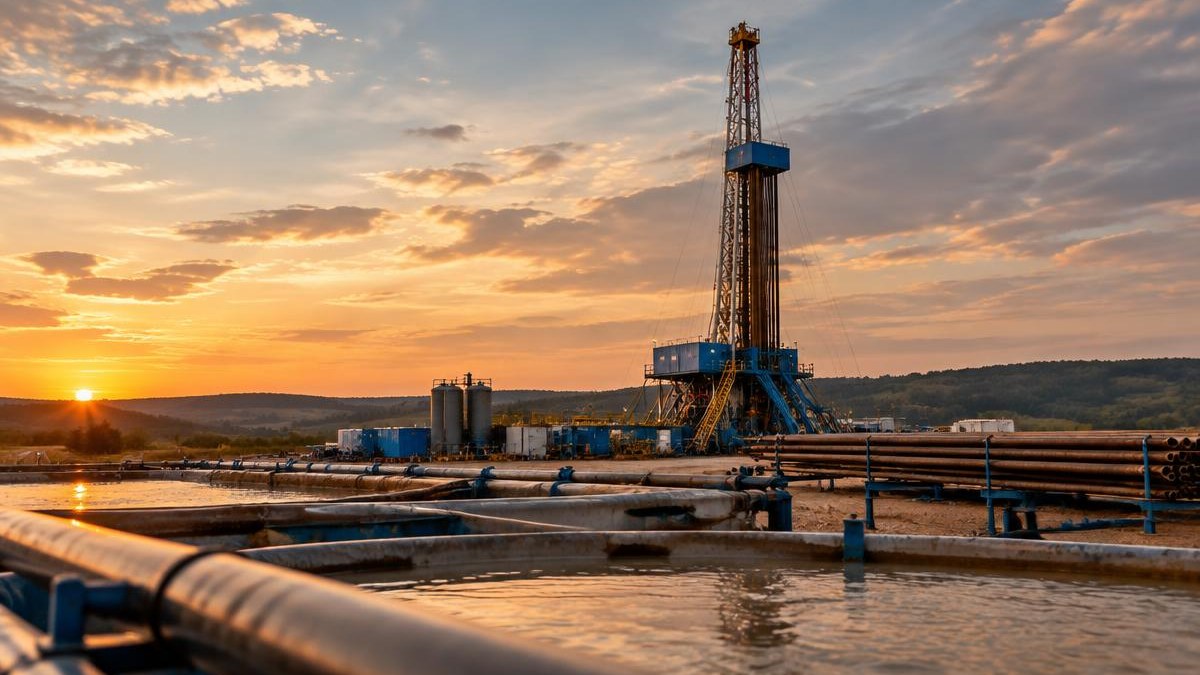
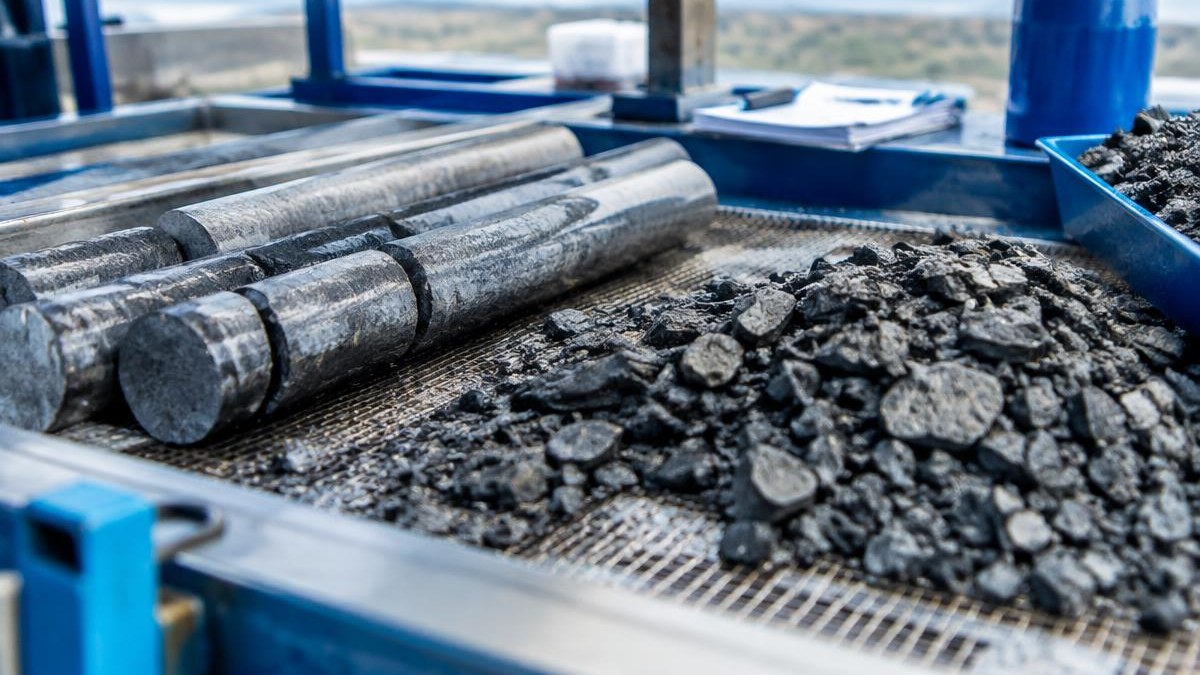 Reactive shale drilling where Guar Gum-KCl fluids protect wellbore integrity.
Economic Optimization and Field Best Practices in 2026
A Guar Gum-KCl system delivers financial and operational advantages across complex 2026 drilling campaigns, particularly where oil-based mud or synthetic polymers would otherwise be specified.
- Cost-effective formulation: Dry powder Guar Gum with industrial-grade KCl generally gives a lower total cost per barrel than synthetic liquid friction reducers or oil-based mud, with a smaller logistical footprint.
- Reduced NPT: Fewer washouts, stuck-pipe events, bit balling incidents, and wiper trips. Industry studies indicate 15% to 25% higher daily footage and up to 30% fewer rig days per well when moving from uninhibited polymers to an optimized KCl-Guar Gum system.
- Additive compatibility: Guar Gum works with barite and calcium carbonate weighting agents, lubricants, biocides, and secondary fluid loss additives, letting mud engineers adjust density and rheology as pressure regimes change.
- Mixing protocol: Pre-dissolve KCl in make-up water at 3% to 5% w/v before adding polymer, and use high-shear jet hoppers to avoid fish-eyes. A non-hazardous biocide such as glutaraldehyde protects stored mud from bacterial degradation. Compare options on the comparison page, and review batch consistency under our quality standards.
Key Takeaways
- Dual-action stabilization: KCl brine and Guar Gum combine potassium ion exchange with galactomannan encapsulation, reducing shale swelling by over 85%.
- Non-ionic salt tolerance: Guar Gum hydrates and builds viscosity in high-salinity brines without the polymer collapse seen in ionic additives.
- Operational hazard prevention: Encapsulation limits bit balling, pipe sticking, sloughing shales, and washouts, protecting ROP and cutting NPT.
- Reservoir protection: Clean enzymatic and oxidative breaking leaves minimal residue and preserves over 90% regain permeability.
- Environmental compliance: A 100% natural, biodegradable hydrocolloid aligned with 2026 onshore and offshore waste management expectations.
Frequently Asked Questions
Why is KCl preferred over NaCl for clay stabilization in drilling fluids?
Potassium ions have a smaller hydrated radius and lower hydration energy than sodium ions. They enter the hexagonal lattice of smectite clays, replace sodium, collapse the interlayer gap, and bind clay layers together, whereas NaCl cannot effectively suppress clay hydration.
Does high KCl concentration impair Guar Gum hydration and viscosity?
No. Native Guar Gum is a non-ionic galactomannan, so its chain conformation does not depend on electrostatic repulsion. It hydrates smoothly and keeps high viscosity across KCl concentrations of 2% to 15% without coil collapse or precipitation.
How does Guar Gum compare with PHPA for shale encapsulation?
PHPA encapsulates shale effectively but is sensitive to salinity, divalent cations such as calcium and magnesium, and mechanical shear. Guar Gum offers Superior salt tolerance, shear-thinning rheology, natural biodegradability, and lower environmental toxicity, easing cuttings disposal.
What dosage of Guar Gum and KCl suits reactive shale formations?
Typical field formulations use 3% to 5% w/v KCl with 0.3% to 0.6% w/v high-viscosity or fast-hydrating Guar Gum, roughly 3 to 6 kg per cubic meter. Final dosage should be set by capillary suction time and linear swell meter tests on formation cores.
To optimize drilling fluid formulations and secure high-viscosity, fast-hydrating Guar Gum for global oilfield completions, contact the technical team at B.D. Guar Pvt. Ltd. or write to sales@bdguar.com.