Shelf Life Stability in 2026: The Science of Water Activity Control
In 2026's e-commerce food landscape, mastering water activity control is the key to shelf life. Discover how Guar Gum binds free moisture to halt spoilage and protect product integrity.
Last updated:
As the global food supply chain rapidly decentralizes to support direct-to-consumer delivery models, mastering water activity control food shelf life has emerged as the defining technical challenge of 2026. While the explosive expansion of e-commerce grocery and direct-to-door meal delivery provides unprecedented market access for food manufacturers, the harsh reality of unreliable cold chains and fluctuating ambient transit temperatures constantly threatens product integrity. To ensure prolonged preservation without relying on synthetic chemical preservatives, modern food scientists utilize high-performance natural galactomannans. By strategically deploying Guar Gum, manufacturers can effectively immobilize free water within the food matrix, halting microbial proliferation and chemical degradation to guarantee a Superior consumer experience upon delivery.
Research Overview: The Thermodynamics of Free Water in Food Matrices
Maintaining structural, microbial, and sensory quality over an extended distribution window requires a precise understanding of water thermodynamics within the food matrix. The concept of water activity (aw) — defined as the ratio of the vapor pressure of water in a food system to the vapor pressure of pure water at the same temperature — is the single most predictive indicator of product shelf life. Free water acts as the primary solvent and transport medium for enzymatic reactions, lipid oxidation, and the rapid proliferation of spoilage microorganisms such as bacteria, yeasts, and molds. When the water activity of a food system exceeds critical thresholds (typically above 0.85 for most pathogenic bacteria), the product becomes highly susceptible to rapid microbial degradation.
In 2026, reducing water activity through traditional methods such as heavy salting, massive sugar addition, or extreme thermal dehydration is no longer commercially viable, as these techniques severely degrade the nutritional profile and violate stringent clean-label consumer demands for low-sodium and low-sugar diets. To solve this thermodynamic challenge, formulators rely on the integration of complex polysaccharides. A high-molecular-weight hydrocolloid moisture binder physically alters the state of the water within the food matrix. By introducing natural polymers like Guar Gum and pectin into the aqueous phase, the massive polymer chains interact directly with the water molecules, transforming highly mobile free water into bound water, significantly reducing its vapor pressure and entirely removing its availability for microbial consumption and chemical reactivity. This physicochemical transformation establishes Guar Gum as an indispensable tool for maximizing shelf life in an era of complex global logistics.
The Molecular Architecture of a Superior Hydrocolloid Moisture Binder
To fully comprehend how Guar Gum exerts such profound control over water activity, it is necessary to examine its unique molecular architecture. Guar Gum is a naturally occurring heteropolysaccharide extracted from the endosperm of the drought-resistant Cyamopsis tetragonoloba legume, cultivated primarily in the semi-arid regions of India and Pakistan. Its extraordinary thickening and water-binding performance derives directly from its galactomannan polymer structure.
- Galactomannan Backbone: Guar Gum is classified as a galactomannan, featuring a massive, linear polymer backbone of beta-1,4-linked D-mannopyranose sugar units. Attached to this long mannose backbone are pendant side branches of alpha-1,6-linked D-galactopyranose units, creating an extended, highly branched molecular structure with extraordinary surface area for water interaction.
- The 2:1 Branching Ratio: What sets Guar Gum apart from other galactomannans — such as locust bean gum — is its highly specific branching density. In Guar Gum, the mannose-to-galactose (M:G) ratio is approximately 2:1, meaning galactose branches appear with high regularity along the mannose backbone. This dense branching prevents tight self-aggregation and promotes complete, rapid cold-water solubility without requiring heat.
- Superentanglement in Solution: The exceptionally high molecular weight of Guar Gum (typically 1 to 2 million Daltons) means that even at very low concentrations of 0.15% to 0.5% by weight, polymer chains completely permeate the entire volume of the aqueous phase. The chains become physically superentangled, creating a continuous, space-filling molecular network with enormous surface area available for water interaction and immobilization.
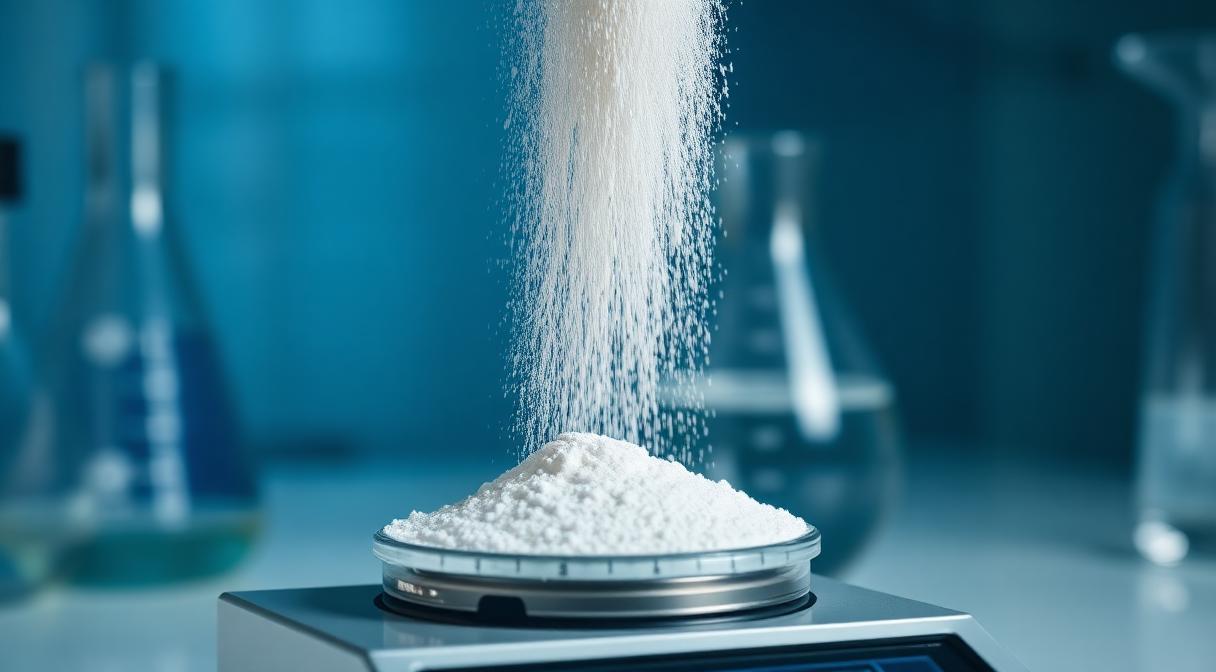 Industrial food-grade Guar Gum forms a dense molecular network that locks free water within the food matrix, delivering Superior shelf life extension without synthetic preservatives.
How Guar Gum Mechanically Lowers Water Activity in Food Systems
The deployment of a Guar Gum shelf life extender relies on several interconnected rheological and thermodynamic mechanisms. Food scientists precisely calibrate these parameters to match the specific distribution environment of each product, whether ambient shelf-stable, chilled, or frozen.
- Creating the Hydration Shell: When Guar Gum is introduced into a liquid food matrix, the polymer chains immediately attract water molecules. The water molecules orient themselves around the hydroxyl groups of the galactomannan, forming a tightly bound hydration shell. Water trapped within this primary hydration layer requires massive kinetic or thermal energy to be removed, rendering it thermodynamically unavailable to participate in the hydrolytic reactions that cause food spoilage.
- Restricting Kinetic Mobility: Beyond the primary hydration shell, the superentangled Guar Gum network creates physical barriers throughout the continuous aqueous phase. This dense micro-structure severely restricts the macroscopic kinetic mobility of remaining unbound water. By increasing localized viscosity, the diffusion rate of oxygen, enzymes, and reactive chemical species plummets, actively retarding lipid oxidation (rancidity) and enzymatic browning across the product's shelf life.
- Syneresis Prevention: Syneresis — the unsightly weeping or pooling of free water from a gelled or structured food — is a primary cause of consumer rejection and premature spoilage. Guar Gum polymer chains act as flexible molecular spacers within the food structure, physically preventing the over-contraction of the protein or starch matrix and permanently eliminating moisture weeping during prolonged ambient storage or refrigerated display.
- Ice Crystal Inhibition: For frozen foods moving through modern e-commerce channels, temperature abuse (heat shock) during transit is inevitable. When frozen products partially thaw and refreeze, unbound water migrates and forms massive, gritty ice crystals that destroy cellular structure and texture. By thoroughly binding the free water in the unfrozen serum phase, Guar Gum restricts moisture migration, forcing ice crystals to remain microscopic and protecting the structural integrity of the food during transit.
Ready-to-Eat Meal Stability and Thermal Processing Resilience
In 2026, the demand for ready-to-eat meals, instant soups, canned culinary sauces, and meal-prep kits has skyrocketed. These complex, multi-component foods represent the ultimate challenge in ready to eat meal stability, as they contain highly diverse ingredients with vastly different water activity values that are packaged together and subjected to aggressive thermal processing before reaching the consumer.
- Multi-Component Moisture Migration Control: A critical failure point in RTE meals — such as a sauce served over pasta or a fruit filling inside a pastry — is the migration of moisture from the high-aw component to the low-aw component. This migration turns the sauce dry and the pastry soggy. The targeted inclusion of Guar Gum in the sauce effectively binds the free water, lowering its chemical potential and halting the thermodynamic drive for moisture to migrate, ensuring every component retains its intended distinct texture and firmness.
- Acid-Resistant Viscosity: Many RTE sauces, salad dressings, and culinary marinades are intentionally acidified (pH 3.0 to 4.5) to inhibit bacterial growth. Certain synthetic thickeners and delicate proteins rapidly break down and lose their water-binding capacity in these highly acidic environments. Industry studies indicate that the non-ionic nature of Guar Gum provides exceptional stability across a broad pH spectrum, ensuring that moisture-binding performance is fully maintained in acidic formulations throughout their complete shelf life.
- Retort Processing Compatibility: Commercial RTE meals typically undergo high-temperature retort sterilization at 121°C for defined F0 values. Superior food-grade Guar Gum grades, particularly when combined with synergistic hydrocolloids such as cassia gum, maintain stable viscosity and moisture-retention performance throughout the retort cycle, ensuring the finished product arrives to the consumer with its intended texture and mouthfeel fully preserved.
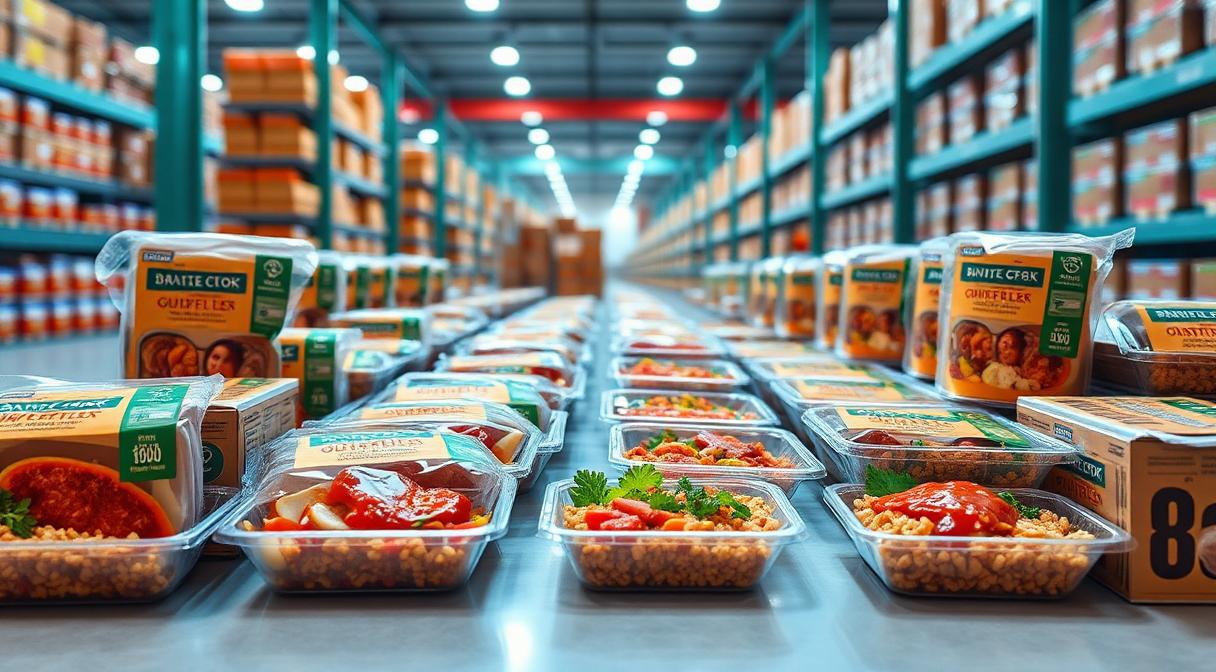 Guar Gum-stabilized ready-to-eat meals maintain moisture integrity, component separation, and Superior texture through the full e-commerce supply chain in 2026.
Synergistic Hydrocolloid Systems: Amplifying Water Activity Control
One of the most powerful formulation strategies available in 2026 is combining Guar Gum with complementary hydrocolloids to achieve synergistic improvement in water activity control, texture, and stability that neither gum could deliver alone. Understanding how to engineer these blends is a key competitive advantage for food manufacturers. Explore our Guar Gum vs. Xanthan Gum comparison guide and the Guar Gum Glossary for deeper technical reference.
- Guar Gum and Pectin (Fruit and Bakery Fillings): In fruit preserves and baked pastry fillings, the flexible Guar Gum chains intertwine through the rigid pectin gel network, acting as a secondary moisture-trapping web. This combination yields a Superior, spreadable texture with absolute moisture retention, preventing the fruit filling from bleeding into the surrounding pastry dough during extended retail display and protecting shelf life.
- Guar Gum and Carboxymethyl Cellulose (Baked Goods): In commercial baked goods such as sandwich breads and gluten-free cakes, staling is driven by starch retrogradation and the progressive loss of free moisture to the atmosphere. Blending food-grade Guar Gum with CMC creates an aggressive hydration network — the Guar Gum intimately binds to starch granules delaying retrogradation, while the CMC aggressively retains ambient moisture. This synergistic stabilization keeps the crumb structure tender, soft, and moist for weeks, drastically reducing retail spoilage and product returns.
- Guar Gum and Xanthan Gum (Sauces and Dressings): The flexible Guar Gum molecules physically intertwine with the ordered helical structure of xanthan gum, creating a reinforced 3D polymer matrix. This synergistic blend binds water far more effectively than either gum alone at the same concentration, delivering Superior shelf life stability at a lower total ingredient cost — a critical advantage in the cost-compressed 2026 food manufacturing environment.
The 2026 Economic and Regulatory Landscape for Natural Stabilizers
The global food hydrocolloids market is undergoing sustained, high-value growth, projected to reach USD 7.9 billion in 2026, expanding at a CAGR of 4.7%. In 2026, persistent macroeconomic inflation and agricultural supply chain volatility have compressed the profit margins of commercial food processors. Because Guar Gum possesses an immense hydrodynamic volume and water-binding capacity, it requires exceptionally low inclusion rates. Industry studies indicate that a dosage of just 0.15% to 0.5% by weight is entirely sufficient to stabilize commercial batches of soups, sauces, and dairy products — drastically lowering overall formulation costs compared to utilizing modified starches, expensive dairy solids, or synthetic chemical preservatives.
Recognized universally as GRAS (Generally Recognized as Safe) by the U.S. FDA and approved as food additive E412 by the European Food Safety Authority (EFSA), Guar Gum is permitted in virtually every major food category globally. Certified food-grade grades used in modern formulations are produced to strict quality control parameters ensuring microbiological safety and the absence of trace contaminants. By aligning with these rigorous global frameworks, food manufacturers can confidently formulate Superior, long-lasting products that seamlessly navigate complex international export regulations and secure retail placements in the rapidly growing e-commerce food sector. For manufacturers building a sustainable ingredient supply chain, Guar Gum's renewable agricultural origin — as a nitrogen-fixing legume requiring minimal water in arid climates — provides additional ESG credentials valued by investors and retail partners alike.
Key Takeaways
- Thermodynamic Moisture Control: Extending shelf life requires controlling the thermodynamic energy state of water (water activity), not merely total moisture content. Guar Gum transforms highly reactive free water into tightly bound water, rendering it unavailable for microbial proliferation and chemical spoilage reactions.
- Superior Molecular Architecture: The high molecular weight (1–2 million Daltons) and specific 2:1 mannose-to-galactose branching ratio of Guar Gum enable massive superentanglement and hydrogen bonding, generating an intense hydration network that locks moisture into the food matrix at extremely low concentrations of 0.15% to 0.5%.
- Multi-Mechanism Protection: Guar Gum simultaneously creates hydration shells, restricts kinetic mobility of reactive species, prevents syneresis, and inhibits ice crystal growth — providing comprehensive multi-barrier protection across ambient, chilled, and frozen distribution environments.
- RTE Meal Performance: For complex, multi-component ready-to-eat meals, Guar Gum controls cross-compartment moisture migration, maintains acid-resistant viscosity (pH 3.0–4.5), and survives high-temperature retort sterilization, ensuring structural integrity from factory to consumer's plate.
- Synergistic Cost Efficiency: When combined with pectin, CMC, or xanthan gum, Guar Gum creates synergistic hydrocolloid blends that bind water far more effectively than single-gum systems, delivering Superior shelf life stability at a lower total ingredient cost.
- Clean-Label Regulatory Compliance: Approved as E412 (EFSA) and GRAS (FDA), Guar Gum fully satisfies the 2026 consumer demand for natural, clean-label, and vegan-certified preservation systems — enabling manufacturers to eliminate artificial chemical additives from ingredient declarations.
Frequently Asked Questions
How does water activity control extend food shelf life more effectively than total moisture measurement?
Total moisture measures the quantity of all water in a food product, but water activity measures the energy state and thermodynamic availability of that water. Even a product with high total moisture can have a low water activity if the water is tightly bound by hydrocolloids like Guar Gum, meaning it is thermodynamically unavailable to microorganisms and degradative chemical reactions. Controlling water activity is therefore a far more precise and effective predictor of actual microbial safety and shelf life than measuring total moisture content alone.
At what concentration should Guar Gum be used as a shelf life extender in ready-to-eat meals?
Industry studies indicate that inclusion levels of 0.15% to 0.5% by weight are sufficient for most commercial applications including soups, sauces, dairy dressings, and bakery products. The exact dosage depends on the target water activity reduction required, the presence of other hydrocolloids or starches in the formula, and the specific thermal processing conditions. Partnering with a technical formulation specialist can help optimize dosage for specific product systems and distribution environments.
How does Guar Gum perform as a moisture binder when combined with other hydrocolloids?
Guar Gum displays powerful positive synergies when blended with complementary hydrocolloids. When combined with the rigid structure of xanthan gum or pectin, the flexible Guar Gum molecules physically intertwine with them, creating a reinforced 3D matrix that binds water far more effectively than either gum could achieve alone at the same concentration. This synergistic blend delivers Superior shelf life stability at a lower total ingredient cost, making it an economically attractive solution for commercial food manufacturers operating in 2026's margin-compressed environment.
Is Guar Gum considered a clean-label ingredient by 2026 consumer standards?
Yes. Guar Gum is an agriculturally renewable, 100% natural plant extract derived from the seeds of the guar bean (Cyamopsis tetragonoloba). It contains no synthetic chemicals and is universally recognized as safe by global food authorities including the U.S. FDA (GRAS) and EFSA (E412). It is widely utilized by food brands seeking to remove artificial preservatives and achieve clean-label, vegan, and gluten-free product certifications in 2026 retail and e-commerce environments.
To master the precise rheology and thermodynamic control required for your next generation of shelf-stable food products, partner with the industry experts. B.D. Guar Pvt. Ltd. provides expertly milled, Superior-grade Guar Gum hydrocolloids engineered specifically for maximum hydration, unparalleled water activity control, and perfect clean-label compliance. Contact B.D. Guar Pvt. Ltd. today to discover how our advanced, naturally derived formulations can safeguard your product quality across the most demanding global supply chains.