Roasted Guar Korma: A Sustainable Fish Meal Alternative
Discover how Roasted Guar Korma replaces wild-caught marine fish meal in aquafeed, delivering balanced amino acids and high digestibility for shrimp and fish.
Last updated:

As global aquaculture scales through 2026 to meet rising seafood demand, feed formulators face sustained pressure to reduce reliance on wild-caught marine fish meal. Roasted Guar Korma has emerged as a Superior plant-based protein that answers this challenge, offering a balanced amino acid profile and high digestibility for shrimp and carnivorous fish species. Produced during the endosperm processing of Cyamopsis tetragonoloba, this sustainable co-product helps fish farms stabilize supply, control feed costs, and meet tightening environmental expectations across the sector.
Research Overview
Marine fish meal remains a benchmark aquafeed protein, yet overfishing pressure and price volatility continue to accelerate the search for alternatives. Roasted Guar Korma, a co-product of Guar Gum manufacturing, typically delivers 50 to 56 percent crude protein once thermal roasting neutralizes anti-nutritional factors such as trypsin inhibitors. Industry studies indicate that carefully processed guar protein can replace a meaningful share of fish meal without compromising growth performance across several farmed species.
The Sustainability Case Against Marine Fish Meal
Roughly a quarter of the global wild fish catch is still directed toward fish meal and fish oil production, placing strain on marine ecosystems already stressed by climate variability and demand growth. According to the FAO, aquaculture now supplies more than half of the fish consumed worldwide, which makes the feed supply chain a decisive lever for the industry's long-term sustainability.
Roasted Guar Korma reframes this equation. As a land-grown legume co-product, it decouples aquafeed protein from marine harvesting while making fuller use of the guar bean. This aligns aquaculture operations with the circular sourcing principles that buyers and certification bodies increasingly demand.
- Reduced marine dependence: Substituting guar korma for a portion of fish meal eases pressure on wild forage fish stocks.
- Circular utilization: The protein-rich korma is recovered from Guar Gum processing rather than grown as a dedicated feed crop.
- Supply stability: Land-based sourcing insulates formulators from the seasonal swings and price spikes typical of marine fish meal.
For sourcing directors, these attributes translate into a more predictable, ESG-aligned procurement story that supports responsible-aquaculture positioning. Learn more about our approach on the sustainability page.
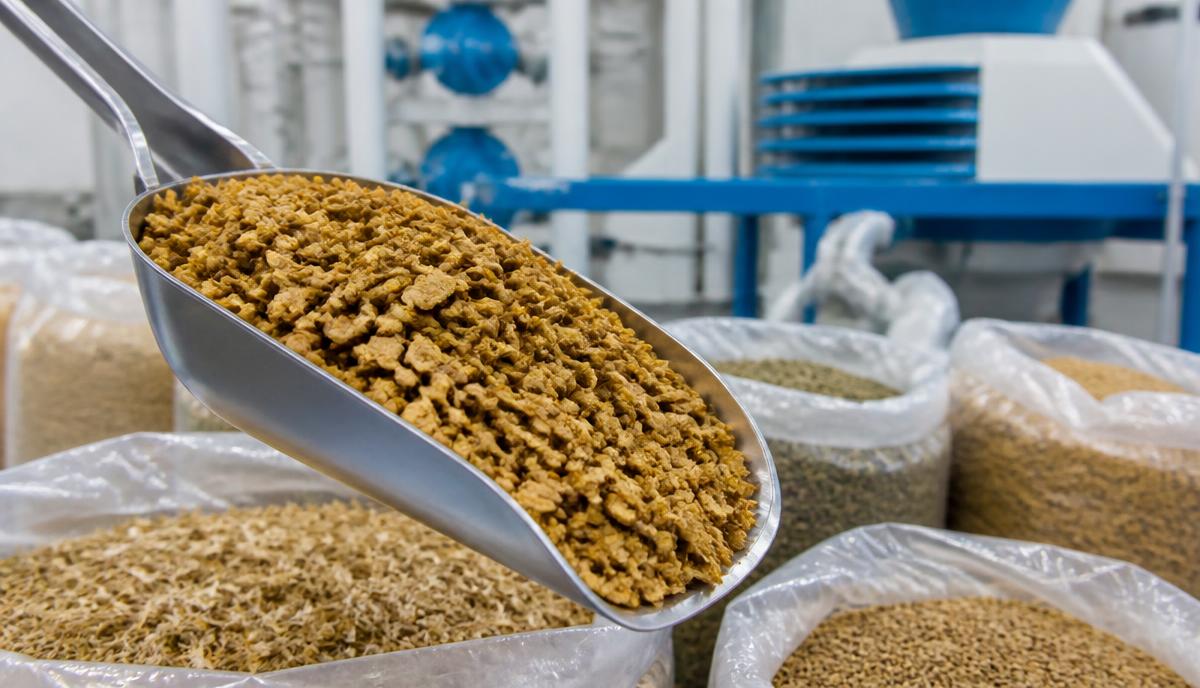 Roasted Guar Korma offers a land-based, sustainable protein source for modern aquafeed formulations.
Nutritional Profile and Amino Acid Balance
The value of any fish meal replacer rests on its protein quality, not merely its crude protein percentage. Roasted Guar Korma provides a favorable amino acid distribution, contributing appreciable levels of arginine, leucine and phenylalanine that complement the profiles of other plant meals commonly used in aquafeed.
Thermal roasting is central to this performance. Controlled heat treatment deactivates trypsin inhibitors and other anti-nutritional factors that would otherwise limit protein utilization, yielding a more digestible ingredient suited to sensitive species. The result is a protein source that formulators can incorporate with confidence when balancing least-cost rations.
- Protein density: 50 to 56 percent crude protein supports high-protein grow-out diets.
- Complementary amino acids: Strong arginine content pairs well with methionine-rich supplements to round out the profile.
- Anti-nutrient control: Roasting reduces trypsin inhibitor activity, improving nitrogen retention.
Because amino acid targets differ by species and life stage, formulators can combine guar korma with targeted supplementation to meet precise dietary specifications. Detailed batch data is available with every shipment through our quality program.
Digestibility in Shrimp and Carnivorous Fish
Carnivorous species such as trout, seabass and shrimp have historically been the hardest to wean off marine protein because of their exacting digestive requirements. Roasted Guar Korma performs well in these systems when introduced at measured inclusion levels, supporting feed intake and nutrient absorption without the palatability losses sometimes seen with untreated plant meals.
Industry studies indicate that the soluble galactomannan fraction remaining in guar korma can influence gut transit and feed pellet integrity, which is why processing consistency matters. A uniformly roasted, well-milled korma disperses evenly through the ration and supports stable, water-resistant pellets during extrusion.
- Shrimp diets: Moderate inclusion supports growth while contributing to pellet water stability and reduced nutrient leaching.
- Carnivorous finfish: Graded introduction maintains intake and digestibility in trout, seabass and similar species.
- Pellet performance: Residual galactomannan aids binding, complementing dedicated extrusion aids.
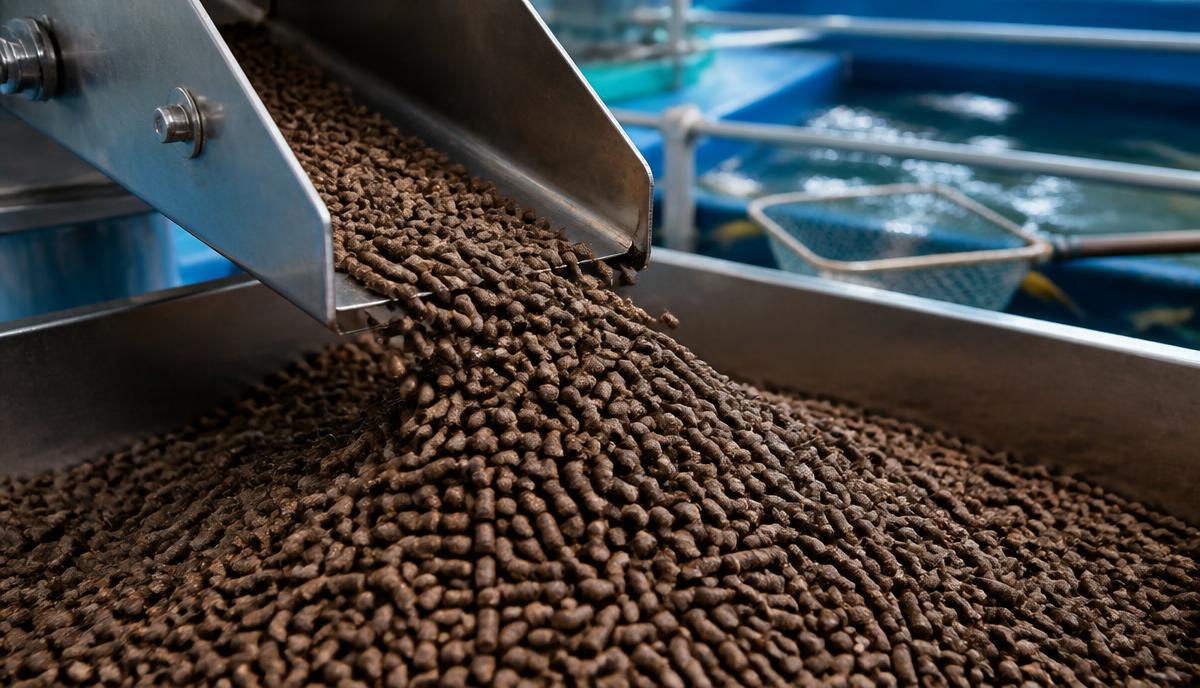 Consistent roasting and milling support digestibility and water-stable pellets in shrimp and finfish diets.
Formulation Guidelines and Inclusion Rates
Successful adoption is a matter of gradual substitution and careful nutrient balancing rather than wholesale replacement. Formulators typically begin by displacing a portion of fish meal and monitoring growth, feed conversion and water quality before scaling inclusion upward.
Species, life stage and the balance of other protein sources all shape the optimal rate. Pairing guar korma with complementary supplements ensures that essential amino acid and energy targets remain intact as marine protein is reduced.
- Start conservatively: Introduce guar korma as a partial fish meal replacement and track performance metrics.
- Balance amino acids: Supplement methionine and lysine as needed to match species requirements.
- Validate on-site: Confirm feed conversion and water stability under real production conditions before scaling.
The B.D. Guar technical team can help match korma specifications to specific aquafeed formulations. Explore compatible grades on our products page.
Key Takeaways
- Sustainable substitution: Roasted Guar Korma reduces aquafeed dependence on wild-caught marine fish meal.
- High protein content: Delivers 50 to 56 percent crude protein with a balanced amino acid profile.
- Roasting matters: Thermal processing deactivates trypsin inhibitors, improving digestibility.
- Species versatility: Suitable for shrimp and carnivorous finfish at measured inclusion rates.
- Pellet benefits: Residual galactomannan supports water-stable pellets and reduced nutrient leaching.
- Supply resilience: Land-based sourcing offers price stability versus volatile marine fish meal.
Frequently Asked Questions
How much fish meal can Roasted Guar Korma replace?
Replacement rates depend on species, life stage and the overall ration. Formulators generally begin with partial substitution, monitor growth and feed conversion, then scale inclusion where performance holds. Balancing supplemental amino acids such as methionine and lysine allows higher displacement without compromising nutritional targets.
Why is roasting important for guar korma?
Roasting applies controlled heat that deactivates trypsin inhibitors and other anti-nutritional factors present in raw guar meal. This step markedly improves protein digestibility and nitrogen retention, making the korma safe and effective for sensitive aquaculture species that would otherwise struggle to utilize untreated plant protein.
Is Roasted Guar Korma suitable for carnivorous species?
Yes. When introduced gradually at measured inclusion levels, Roasted Guar Korma supports intake and digestibility in carnivorous finfish such as trout and seabass, as well as in shrimp. Consistent roasting and fine milling ensure even dispersion through the ration and contribute to stable, water-resistant pellets.
Does guar korma affect pellet quality?
The residual galactomannan fraction in guar korma provides natural binding that can improve pellet water stability and reduce nutrient leaching during feeding. Processing consistency is key, so uniformly milled korma is recommended to complement dedicated extrusion aids and maintain reliable pellet integrity.
To evaluate Roasted Guar Korma for your aquafeed formulations and request specifications, contact the B.D. Guar team today.