Replacing Synthetic Polymers: Transitioning to Biodegradable Bio-Gums
Guar Gum gives industrial sourcing teams a plant-based, biodegradable alternative to carbomers and polyacrylamides without sacrificing thickening or stabilization.
Last updated:
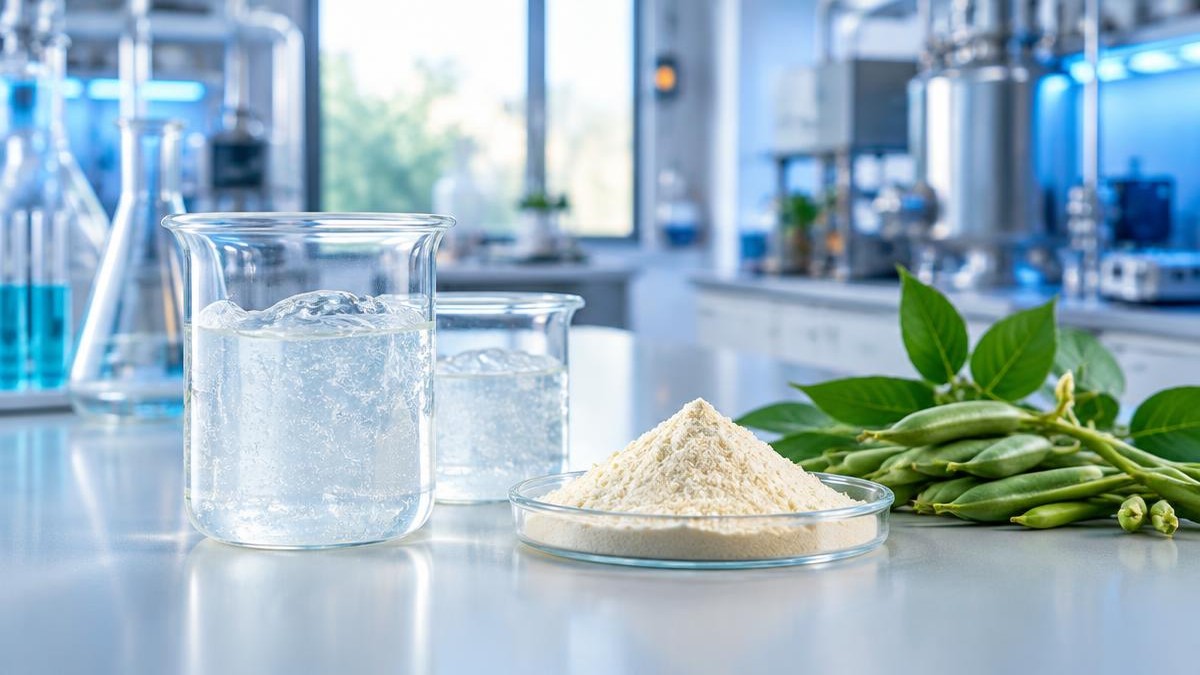
In 2026, replacing synthetic polymers with biodegradable bio-gums has moved from a sustainability aspiration to a procurement priority. Tightening microplastic rules under EU REACH, rising Scope 3 reporting expectations and volatile petrochemical feedstock costs are pushing industrial sourcing officers to re-evaluate carbomers and polyacrylamides. Natural Guar Gum and its derivatives offer a plant-based, readily biodegradable route that delivers comparable thickening, stabilization and flocculation performance.
Research Overview
Industry studies indicate that demand for bio-based hydrocolloids is growing steadily as formulators phase out petroleum-derived acrylic polymers, crosslinked polyacrylamides and synthetic quaternary conditioners. Research in Carbohydrate Polymers and the SPE Journal describes Guar Gum as a high-molecular-weight galactomannan whose hydroxyl-rich backbone supports strong hydrogen bonding, cold-water thickening and pseudoplastic flow. Food-grade Guar Gum is also recognized under CODEX (E412 / INS 412), supporting a favorable safety and environmental profile.
Galactomannan Structure: Why Guar Gum Can Substitute Synthetic Thickeners
Guar Gum is built on a beta-1,4-linked mannose backbone with single galactose side units at roughly a 2:1 ratio. This architecture explains why a small dosage produces high viscosity and why the polymer behaves so predictably under shear.
- High zero-shear viscosity: entangled polymer chains form a three-dimensional hydrated network that suspends pigments, actives and abrasive particles.
- Shear-thinning behavior: chains align under pumping, spraying or spreading, lowering apparent viscosity for easy processing and recovering at rest.
- Non-ionic character: viscosity is far less sensitive to dissolved salts and pH swings than carbomers, which can lose viscosity in electrolyte-rich systems.
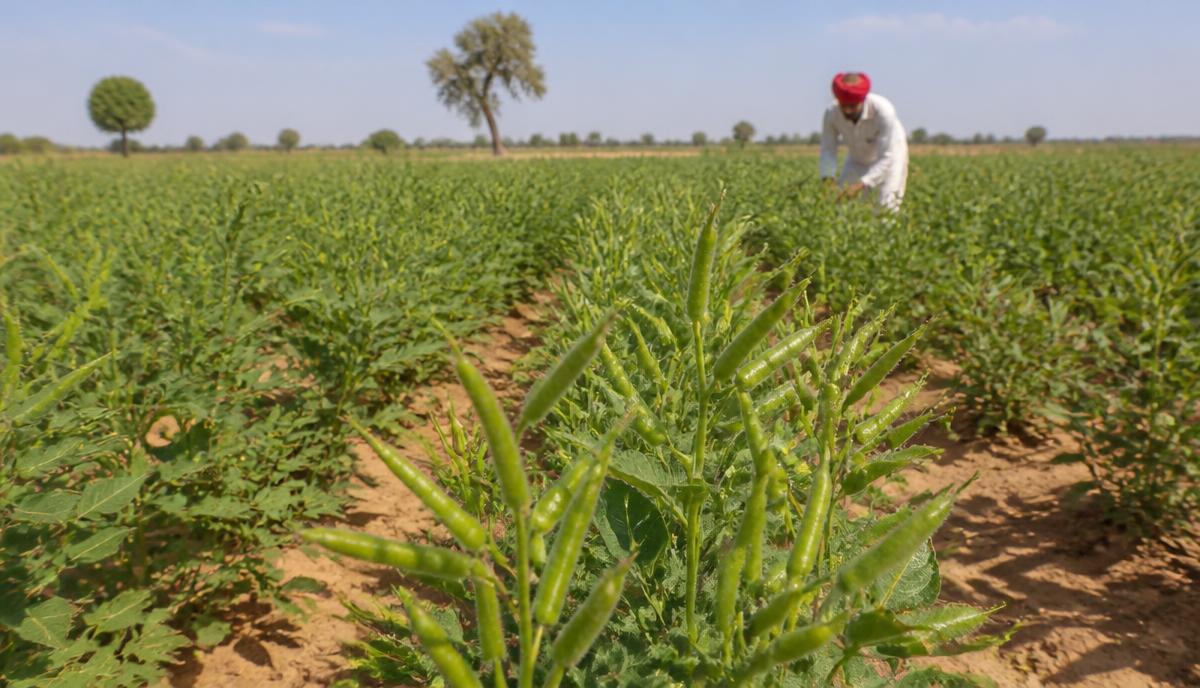
- Renewable origin: derived from Cyamopsis tetragonoloba seed endosperm, a drought-tolerant legume crop.
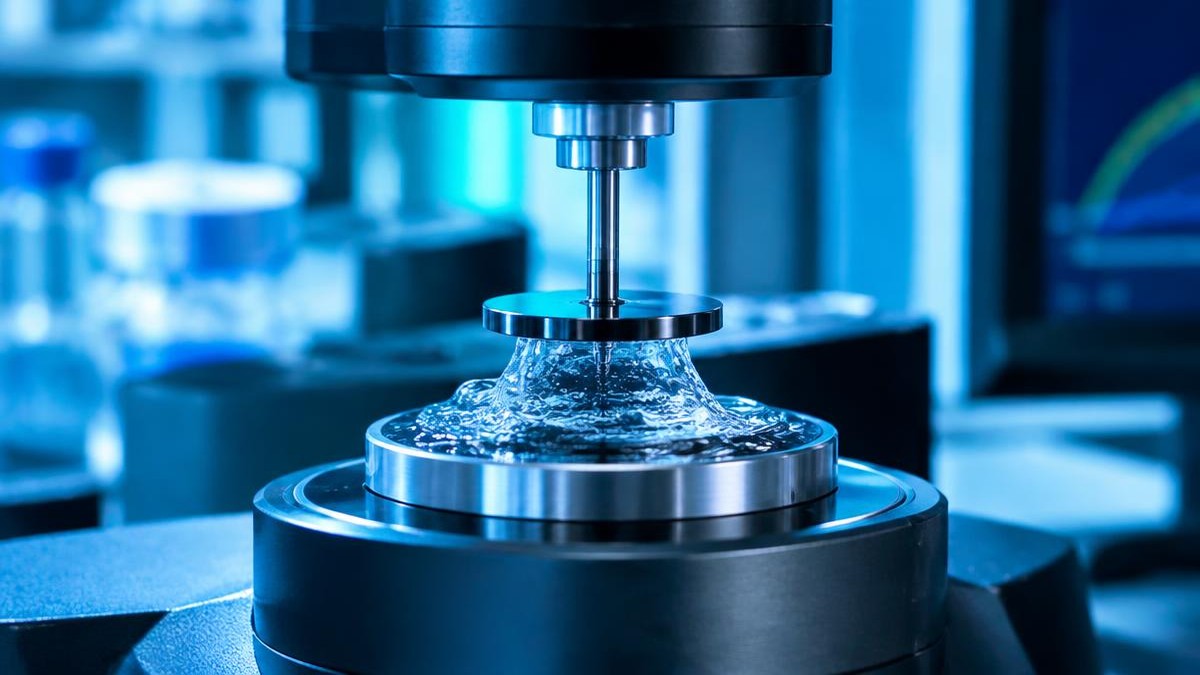 Rheology testing confirms that Guar Gum delivers the shear-thinning profile required to replace synthetic thickeners.
Rheological Equivalence: Replacing Carbomers in Formulations
Carbomers require neutralizing bases and high-energy mixing to develop full viscosity. Guar Gum, particularly fine 200 Mesh grades, hydrates in cold or ambient water without neutralization, which simplifies batch compounding and reduces processing energy.
- Cold-water hydration: no triethanolamine or sodium hydroxide step is needed, shortening batch cycles.
- Electrolyte tolerance: stable performance in salt-containing and moderately acidic or alkaline systems where carbomers collapse.
- Emulsion and suspension stability: thickening of the continuous phase keeps oil droplets and solids evenly dispersed during storage.
- Custom mesh sizes: particle size can be matched to dispersion speed, clarity and viscosity targets. See the product range and the Guar Gum versus Xanthan Gum comparison for grade selection guidance.
Flocculation and Friction Reduction: Replacing Polyacrylamides
Polyacrylamides are widely used for solids settling and drag reduction, yet they can leave persistent residues and raise concerns about residual acrylamide monomer. High-molecular-weight Guar Gum and its derivatives act as clean, biodegradable alternatives in several industrial operations.
- Wastewater and tailings flocculation: long polymer chains bridge suspended clay, silica and organic particles into settling flocs for faster dewatering.
- Slickwater friction reduction: linear Guar Gum chains reduce turbulent drag in hydraulic fracturing fluids, with fast-hydrating grades supporting on-the-fly mixing.
- Mineral processing: Guar Gum acts as a selective depressant for talc and clay gangue, improving concentrate purity in froth flotation.
- Complete biodegradation: natural soil microorganisms break the polymer down, removing long-term disposal liabilities associated with synthetic residues.
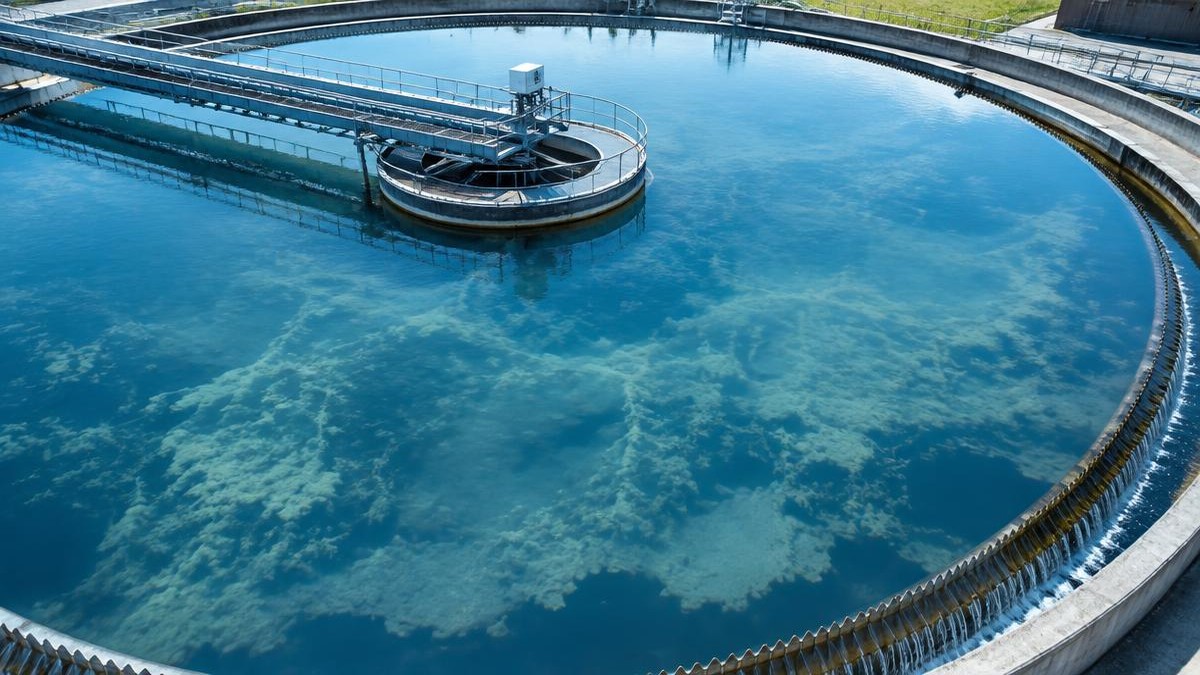 Bio-based Guar Gum flocculants support cleaner settling and easier compliance in industrial water treatment.
Derivatives That Match Synthetic Conditioning and Film Formation
Where native Guar Gum is not enough, chemically modified grades extend the substitution range into personal care, textiles, construction and oilfield chemistry.
- Cationic Guar: positively charged groups bind to negatively charged hair and skin, delivering conditioning and combability in silicone-free formulations.
- Hydroxypropyl Guar (HPG): improved thermal stability and water retention for deep-well fluids and construction mortars.
- Carboxymethyl Hydroxypropyl Guar (CMHPG): compatible with borate and zirconium crosslinkers for high-temperature gels that break cleanly.
- Bio-based carbon content: plant-derived grades can support bio-based product claims and sustainability reporting.
Procurement, Supply Security and ESG Value
For sourcing officers, the business case combines performance parity with measurable sustainability gains. Industry studies indicate that replacing petroleum-derived polymers with agricultural bio-gums lowers embedded Scope 3 emissions and reduces exposure to petrochemical price swings.
- Scope 3 reporting: plant-based inputs provide traceable data for ESG audits. Learn more about our approach on the sustainability page.
- Quality assurance: batch-level viscosity, particle size and moisture testing with a certificate of analysis supports consistent drop-in replacement. Details are on the quality page.
- Export readiness: B D Guar Pvt. Ltd. is a Star Export House with 25 kg bag and 1,000 kg bulk bag options for international shipments.
- Drop-in integration: most liquid blending lines need minimal modification, which shortens time to market.
Key Takeaways
- Regulatory readiness: Guar Gum is a biodegradable alternative to carbomers and polyacrylamides as microplastic restrictions tighten.
- Processing simplicity: cold-water hydration removes neutralization steps and lowers mixing energy.
- Robust rheology: non-ionic structure keeps viscosity stable across wide pH and salinity ranges.
- Functional breadth: cationic, HPG and CMHPG derivatives cover conditioning, thermal and crosslinked-gel needs.
- ESG alignment: plant-based sourcing supports Scope 3 reduction and credible sustainability reporting.
Frequently Asked Questions
How does Guar Gum compare to carbomers in thickening performance?
Guar Gum is a high-molecular-weight galactomannan that hydrates in cold water and builds high zero-shear viscosity with pseudoplastic flow. Unlike carbomers, it needs no neutralizing base and holds viscosity better in salty or variable-pH systems, making it a practical drop-in option for many formulations.
Can Guar Gum replace polyacrylamide flocculants?
In many wastewater, tailings and mineral processing applications, Guar Gum and its derivatives bind suspended particles into settling flocs while biodegrading naturally. Performance depends on the water chemistry, so jar testing against the current polyacrylamide is recommended before full-scale changeover.
Can Cationic Guar replace silicones and polyquats in personal care?
Cationic Guar binds electrostatically to hair and skin, providing wet combability, anti-static control and smooth conditioning in clean-label, silicone-free formulations. Final sensory performance should be confirmed in the specific shampoo or conditioner base.
What standards support using Guar Gum as a synthetic polymer replacement?
Food-grade Guar Gum is recognized under CODEX as E412 and evaluated by bodies such as EFSA and the FAO. Industrial grades are biodegradable and plant-derived, which supports REACH-aligned and bio-based sourcing strategies.
Ready to evaluate a biodegradable replacement for your current synthetic polymer? Explore the B D Guar product range or contact our technical team to request samples and formulation support.