Hydroxypropyl Guar (HPG): Thermal Stability for Deep Wells
Hydroxypropyl Guar (HPG) delivers Superior thermal stability and acid tolerance for deep-well fracturing, holding viscosity to 350F while cutting formation damage.
Last updated:
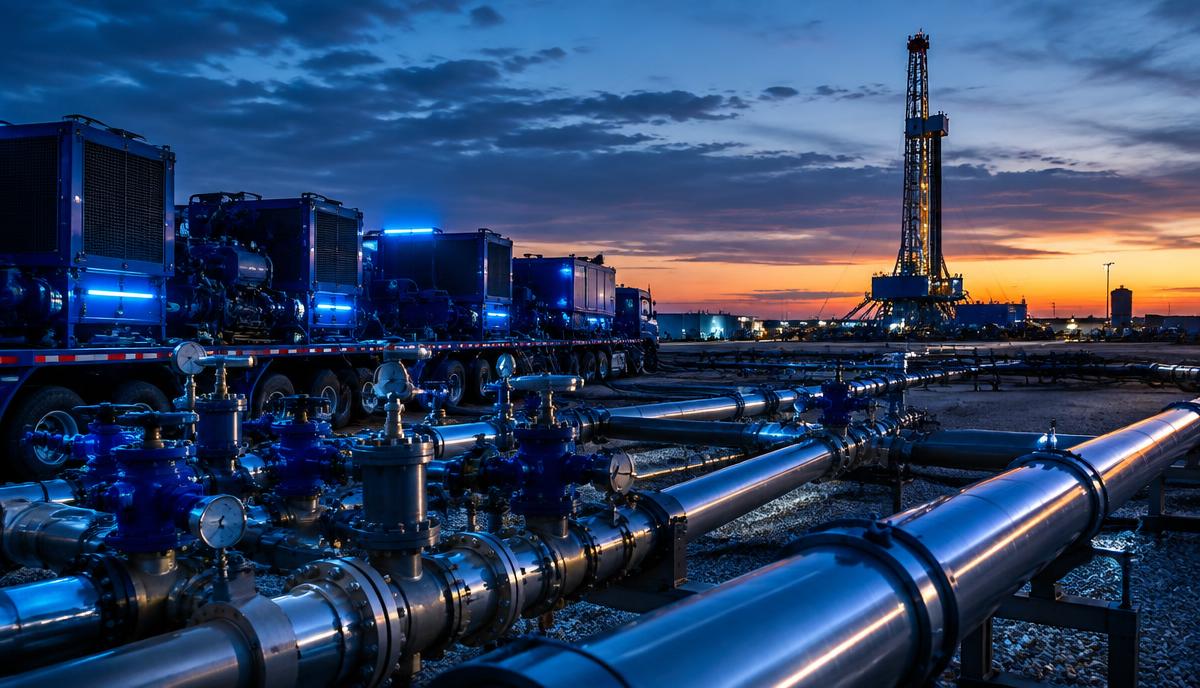
In the highly demanding 2026 global oilfield market, securing Hydroxypropyl Guar (HPG) with Superior thermal stability has become an absolute necessity for deep-well exploration and high-temperature hydraulic fracturing. As drilling operations extend into extreme high-pressure high-temperature (HPHT) subterranean formations, conventional viscosifiers face rapid thermal degradation and severe formation damage. By chemically modifying natural Guar Gum through precise etherification, HPG delivers unmatched viscosity retention, exceptional acid tolerance, and minimal insoluble residue, empowering chemical procurement managers to optimize stimulation performance while protecting reservoir permeability.
Research Overview
The global oil and gas sector in 2026 is defined by a strategic expansion into deeper, hotter, and more complex geological structures. As accessible shallow reserves decline, producers are targeting deep shale plays, tight gas sands, and high-temperature carbonate reservoirs that routinely exceed 15,000 feet and bottom-hole temperatures of 275°F to 350°F (135°C to 177°C). According to market intelligence from IMARC, global demand for high-performance oilfield stimulation chemicals has expanded significantly, driven by the need to maintain fluid rheology under severe downhole shear and thermal stress. Hydraulic fracturing and acid stimulation in these environments require thickeners that withstand prolonged thermal exposure without catastrophic chain scission, and modified Guar Gum derivatives have become the reference standard.
Macromolecular Chemistry and Derivatization of Hydroxypropyl Guar
While native Guar Gum is a highly effective galactomannan polysaccharide composed of a beta-1,4-linked D-mannopyranose backbone with alpha-1,6-linked D-galactose side chains, raw Guar Gum contains approximately 8% to 12% water-insoluble plant protein and cellulosic residue. Under high-temperature conditions this insoluble debris can lodge within microscopic pore throats, causing severe formation damage and impairing hydrocarbon conductivity. To overcome these limitations, polymer chemists derivatize natural Guar Gum via nucleophilic substitution, grafting non-ionic hydroxypropyl groups onto the galactomannan backbone.
- Etherification via Propylene Oxide: HPG is synthesized by reacting purified Guar Gum splits with non-ionic propylene oxide under alkaline conditions, introducing neutral hydroxypropyl (-CH2CH(OH)CH3) groups onto the hydroxyl positions of mannose and galactose rings to yield a modified galactomannan derivative (CAS 39421-75-5).
- Steric Hindrance and Residue Reduction: The bulky hydroxypropyl substituents act as molecular spacers that prevent tight crystalline chain alignment during hydration, while purification denatures and removes insoluble plant proteins, reducing total insoluble residue from 8-12% to an industry-leading 2-4%, as documented in SPE Journal literature.
- Accelerated Hydration Kinetics: Because internal hydrogen bonds are selectively disrupted, HPG hydrates rapidly even in cold fluids and high-salinity brines, uncoiling smoothly without undissolved gel clusters or fish-eyes and establishing an instant, uniform base gel viscosity for continuous on-the-fly field blending.
- Enhanced Biostability and Alkaline Stability: The non-ionic ether linkages shield the glycosidic bonds against premature enzymatic and bacterial cleavage, delivering stable rheology across a broad pH spectrum (pH 3 to 12) in both acidic stimulation fluids and alkaline crosslinked gels. Research published in Carbohydrate Polymers demonstrates that this modification fundamentally alters the polymer solvation thermodynamics.
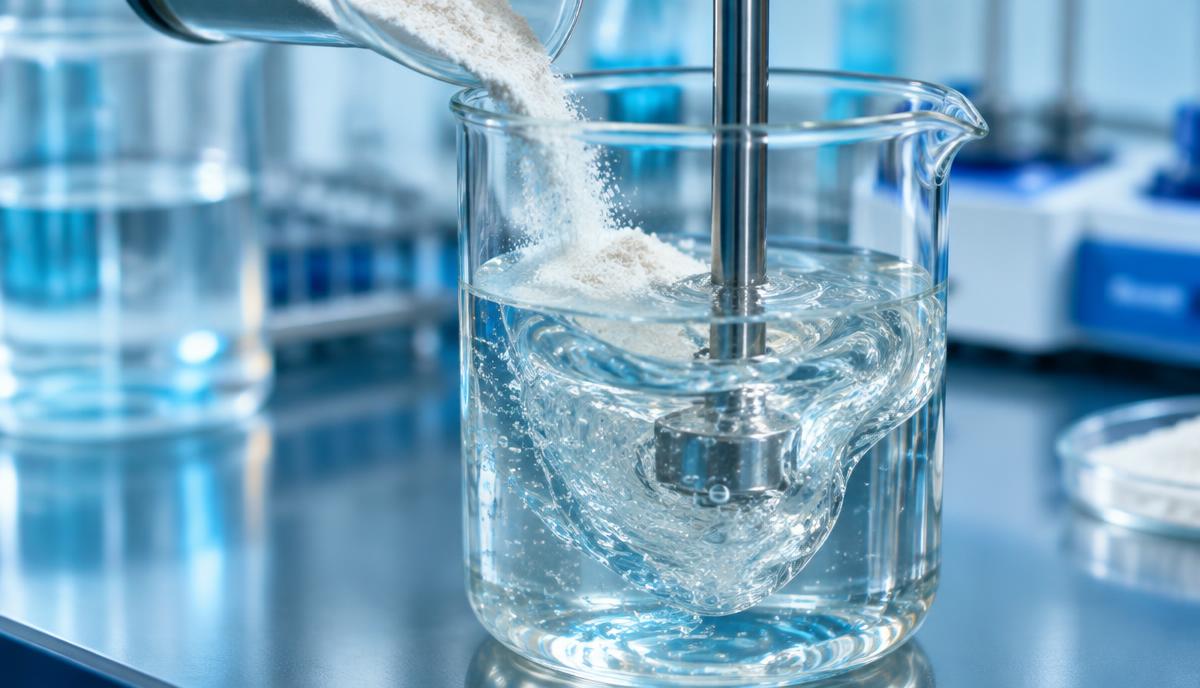 Hydroxypropyl Guar hydrates rapidly with minimal insoluble residue, forming a uniform base gel for HPHT stimulation fluids.
Thermal Endurance and Viscosity Retention under HPHT Conditions
In deep-well hydraulic fracturing, a viscosifier must maintain high yield stress and proppant-carrying capacity as the fluid travels down the wellbore casing and enters scorching reservoir fractures. Thermal hydrolysis at elevated temperatures is the primary cause of fluid failure in unmodified polysaccharide systems.
- Suppressing Thermal Degradation: At temperatures above 250°F (121°C), standard natural polymers undergo rapid thermal and acid-catalyzed hydrolysis, losing over 80% of initial viscosity within minutes. The hydroxypropyl modifications protect the galactomannan backbone, allowing the linear gel to hold stable viscosity at bottom-hole temperatures up to 300°F to 350°F (149°C to 177°C).
- Synergistic Zirconium and Borate Crosslinking: For maximum viscoelasticity, HPG base gels are crosslinked with organo-zirconium and delayed borate crosslinkers. As highlighted in industry oil and gas research, zirconium forms robust coordinate-covalent bonds with HPG hydroxyl groups under alkaline conditions (pH 10 to 12), generating a dense three-dimensional network that endures shear rates exceeding 500 s^-1 without structural collapse.
- Nanoparticle and Colloidal Reinforcement: Advanced 2026 formulations incorporate boron-functionalized nanosilica or carbon nanotube additives; peer-reviewed studies indicate that nanosilica particles act as secondary crosslinking nodes, forming hydrogen-bonded bridges with HPG chains that extend thermal stability to 350°F while limiting fluid loss into low-permeability rock.
- Proppant Transport and Screen-Out Prevention: The high zero-shear viscosity and pseudoplastic shear-thinning profile of crosslinked HPG suspend dense ceramic proppants and silica sand uniformly during pumping, preventing proppant settling and wellbore screen-outs.
Improved Acid Tolerance for Carbonate Matrix Acidizing and Acid Fracturing
Deep-well completions in carbonate formations such as limestone and dolomite plays rely heavily on acidizing to dissolve formation rock and etch conductive flow channels. Standard thickeners hydrolyze almost instantly upon contact with concentrated mineral acids, making HPG the industry standard for gelled acid systems.
- Resistance to Acid-Catalyzed Hydrolysis: Matrix acidizing and acid fracturing use concentrated hydrochloric acid (HCl, typically 15% to 28%) or organic acid blends. HPG hydroxypropyl ether groups provide steric and inductive protection to the acetal linkages, drastically retarding acid hydrolysis so the fluid maintains target viscosity throughout the pumping schedule.
- Retarding Acid Reaction Rates: Thickening the acid with HPG restricts hydrogen-ion diffusion to the rock surface, allowing the reactive fluid to penetrate deep into the formation before spending and creating extensive conductive channels that maximize long-term well productivity.
- Corrosion Inhibition and Equipment Protection: HPG acts as a synergistic co-inhibitor with commercial corrosion inhibitors, forming a thin protective macromolecular film along internal metallic casing walls that blocks corrosive H+ ions from the metal interface.
- Heavy Brine Compatibility: Unlike synthetic anionic polymers that precipitate in the presence of multivalent cations, the non-ionic structure of HPG maintains complete solubility and viscosity stability in high-density completion brines such as sodium bromide (NaBr), calcium bromide (CaBr2), and zinc bromide (ZnBr2).
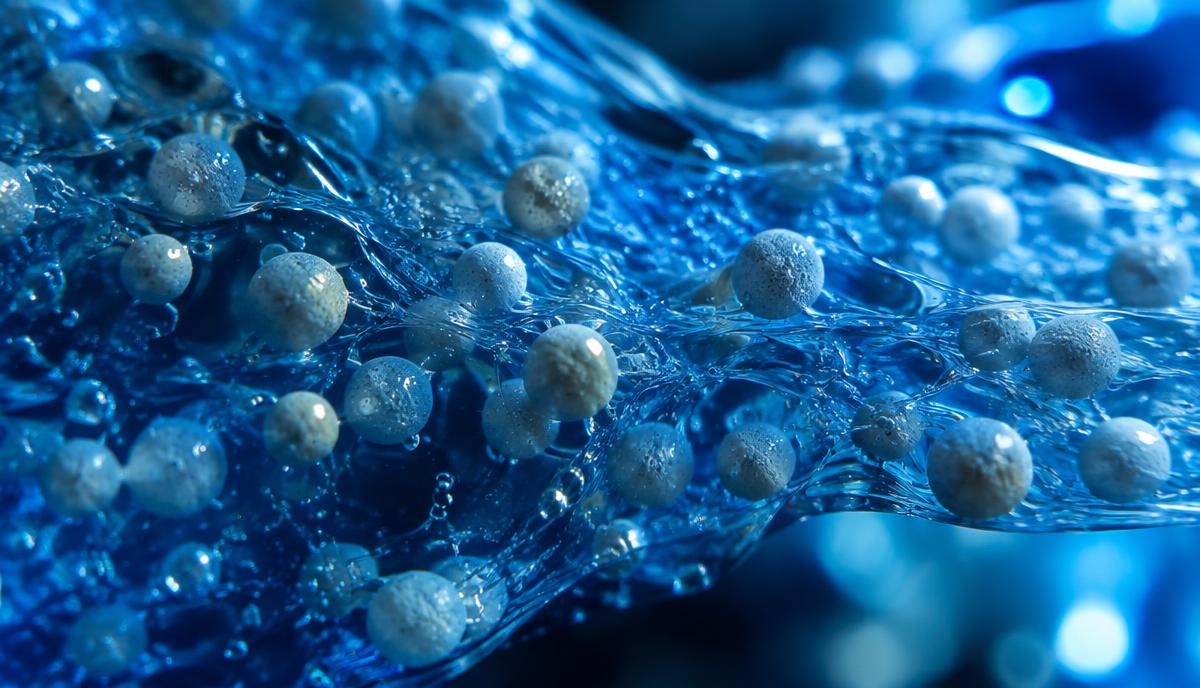 Zirconium-crosslinked HPG gels deliver Superior proppant suspension and shear resistance under extreme HPHT downhole conditions.
Low-Residue Reservoir Cleanup and Environmental Compliance
Maximizing initial hydrocarbon flow after fracturing requires complete removal of the polymer gel from the newly created fracture network. Residual polymer left in the proppant pack acts as a mechanical barrier that severely restricts oil and gas permeability.
- Minimized Formation Damage: Because HPG contains only 2% to 4% insoluble residue versus 8% to 12% in raw Guar Gum, post-break fluid generates far less particulate matter. SPE Journal literature confirms that broken HPG gels restore over 90% to 95% of initial rock permeability, compared with under 70% for unrefined gums.
- Controlled Enzymatic and Oxidative Gel Breaking: HPG is highly responsive to oxidative breakers such as ammonium persulfate or sodium bromate and to high-temperature hemicellulase enzymes, cleaving the galactomannan backbone at designated intervals to reduce viscosity to near-water levels (below 5 cP) for rapid flowback.
- Biodegradability and Green Chemistry: Derived from renewable agricultural guar crops, HPG is a Superior, 100% biodegradable, non-toxic alternative to persistent synthetic polyacrylamides (PAM), supporting operators facing tightening environmental regulations across North American and European basins.
- Procurement Economics and Total Cost-in-Use: Although derivatization raises the dry-powder cost relative to raw Guar Gum, lower polymer loading, Superior thermal stability, reduced breaker costs, and the prevention of expensive re-stimulation deliver a significantly lower total cost-in-use, backed by batch-level CoA and quality data.
Key Takeaways
- High-Temperature Stability: Hydroxypropyl Guar (HPG) maintains robust linear and crosslinked viscosity under extreme HPHT downhole conditions up to 350°F (177°C).
- Minimal Insoluble Residue: Derivatization cuts insoluble protein residue from 8-12% down to 2-4%, preventing pore-throat blockage and restoring over 90% of initial formation permeability after cleanup.
- Superior Acid Tolerance: HPG resists acid-catalyzed hydrolysis in 15% to 28% HCl fluids, retards acid reaction rates during matrix acidizing and deep carbonate acid fracturing, and serves as a secondary corrosion inhibitor for downhole steel casing.
- Heavy Brine Compatibility: The non-ionic hydroxypropyl ether backbone prevents molecular coil collapse in high-TDS, multivalent salt environments, enabling direct formulation with high-density completion brines.
- Eco-Friendly Performance: As a renewable, 100% biodegradable clean-label alternative to petroleum-based polyacrylamides, HPG satisfies strict global 2026 environmental standards.
Frequently Asked Questions
What is the primary chemical difference between native Guar Gum and Hydroxypropyl Guar (HPG)?
Native Guar Gum is an unmodified polysaccharide containing raw plant proteins and high insoluble residue (8-12%). HPG is a chemically modified derivative produced by reacting Guar Gum with propylene oxide. This etherification introduces non-ionic hydroxypropyl groups onto the backbone, reducing insoluble residue to 2-4%, accelerating hydration, and drastically improving thermal and acid stability under HPHT downhole conditions.
Why is HPG preferred over synthetic polymers in deep-well acid fracturing?
Synthetic anionic polymers like polyacrylamides undergo electrostatic collapse and precipitation when exposed to low-pH acids or multivalent calcium ions. HPG is non-ionic and modified to resist acid-catalyzed hydrolysis in concentrated HCl systems. It thickens the acid, retards reaction rates on limestone and dolomite, and carries proppant deeply into fractures without collapsing.
How does HPG reduce formation damage compared to raw industrial Guar Gum?
When a fracturing gel breaks down after pumping, insoluble residue remains trapped inside rock pore spaces and proppant packs, blocking oil and gas flow. Because HPG contains only 2-4% insoluble residue—a 60% to 80% reduction versus raw Guar Gum—it breaks into a thin, clear fluid that cleans up easily during flowback, preserving formation permeability.
What crosslinking agents work best with HPG for 300°F+ reservoirs?
For bottom-hole temperatures from 275°F to 350°F (135°C to 177°C), organo-zirconium crosslinkers are the industry standard for HPG fluids. Zirconium complexes form coordinate-covalent bonds with HPG under alkaline conditions (pH 10 to 12). Combined with thermal stabilizers, nanosilica, or delayed borate buffers, zirconium-HPG gels deliver exceptional shear resistance and zero-shear proppant suspension under HPHT conditions.
To optimize your deep-well completion economics, secure absolute HPHT rheological stability, and eliminate formation damage across your 2026 exploration projects, partner with the global biopolymer experts. B.D. Guar Pvt. Ltd. manufactures and exports Superior-grade Hydroxypropyl Guar (HPG) derivatives engineered for extreme thermal endurance, rapid hydration, and uncompromised reservoir cleanup. Contact our chemical procurement team today at sales@bdguar.com to request custom technical specifications, laboratory CoA data, and direct factory pricing for your global stimulation operations, or explore our full HPG and oilfield Guar Gum range.