Hydraulic Seeding: Tackifying Soils for Superior Erosion Control
Hydroseeding-grade Guar Gum binds mulch, seed and fertilizer to steep slopes, resisting erosion and speeding germination for contractors in 2026.
Last updated:
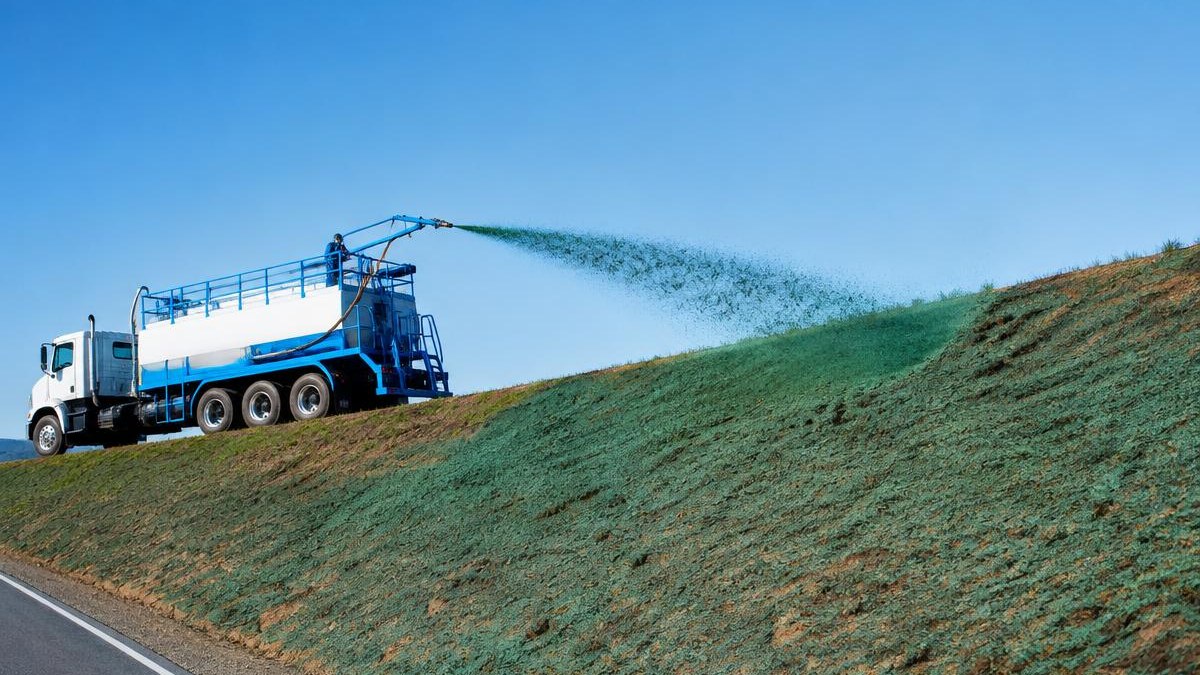
In the 2026 global civil infrastructure and land reclamation sector, hydraulic seeding with Guar Gum tackifier is an essential engineering strategy for contractors and geotechnical managers stabilizing earthworks. Accelerating climate volatility and stringent environmental regulations require rapid soil stabilization on steep highway cuts, mine sites, and commercial embankments. Hydroseeding-grade Guar Gum serves as a Superior, 100% biodegradable tackifier, binding wood fiber mulch, seed, and fertilizer slurries into a resilient matrix that resists erosion and retains moisture.
Research Overview
Slope stabilization and erosion control represent a major operational and environmental compliance challenge in 2026. According to market research published by IMARC, the global erosion control and revegetation market continues to grow, driven by transportation infrastructure, renewable energy installations, and mine closure mandates. Industry studies indicate that un-tackified hydraulic mulches on slopes steeper than 3:1 suffer severe washouts under moderate rainfall, causing seed displacement, soil loss, and costly re-seeding. Data evaluated by the USDA and FAO indicate that organic polysaccharide tackifiers reduce sediment runoff by 85% to 92% compared with bare soil.
Galactomannan Chemistry and Soil Interlocking Mechanics
The efficacy of Guar Gum as a hydraulic tackifier stems directly from its macromolecular structure and surface chemistry. The polymer interacts with soil silicates, clay minerals, and cellulosic mulch fibers through dense hydrogen bonding. More background is available in the Guar Gum glossary.
- Polymer structure and hydrogen bonding: Guar Gum is a non-ionic galactomannan with a (1→4)-linked β-D-mannopyranosyl backbone and (1→6)-linked α-D-galactopyranosyl side chains on every second mannose unit. This 2:1 mannose-to-galactose ratio gives exceptional cold-water solubility and hydration speed, and exposed hydroxyl groups bond with soil and fiber surfaces.
- Three-dimensional matrix formation: Guar Gum molecules bridge soil particles and organic fibers. On drying, the polymer forms a flexible, water-insoluble film that locks slurry components in place, conforms to irregular micro-topography, and limits particle detachment from raindrop impact (splash erosion).
- Viscoelastic rheology in spray applications: Hydroseeding-grade Guar Gum is pseudoplastic. Under high shear in pumps and nozzles the solution thins for easy pumping over long discharge distances; once sprayed, shear drops to zero and the fluid recovers high zero-shear viscosity (3,500 to 5,000 cps at 1% concentration), preventing run-off and slumping on steep embankments.
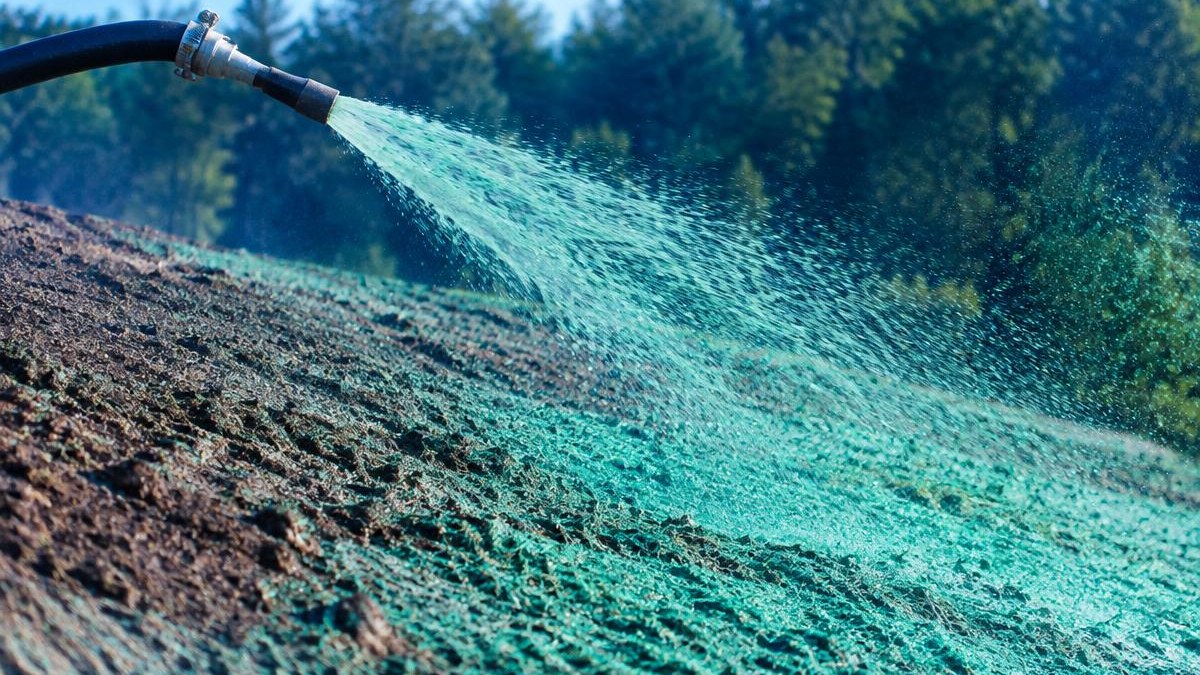 Hydroseeder applying a Guar Gum tackified slurry to an engineered embankment.
Hydraulic Slurry Binding, Rheology, and Application Parameters
Optimal erosion control performance requires precise formulation ratios and mixing protocols in commercial hydroseeding machinery. Fast-hydrating grades are described on the products page, and performance against alternative hydrocolloids is summarized in the comparison tool.
- Standard and heavy-duty application rates: For 3:1 to 2:1 slopes, industry practice is 25 to 40 kg per hectare (22 to 35 lbs per acre). On 1:1 or steeper slopes, erodible sandy soils, or high-rainfall zones, rates rise to 45 to 60 kg per hectare (40 to 53 lbs per acre).
- Tank mixing sequence and hydration kinetics: Water is added first with agitation; Guar Gum powder is introduced slowly into the high-shear vortex before wood fiber or paper mulch, fertilizer, and seed. Fast-hydrating 200-mesh Guar Gum reaches 90% of ultimate viscosity within 3 to 5 minutes, permitting rapid field loading and continuous spraying.
- Slurry coverage and matrix density: Combined with bonded fiber matrix (BFM) or flexible growth medium (FGM) fibers at 2,000 to 3,500 kg per hectare, the tackifier binds fibers into a continuous, breathable crust that anchors seed against wind scour and sheet flow erosion.
Moisture Retention, Germination Acceleration, and Seedling Establishment
Beyond physical stabilization, Guar Gum provides agronomic benefits by optimizing moisture availability in the seed microenvironment.
- High water-holding capacity: Galactomannan polysaccharides absorb 20 to 30 times their dry weight in water, acting as a localized reservoir for dew, humidity, and rainfall in the upper 1 to 2 centimeters of soil where seeds reside.
- Evaporation reduction: Studies in Carbohydrate Polymers and J. Food Sci. show hydrocolloid films significantly reduce moisture evaporation from porous substrates. The tackified mulch buffers surface temperature swings and keeps the seed bed moist in hot conditions.
- Accelerated germination and root anchoring: Field trials at arid reclamation sites report 30% to 50% faster seedling emergence versus un-tackified controls. Roots penetrate the flexible crust, and over 60 to 90 days the Guar Gum biodegrades into carbon dioxide, water, and organic matter, leaving self-sustaining vegetative cover.
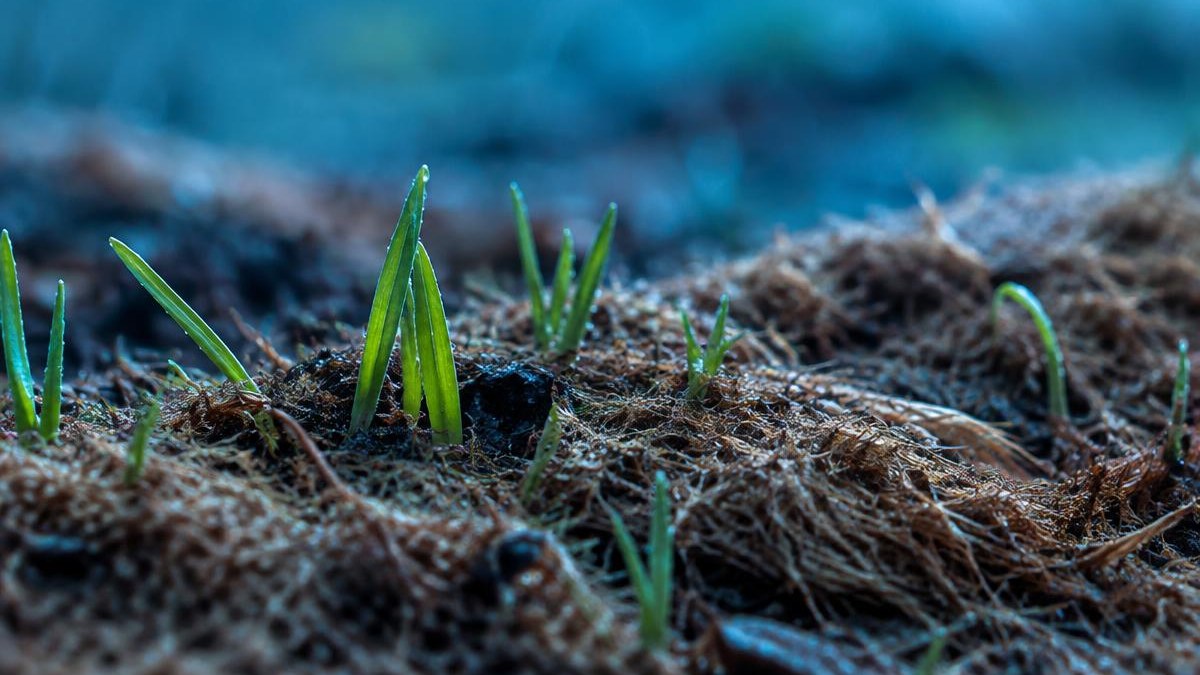 Early seedling emergence through a flexible Guar Gum bound hydro-matrix.
Environmental Safety, Water Quality Protection, and Compliance
Modern projects under ESG mandates require non-toxic materials that protect terrestrial and aquatic ecosystems. See the company's sustainability commitments for sourcing and environmental practices.
- 100% biodegradable and non-toxic: Derived from natural agricultural seeds, hydroseeding-grade Guar Gum contains no synthetic additives, heavy metals, or petroleum derivatives. Assessments referenced by EFSA and CODEX indicate natural galactomannans are non-hazardous to soil fauna, aquatic organisms, and livestock.
- Zero runoff toxicity: Unlike synthetic polyacrylamide (PAM) tackifiers or asphalt emulsion binders, which can leach residual monomers or oils into streams, Guar Gum runoff is broken down enzymatically by soil microorganisms, supporting compliance with local water quality guidelines.
- Organic and sustainable specifications: Guar Gum tackifiers suit eco-sensitive highway corridors, national park infrastructure, organic farming buffer zones, and LEED-certified site developments.
Key Takeaways
- Superior soil binding: Hydroseeding-grade Guar Gum cross-links soil particles and mulch fibers into a water-resistant, flexible hydro-matrix that reduces rainfall erosion and sediment runoff by over 90%.
- Optimal pseudoplastic flow: High zero-shear viscosity prevents slumping on steep 1:1 slopes, while shear-thinning ensures smooth pumping through long hose lines and nozzles.
- Enhanced moisture retention: Absorbing 20 to 30 times its dry weight in water maintains a moist seed zone that accelerates germination by 30% to 50%.
- Rapid field hydration: Fast-hydrating 200-mesh powders hydrate in 3 to 5 minutes, maximizing tank loading efficiency and daily coverage.
- Eco-friendly compliance: 100% biodegradable and non-toxic, eliminating microplastics and chemical leaching to satisfy 2026 ESG and environmental mandates.
Frequently Asked Questions
What is the recommended application rate for Guar Gum in hydroseeding operations?
Standard rates range from 25 to 40 kg per hectare (22 to 35 lbs per acre) for mild to moderate slopes (3:1 to 2:1). On 1:1 or steeper embankments, erodible sandy soils, or high-rainfall sites, rates should increase to 45 to 60 kg per hectare (40 to 53 lbs per acre) to ensure maximum matrix density and slope adhesion.
How does Guar Gum compare to synthetic polyacrylamide (PAM) tackifiers?
Guar Gum is a 100% natural, plant-based polysaccharide that biodegrades completely into organic matter within 60 to 90 days, leaving no synthetic residues or microplastics. Synthetic PAM can present aquatic toxicity risks if unreacted monomers leach into waterways, whereas Guar Gum is non-toxic and suited to sensitive watersheds and organic land reclamation projects.
How long does a Guar Gum tackifier crust remain effective on slopes?
A properly applied Guar Gum hydro-matrix forms a protective crust upon drying and remains effective for 60 to 90 days. This gives seeds an adequate window to germinate, establish root systems, and form permanent vegetative cover before the polymer degrades naturally into the soil.
Can Guar Gum be used with all types of hydraulic mulches and seeds?
Yes. Hydroseeding-grade Guar Gum is compatible with 100% wood fiber, paper and wood blends, bonded fiber matrices (BFM), flexible growth media (FGM), turf grass seeds, native wildflower mixes, and agricultural fertilizers. It mixes cleanly without affecting seed viability or equipment function.
To elevate hydraulic seeding performance and secure Superior soil erosion control on 2026 infrastructure projects, partner with B.D. Guar Pvt. Ltd. Contact the technical team at sales@bdguar.com for specification sheets, custom dosage recommendations, and global export quotes, or explore the product range.