The Rise of Hybrid Meat: Blending Plant and Animal Proteins
Hybrid meat is reshaping 2026 protein formulation. See how Guar Gum and cassia gum knit plant and animal proteins into one cohesive, juicy, clean-label matrix.
Last updated:
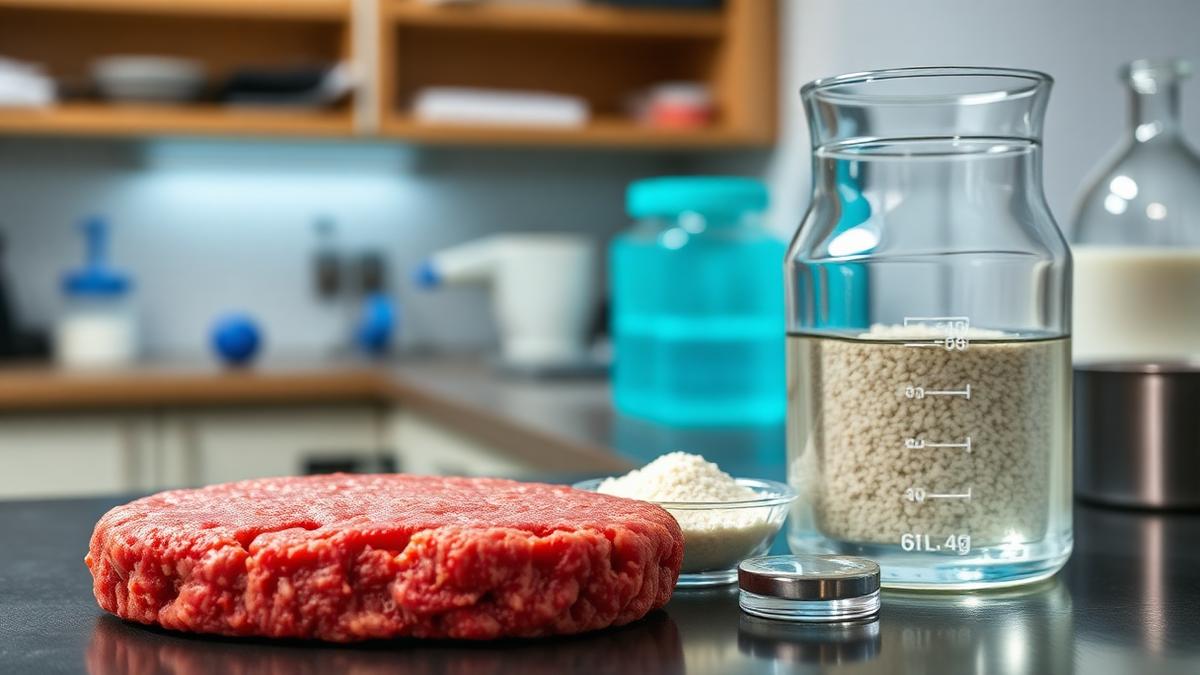
As the 2026 global food industry embraces sustainable nutrition, the formulation of hybrid meat products has emerged as a revolutionary strategy for modern meat scientists. By substituting a calculated percentage of animal protein with plant-based extenders, manufacturers substantially lower costs and environmental impact while satisfying flexitarian demographics. Seamlessly merging these divergent protein matrices, however, requires advanced rheological intervention. By utilizing Superior natural hydrocolloids, specifically Guar Gum and cassia gum, formulators can knit these hybrid systems together while preserving authentic organoleptic properties.
Research Overview
The 2026 global meat processing sector faces a profound thermodynamic challenge when combining animal muscle tissue with plant-derived proteins. Animal proteins, primarily composed of the fibrous myofibrillar proteins actin and myosin, form highly organized, cross-linked gels when subjected to thermal processing. Conversely, plant-based extenders such as soy, pea, or wheat isolates are predominantly globular proteins. When these fundamentally different structures are mixed in an aqueous meat batter, they exhibit thermodynamic incompatibility. Instead of forming a single cohesive matrix, the plant and animal proteins tend to repel each other, phase-separating during cooking. This phase separation leads to severe textural defects, and the resulting hybrid meat product often becomes crumbly, excessively dry, or unpleasantly spongy, leading to immediate consumer rejection.
To overcome this inherent structural failure, meat scientists deploy hydrocolloid networks to engineer realistic textures in meat analogues. The integration of high-molecular-weight polysaccharides acts as a critical structural bridge within the continuous aqueous phase of the meat batter. Industry studies indicate that hydrocolloids serve a multiplicity of food uses, including meat structuring, and are of critical relevance in restructured snacks and hybrid meats, creating semisolids and gels from processed meat derivatives and plant extenders. Their combination with specific gums serves to attain the precise hardness, adhesiveness, cohesiveness, and chewiness necessary for consumer acceptance of sausages, patties, and cold meats. By introducing Guar Gum and cassia gum into the formulation, food scientists physically entangle the disparate protein fractions, immobilizing free water and regulating the unfolding of protein chains during thermal denaturation to create a unified, Superior hydrogel network that flawlessly mimics the structural integrity of a 100% animal-based meat product.
The Molecular Mechanics of Guar Gum as a Structural Binder
The ability of Guar Gum to act as a universal binder in complex hybrid meat matrices is directly attributable to its unique molecular architecture. Chemically, Guar Gum is a massive, non-ionic heteropolysaccharide featuring a linear polymer backbone constructed entirely of 1,4-linked beta-D-mannopyranosyl units, with random branch points of 1,6-linked alpha-D-galactose units attached as side chains. The critical feature of Guar Gum is its highly specific branching density, possessing a mannose-to-galactose ratio of approximately 2:1. According to research published in Carbohydrate Polymers, this frequent branching sterically prevents the massive polymer chains from tightly packing together and crystallizing.
This structural geometry allows Guar Gum to hydrate rapidly and completely in the cold water commonly used in meat processing facilities, a critical operational advantage when working with temperature-sensitive meat batters. Because of its immense molecular weight, frequently exceeding 2,000,000 Daltons, and its high density of free hydroxyl functional groups, Guar Gum engages in extensive intermolecular hydrogen bonding with the surrounding water. As the chains hydrate, they rapidly expand, overlap, and intertwine in a phenomenon known as superentanglement.
In a hybrid meat batter, this superentangled pseudo-gel network weaves itself through both the fibrous animal proteins and the globular plant proteins. The Guar Gum acts as a flexible, molecular shock absorber, physically locking the two incompatible protein types together in a stable, uniform suspension before and during cooking.
- Reduced cook shrink: The intense water-binding capacity of Guar Gum resists contracting pressure during thermal processing, locking moisture inside the meat matrix and keeping the final patty or sausage plump and juicy.
- Prevention of fat capping: Synergistic interaction between the galactomannan network and the meat emulsion prevents lipids from separating and congealing on the exterior of the casing.
- Higher economic yield: Superior moisture retention translates directly into a heavier, higher-yield final product at inclusion rates as low as 0.2%-0.5% by weight.
 Guar Gum hydrates in cold water to form a superentangled polymer network that binds moisture in hybrid meat batters.
Synergistic Blending with Cassia Gum and Xanthan
While Guar Gum provides unparalleled water-binding and viscosity, formulating the ultimate Superior hybrid meat often requires a customized rheological profile that a single hydrocolloid cannot deliver. Meat scientists frequently utilize synergistic blends of Guar Gum, cassia gum, and xanthan gum to achieve the perfect structural snap. Cassia gum is another natural galactomannan, but it differs fundamentally: with fewer galactose side branches, its mannose backbone has long, smooth, naked regions.
This reduced branching allows cassia gum to interact powerfully with other structural polymers, particularly xanthan gum or carrageenan. When blended in a hybrid meat formulation, the smooth regions of the cassia gum molecules bind directly to the helical structures of secondary gums, forming rigid, three-dimensional intermolecular junction zones. Synergistic studies of Cassia tora gum with xanthan and Guar Gum highlight the profound impact of these combinations on gel strength and matrix stability. While Guar Gum excels at creating thick, viscous solutions that hold water, cassia gum blends are capable of forming true, thermoreversible gels.
By utilizing a precise ratio of Guar Gum for moisture retention and a cassia gum blend for structural rigidity, formulators can perfectly replicate the firm, resilient texture of an all-meat hot dog or deli slice. Improving slicing yields is another major benefit: the cassia and Guar Gum matrix fills the interstitial spaces between plant and animal proteins with a highly elastic hydrocolloid web, providing the cohesiveness required for paper-thin, high-speed commercial slicing and dramatically reducing unsellable waste. For a deeper comparison of these gums, see our guide on Guar Gum vs. xanthan gum.
- Hardness and snap: Increasing the cassia gum fraction elevates the hardness and snap of a sausage casing.
- Juiciness and cohesiveness: Increasing the Guar Gum fraction elevates the juiciness and internal cohesiveness of a burger patty.
- Measurable precision: Instrumental Texture Profile Analysis lets scientists mathematically dial in hardness, springiness, and chewiness by adjusting the Guar Gum to cassia gum ratio.
Emulating Adipose Tissue and Mouthfeel
One of the most significant sensory hurdles in hybrid meat development is replicating the luxurious mouthfeel of animal fat on the palate. If animal fat is removed to make room for plant extenders, the product becomes unpleasantly dry. Here, Guar Gum serves as an exceptional, low-calorie fat mimetic. Because it binds massive amounts of water into a dense, lubricating micro-gel, it physically simulates the presence of melted animal fat inside the mouth.
The success of this fat emulation relies on the non-Newtonian flow behavior of Guar Gum. The hydrated galactomannan network is highly pseudoplastic, or shear-thinning. When the hybrid meat is at rest on a plate, the Guar Gum gel is thick and structurally solid, holding the product shape. When the consumer takes a bite, the mechanical shear force of chewing causes the massive polymer chains to instantly align, the internal friction of the gel plummets, and trapped moisture is released smoothly across the palate, mimicking the exact melting profile and lubricating sensation of Superior beef or pork fat.
Flavor release kinetics are also optimized through this process. Animal fat is a primary carrier for lipophilic flavor compounds, so replacing meat with plant extenders often compromises flavor delivery. Unlike rigid, brittle gels that trap flavors permanently, the flexible, shear-thinning network of Guar Gum continuously delivers dissolved savory and umami compounds to the taste receptors as the matrix breaks down during mastication. Additionally, the superentangled Guar Gum network creates a physical barrier around emulsified fat droplets, restricting oxygen diffusion, retarding lipid oxidation, and protecting the Superior flavor profile throughout an extended shelf life.
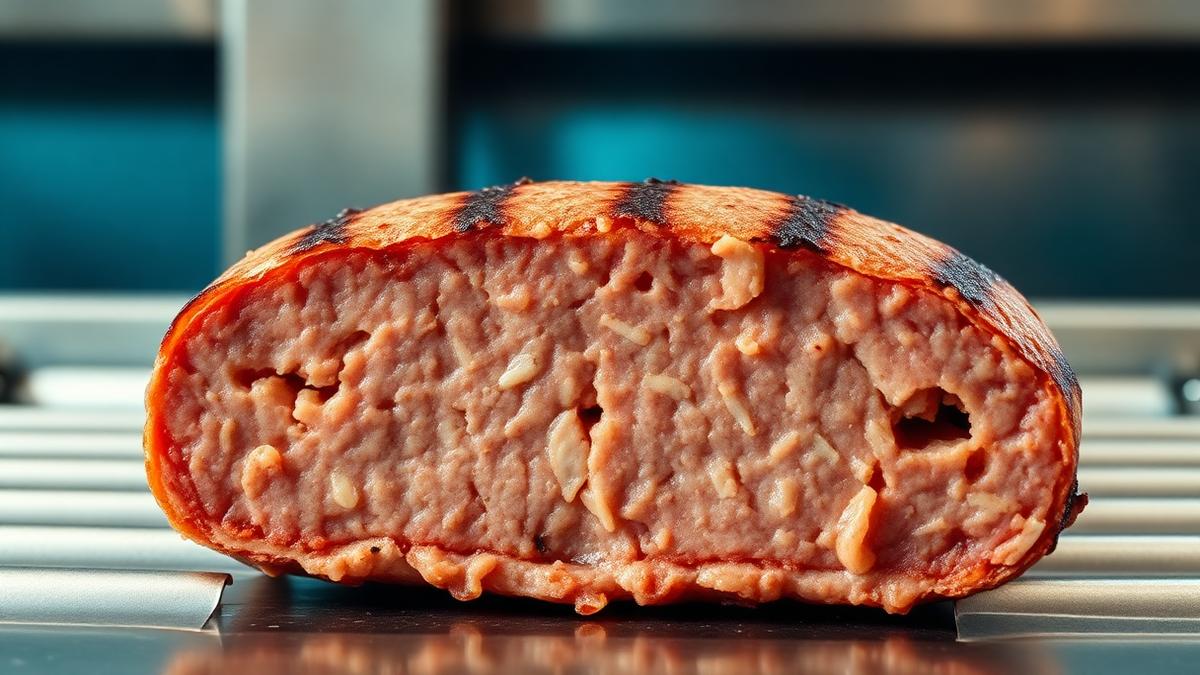 A precise Guar Gum and cassia gum ratio replicates the firm, juicy texture of traditional meat in hybrid sausages and patties.
Overcoming Processing Stresses and Thermal Degradation
Modern commercial meat processing subjects ingredients to extreme mechanical and thermal stresses, and a hydrocolloid binder must be exceptionally robust to survive the journey from mixing vat to consumer plate. The production of hybrid sausages and emulsified meats requires high-speed bowl chopping and aggressive mechanical emulsification. Native Guar Gum boasts incredibly resilient glycosidic bonds, effortlessly withstanding these extreme shear forces without undergoing molecular depolymerization and retaining its absolute water-binding capacity after intense processing.
During thermal processing, hybrid meat products are typically cooked, smoked, or retorted to ensure microbiological safety. Under high-temperature processing, many synthetic binders and inferior plant starches break down, leading to massive moisture purge and fat separation. Industry studies indicate that Superior-grade Guar Gum maintains highly stable viscosity at elevated temperatures. When products are subjected to sterilization temperatures exceeding 121 degrees Celsius, the addition of Guar Gum, particularly when blended with cassia or xanthan, maintains a highly viscous emulsion throughout retorting, preventing the formation of an unappealing layer of congealed fat and watery broth.
The 2026 global supply chain relies heavily on frozen distribution to move meat products across international borders. When hybrid patties experience temperature fluctuations during transit, unbound water migrates and forms large, jagged ice crystals that puncture delicate protein matrices. By thoroughly binding free water within its molecular matrix, Guar Gum acts as a potent ice crystal inhibitor, restricting molecular mobility and forcing any ice crystals that do form to remain microscopic.
- Shear resistance: Resilient glycosidic bonds survive high-speed bowl chopping without depolymerization.
- Thermal stability: Maintains viscosity through cooking, smoking, and retorting above 121 degrees Celsius.
- Freeze-thaw protection: Acts as an ice crystal inhibitor across the frozen supply chain.
Learn more about our batch-tested consistency on our quality page.
Clean-Label Economics and 2026 Regulatory Compliance
The commercial viability of hybrid meat products in the 2026 global landscape is dictated by two forces: stringent economic optimization and intense consumer scrutiny over ingredient labels, and hydrocolloids are the linchpin for satisfying both. Persistent global inflation and agricultural supply chain volatility have made pure animal proteins exceptionally expensive raw materials. The fundamental economic premise of a hybrid meat product is to replace a portion of this costly meat with more affordable plant proteins and water, which is only profitable if the water actually stays in the product. Because Guar Gum possesses an immense hydrodynamic volume, inclusion rates as low as 0.2% to 0.5% by weight bind massive quantities of moisture, drastically lowering formulation costs and protecting profit margins.
Beyond pure economics, the 2026 consumer actively avoids chemical-sounding, highly processed synthetic additives and demands absolute ingredient transparency. Guar Gum, derived completely naturally from the drought-resistant Cyamopsis tetragonoloba legume, satisfies these clean-label mandates, allowing brands to replace artificial moisture-binders and synthetic emulsifiers with a recognizable, agriculturally derived plant extract. From a regulatory standpoint, the compliance profile is impeccable: the USDA permits its use in various meat and poultry products as a safe binder and extender, while the EFSA and the FAO recognize Guar Gum (E412/INS 412) and cassia gum (E427) as safe food additives. Sourcing from a partner committed to sustainable cultivation further strengthens the environmental story that flexitarian shoppers reward.
Key Takeaways
- Bridging incompatible proteins: Guar Gum acts as a flexible polymeric bridge, physically entangling fibrous animal proteins with globular plant proteins to prevent phase separation and textural failure.
- Synergistic gelation: Blending Guar Gum with cassia gum creates rigid intermolecular junction zones, letting formulators mathematically dial in hardness, springiness, and slicing yield.
- Rheological fat emulation: The shear-thinning properties of hydrated Guar Gum mimic the lubricating mouthfeel and melting profile of animal fat, keeping lean hybrid meats juicy.
- Thermal and shear stability: Robust glycosidic bonds allow Guar Gum to survive aggressive commercial processing, including bowl chopping and retorting, without losing water-binding capacity.
- Economic and clean-label compliance: As a 100% natural, plant-derived ingredient recognized by the USDA and EFSA, Guar Gum lowers recipe costs and raises cooking yields while satisfying clean-label demands.
Frequently Asked Questions
Why do plant and animal proteins separate when mixed together in a meat product?
Plant proteins such as soy or pea and animal muscle fibers possess fundamentally different molecular structures and thermodynamic properties. When cooked, they tend to repel each other and coagulate independently, squeezing out water and fat and producing a crumbly, dry hybrid. Hydrocolloids like Guar Gum are required to act as a molecular net, holding both protein types and the surrounding moisture tightly together in a unified structure.
How does Guar Gum replace the missing fat in a hybrid meat formulation?
When formulating hybrid meats, animal fat is often reduced to improve the nutritional profile or make room for plant extenders, which can make the meat taste dry. Guar Gum acts as an advanced fat mimetic, binding large amounts of water into a dense, lubricating micro-gel that recreates the rich, juicy mouthfeel of natural animal fat without adding calories.
Why is cassia gum often blended with Guar Gum in these recipes?
Guar Gum is exceptional at holding water and providing a thick, juicy texture, but it does not form a firm, rigid gel on its own. Cassia gum has a slightly different molecular structure that lets it lock tightly with other ingredients such as xanthan gum to create a strong, solid structure. Blending Guar Gum for moisture with cassia gum for firmness lets food scientists replicate the satisfying snap and chewiness of a traditional, all-meat sausage.
Is the use of Guar Gum in meat products compliant with 2026 clean-label trends?
Yes. In a market where consumers are highly skeptical of synthetic chemicals and artificial binders, Guar Gum provides a distinct advantage as a 100% natural, agriculturally derived extract from the seeds of the guar bean plant. It is globally recognized as safe by major regulatory bodies, including the USDA and EFSA, allowing manufacturers to formulate Superior, clean-label hybrid meats for health-conscious and flexitarian consumers.
To achieve flawless texture, unmatched moisture retention, and clean-label compliance in your next generation of hybrid meat formulations, partner with the industry experts. B.D. Guar Pvt. Ltd. provides expertly milled, Superior-grade Guar Gum and cassia gum hydrocolloids engineered for maximum hydration, unparalleled emulsion stability, and robust thermal resilience. Contact B.D. Guar Pvt. Ltd. today, and explore our full Guar Gum product range to elevate your meat processing capabilities in a competitive global market.