Gum Arabic vs. Guar Gum: Choosing the Best Stabilizer for Clear Beverages
Gum Arabic delivers crystal-clear emulsification while Guar Gum builds rich viscosity. Compare both hydrocolloids and choose the right stabilizer for your 2026 beverage line.
Last updated:
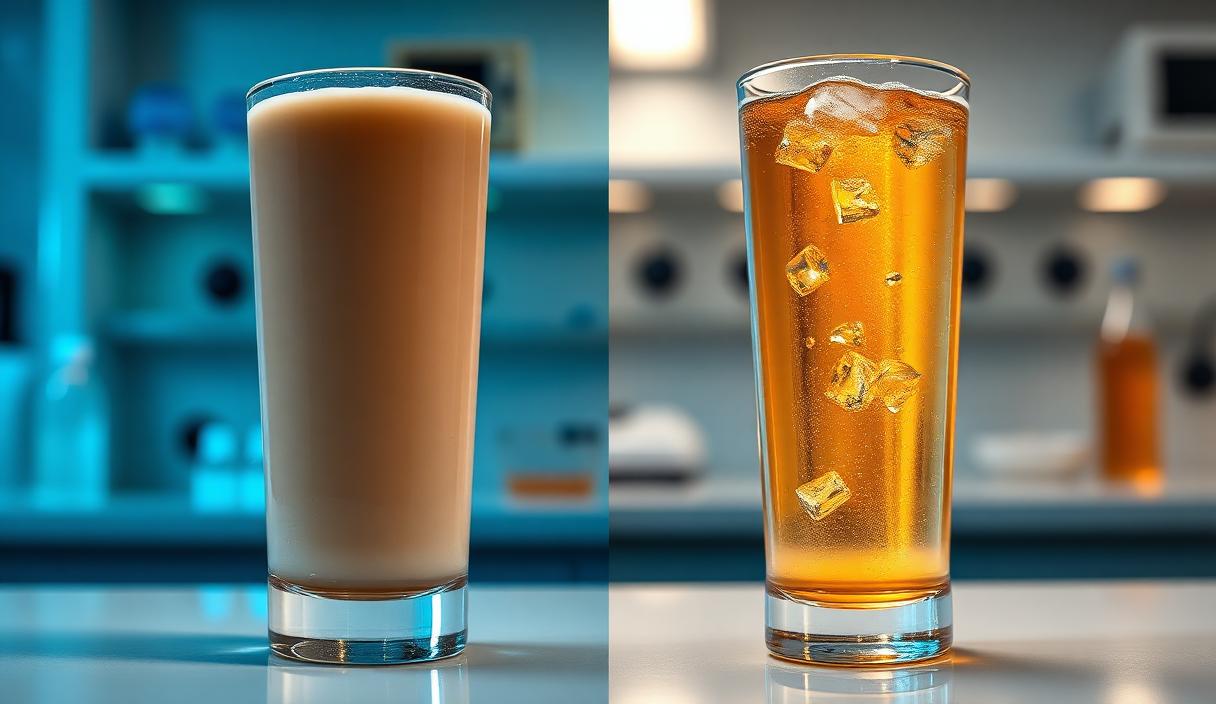
The 2026 global beverage market is accelerating toward functional, clean-label formulations, forcing food scientists to weigh Gum Arabic vs. Guar Gum when engineering flawless stabilization. Both are natural, plant-derived hydrocolloids, yet their rheological and functional profiles dictate entirely different applications within liquid matrices — from suspending heavy fruit particulates in thick nectars to encapsulating delicate citrus oils in crystal-clear functional waters. Selecting the precise hydrocolloid is the foundation of Superior product development and prolonged shelf-life stability.
Research Overview: The Molecular Architecture of Natural Hydrocolloids
The global beverage industry in 2026 is defined by a rapid transition away from synthetic additives toward natural, agriculturally derived stabilizers. According to data from IMARC, the global food hydrocolloids market is expanding significantly, driven by consumer demand for clean-label, sustainable, and functional ingredients. Within this market, Guar Gum and Gum Arabic represent two of the most critical, yet functionally divergent, tools available to the modern beverage formulator.
Research published in Carbohydrate Polymers details the fundamental chemical differences between these two hydrocolloids. Guar Gum is a high-molecular-weight galactomannan polysaccharide extracted from the endosperm of the Cyamopsis tetragonoloba legume, primarily cultivated in the semi-arid regions of India. Its structure consists of a linear backbone of beta-1,4-linked D-mannopyranose units with pendant alpha-1,6-linked D-galactopyranose side branches. This structure, possessing a mannose-to-galactose ratio of approximately 2:1, prevents the polymer chains from packing tightly together. Consequently, Guar Gum exhibits rapid, massive hydration in cold water, forming a superentangled, three-dimensional pseudo-gel network that drastically increases fluid viscosity.
Conversely, Gum Arabic (also known as acacia gum) is a dried exudate harvested from the stems and branches of Acacia senegal and Acacia seyal trees, primarily found in the Sahel region of Africa. Structurally, it is an exceedingly complex, highly branched arabinogalactan-protein complex. Unlike the linear chains of Guar Gum, the molecules of Gum Arabic are tightly coiled and highly compact, resulting in a remarkably low hydrodynamic volume. The presence of a covalently linked protein fraction grants Gum Arabic unique surface-active properties that are entirely absent in native galactomannans. To understand how these molecules compare to synthetic-fermentation gums, review our Guar Gum vs. xanthan gum comparison.
The Rheology of Guar Gum in Viscous Beverage Systems
When formulators are tasked with creating thick, satiating beverages — such as meal replacement shakes, dairy-based smoothies, or high-pulp fruit nectars — Guar Gum is universally recognized as the Superior choice. Its performance is rooted in its exceptional water-binding capacity.
- Massive viscosity generation: Because of its immense molecular weight (frequently exceeding 2,000,000 Daltons) and its abundance of free hydroxyl groups, Guar Gum engages in extensive intermolecular hydrogen bonding with surrounding water. Industry studies indicate that a 1% aqueous solution can easily produce viscosities ranging from 3,000 to 5,000 centipoise (cps), delivering rich mouthfeel at cost-effective inclusion rates of 0.1% to 0.3% by weight.
- Pseudoplastic (shear-thinning) flow: Under the intense mechanical shear of industrial pumping and filling nozzles, the superentangled galactomannan chains temporarily align, causing a rapid drop in internal friction. The beverage flows easily into the bottle, then instantly recovers its high viscosity once the shear force stops.
- Particulate suspension: Guar Gum imparts a distinct yield stress to the liquid matrix. As long as the gravitational force of a suspended particle does not exceed that yield stress, insoluble cocoa powder, protein isolates, or fruit pulp remain permanently suspended — eliminating the need for consumers to shake the product.
The critical limitation of Guar Gum in beverage formulation is its optical profile. The massive, superentangled polymer chains physically scatter transmitted light, producing a cloudy, opaque, or slightly turbid solution. It is therefore fundamentally unsuitable for clear sports drinks, enhanced waters, or transparent fruit juices where optical clarity is a strict formulation requirement. Explore the full range of application-specific grades in our Guar Gum product catalogue.
Practically, this pseudoplastic-plus-yield-stress behavior is why a Superior meal replacement shake can carry dense protein and mineral particulates for months of ambient shelf life yet still pour cleanly from the bottle. Formulators typically bracket their Guar Gum dosage between a lower bound set by the minimum yield stress needed to suspend the heaviest particle and an upper bound set by the maximum viscosity the filling line can pump efficiently.
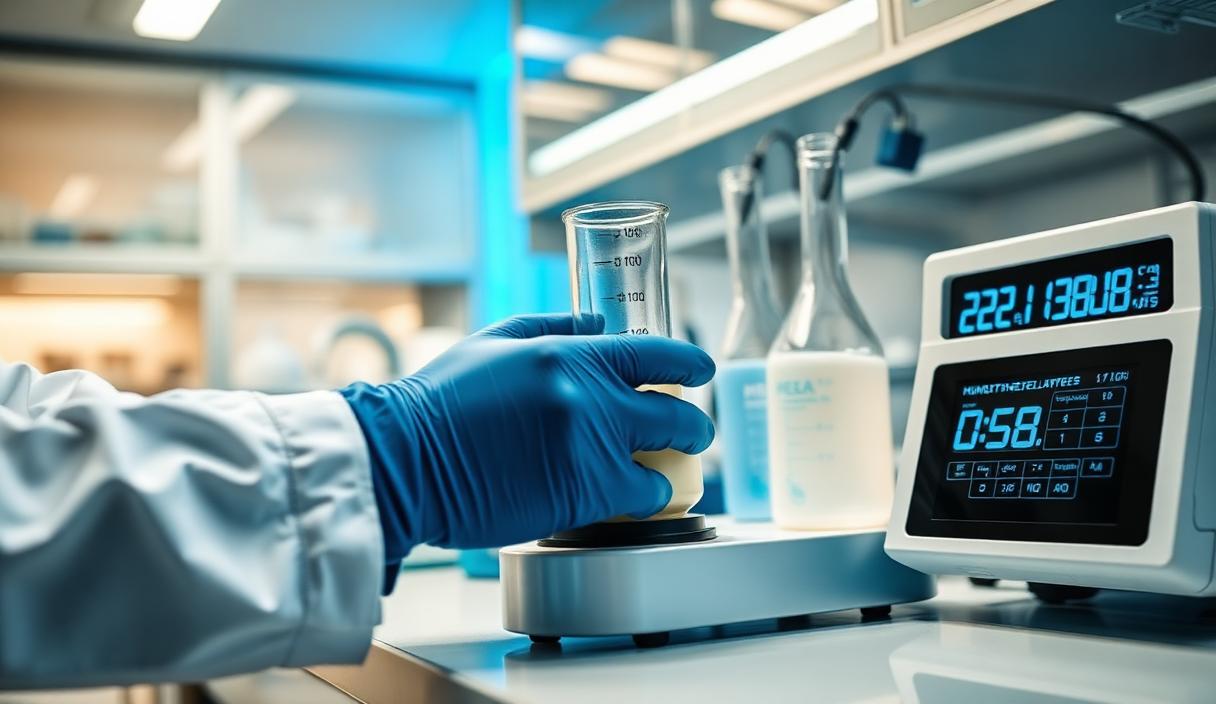 Rheological testing distinguishes the cloudy, high-viscosity network of Guar Gum from the clear, low-viscosity profile of Gum Arabic.
Gum Arabic: Achieving Clarity, Emulsification, and Flavor Encapsulation
For formulations demanding crystal-clear liquids or the suspension of essential oils, Gum Arabic is the undisputed industry standard. Its compact, highly branched molecular structure allows it to behave completely differently from Guar Gum in aqueous environments.
- High solubility, low viscosity: According to research in the J. Food Sci., Gum Arabic can be dissolved in water at concentrations up to 30% to 40% by weight without creating a highly viscous or gel-like texture, preserving a light, refreshing, drinkable mouthfeel.
- Superior emulsion stabilization: Gum Arabic contains an amphiphilic glycoprotein fraction; the hydrophobic protein chain anchors into the surface of each microscopic oil droplet while the hydrophilic carbohydrate branches extend into the water, firmly stabilizing citrus flavor oils.
- Preventing Ostwald ripening and ringing: The carbohydrate branches create a steric barrier around each oil droplet, physically preventing coalescence. Industry studies indicate this steric stabilization permanently prevents “ringing” — the unsightly accumulation of separated flavor oils at the neck of a bottle.
- Optical clarity: Because the molecular weight of Gum Arabic is relatively low and its structure highly compact, it does not scatter light like galactomannans. When adequately filtered, solutions are exceptionally clear, making it the stabilizer of choice for transparent energy drinks, fortified waters, and clear carbonated soft drinks.
In the production of dry beverage mixes such as instant coffees or powdered sports drinks, Gum Arabic also acts as a Superior encapsulating agent. Liquid flavor oils are emulsified with the gum and spray-dried, forming a hard, oxidation-resistant glassy matrix around the volatile flavor compounds and protecting them from degradation during prolonged shelf storage.
The economics of Gum Arabic are also shifting. Because clear-beverage stabilization and fiber fortification both demand relatively high inclusion rates, total formulation cost is sensitive to acacia supply. This has accelerated formulator interest in blended systems and in clear PHGG as a cost-managed route to the same clarity and prebiotic outcomes.
The 2026 Trend: Fiber Enrichment and Partially Hydrolyzed Guar Gum
The 2026 global beverage market is heavily driven by the “food as medicine” macro-trend. Consumers are actively seeking beverages fortified with functional ingredients that promote gastrointestinal health, stabilize blood glucose levels, and improve cardiovascular profiles, driving a surge in demand for invisible, soluble dietary fibers.
Because Gum Arabic can be added to beverages in high concentrations without thickening the liquid, it serves as an excellent source of soluble dietary fiber. It passes undigested through the stomach and small intestine, arriving intact in the colon where it is fermented by beneficial bifidobacteria and lactobacilli. The FAO and EFSA recognize Gum Arabic as a safe, highly tolerable prebiotic fiber that does not cause the gastric distress often associated with synthetic oligosaccharides, enabling “High Fiber” label claims on clear, low-calorie functional waters.
To compete in this space, the Guar Gum industry has developed Partially Hydrolyzed Guar Gum (PHGG). Produced through the controlled enzymatic hydrolysis of native Guar Gum using specialized mannanase enzymes, PHGG cleaves the galactomannan backbone into much smaller, low-molecular-weight fragments. It retains the immense dietary fiber and prebiotic benefits of native Guar Gum but completely loses its viscosity-building properties, dissolving perfectly clear in cold water without cloudiness or off-flavors. In the 2026 market, PHGG is rapidly gaining share as a Superior, tasteless, invisible fiber fortifier, directly challenging the traditional dominance of Gum Arabic in the fiber-enrichment sector.
Market analysts tracking the 2026 landscape note that the convergence of prebiotic science and clean-label demand has blurred the historical boundaries between these two ingredients. Where beverage brands once defaulted to Gum Arabic purely for its clarity, the emergence of clear PHGG gives formulators a domestically abundant, drought-resilient galactomannan alternative sourced from Indian guar cultivation. This dual availability strengthens supply-chain resilience, allowing procurement teams to hedge against the price volatility and climate exposure that periodically affect African acacia harvests.
 PHGG and Gum Arabic enable invisible fiber fortification in the crystal-clear functional drinks defining the 2026 market.
Stability Under Processing and the Formulator's Decision Matrix
Carbonation adds a further constraint. In sparkling functional waters and hard seltzers, any excess viscosity from an ill-chosen stabilizer dampens effervescence and dulls the crisp sensory signature consumers expect, which is another reason low-viscosity Gum Arabic dominates the transparent, carbonated segment while Guar Gum is reserved for still, opaque systems.
Modern commercial beverages must endure brutal manufacturing conditions, including high-shear homogenization, extreme thermal pasteurization, and highly acidic environments. Fruit juices, sodas, and energy drinks are frequently acidulated to a pH of 2.5 to 3.8; native Guar Gum is a non-ionic polysaccharide, so its viscosity is largely unaffected by variations in ionic strength or acidic pH. During Ultra-High Temperature (UHT) processing, where liquid is flashed above 135°C, the robust glycosidic bonds of Superior-grade Guar Gum withstand the thermal shock without depolymerization. For clear beverages, industry studies indicate that the covalent protein-carbohydrate linkage in Gum Arabic maintains its protective steric barrier around flavor oil droplets throughout pasteurization.
To navigate these requirements, formulators must map the desired sensory attributes of the final product to the physicochemical properties of each hydrocolloid.
Select Guar Gum when the target is:
- Thick, heavy, rich, and creamy mouthfeel with opaque or milky appearance.
- Heavy particulate suspension — cocoa powder in chocolate milk, fruit pulp in nectars, insoluble calcium in fortified dairy.
- Applications such as plant-based oat milks, high-protein meal replacement shakes, frozen blended coffees, fruit smoothies, and drinkable yogurts.
- Exceptional cost-in-use: only 0.1% to 0.3% inclusion is required to reach target viscosity.
Select Gum Arabic when the target is:
- Light, crisp, low-viscosity, water-like mouthfeel with crystal-clear transparency.
- Micro-emulsification of volatile flavor oils (orange, lemon, mint) and prevention of oil ringing at the bottleneck.
- Applications such as clear energy drinks, carbonated soft drinks, flavored sparkling waters, hard seltzers, and dry powdered beverage mixes requiring flavor encapsulation.
- Higher usage rates (often 1% to 15%) for emulsion stability or fiber fortification, resulting in a higher volumetric cost-in-use than galactomannans.
For a deeper technical comparison of grades and functional properties, consult our hydrocolloid comparison tool or the Guar Gum glossary.
Sourcing, Quality Assurance, and Sustainability
Ingredient performance is only as reliable as the supply chain behind it. In 2026, beverage manufacturers increasingly qualify hydrocolloid suppliers on batch-to-batch viscosity consistency, microbiological safety, and documented sustainability credentials, not price alone. Guar is a drought-tolerant legume adapted to the semi-arid regions of northwest India, where it also fixes atmospheric nitrogen and enriches the soil, giving it a comparatively low water footprint against many alternative thickening crops.
For food-grade beverage applications, three quality parameters are decisive. First, controlled particle size (mesh) governs hydration speed and lump-free dispersion in high-throughput mixing lines. Second, standardized Brookfield viscosity testing on every batch, delivered with a Certificate of Analysis, ensures a formulation behaves identically from pilot plant to full production. Third, strict microbiological and trace-metal limits protect low-acid dairy and functional water systems from spoilage and recalls. B.D. Guar's in-house laboratory validates each of these parameters before dispatch; formulators can review the full framework on our quality assurance page.
- Traceable raw material: Direct sourcing from guar-growing regions supports consistent seed quality and transparent, farm-level provenance.
- Clean-label and regulatory fit: Non-GMO, plant-derived hydrocolloids that satisfy USDA, FDA, and EFSA expectations for transparent ingredient decks.
- Sustainability advantage: A drought-resilient, nitrogen-fixing crop with a low water footprint, detailed further on our sustainability page.
By pairing the correct hydrocolloid chemistry with a rigorously controlled supply chain, beverage brands protect both product quality and brand reputation across increasingly demanding global retail channels.
Key Takeaways
- Distinct rheological profiles: Guar Gum provides massive, shear-thinning viscosity at extremely low concentrations, whereas Gum Arabic provides incredibly low viscosity even at high concentrations.
- Optical clarity constraints: The superentangled network of Guar Gum causes cloudiness, making compact Gum Arabic the strict requirement for crystal-clear beverages.
- Superior emulsification: The unique glycoprotein fraction of Gum Arabic anchors to flavor oils, providing steric stabilization that prevents separation and “ringing” in commercial soft drinks.
- Fiber fortification trends: In 2026, Gum Arabic serves as a high-dose, low-viscosity invisible fiber, while enzymatically modified PHGG offers a clear, tasteless prebiotic alternative.
- Cost-in-use efficiency: Guar Gum remains exceptionally cost-effective for thickening opaque dairy and plant-based milks at only 0.1% to 0.3% inclusion.
Frequently Asked Questions
Why does Guar Gum make my beverage formulation look cloudy?
Guar Gum is composed of massive, highly extended polymer chains that intertwine to create a thick gel network. These large molecular structures deflect and scatter light as it passes through the liquid, resulting in a hazy, turbid, or opaque appearance. This makes it ideal for dairy products but unsuitable for clear sports drinks.
Can I use Guar Gum to emulsify citrus flavor oils in a clear soda?
No. Native Guar Gum lacks the specialized protein components necessary to bind oil droplets and lacks the optical clarity required for a transparent soda. For emulsifying flavor oils in clear carbonated beverages without causing ringing, Gum Arabic is the industry-standard ingredient due to its surface-active glycoprotein structure and high transparency.
What is the best way to add dietary fiber to a clear beverage without making it thick?
Formulators have two primary natural options for invisible fiber fortification: Gum Arabic, which can be added in high concentrations without significantly raising viscosity, or Partially Hydrolyzed Guar Gum (PHGG), a specialized derivative in which the Guar Gum molecules are enzymatically broken into tiny, clear, non-thickening fragments that deliver excellent prebiotic benefits.
Are both of these gums safe and clean-label compliant for the 2026 market?
Yes. Both Guar Gum and Gum Arabic are 100% natural, agriculturally derived plant products, globally recognized as safe by major regulatory bodies including the USDA, FDA, and EFSA. Utilizing these natural hydrocolloids allows brands to replace synthetic chemical stabilizers, aligning with consumer demand for transparent, clean-label ingredient lists.
To master the precise rheology, emulsion stability, and clean-label compliance required for your next generation of functional beverages, partner with the industry experts. B.D. Guar Pvt. Ltd. provides expertly milled, Superior-grade Guar Gum hydrocolloids and advanced derivatives engineered for maximum hydration, unparalleled suspension control, and flawless sensory performance. Contact B.D. Guar Pvt. Ltd. today to discover how our naturally derived formulations can elevate your commercial beverage lines.