Guar Gum Uses in Cooking: A Practical Home Guide
How to use Guar Gum at home — gluten-free baking, smoothies, sauces, ice cream, salad dressings — with dosage, technique, and common mistakes to avoid.
Last updated:
Quick Answer
How do I use Guar Gum in home cooking?
Use Guar Gum as a tiny-quantity thickener — typically 0.25 to 0.5 teaspoons (1 to 2 grams) per cup of liquid — to thicken sauces, gravies, soups, smoothies and ice cream without adding fat or calories. Whisk it into a little oil or sugar before adding to the recipe to prevent lumps, and remember that it is roughly eight times more potent than cornstarch.
Guar Gum sits quietly in the baking aisle of most supermarkets, but home cooks who learn to use it gain a powerful tool for thickening, stabilising and improving the texture of everything from soups and gravies to ice cream and smoothies. This practical guide explains how to use it in real recipes, how much to add, how to avoid the lumps that frustrate first-time users, and where Guar Gum delivers results that flour and cornstarch cannot match.
Research Overview
We cover what Guar Gum is in everyday terms, how it compares to flour, cornstarch and xanthan, working dose tables for the main home-cooking categories, dispersion technique, and the dishes where Guar Gum is genuinely game-changing for home cooks — particularly gluten-free baking, smoothies, homemade ice cream and dressings.
What Guar Gum Is in Plain Language
Guar Gum is a fine off-white powder made by milling the inner endosperm of the cluster bean, an Indian legume related to peas. It has been used as a food ingredient since the 1950s and as a traditional cooking ingredient in India for much longer. In water it absorbs many times its own weight and turns into a viscous gel, which is why such a tiny amount thickens so effectively. It has no flavour and no calories, contains no gluten, and is suitable for vegan, vegetarian, Halal and Kosher diets when sourced from a certified supplier.
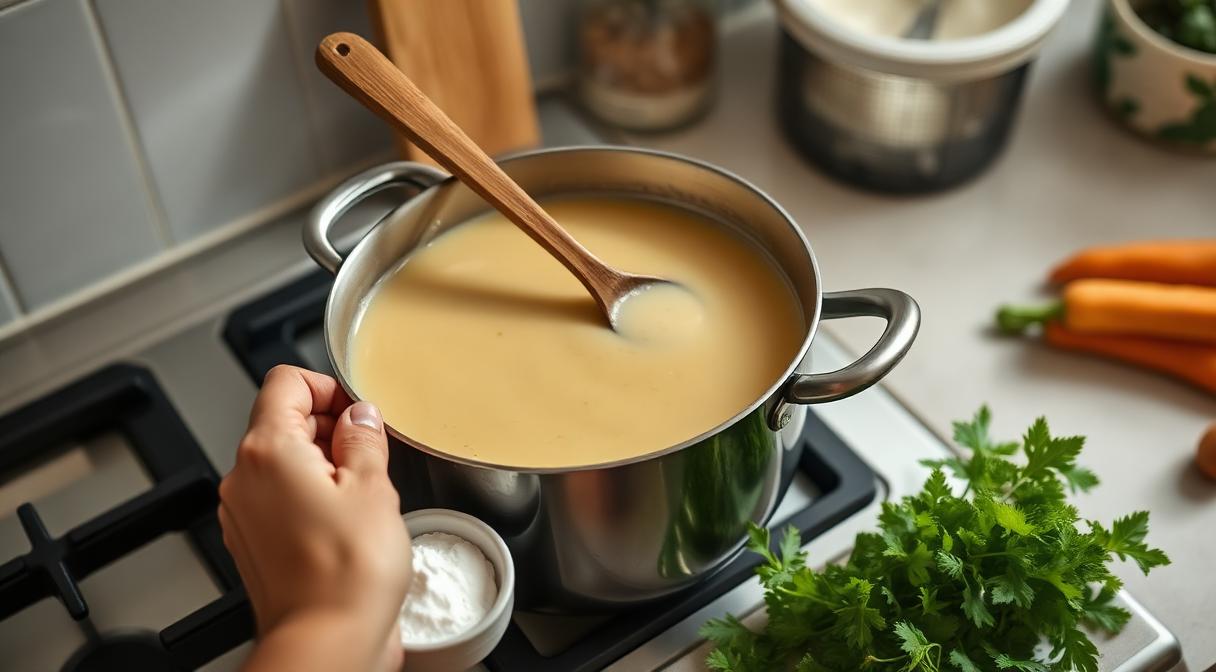 A pinch of Guar Gum thickens a soup or gravy without adding flour, butter or calories — the polymer hydrates almost instantly in hot or cold liquid.
Working Dosage for Home Cooking
Guar Gum is about eight times more potent than cornstarch, so the first lesson is to use far less than you would expect. Sensible starting points by category:
- Sauces and gravies: 0.5 teaspoon (2 g) per 250 ml liquid for a medium pour, 1 teaspoon for a thick coating
- Soups: 0.25 to 0.5 teaspoon per litre for body without heaviness
- Smoothies: a pinch (about 0.25 teaspoon) per serving for thicker mouthfeel and slower separation
- Salad dressings: 0.25 teaspoon per 250 ml for an emulsified, cling-to-leaves texture
- Homemade ice cream: 0.5 teaspoon per 500 ml of mix for smooth, scoopable consistency
- Gluten-free baking: 0.5 to 1 teaspoon per cup of flour (see our gluten-free baking guide)
If your first batch is too thick, the answer is almost always that you used too much. Halve the next attempt.
How to Avoid Lumps
The single mistake that ruins most first attempts is sprinkling dry Guar Gum directly into a watery liquid. The outside of the powder hydrates instantly into a sticky shell that traps dry powder inside, producing the dreaded "jellyfish" lumps. The fix is to disperse the powder before it touches water. Whisk it into a tablespoon of oil, melted butter or sugar first, then stir that mixture into the hot or cold liquid. For smoothies, add it directly to the blender with the other ingredients and run on high — the mechanical shear breaks up the powder before it can clump.
Smoothies and Drinks
A quarter teaspoon of Guar Gum transforms a watery smoothie into a thick, milkshake-like drink without adding bananas or extra ice. It also keeps protein powders, cocoa and chia seeds suspended rather than settling to the bottom of the glass over breakfast. For thick juice cleanses and meal replacements it does the same job, providing a feeling of fullness with minimal calories.
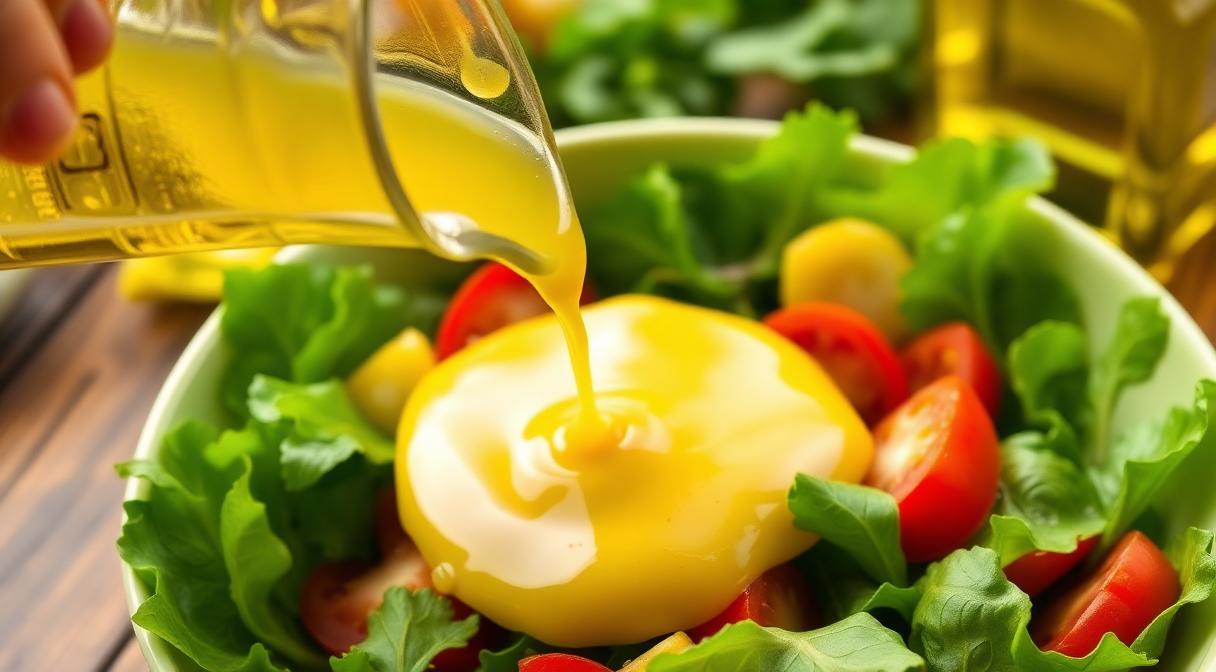 A pinch of Guar Gum stabilises a vinaigrette so the oil and vinegar stay emulsified through the meal — the dressing clings to leaves instead of pooling at the bottom of the bowl.
Homemade Ice Cream
This is where Guar Gum shines for home cooks. Adding 0.5 teaspoon per 500 ml of ice cream base before churning produces a markedly smoother, scoopable texture that resists the icy graininess homemade ice cream usually develops in the freezer over a few days. The full science is covered in our ice cream stabiliser article. Combine with a pinch of xanthan gum for a slightly more elastic, gelato-style consistency.
Salad Dressings and Marinades
Vinaigrettes naturally separate within minutes of pouring. A quarter teaspoon of Guar Gum whisked into the oil before adding the vinegar produces a permanent emulsion that clings to lettuce and stays uniform in the bottle for weeks. The same trick works for marinades, where Guar Gum makes the herbs and spices stay suspended rather than settling, ensuring even flavour distribution on the food.
Sauces, Gravies and Soups
Traditional flour or cornstarch thickeners can mask flavour, add calories and need to be cooked out to remove rawness. Guar Gum thickens immediately, requires no further cooking and contributes no flavour of its own. This is why low-carb, keto and weight-loss home cooks use it routinely. The shear-thinning behaviour also means a sauce thickened with Guar pours nicely but coats food well on the plate.
Frequently Asked Questions
Where can I buy Guar Gum for home use?
Most supermarkets carry it in the gluten-free or baking aisle. Online retailers sell food-grade packs in 100 g to 500 g bags that last for years if kept dry and sealed.
Is Guar Gum the same as xanthan gum?
No, but they are similar tools. Xanthan is produced by bacterial fermentation and has a slightly more elastic, slimy quality. Guar Gum is plant-derived and produces a cleaner mouthfeel. The two can be combined or used interchangeably in most home recipes.
Will Guar Gum change the taste of my food?
No. At normal cooking doses it has no flavour and no aroma. Overdose can produce a slightly slippery mouthfeel, but it never tastes of anything.
How long does a bag of Guar Gum last?
Stored sealed in a dry cupboard, several years. The powder is very stable and does not spoil. A 100 g bag is enough for many months of regular home use.
Can I use Guar Gum in a keto or low-carb diet?
Yes. Guar Gum is a soluble dietary fibre that does not count toward net carbohydrates and is a staple thickener in keto kitchens.
For more recipes, food-grade Guar Gum packs and cooking guidance, browse our complete product range or contact the team at /contact.