Guar Gum in Gluten-Free Baking: Complete Formulation Guide
How Guar Gum replaces gluten's elastic network in bread, cakes, cookies and pasta. Dosage tables by product, comparison with xanthan, and troubleshooting.
Last updated:
Quick Answer
How much Guar Gum should I use in gluten-free baking?
Use roughly 0.25 to 0.5 teaspoons (1 to 2 grams) of Guar Gum per cup of gluten-free flour. Cookies and cakes need less; breads and pizza doughs need more. Guar Gum replaces the elastic gluten network by binding water and creating viscosity, which traps gas, prevents crumbling and improves crumb structure in baked goods that would otherwise fall apart.
Gluten-free baking lives or dies on hydrocolloid choice. Without the elastic protein network that wheat gluten provides, doughs lack the cohesion to trap fermentation gas and the structure to support the crumb after baking. Guar Gum is the most widely used solution at home and in industrial bakeries because it is inexpensive, neutral in flavour, easy to disperse and effective at very low inclusion. This guide explains how to use it correctly across cookies, cakes, breads and pizza doughs in 2026 gluten-free formulations.
Research Overview
We cover the role of gluten in conventional baking, why hydrocolloids substitute for it in gluten-free systems, the practical dosage of Guar Gum across the main bakery categories, common mistakes, and the comparison to xanthan gum and psyllium husk. Dosage tables and process notes are included for both home bakers and small commercial operations.
What Gluten Actually Does
In wheat dough, glutenin and gliadin proteins hydrate and align to form a continuous elastic network that traps the carbon dioxide produced by yeast or chemical leaveners. The network is what allows bread to rise, holds the structure of a cake after baking and gives cookies their characteristic chew. When gluten is removed, the dough becomes a loose suspension of starches and proteins that cannot retain gas and collapses on cooling. The job of a hydrocolloid in a gluten-free recipe is to mimic the water-binding and viscosity functions of gluten — not its protein structure, which cannot be replicated with a single ingredient.
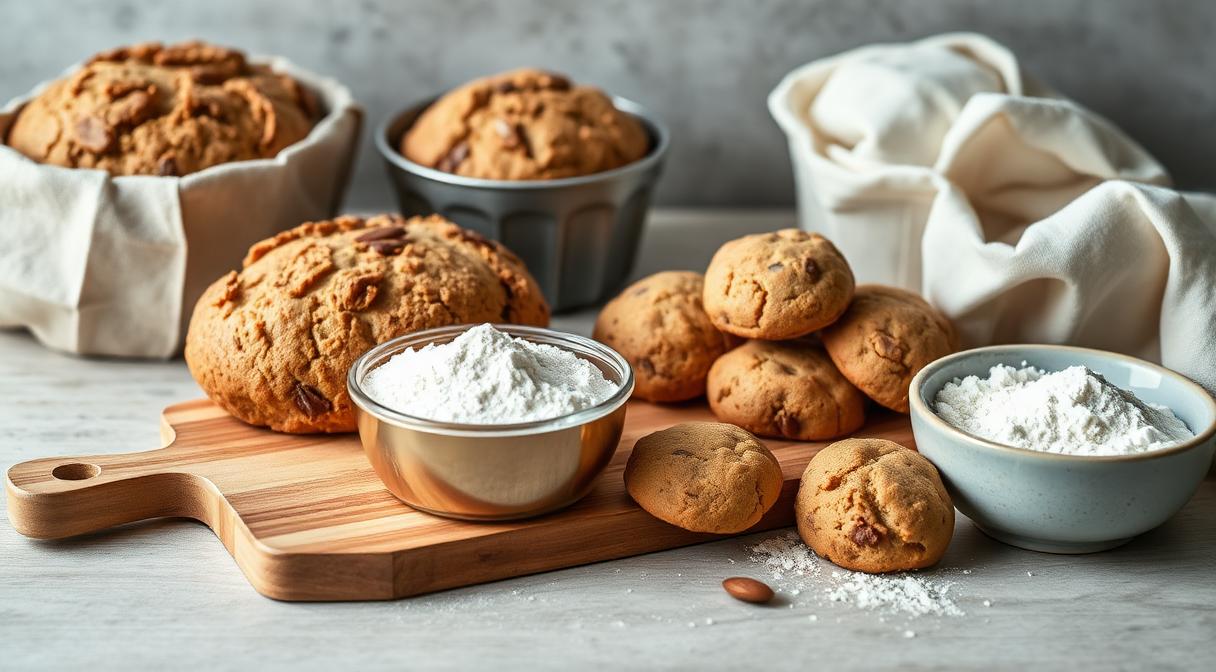 Soft, well-structured gluten-free baked goods rely on a small percentage of Guar Gum to bind water and trap fermentation gas without wheat gluten.
Why Guar Gum Works So Well
Guar Gum is a high-molecular-weight galactomannan that hydrates rapidly in cold water and produces high viscosity at very low concentration. When added to a gluten-free flour blend, it binds free water and increases dough viscosity to the point where escaping carbon dioxide is slowed long enough to expand the crumb structure before the starches gelatinise and set. The polymer also helps emulsify fats, slows starch retrogradation during cooling and significantly extends shelf life by reducing crumb staling. Importantly, Guar Gum has no detectable flavour at the doses used in baking, unlike some psyllium-based formulations that can carry a vegetal note.
Working Dosage Table
Use the following starting points by category. Adjust by ten to twenty percent in either direction based on the moisture profile of the specific flour blend.
- Cookies and biscuits: 0.25 teaspoon (1 gram) per cup of flour. Higher doses produce a tough chewy bite.
- Cakes and quick breads: 0.5 teaspoon (2 grams) per cup of flour. Helps the crumb hold the rise from baking soda or powder.
- Yeasted breads: 0.75 to 1 teaspoon (3 to 4 grams) per cup of flour. Higher viscosity is needed to retain yeast gas over a longer ferment.
- Pizza and flatbread doughs: 1 teaspoon (4 grams) per cup of flour. Combined with psyllium husk for elasticity.
- Pastry and shortcrust: 0.25 teaspoon (1 gram) per cup of flour. Avoid overdosing to keep the crumb tender.
Common Mistakes
The most frequent error is overdosing, which produces dense, gummy, slick baked goods. Guar Gum is potent — twice the recommended dose can ruin a recipe. The second common mistake is adding it directly to wet ingredients without first dispersing it in the dry flour blend, which causes lumps that hydrate into tough gel beads in the final crumb. Always whisk Guar Gum thoroughly into the dry mix before adding liquids. Finally, very acidic doughs such as sourdough-style gluten-free breads benefit from slightly higher Guar inclusion because acidity reduces hydrocolloid functional viscosity.
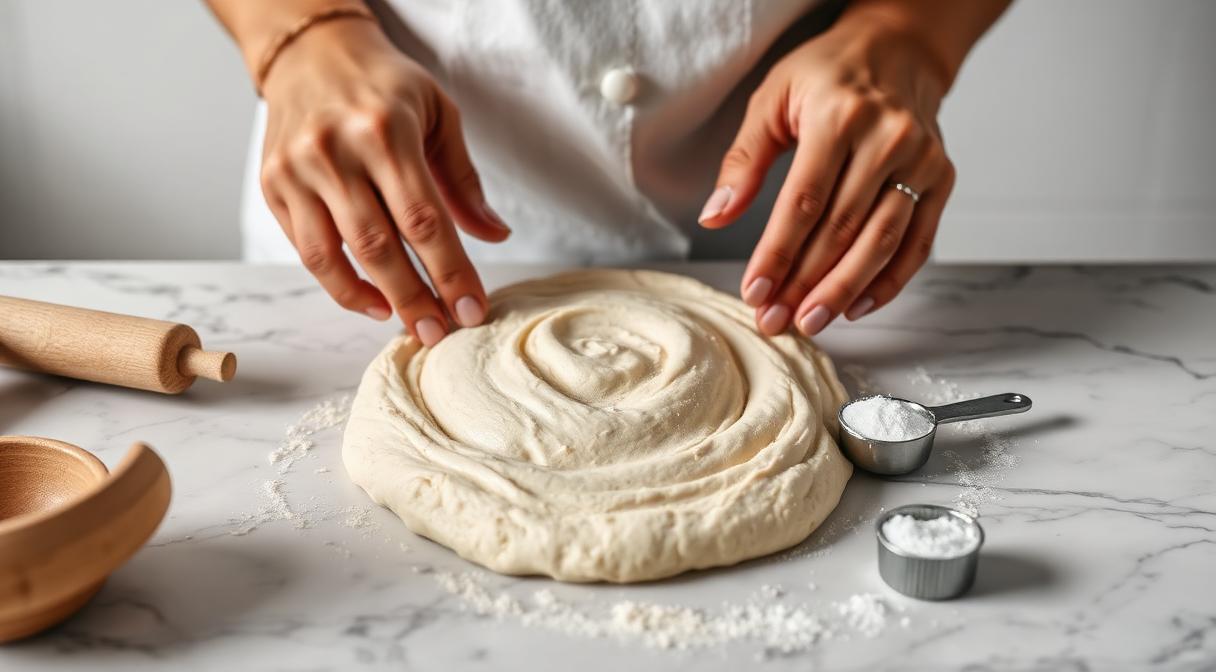 Dispersing Guar Gum into the dry flour blend before adding liquids is the single most important step in avoiding lumpy crumb in gluten-free baking.
Guar Gum versus Xanthan Gum in Baking
Xanthan gum is the closest functional alternative and the two are sometimes blended at a 50/50 ratio. Guar Gum tends to produce a softer, more cake-like crumb and is more cost-effective. Xanthan gives a slightly more elastic chew that suits bread and pizza dough. For yeasted breads many professional gluten-free bakers use 60% Guar with 40% xanthan to balance softness and structure. The full technical comparison lives in our Guar Gum vs Xanthan Gum guide.
Combining with Psyllium Husk
Psyllium husk powder is the third popular hydrocolloid for gluten-free baking, and it complements Guar Gum well in bread formulations. Psyllium forms a more robust gel that adds the elasticity needed for hand-shaped loaves, while Guar Gum continues to control water binding and crumb softness. A combined system of 1 teaspoon psyllium and 1 teaspoon Guar per cup of flour is a robust starting point for free-form gluten-free bread.
Frequently Asked Questions
Is Guar Gum gluten-free?
Yes. Guar Gum is derived from the cluster bean and contains no wheat, barley or rye proteins. It is naturally suitable for celiac diets and is in fact one of the standard ingredients of certified gluten-free flour blends.
Can I use Guar Gum and xanthan gum together?
Yes. A 50/50 or 60/40 Guar-to-xanthan blend gives a balance of softness and elasticity that works well in yeasted breads and pizza doughs.
Does Guar Gum need to be hydrated before adding to dough?
No pre-hydration is required. Whisk it thoroughly into the dry flour blend before adding liquids; it will hydrate fully during mixing.
Is Guar Gum vegan?
Yes. It is plant-derived from cluster beans and contains no animal inputs. Halal and Kosher certified grades are widely available.
Can I substitute Guar Gum with cornstarch or flour?
No. Starches and flours behave very differently and cannot replicate Guar Gum's water-binding and gas-retention functions. Other hydrocolloids such as xanthan or psyllium are the only viable substitutes.
For food-grade Guar Gum specifications and small-pack samples for bakery R&D, contact the B D Guar team at /contact or browse our product catalogue.