Commercial Slurry Explosives: Water-Blocking and Gelling Thickeners
Discover how Guar Gum gels water inside slurry explosives, blocks leaching in wet boreholes, and delivers the water resistance blasting operations demand in 2026.
Last updated:
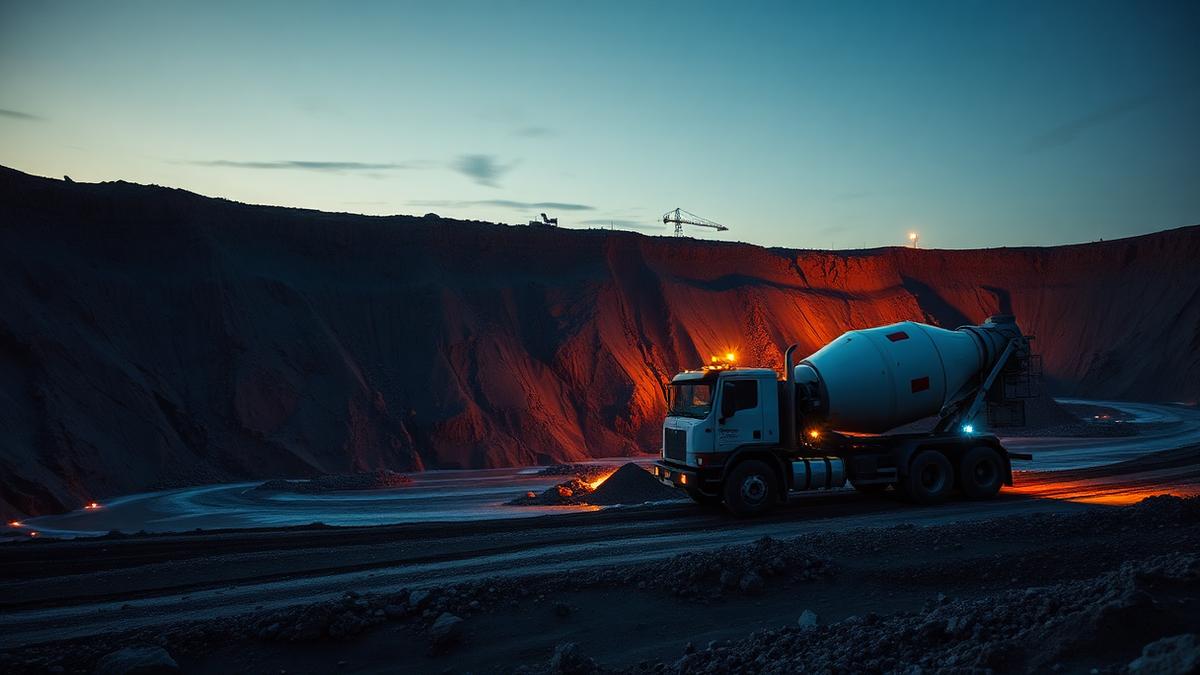
In 2026, commercial blasting operations across mining, quarrying, and civil construction continue to rely on water-based slurry explosives, and Guar Gum remains a cornerstone of their performance. As deeper open-pit mines and infrastructure projects push into water-saturated ground, the ability to gel the aqueous phase and block water ingress has become a defining requirement. Industry studies indicate that wet boreholes account for a significant share of misfires and cutoffs, making robust water resistance a direct driver of both safety and blast efficiency.
Research Overview
Slurry and water-gel explosives suspend oxidizers such as ammonium nitrate in a thickened aqueous matrix. Guar Gum, a galactomannan polysaccharide, hydrates rapidly to build viscosity and, when cross-linked, forms a three-dimensional gel network. Research in carbohydrate polymer science and mining engineering literature consistently identifies this gel structure as the mechanism that immobilizes free water, resists dilution, and holds the explosive column intact within a charged borehole.
Why Water Resistance Determines Blast Reliability
Water in a borehole is the enemy of a clean detonation. It dissolves and leaches oxidizer salts, cools the reaction, and can separate the fuel and oxidizer phases, all of which degrade energy output or cause outright failure. A Guar Gum gel matrix counteracts this by binding the water within the explosive itself and forming a barrier against surrounding groundwater.
For blasting engineers loading wet holes, the practical benefits are direct and measurable:
- Leaching prevention: The gelled matrix keeps oxidizer salts locked in place rather than dissolving into standing water.
- Column integrity: A cohesive gel resists channeling and washout, maintaining a continuous explosive column from toe to collar.
- Consistent density: Stable viscosity supports uniform loading and predictable energy per metre of borehole.
- Reduced misfires: By protecting the charge from dilution, the gel lowers the risk of cutoffs and incomplete detonation.
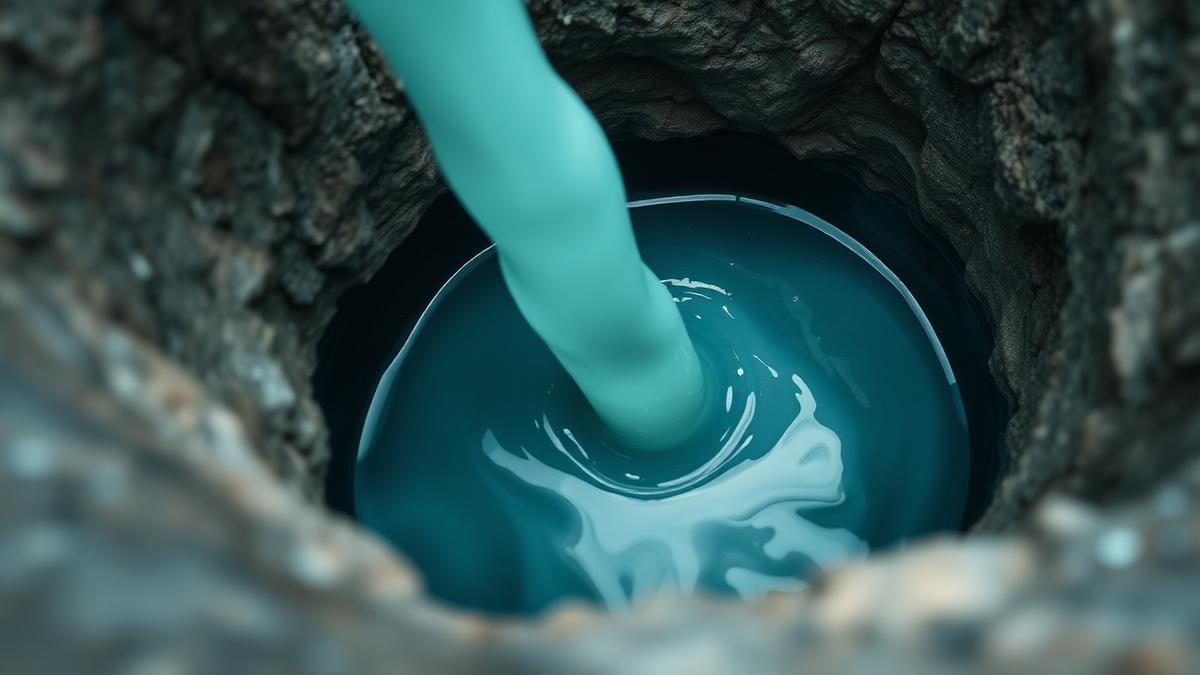 Guar Gum gels the aqueous phase of slurry explosives, blocking water ingress in saturated boreholes.
The Gelling Mechanism: From Hydration to Cross-Linked Network
Guar Gum performs two sequential roles in a slurry formulation. First, its long polymer chains hydrate in the water phase, raising viscosity and suspending dense oxidizer particles against settling. Second, when a cross-linking agent such as a borate or transition-metal ion is introduced, adjacent chains bridge together to form an elastic, water-resistant gel.
The mannose-to-galactose ratio of the galactomannan backbone governs how efficiently the polymer hydrates and cross-links. This structural chemistry allows formulators to tune the balance between pumpable viscosity during loading and firm gel strength once the charge is in place.
- Dispersion: Fine-milled Guar Gum is wetted without lumping to ensure complete hydration.
- Thickening: Polymer chains build viscosity, suspending ammonium nitrate and sensitizers uniformly.
- Cross-linking: Borate or metal ions bridge chains, converting the viscous fluid into a cohesive water-blocking gel.
- Stabilization: The set gel holds the explosive column and resists groundwater dilution over the loading-to-firing window.
Formulation and Grade Selection for Blasting Applications
Not every Guar Gum grade behaves identically in an explosive slurry. Particle size, hydration rate, and viscosity profile all influence how the product mixes on the bench or in a mobile mixing unit and how quickly it develops water resistance. Superior explosives-grade Guar Gum is milled for controlled hydration and consistent batch-to-batch viscosity, so blast crews can rely on repeatable loading behaviour.
Key formulation considerations include:
- Viscosity target: Matching gel strength to borehole conditions, from damp holes to fully flooded ground.
- Hydration speed: Fast, uniform hydration to avoid fish-eyes and ensure homogeneous energy distribution.
- Cross-linker compatibility: Predictable response to borate and metal-ion systems for reliable gel set.
- Shear stability: Resistance to viscosity breakdown during pumping through delivery hoses into the hole.
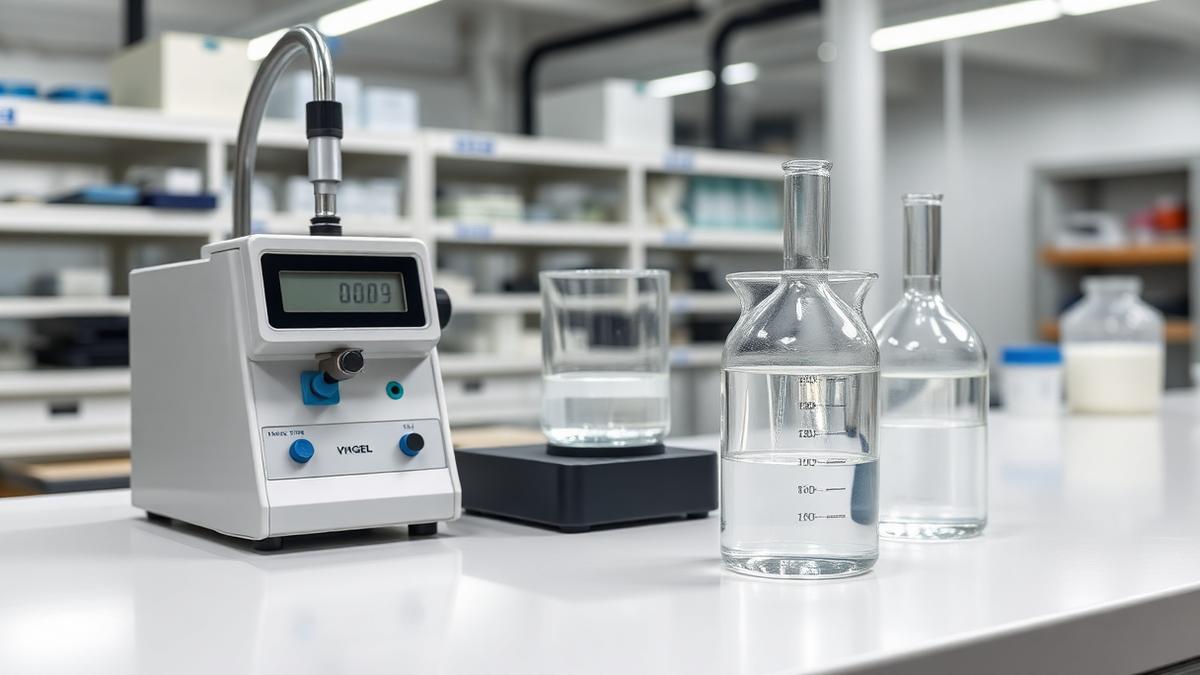 Batch-tested explosives-grade Guar Gum delivers consistent viscosity and water resistance for commercial blasting.
Sustainability and Supply Reliability in 2026
As mining operators tighten environmental standards, the plant-derived, biodegradable nature of Guar Gum offers an advantage over fully synthetic thickeners. Sourced from the drought-resilient guar bean cultivated in arid regions of northwest India, it provides a natural rheology modifier that performs without introducing persistent synthetic residues into blasted ground and runoff.
Reliable performance also depends on a stable supply of consistent raw material. Direct relationships with guar-growing communities and in-house batch testing help ensure that every consignment of explosives-grade Guar Gum meets the viscosity and moisture specifications that blasting formulations require.
Key Takeaways
- Water resistance is decisive: Guar Gum gels the aqueous phase and blocks groundwater, protecting slurry explosives from leaching and misfire in wet boreholes.
- Two-stage function: The polymer first thickens and suspends oxidizers, then cross-links into a cohesive, water-blocking gel.
- Grade matters: Explosives-grade, batch-tested Guar Gum delivers the controlled hydration and shear stability that consistent loading demands.
- Column integrity: A firm gel network maintains a continuous explosive charge and predictable energy output.
- Sustainable choice: A biodegradable, plant-derived thickener aligns blasting operations with 2026 environmental expectations.
Frequently Asked Questions
Why is Guar Gum used in slurry explosives instead of synthetic thickeners?
Guar Gum hydrates quickly, builds high viscosity at low dose, and cross-links into a water-resistant gel that immobilizes free water. It is also biodegradable and plant-derived, which supports environmental compliance while delivering the leaching resistance and column stability that wet-borehole blasting requires.
How does the gel prevent water from spoiling the charge?
Once cross-linked, the Guar Gum network traps water inside the explosive matrix and forms a barrier against surrounding groundwater. This keeps oxidizer salts from dissolving away, preserves the fuel-oxidizer balance, and maintains the density and energy needed for a reliable detonation.
What grade of Guar Gum is suitable for blasting formulations?
An explosives-grade Guar Gum, milled for controlled hydration and tested for consistent viscosity and moisture, is recommended. These specifications ensure lump-free mixing, predictable cross-linking, and shear stability during pumping, so each blast column performs consistently across varied borehole conditions.
Is Guar Gum compatible with standard cross-linking systems?
Yes. Guar Gum responds predictably to borate and transition-metal cross-linkers commonly used in water-gel and slurry explosives. Selecting a grade matched to the chosen cross-linker ensures a firm, water-blocking gel sets within the operational loading window.
To specify Superior explosives-grade Guar Gum for your slurry and water-gel formulations, explore our product range, review our quality and batch-testing standards, or contact our technical team to discuss your borehole conditions and cross-linker system.