Guar Gum Side Effects: Scientific Safety Review 2026
Comprehensive review of Guar Gum safety — EFSA opinion, US FDA GRAS status, the historical weight-loss tablet incident, gastrointestinal tolerance, and the dose-response evidence.
Last updated:

Quick Answer
Is Guar Gum safe to consume?
Yes. Guar Gum is approved by the FDA (GRAS), EFSA (E412) and JECFA with no numerical ADI restriction because of its long safety record. The only meaningful side effects appear at very high doses — typically above 15 grams per day — and consist of mild, reversible gastrointestinal symptoms such as bloating or flatulence as the soluble fibre is fermented in the colon. At normal food-stabiliser dose levels of 0.1 to 0.5%, intake is well below any concern threshold.
Few food ingredients have been studied as thoroughly as Guar Gum. Approved in every major regulatory jurisdiction and used since the 1950s, it nevertheless attracts periodic questions from consumers reading ingredient labels for the first time. This article walks through what the scientific literature actually says about Guar Gum safety, where the historical concerns came from, and what dose levels matter in real food formulations entering the 2026 clean-label market.
Research Overview
We cover the toxicology, fermentation behaviour, allergenicity profile, drug-interaction considerations and historical 1990s weight-loss tablet incidents that shaped public perception of Guar Gum. The regulatory positions of the FDA, EFSA, JECFA and FSSAI are summarised, and practical guidance is given for typical food-stabiliser inclusion versus high-dose fibre-supplement use.
The Regulatory Picture
The US FDA classifies Guar Gum as Generally Recognized as Safe (GRAS) under 21 CFR 184.1339 with permitted use levels up to 2% in baked goods and 1% in dressings. The European Food Safety Authority lists it as E412 with no numerical Acceptable Daily Intake, a designation reserved for substances with very wide safety margins. JECFA, the joint FAO/WHO expert committee, agrees. India's FSSAI lists it as an approved additive under its own thickening agent schedule. None of these bodies has revised its position downward in recent reviews, and EFSA's most recent re-evaluation reaffirmed the safety of E412 at current use levels.
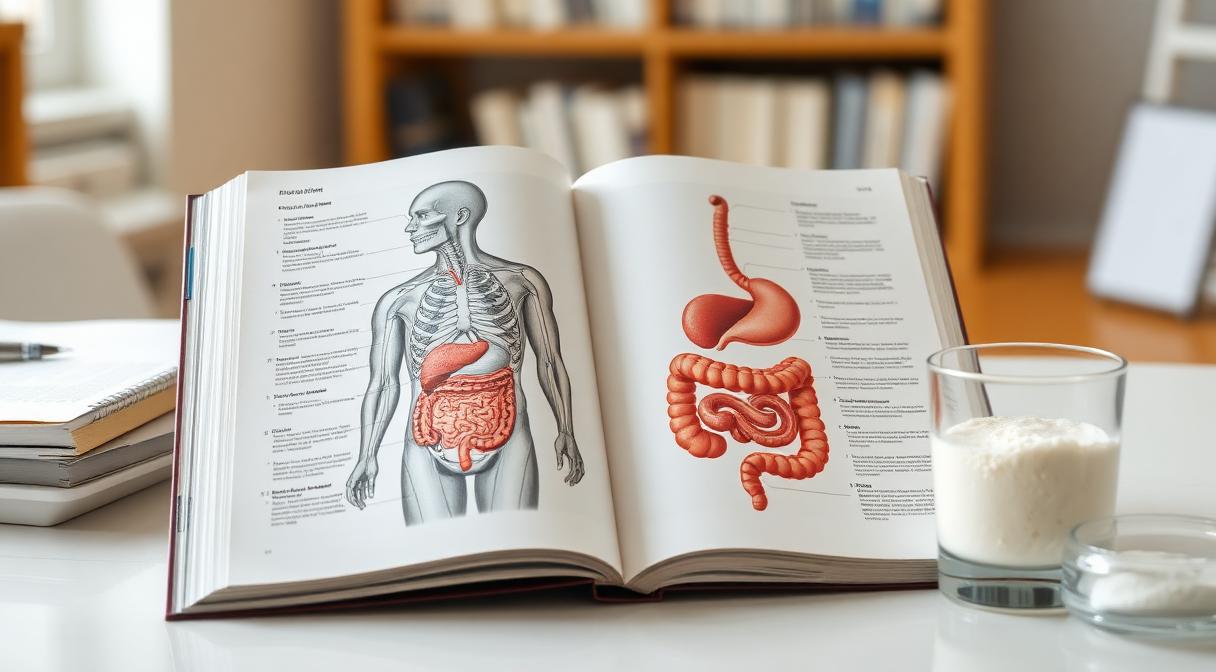 Soluble dietary fibres such as Guar Gum are fermented in the colon — the resulting short-chain fatty acids are documented to support gut health at moderate intake levels.
How Guar Gum Behaves in the Digestive Tract
Guar Gum is a soluble dietary fibre. It passes through the stomach and small intestine essentially intact, where it forms a viscous gel that slows gastric emptying and modestly delays carbohydrate absorption. This is the mechanism behind its documented benefits on postprandial glucose control and satiety. Once it reaches the colon, the resident microbiota ferment it into short-chain fatty acids — acetate, propionate and butyrate — which support colonic mucosal health.
This same fermentation is the source of the only common side effect. When intake rises sharply or when an individual's microbiota are unaccustomed to fermentable fibre, the gas produced can cause bloating, flatulence and mild abdominal discomfort. These symptoms are not toxicological; they are the predictable consequence of feeding fermentable substrate to the gut microbiome and they resolve within days as the body adapts. The threshold at which they appear is generally above 10 to 15 grams of Guar Gum per day, far higher than the few hundred milligrams a person consumes from typical food stabiliser use.
The 1990s Weight-Loss Tablet Incident
Much of the residual public concern about Guar Gum dates to a small number of weight-loss tablet products sold in the late 1980s and early 1990s. These products delivered 5 to 10 grams of dry, compressed Guar Gum per tablet with the instruction to swallow with limited water. Because Guar hydrates and expands rapidly, swallowing concentrated dry tablets without sufficient fluid caused oesophageal obstruction in some users. The FDA banned these specific dosage forms in 1992. Properly formulated Guar Gum — dispersed in liquid or already hydrated within a food matrix — does not present this risk, and the regulatory action targeted the dosage form, not the ingredient itself.
 The food-additive safety dossier for Guar Gum spans more than seventy years of toxicological and clinical research across multiple regulatory jurisdictions.
Allergenicity and Drug Interactions
True IgE-mediated allergy to Guar Gum is rare and has been documented mostly in occupational settings where workers inhaled airborne polymer dust. Oral allergy in consumers is very uncommon. For drug interactions, the same viscous gel that benefits glucose control can theoretically slow the absorption of certain oral medications. The clinically relevant guidance is to separate Guar Gum supplement doses from medication intake by approximately one hour. At food-stabiliser doses this interaction is not generally meaningful.
Special Populations
Pregnant and lactating women, children and elderly consumers can use Guar Gum at typical food levels without concern; regulatory approvals make no special restriction for these groups. Individuals with diagnosed gastrointestinal motility disorders, severe diverticular disease or significant intestinal strictures should consult a clinician before adopting high-dose fibre supplementation. Veterinary safety is similarly well established at the dietary inclusion levels used in pet food.
Practical Guidance for 2026 Formulators
For typical food stabiliser use at 0.1 to 0.5% inclusion, no safety concern arises and no maximum-use restriction beyond the existing FDA category limits applies. For fibre-supplement and meal-replacement formulations targeting 5 grams or more of Guar Gum per serving, the recommendation is to introduce the product with usage guidance — start with a smaller serving, build up over a week, consume with adequate water — to allow the gut microbiota to adapt and prevent transient bloating. Partially hydrolysed Guar Gum (PHGG) gives the same fibre benefits with markedly less gas production and is the preferred ingredient for supplement positioning.
Frequently Asked Questions
Can Guar Gum cause weight loss?
It can contribute to satiety and modest weight management in supplement form, but it is not a medication. The mechanism is delayed gastric emptying and prolonged fullness rather than any direct effect on energy metabolism.
Is Guar Gum safe during pregnancy?
Yes, at normal food levels. Regulators apply no special restriction during pregnancy. Pregnant women using fibre supplements at gram-scale doses should follow general clinical advice on fibre intake and hydration.
Why was Guar Gum banned in some products?
Only a specific dry tablet dosage form was withdrawn in 1992 after a small number of oesophageal-obstruction incidents. The ingredient itself was never banned and remains approved worldwide.
Does Guar Gum contain gluten?
No. Guar Gum is naturally gluten-free and is in fact a common ingredient in gluten-free baking to replace the structure normally provided by wheat gluten.
Can children consume Guar Gum?
Yes, at food-stabiliser levels found in dairy products, sauces and bakery items. High-dose fibre supplements should be used in children only under clinician supervision.
For application-specific dosage recommendations, regulatory dossiers and ETO-free certificates of analysis, contact the B D Guar quality team at /contact or review our quality and certifications page.