Guar Gum in Dog Food and Pet Nutrition: Safety and Function
Is Guar Gum safe for dogs and cats? Why pet food brands use it in wet food, gravies and dental treats — function, dosage, and the latest 2026 evidence.
Last updated:
Quick Answer
Is Guar Gum safe in dog and cat food?
Yes. Guar Gum is approved by AAFCO in the United States and FEDIAF in Europe as a thickener and binder in pet food at typical inclusion levels of 0.1 to 1.0%. It improves gravy viscosity in wet foods, binds moisture in semi-moist kibble and contributes soluble dietary fibre that supports gut health. No toxicological concern arises at the doses used in commercial pet nutrition.
Modern pet nutrition has become as technically sophisticated as human food formulation. Consumers expect wet foods with stable gravies, kibbles that retain moisture without crumbling and treats that hold their shape through transit. Guar Gum sits quietly behind many of these properties as the most cost-effective natural binder available to the pet food industry, supported by clear regulatory approvals and a long safety record across companion-animal species.
Research Overview
This guide covers the regulatory standing of Guar Gum under AAFCO and FEDIAF, its functional roles in wet, dry and semi-moist pet foods, the fibre and gut-health contribution to canine and feline diets, dosage guidance by product type, and considerations for cats, weight-management diets and senior-pet formulations entering the 2026 product cycle.
Regulatory Standing
The Association of American Feed Control Officials lists Guar Gum as an approved feed additive for use as a thickener and binder, with no numerical upper limit beyond the general principle of using the minimum quantity needed for technical effect. FEDIAF, the European pet food industry federation, references EU food-additive Regulation 1333/2008 under which Guar Gum (E412) is approved with no numerical ADI. National regulators in Canada, Japan, Australia and the major South American markets follow equivalent positions. Halal and Kosher certified Guar Gum is also available for premium and export-focused pet food brands.
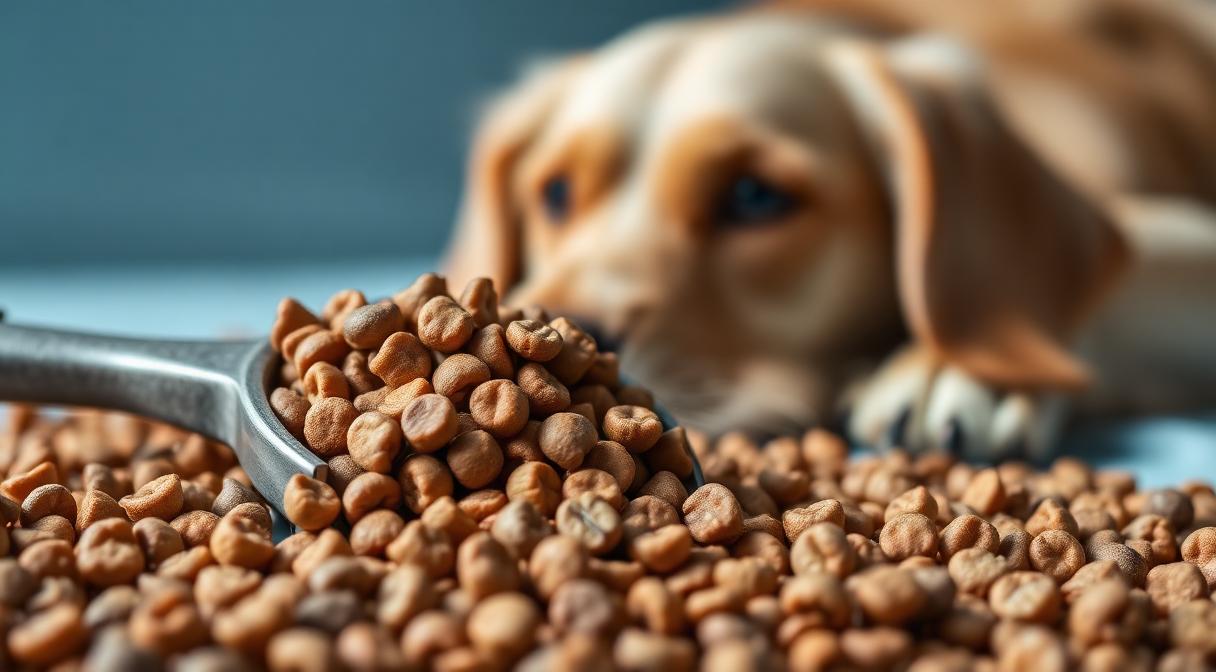 Modern dry kibble formulations include a small percentage of Guar Gum to retain moisture, reduce crumbling and contribute soluble fibre to canine diets.
Role in Wet Pet Food
Wet foods — pates, chunks-in-gravy and stews — depend on hydrocolloid stabilisation to maintain visual appeal through the retort process and across the long shelf life expected of canned products. Guar Gum is typically used at 0.3 to 0.8% of the total recipe to control gravy viscosity, prevent syneresis (the water-weeping that gives unappetising pooling at the top of a can) and bind the meat and vegetable inclusions in a uniform suspension. In combination with carrageenan and locust bean gum, Guar provides the cold viscosity that keeps the can looking right on the shelf, while the other hydrocolloids add the thermo-reversible gel character that survives retort sterilisation.
Role in Dry and Semi-Moist Kibble
In extruded dry kibble, Guar Gum is added at 0.1 to 0.4% to act as a binder during the extrusion process. The polymer increases dough viscosity, improves the integrity of the kibble shape after cutting and reduces fines generation during packaging and transport. In semi-moist treats and intermediate-moisture diets, Guar Gum at 0.5 to 1.0% binds water inside the matrix, contributing to the soft chewy texture and preventing surface dryness over the shelf life.
Soluble Fibre and Gut Health
Beyond its physical functions, Guar Gum contributes useful soluble dietary fibre to companion-animal diets. The polymer is fermented by the colonic microbiota into short-chain fatty acids that support gut mucosal health and stool quality. Partially hydrolysed Guar Gum (PHGG) is increasingly used in veterinary therapeutic diets for chronic enteropathy and inflammatory bowel disease in dogs because it delivers the same fermentation benefits with much lower viscosity in the gut. Premium senior and weight-management formulations often include PHGG specifically for these effects.
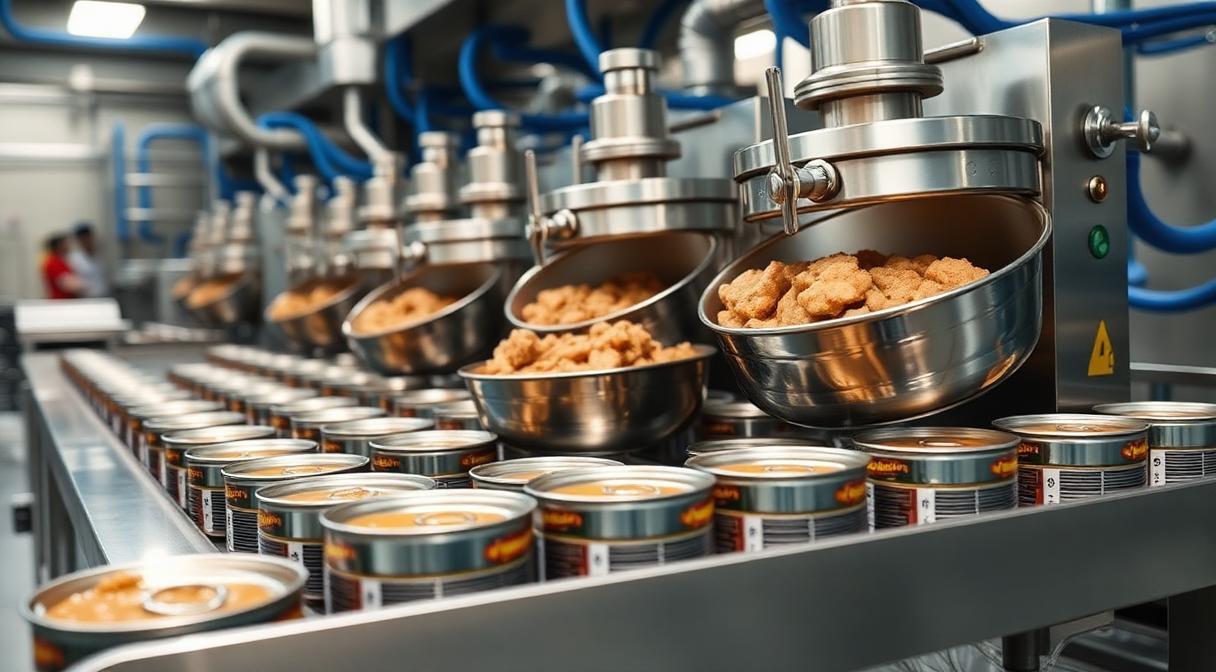 Industrial wet pet food production — Guar Gum provides the cold gravy viscosity and prevents syneresis during the long retort shelf life expected of canned products.
Special Considerations for Cats
Cats are obligate carnivores with shorter intestinal tracts and different fermentation profiles than dogs, but Guar Gum at typical inclusion levels is well tolerated. Wet cat foods routinely use Guar in combination with carrageenan and xanthan to deliver the gravy and pate textures cats prefer. Hairball-control formulations sometimes increase soluble fibre inclusion, where Guar Gum and PHGG support intestinal motility and reduce hairball formation.
Weight Management and Therapeutic Diets
Guar Gum's satiety effect translates from human nutrition into companion-animal applications. Veterinary weight-loss diets use elevated soluble fibre, often including Guar Gum, to increase fullness on lower calorie intake. The viscous gel slows gastric emptying and reduces the rate of glucose absorption, both of which support metabolic management in overweight and diabetic dogs. Always confirm therapeutic claims with the relevant veterinary regulatory body.
Frequently Asked Questions
What is the safe inclusion level of Guar Gum in dog food?
Typical inclusion ranges from 0.1% in dry kibble to 1.0% in semi-moist treats and wet foods. There is no AAFCO numerical maximum; suppliers and formulators use the minimum quantity needed for the technical effect.
Can Guar Gum cause digestive upset in pets?
At normal formulation doses no. Very large overdoses in test diets can produce loose stools as the gut microbiota ferment the additional substrate, but this does not occur at commercial inclusion levels.
Is Guar Gum suitable for grain-free pet foods?
Yes. Guar Gum is naturally grain-free and gluten-free, and it is commonly used in grain-free recipes to provide the binding function that wheat or corn would otherwise contribute.
Does Guar Gum work in raw or fresh frozen pet diets?
Yes. Its cold-water solubility makes it ideal for raw and fresh frozen formats where heating is not part of the process. Inclusion is typically lower (0.1 to 0.3%) because the moisture matrix is less demanding than retorted wet food.
How does Guar Gum compare to xanthan in pet food?
Guar Gum is significantly less expensive and produces a smoother, less rubbery gravy. Xanthan offers slightly better tolerance to retort sterilisation but at substantially higher cost. Many manufacturers blend the two to optimise cost and texture.
For pet food grade Guar Gum specifications, AAFCO documentation and free samples for trial extrusion runs, contact the B D Guar pet nutrition team at /contact or review our complete product range.