The Mechanics of Friction Reduction in High-Speed Pipeline Flow
Discover how ultra-low concentrations of Guar Gum dampen near-wall turbulence to cut pipeline pressure drop, lift flow rates, and slash pumping energy costs.
Last updated:
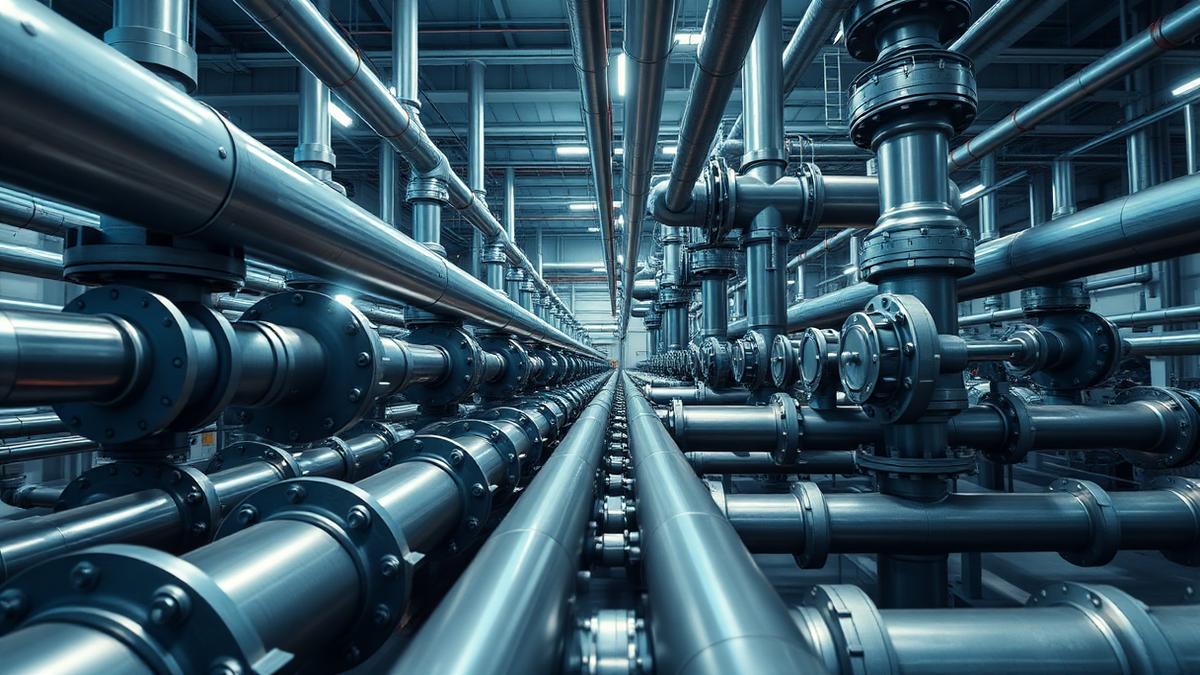
In the demanding 2026 industrial fluid-transport landscape, friction reduction in high-speed pipeline flow has become a decisive lever for engineers under pressure to move more volume with less energy. When large volumes of aqueous liquid are pumped at high velocity through extended networks, violent internal turbulence generates severe frictional pressure drop and drives up electrical consumption. By introducing ultra-low concentrations of high-molecular-weight Guar Gum, pipeline engineers can reshape the internal hydrodynamics, dampen near-wall turbulent eddies, and achieve higher flow rates at markedly lower pumping pressures.
Research Overview: The Physics of High-Speed Pipeline Drag
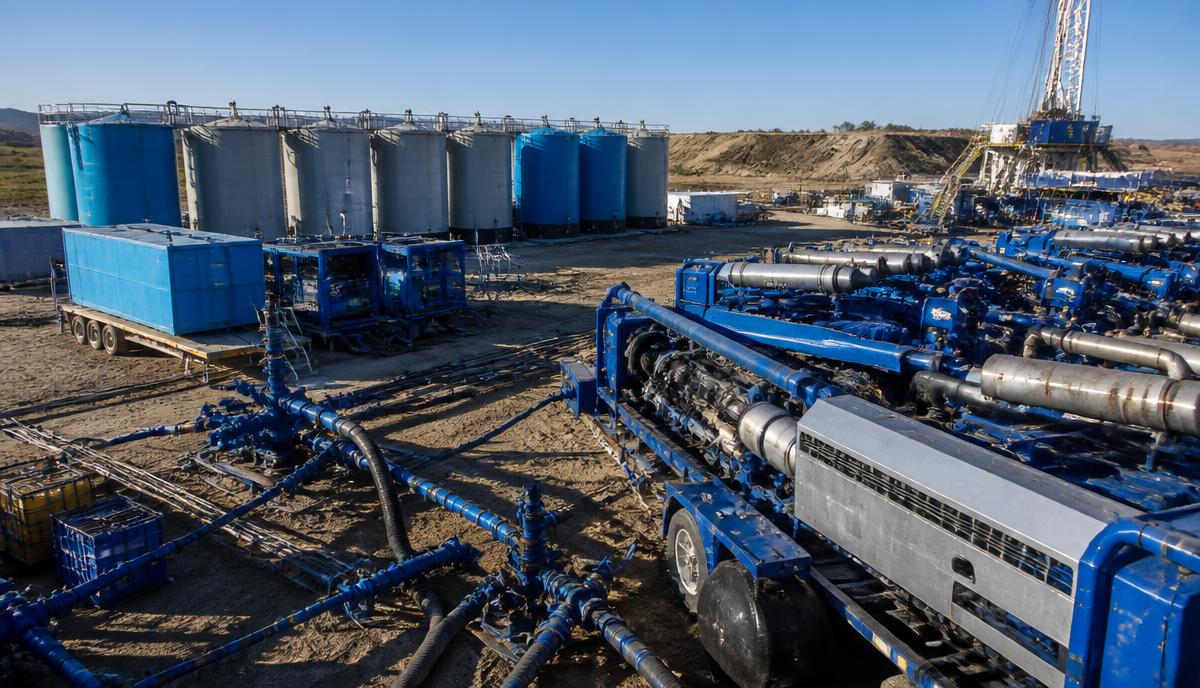
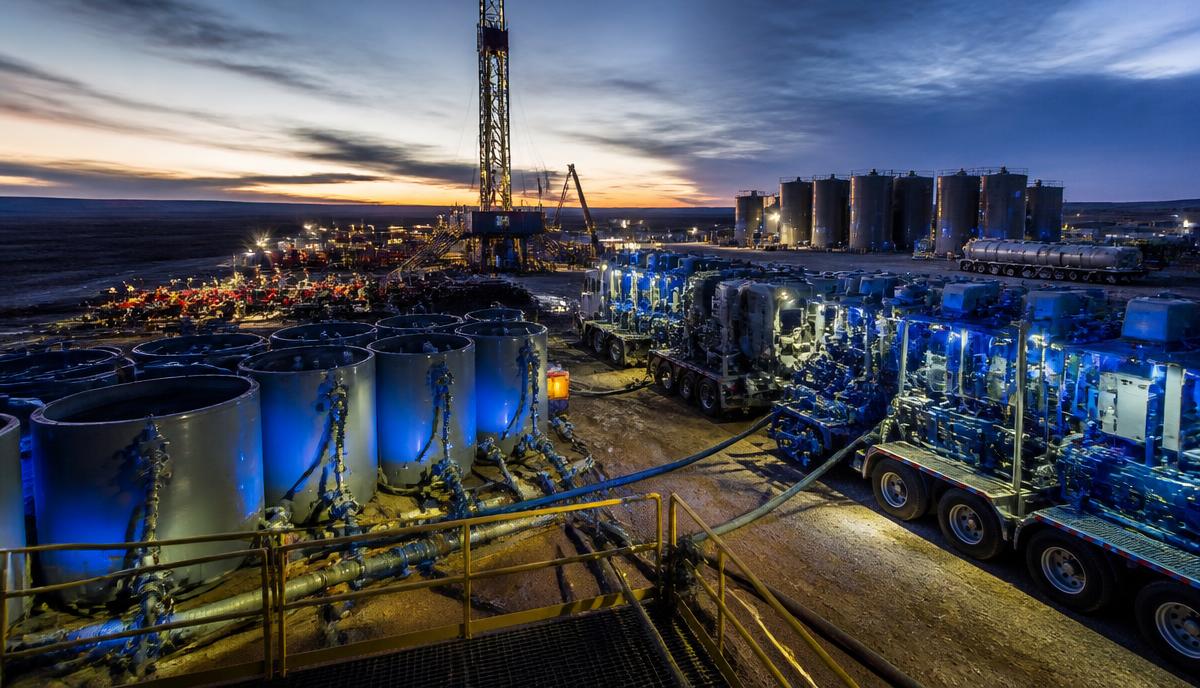
The global market for drag-reducing and rheology-modifying additives continues its steady expansion through 2026, propelled by rising energy prices, aging pipeline infrastructure, and tightening environmental mandates. Across municipal water distribution, mineral slurry transport, and high-pressure oilfield hydraulic fracturing, operators are re-examining the fundamental economics of moving fluid through pipe. Industry studies indicate that the energy required to overcome frictional losses accounts for the single largest recurring operating cost in long-distance liquid transport.
At high flow velocities, a pipeline operates in the turbulent regime, characterised by a high Reynolds number. Instead of moving in smooth, parallel streamlines, the fluid breaks into chaotic, three-dimensional eddies and swirling cross-currents. These structures push fluid outward against the rough internal pipe wall, converting useful forward kinetic energy into wasted heat. The result is a steep frictional pressure drop that forces pumps to work harder and consume more electricity for every unit of fluid delivered. Suppressing this turbulence, rather than simply pumping harder, is the core insight behind polymer drag reduction.
The Reynolds number expresses the ratio of inertial to viscous forces within the flow. Below a critical threshold the flow is laminar and orderly; above it the flow becomes fully turbulent and the friction factor climbs sharply with velocity. Because pressure drop scales with roughly the square of velocity in the turbulent regime, even a modest increase in throughput can produce a disproportionate jump in energy demand. This non-linear relationship is exactly why a small chemical intervention that reshapes the near-wall flow structure can yield outsized economic returns. Field experience across water transmission, slurry haulage, and stimulation fluids consistently shows double-digit percentage reductions in friction when trace polymer is added, and optimised systems can approach the theoretical maximum drag-reduction asymptote described in the fluid dynamics literature.
The turbulence engineers must control is concentrated in a thin region adjacent to the pipe wall known as the buffer layer, where the velocity gradient is steepest and turbulent bursts are generated. It is here, rather than in the well-mixed turbulent core, that the majority of frictional energy is dissipated. Any additive that stabilises this buffer layer and delays the ejection of low-momentum fluid away from the wall will directly lower the overall friction factor. Long-chain polymers such as Guar Gum are uniquely suited to this role because their extended conformation spans exactly the length scales of the turbulent structures they are designed to suppress.
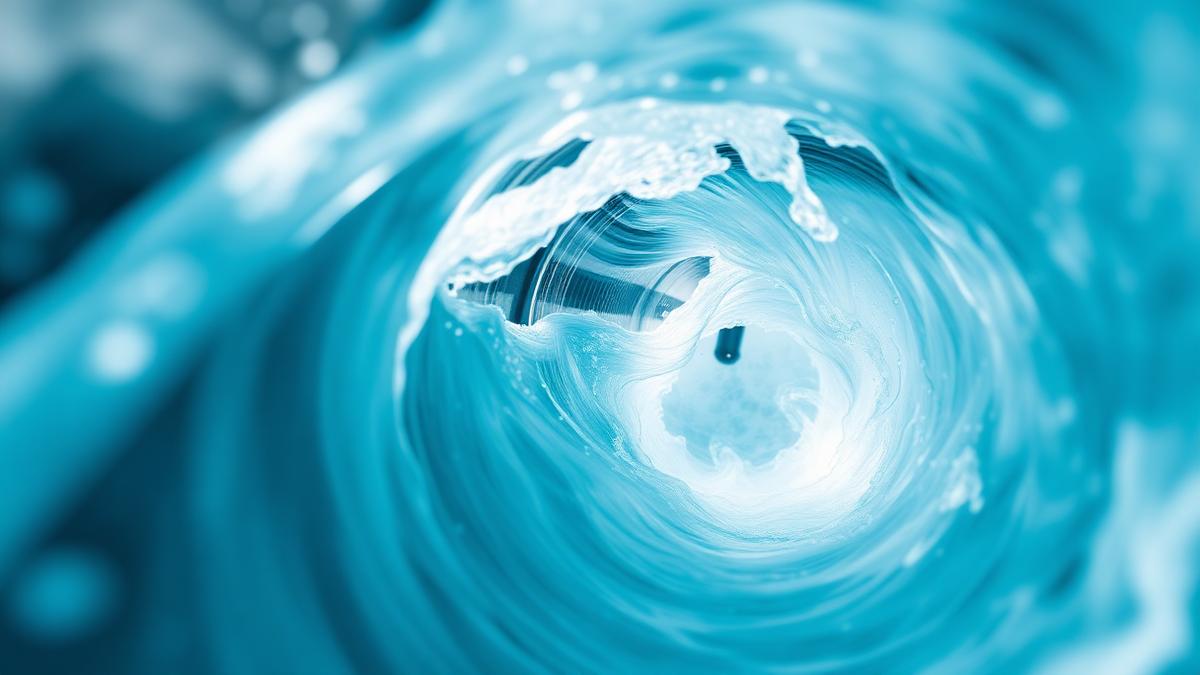 Turbulent eddies near the pipe wall are the primary source of frictional pressure drop in high-velocity flow.
The Molecular Architecture of a Superior Friction Reducer
The effectiveness of Guar Gum as a drag reducer is rooted directly in its molecular architecture. As a galactomannan, it consists of an extremely long, flexible carbohydrate backbone that can stretch, uncoil, and recoil repeatedly, absorbing turbulent energy without immediate mechanical degradation. This structural resilience is what allows it to function at concentrations measured in parts per million.
- Long-chain flexibility: The linear beta-1,4-linked D-mannose backbone provides the high molecular weight and chain length needed to interact with turbulent structures across the boundary layer.
- Regular branching ratio: Pendant alpha-1,6-linked D-galactose side branches occur at a mannose-to-galactose ratio of roughly 1.6:1 to 2:1. Research published in Carbohydrate Polymers confirms that this dense branching sterically prevents the chains from packing tightly and crystallising, keeping the polymer fully soluble in cold water.
- Rapid hydration: The open, branched geometry lets water molecules penetrate the polymer network quickly, promoting complete hydration at ambient processing temperatures without heating.
- Hydrogen bonding and superentanglement: The high density of reactive hydroxyl groups fosters intense hydrogen bonding with surrounding water, building an extended, entangled network that resists deformation.
This combination gives a Superior friction reducer its defining property: a very large hydrodynamic footprint per molecule. Even at vanishingly small dosages, the stretched chains occupy and stabilise a disproportionate volume of the near-wall fluid, which is precisely where turbulence is born.
Molecular weight is the single most influential parameter governing drag-reduction efficiency. Higher-molecular-weight fractions carry more chain segments capable of storing extensional energy, so they deliver greater friction reduction per unit mass. This also explains why mechanical degradation is the principal failure mode for polymer drag reducers: repeated passage through pumps, valves, and constrictions can scission the longest chains, gradually eroding performance over distance. The natural chain length and structural resilience of well-processed Guar Gum give it a favourable balance of high initial activity and resistance to shear-induced breakdown, which is why consistent particle size and hydration behaviour are central to reliable field performance. Consistent viscosity and mesh specifications, verified batch by batch, are therefore not a cosmetic quality metric but a direct determinant of hydraulic efficiency.
Suppressing Turbulent Eddies: The Mechanics of the Toms Effect
The phenomenon by which minute quantities of a long-chain polymer dramatically reduce turbulent friction is known as the Toms effect. When just a few parts per million of Guar Gum are dispersed into the fluid, the massive chains align and stretch parallel to the pipe wall under near-wall shear. They behave like microscopic, elastic shock absorbers positioned exactly where they are most needed.
As a turbulent burst begins to form, the stretched polymer coils absorb the radial fluid momentum, storing it briefly as elastic extensional energy and then releasing it back into the primary longitudinal flow. This interrupts the self-sustaining cycle of eddy formation, thickens the viscous sublayer, and smooths the transition between the wall and the fast-moving core. The visible engineering outcome is a substantial reduction in the friction factor at a given Reynolds number.
A useful way to picture the mechanism is to consider the extensional, rather than the shear, viscosity of the fluid. In steady shear the dilute polymer solution behaves much like water, but when it is suddenly stretched, as happens when an eddy accelerates fluid away from the wall, its resistance to elongation rises sharply. This transient stiffening opposes exactly the motions that generate turbulence, without adding meaningful resistance to the smooth, forward-directed bulk flow. The polymer is, in effect, selectively viscous: soft to the flow the engineer wants and stiff to the flow the engineer is trying to eliminate.
- Turbulence dampening: Chaotic, energy-wasting eddies are suppressed at the boundary wall, promoting streamlined flow even at very high fluid velocities.
- Extensional viscosity: The long galactomannan chains resist stretching, absorbing radial momentum and preventing turbulent bursts from disrupting forward flow.
- Lower pumping pressure: With friction reduced, the same volumetric flow rate can be achieved at lower pump discharge pressure, or a higher flow rate at the same pressure.
This behaviour has direct practical consequences in the field. In slickwater hydraulic fracturing, where enormous volumes of water must be pumped down the wellbore at extreme rates, trace Guar Gum and its derivatives are used specifically to reduce friction so that available pump horsepower translates into fluid velocity and fracture geometry rather than being wasted as heat in the tubing. The same principle lowers the number of pump stations required on a long water-transmission main and reduces the specific energy consumed per cubic metre delivered.
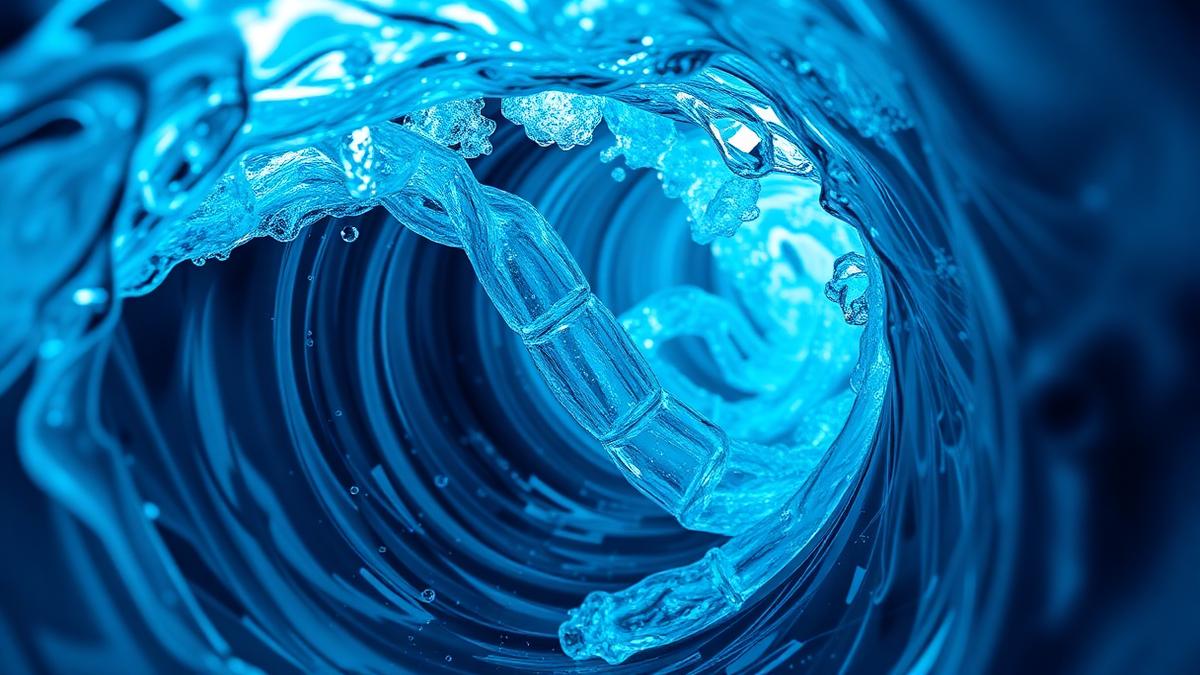 Stretched galactomannan chains act as elastic shock absorbers, dampening near-wall bursts and reducing the friction factor.
Shear-Thinning Rheology and Heavy Slurry Transport
A common concern among pipeline engineers is whether adding a thickening polymer will overload the pumps. Guar Gum resolves this through pronounced pseudoplastic, shear-thinning behaviour. Inside a high-shear pump impeller, the polymer network temporarily disentangles and viscosity drops sharply, allowing the fluid to pass through easily. Once the fluid leaves the pump and enters the straight pipe run, the network instantly recovers its structure. This dual behaviour delivers low resistance where it is needed for pumping and high structure where it is needed for transport.
That recovered viscosity does more than reduce drag. In mineral mining and deep-well hydraulic fracturing, the fluid must carry heavy loads of sand, ceramic proppant, or crushed ore across long distances. According to Stokes law, these dense particulates naturally settle toward the bottom of the pipe, threatening blockages. The resting viscosity and yield stress of the recovered Guar Gum matrix keep solid particles suspended indefinitely, guaranteeing continuous, uninterrupted flow of dense slurries. For a deeper comparison of hydrocolloid rheology, see our Guar Gum versus xanthan gum analysis and the definitions in our technical glossary.
Correct dosing is where laboratory theory meets field practice. Because the drag-reduction response is strongly non-linear at very low concentrations, most systems reach a point of diminishing returns beyond which additional polymer yields little extra benefit and simply raises cost. Engineers therefore characterise each fluid and pipe geometry to identify the concentration at which friction reduction plateaus, then hold dosing near that optimum. Water chemistry, temperature, pipe diameter, and target velocity all shift the optimal loading, so a grade and dosage validated for a municipal water main will differ from one tuned for a high-salinity slurry line. Reliable performance depends on a hydrocolloid that hydrates predictably and delivers consistent viscosity from batch to batch, allowing the same dosing model to be trusted across successive shipments.
Advanced Derivative Chemistry for Extreme Pipeline Environments
While native Guar Gum delivers exceptional friction reduction in standard water-based pipelines, the 2026 industrial landscape frequently involves aggressive chemical and thermal conditions. Deep oilfield pipelines, high-salinity produced water, and geothermal systems can exceed the stability window of the native polymer. Modified Guar Gum derivatives extend performance into these extreme regimes.
- Carboxymethyl Hydroxypropyl Guar (CMHPG): Engineered for high thermal stability and clean breaking, CMHPG maintains friction reduction and structural integrity in environments approaching 150 degrees Celsius and in dense sodium bromide brines.
- Hydroxypropyl Guar (HPG): Offers improved thermal tolerance and low insoluble residue for deep-well and high-temperature service.
- Cationic Guar: Carries a positive charge that improves compatibility with charged surfaces and specific brine chemistries, sustaining performance where native gums would precipitate.
Beyond thermal and salinity tolerance, derivative selection also governs residue and break behaviour. In oilfield service the friction reducer must ultimately be broken back to a low-viscosity fluid so it can be recovered from the formation without impairing permeability. Low-residue grades and cleanly breaking derivatives such as CMHPG are engineered to hydrate rapidly for immediate friction reduction, then respond predictably to oxidative or enzymatic breakers, leaving flow paths open. This lifecycle control, from rapid activation to clean break, is what separates an industrial-grade drag reducer from a simple thickener.
These derivatives allow a single, naturally derived polymer family to serve everything from municipal water mains to high-salinity, high-temperature stimulation fluids. Matching molecular weight, degree of substitution, and hydration rate to the specific duty cycle of a pipeline is a formulation exercise rather than a one-size-fits-all choice. Guidance on grade selection for a specific pipeline environment is available through our product range and technical team.
The 2026 Economic and Environmental Landscape
The business case for Guar Gum drag reduction rests on three reinforcing benefits: throughput, energy, and compliance. By lowering the friction factor, operators can push higher volumes of fluid or heavy slurry through existing, aging pipe without exceeding the safe structural pressure rating of the metal. Lower discharge pressures translate directly into reduced electrical consumption at the pump station, the dominant recurring cost of fluid transport.
Equally important is the environmental profile. Synthetic drag reducers such as polyacrylamides are petroleum-derived, poorly biodegradable, and a growing liability under strict discharge regulations. Guar Gum is a 100 percent natural, plant-based, biodegradable polymer that degrades safely in the environment, helping operators maximise flow and lower pumping costs while adhering to 2026 sustainability mandates. This alignment of performance and stewardship is explored further on our sustainability and quality pages.
Key Takeaways
- Turbulence dampening: Guar Gum suppresses chaotic, energy-wasting eddies at the pipeline wall, enabling streamlined flow at high velocity.
- Extensional viscosity mechanics: Long-chain galactomannans stretch under near-wall shear, absorbing radial momentum and preventing turbulent bursts from disrupting forward flow.
- Pseudoplastic efficiency: Shear-thinning behaviour lets solutions pass easily through pumps, then recover structure to suspend heavy slurries in the pipe.
- Extreme-environment resilience: Derivatives such as CMHPG and Cationic Guar hold performance in 150 degrees Celsius service and dense sodium bromide brines.
- Eco-friendly and cost-effective: Replacing synthetic polyacrylamides with biodegradable Guar Gum cuts pumping energy while meeting strict environmental rules.
- Ultra-low dosage: Effective friction reduction is achieved at parts-per-million concentrations, minimising additive cost per barrel of throughput.
Frequently Asked Questions
What exactly causes pressure drop in a high-speed industrial pipeline?
Pressure drop in high-speed transport is driven mainly by internal turbulence. As fluid is pumped faster, chaotic eddies and cross-currents form and push the fluid against the rough pipe wall. This turbulence converts forward kinetic energy into wasted heat friction, forcing pumps to work harder and consume more electricity.
How does adding a tiny amount of Guar Gum reduce pipeline friction?
Guar Gum molecules are extremely long, flexible carbohydrate chains. Added at just a few parts per million, they stretch out parallel to the pipe wall and act like microscopic elastic shock absorbers. When an eddy tries to form, the stretched chains absorb its energy and dampen the turbulence, smoothing the flow and cutting wall friction.
Does Guar Gum make the fluid too thick for the pumps to handle?
No, because Guar Gum is shear-thinning. Inside a pump high-shear impeller its viscosity drops almost instantly so the fluid flows easily. Once it enters the straight pipeline it recovers its structure, which helps suspend heavy particles like sand and reduces overall drag.
Why is Guar Gum preferred over synthetic friction reducers in 2026?
Traditional synthetic reducers such as polyacrylamides are petroleum-based, toxic to groundwater, and non-biodegradable. Guar Gum is a Superior, 100 percent natural, plant-based polymer that degrades safely, letting operators maximise flow and lower pumping costs while complying with modern sustainability laws.
To achieve maximum hydraulic efficiency and dramatically lower energy costs across your pipeline network, integrate Superior, naturally derived Guar Gum friction reducers into your operations. Contact the B.D. Guar technical team to match the right grade to your fluid chemistry, or explore our full product range to get started.