Guar Gum Friction Reduction: Maximizing Flow and Hydraulic Horsepower
Discover how biodegradable Guar Gum friction reducers cut turbulent drag in fracturing fluids, lowering pumping energy costs and protecting equipment in 2026 operations.
Last updated:
As unconventional operators enter 2026 under tighter energy budgets and stricter environmental scrutiny, Guar Gum friction reduction has re-emerged as a practical lever for cutting pumping costs. When a stimulation crew forces water down the wellbore at high rate, turbulence consumes hydraulic horsepower and stresses surface equipment. Introducing a small concentration of long-chain galactomannan polymer suppresses that turbulence, allowing more of the pump output to reach the formation rather than being lost to friction along the pipe wall.
Research Overview
Drag reduction by high-molecular-weight polymers is a well-documented phenomenon in fluid mechanics, first characterized through the Toms effect in the mid-twentieth century. Industry studies indicate that dilute solutions of linear polysaccharides such as Guar Gum can reduce friction pressure in turbulent pipe flow by roughly fifty to seventy percent. The mechanism centers on how flexible polymer chains interact with turbulent eddies near the pipe wall, damping the energy cascade that drives frictional losses.
How Guar Gum Suppresses Turbulent Friction
In turbulent flow, energy is dissipated through a cascade of eddies that form and collapse against the pipe wall. Long-chain polymers introduce viscoelastic resistance that interrupts this cascade. As the fluid accelerates through the pumping string, extensional forces stretch the coiled Guar Gum molecules and align them with the direction of flow.
Once aligned, these extended chains store and release strain energy elastically rather than allowing it to dissipate as heat and turbulence. The net effect is a measurable reduction in friction pressure at a given flow rate, which is why even trace concentrations produce a pronounced operational benefit.
- Coiled galactomannan chains uncoil under extensional shear near the wall.
- Aligned chains dampen the small-scale turbulent eddies responsible for wall friction.
- Lower friction pressure translates directly into recovered hydraulic horsepower.
- The effect appears at concentrations well below those used for viscosity building.
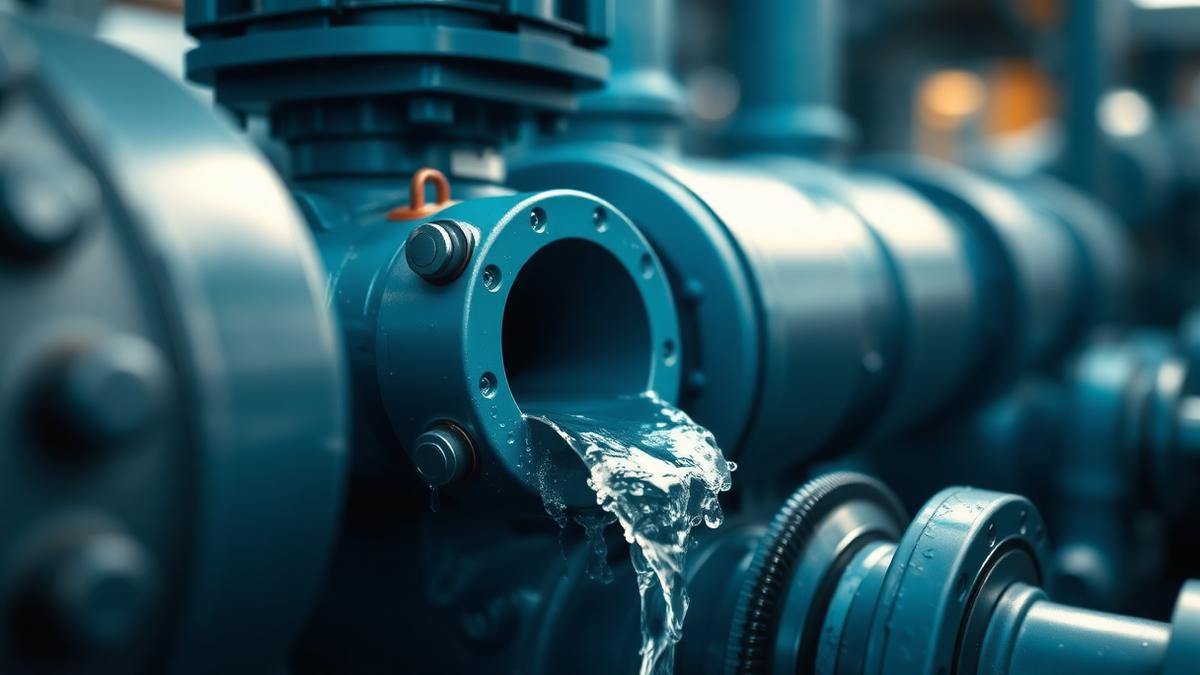 High-pressure pumping equipment benefits directly from reduced friction pressure at the wellbore.
A Biodegradable Alternative to Polyacrylamide
Synthetic polyacrylamide has long dominated slickwater friction reduction, but it persists in produced water and complicates disposal and reuse. Guar Gum, a plant-derived galactomannan from Cyamopsis tetragonoloba, offers comparable drag-reduction performance while breaking down naturally under enzymatic and oxidative conditions.
For operators balancing performance against environmental compliance in 2026, this biodegradability is increasingly decisive. Guar-based friction reducers integrate cleanly with existing breaker chemistry, and when a Superior, low-residue grade is specified they leave minimal residue on flowback. Explore the full range of oilfield grades on our products page, and read more about responsible sourcing on our sustainability page.
- Plant-derived and biodegradable, easing produced-water handling.
- Compatible with standard oxidative and enzymatic breaker systems.
- Superior low-residue grades minimize formation damage on flowback.
- Supports water reuse programs without synthetic polymer accumulation.
Recovering Hydraulic Horsepower and Lowering Energy Costs
Every unit of friction pressure the pumps must overcome represents fuel burned and horsepower diverted from useful work. By lowering the friction gradient along the wellbore, Guar Gum friction reducers let a crew achieve target injection rates with fewer pumping units or reduced engine load.
Over a multi-stage completion these savings compound. Reduced pressure also means gentler duty cycles for pumps, iron, and valves, extending maintenance intervals and lowering the total cost of a fracturing program. The result is a leaner energy footprint per stage without sacrificing placement performance.
- Lower friction pressure reduces required surface treating pressure.
- Fewer active pumping units cut fuel consumption per stage.
- Reduced pressure spikes lessen wear on high-pressure iron and valves.
- Extended equipment life lowers overall program cost.
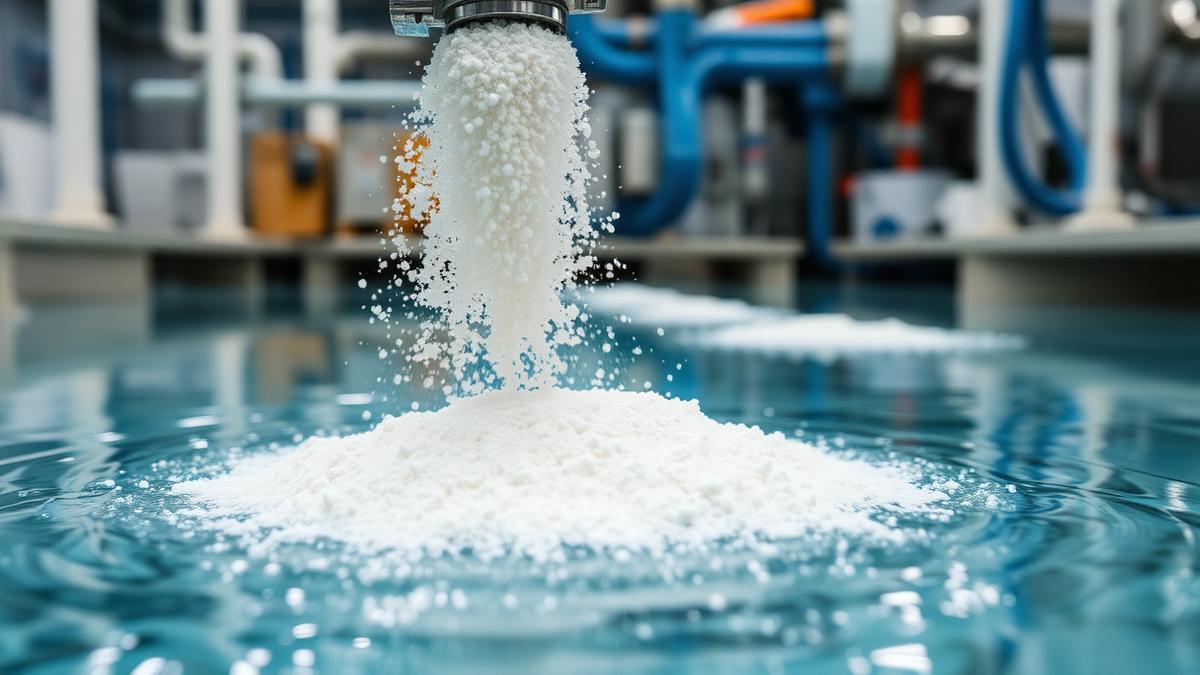 Biodegradable galactomannan friction reducers support cleaner produced-water reuse.
Selecting and Deploying the Right Grade
Field performance depends on rapid hydration and consistent molecular weight. Fast-hydrating Guar Gum grades develop drag-reduction capability within minutes, supporting on-the-fly mixing without large pre-hydration tanks. Consistent particle size ensures uniform dispersion and predictable friction performance from stage to stage, a point reinforced by our batch-level testing described on the quality page.
Water chemistry also matters: high salinity can affect hydration and chain extension, so brine-tolerant grades are specified for produced-water systems. For teams weighing polymer options, our comparison of Guar Gum versus xanthan gum outlines where each performs best. Matching the grade to the water source and pumping schedule is the practical key to reliable results.
- Fast-hydrating grades enable on-the-fly mixing and logistics savings.
- Consistent molecular weight delivers stage-to-stage repeatability.
- Brine-tolerant grades maintain performance in high-salinity water.
Key Takeaways
- Turbulence is the enemy: Guar Gum friction reducers suppress wall turbulence, recovering hydraulic horsepower for the formation.
- Chain alignment drives the effect: extensional shear uncoils galactomannan chains that dampen frictional eddies.
- Biodegradable by nature: plant-derived Guar Gum is a practical alternative to persistent polyacrylamide.
- Lower energy costs: reduced friction pressure cuts fuel use and equipment wear across multi-stage jobs.
- Grade selection matters: fast-hydrating, brine-tolerant grades ensure reliable field performance.
Frequently Asked Questions
How much friction reduction can Guar Gum provide?
Industry studies indicate that dilute high-molecular-weight polysaccharide solutions can reduce turbulent friction pressure by roughly fifty to seventy percent, depending on flow rate, pipe geometry, and water chemistry. Actual field results vary with hydration quality and polymer concentration, so laboratory friction-loop testing against the specific water source is recommended before large-scale deployment.
Is Guar Gum a viable replacement for polyacrylamide?
For many slickwater applications, yes. Guar Gum delivers comparable drag reduction while offering biodegradability that eases produced-water handling and reuse. It integrates with standard breaker chemistry and, in Superior low-residue grades, minimizes formation damage. Polyacrylamide may still be preferred in certain specialized systems, so the choice depends on the water strategy and environmental objectives of the program.
Does friction reduction require high viscosity?
No. Drag reduction occurs at polymer concentrations well below those used to build viscosity. A small dose of long-chain Guar Gum aligns under shear to damp turbulence without significantly thickening the fluid, which is precisely why it suits high-rate slickwater treatments where low viscosity aids proppant transport and placement.
How quickly does the polymer become effective?
Fast-hydrating Guar Gum grades develop friction-reducing capability within a few minutes of mixing, enabling on-the-fly addition directly into the water stream. Hydration speed depends on particle size, water temperature, and salinity, so matching the grade to field conditions ensures the polymer is fully active by the time fluid reaches the perforations.
To specify a fast-hydrating, biodegradable Guar Gum friction reducer matched to your water chemistry and pumping schedule, explore our oilfield product range or contact our technical team to request friction-loop data and grade recommendations.