Guar Gum in the 2026 Oilfield: Beyond Fracking to Enhanced Oil Recovery
Discover how Guar Gum powers Enhanced Oil Recovery in 2026, from polymer flooding mechanics to thermal stability and high-salinity performance in aging oil wells.
Last updated:
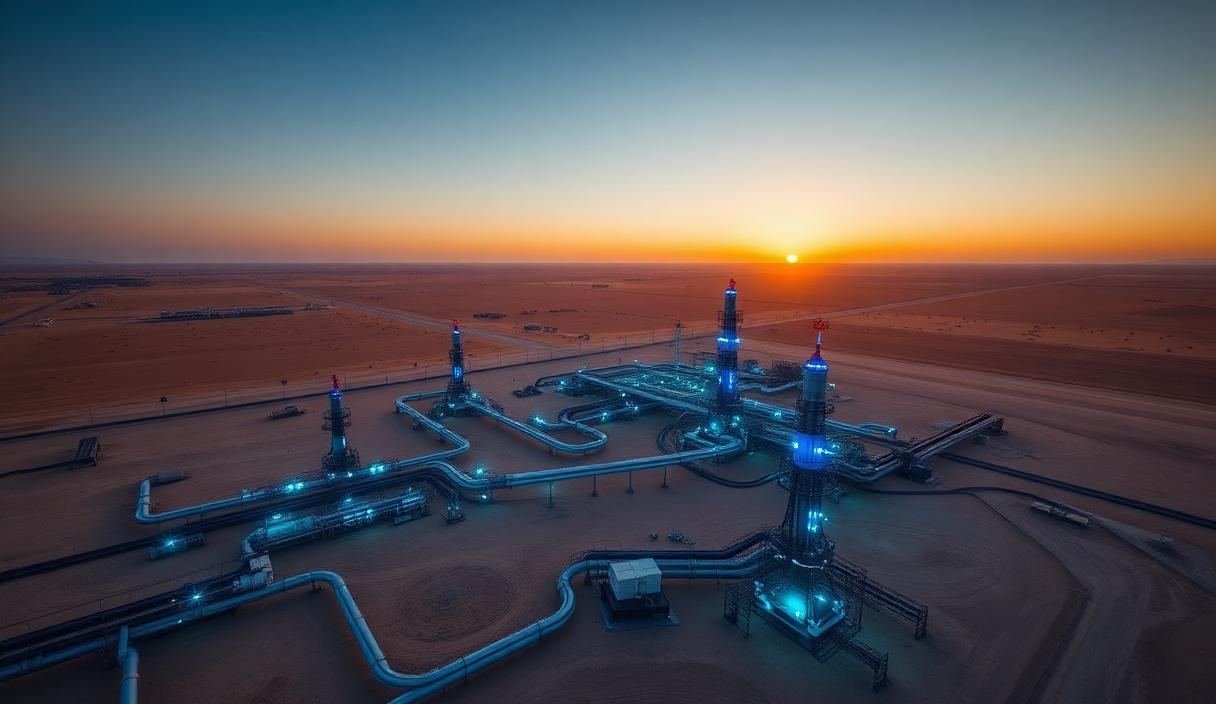
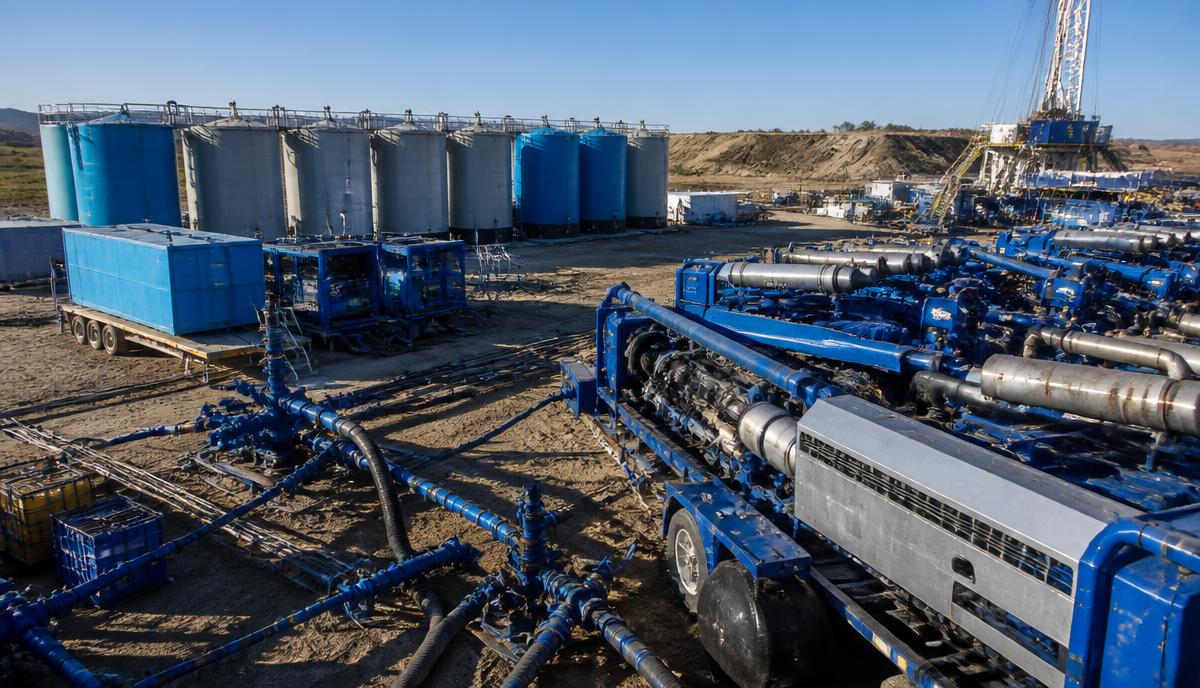
As the global energy sector confronts the complex realities of the 2026 hydrocarbon landscape, Guar Gum in Enhanced Oil Recovery (EOR) has emerged as an indispensable chemical technology for operators seeking to maximize output from mature, aging wells. With primary reserves increasingly depleted and global crude demand remaining robust, chemical EOR offers one of the most technically sophisticated and economically viable extraction pathways available. Guar Gum functions as a highly effective viscosifier for injected water, creating a volumetric sweep that efficiently displaces residual crude oil toward production wellbores while navigating extreme subterranean conditions.
Research Overview: The Science of Galactomannans in Oil Recovery
The application of Guar Gum in the petroleum industry has historically centered around primary well stimulation, where it suspends proppants and widens rock fissures. However, as the 2026 global energy landscape shifts toward maximizing yield from existing, mature oilfields, chemical Enhanced Oil Recovery has taken center stage. Research published in Carbohydrate Polymers and corroborated by the SPE Journal highlights the unique molecular architecture of Guar Gum as an exceptional candidate for EOR applications.
Chemically, Guar Gum is a high-molecular-weight galactomannan polysaccharide featuring a linear backbone of beta-1,4-linked D-mannopyranose units with alpha-1,6-linked D-galactose branches at a mannose-to-galactose ratio of approximately 2:1. When dissolved in water, these polymer chains rapidly hydrate and entangle, creating extremely high-viscosity solutions even at very low concentrations of 0.5% to 2.0% by weight. The fundamental problem that chemical EOR addresses is viscous fingering, where the highly mobile water bypasses the more viscous crude oil, leaving vast quantities of hydrocarbons trapped in the porous rock. Industry studies indicate that the introduction of Guar Gum into the injection fluid fundamentally alters this dynamic, providing the necessary rheological modification to ensure a uniform, efficient volumetric sweep of the reservoir.
To meet the rigorous demands of deep subterranean environments, raw Guar Gum is frequently subjected to advanced derivatization. By synthesizing Superior modified polymers such as Hydroxypropyl Guar Gum (HPG) and Carboxymethyl Hydroxypropyl Guar Gum (CMHPG), engineers have developed solutions that resist harsh thermal degradation and high-salinity brines, solidifying Guar Gum as an indispensable tool in modern EOR operations. Learn more about our quality standards and product range.
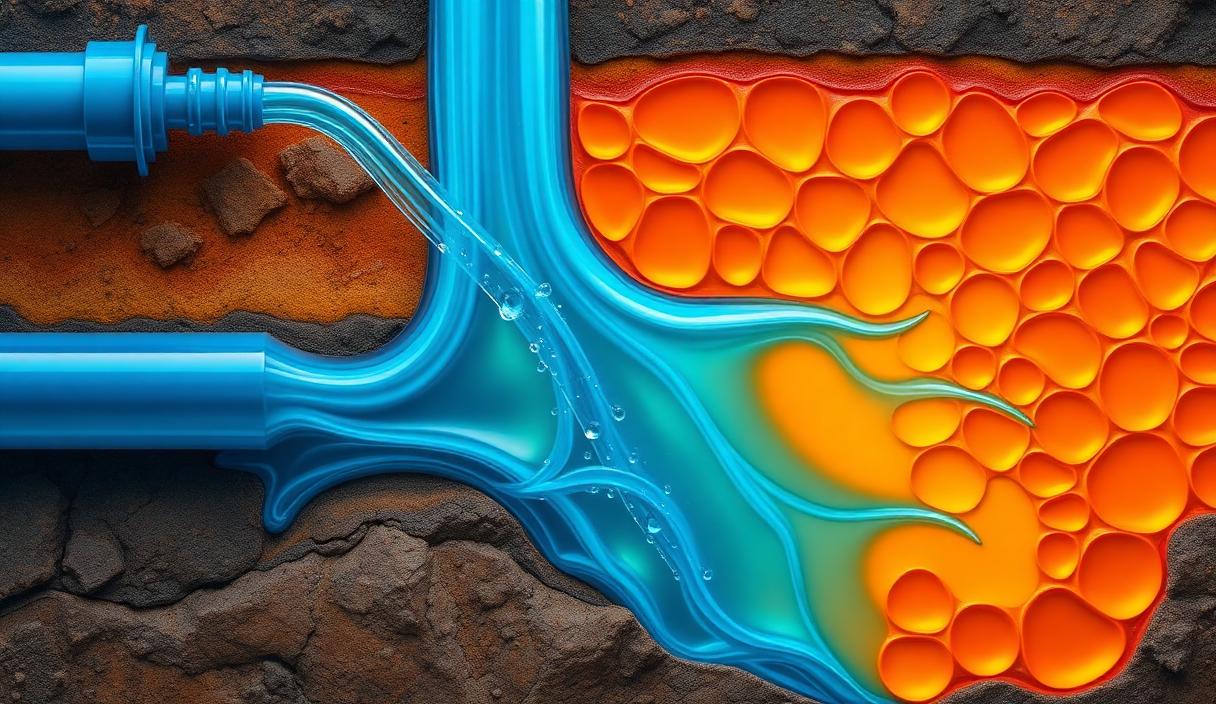 Polymer flooding with Guar Gum creates a uniform volumetric sweep, displacing residual crude oil from porous reservoir rock toward production wellbores.
The Mechanics of Guar Gum in Chemical Enhanced Oil Recovery
The fundamental goal of polymer flooding in EOR is mobility control. By precisely manipulating the viscosity of the displacing fluid, Guar Gum drastically improves the fractional flow ratio of water to oil at the producing well. The phenomenon of rapid viscosity development arises because the frequent galactose branches physically prevent the mannose chains from associating too tightly, allowing rapid hydration and massive viscosity development even at low concentrations.
- Pseudoplastic Flow Behavior: Guar Gum solutions exhibit non-Newtonian, shear-thinning characteristics. Under the extreme high shear of injection pumps at the surface, the fluid temporarily loses viscosity, minimizing pumping energy requirements and friction pressure. Once deep inside the reservoir where shear forces drop significantly, the Guar Gum solution immediately recovers its high viscosity to maintain an effective sweep.
- Permeability Reduction in Swept Zones: As the Guar Gum polymer travels through porous rock, it selectively reduces the permeability of highly conductive, water-swept zones. This flow diversion forces trailing injection water into tighter, previously untouched microscopic rock pores, ultimately improving overall oil extraction efficiency.
- Mobility Ratio Optimization: By dramatically reducing the mobility of the injected water phase relative to the oil phase, Guar Gum ensures a stable, piston-like displacement front that maximizes volumetric contact with oil-bearing rock. Industry studies in the SPE Journal confirm that optimized mobility ratios achieved with Guar Gum can increase ultimate oil recovery by 10% to 25% compared to water-only injection.
Overcoming Thermal Degradation in Deep Reservoirs
As operators drill deeper to access remaining hydrocarbon reserves in 2026, they encounter extreme bottom-hole temperatures that can easily destroy conventional polymers. Ensuring the thermal stability of the injection fluid is a primary engineering challenge in modern EOR operations.
- Limitations of Native Guar Gum: Unmodified Guar Gum is highly effective at moderate temperatures but becomes susceptible to thermal hydrolysis and rapid viscosity loss when exposed to temperatures exceeding 100°C. At these elevated heat levels, the glycosidic bonds linking the mannose backbone break apart, effectively destroying the fluid's sweeping capabilities.
- Superior Etherified Derivatives: To combat high heat, manufacturers process the natural polymer into Superior derivatives such as HPG and CMHPG. Industry studies indicate that introducing hydroxypropyl groups sterically shields the vulnerable glycosidic bonds, dramatically improving thermal resistance. These Superior derivatives maintain functional viscosity at temperatures well above 150°C, making them the standard for deep-well EOR operations.
- Cross-Linking for Extreme Temperatures: When temperatures and pressures exceed the limits of linear polymer systems, chemical cross-linkers such as boron or zirconium complexes form additional covalent bonds with the modified Guar Gum structure. This results in a rigid, highly durable gel network capable of withstanding well temperatures up to 177°C (350°F) without premature breakdown.
- Controlled Gel Breaking: After Guar Gum has successfully displaced targeted hydrocarbons, it is desirable for the fluid to degrade, restoring the natural permeability of the formation. Controlled gel breakers, including specialized oxidizers and enzymes, cleave the Guar Gum backbone into smaller, low-viscosity fragments that can be easily pumped back to the surface, leaving the reservoir formation intact.
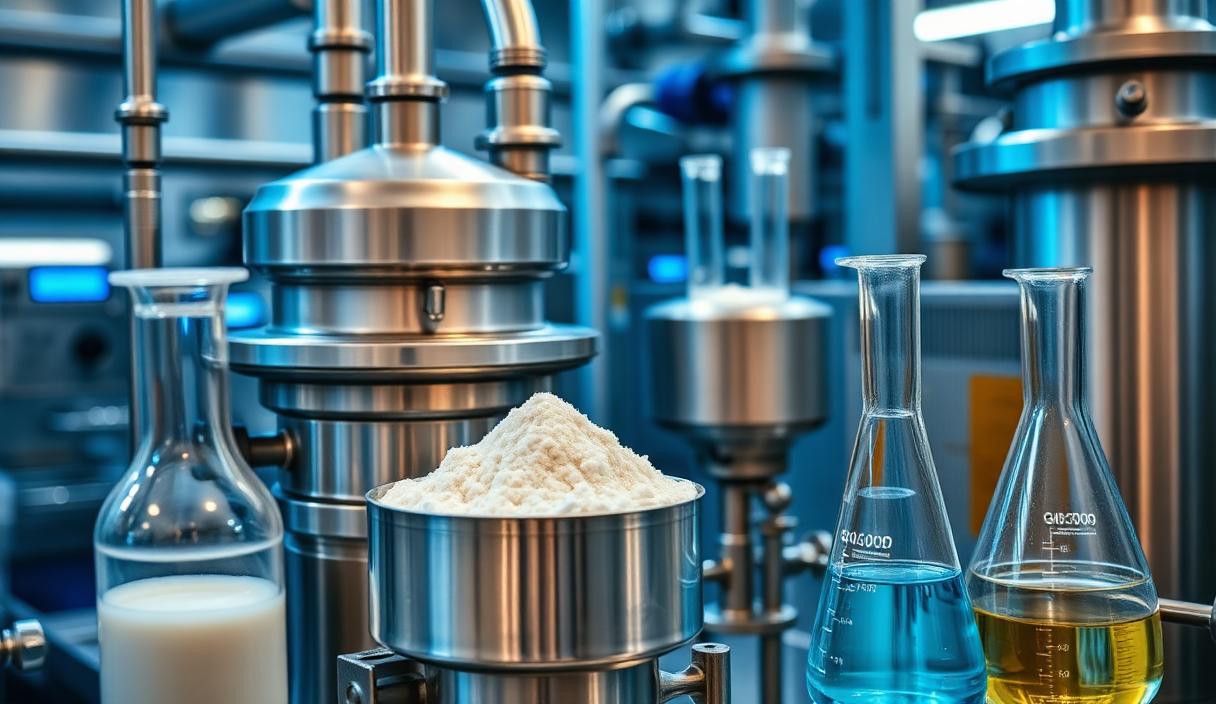 Superior Guar Gum derivatives — including HPG and CMHPG — are engineered to maintain viscosity and structural integrity in the extreme temperatures and salinity of deep reservoir environments.
Electrolyte Compatibility and High-Salinity Environments
Freshwater scarcity is a critical operational constraint in the 2026 oilfield. Consequently, EOR operations heavily rely on the reinjection of produced water — the naturally occurring, highly saline brines extracted alongside crude oil. These brines pose severe challenges for polymer stability due to the presence of divalent cations, including calcium, magnesium, and barium. Research published in the SPE Journal confirms that Guar Gum's specific molecular structure, particularly its non-ionic galactomannan backbone, provides exceptional electrolyte compatibility under these demanding conditions.
- Divalent Cation Resilience: Interestingly, the presence of barium ions actually enhances the dynamic radius of the Guar Gum polymer coils. Industry studies indicate that a concentration of 150 ppm of barium chloride can increase the viscosity of HPG solutions by up to 30% at ambient temperatures, turning a potential challenge into a performance advantage.
- Sulfate Resilience: Sulfate ions, commonly found in seawater and produced brines, have a minimal negative impact on the rheological performance of Guar Gum. For instance, the addition of 150 ppm of sodium sulfate increases HPG linear gel viscosity by only approximately 7% to 8% at ambient temperatures, ensuring highly predictable fluid behavior during the EOR sweep.
- Scale Inhibition Synergy: High-salinity brines co-produced with crude oil can also precipitate scale deposits in the wellbore and near-formation environment. Guar Gum EOR programs are frequently designed in conjunction with compatible scale inhibitors, making the polymer a versatile component of a comprehensive oilfield fluid management strategy. Explore our technical glossary for detailed derivative specifications.
EOR Economics and the 2026 Global Market for Guar Gum
The economics of Enhanced Oil Recovery in 2026 demand maximum efficiency. With the most accessible reserves largely depleted, the petroleum industry is channeling massive capital into secondary and tertiary recovery phases. Data from IMARC Group and institutional industry studies indicate that the Guar Gum market is undergoing sustained, high-value growth, projected to reach USD 1.53 billion in 2026, with the oilfield segment representing one of its most technically demanding and value-intensive applications.
- Cost-Effective Superior Performance: While synthetic polyacrylamides remain common in EOR, they are highly sensitive to petroleum pricing and complex to manufacture. Guar Gum, derived from a renewable agricultural crop, offers operators a highly predictable, cost-effective base polymer. Even when chemically modified into Superior derivatives like CMHPG, it frequently delivers better return on investment in high-temperature, high-salinity wells than fully synthetic alternatives.
- Environmental and Regulatory Compliance: Environmental regulations regarding subterranean fluid injection are stricter in 2026 than ever before. The natural, biodegradable origin of Guar Gum provides a significant compliance advantage, as the polymer ultimately breaks down into harmless saccharide fragments that do not persist in subsurface formations or groundwater systems in the way that synthetic polyacrylamides might. This biodegradability is increasingly valued in oilfield chemical injection and wastewater management programs globally.
- Supply Chain Stability: The 2026 Guar Gum supply chain is highly organized compared to previous decades. Advanced agricultural practices and direct contract-farming models in the primary cultivating regions of India and Pakistan ensure a steady, high-quality stream of raw galactomannan to industrial processors. India accounts for over 80% of global Guar Gum production, and modernized processing facilities have achieved operational improvements that stabilize global supply, allowing oil and gas operators to forecast EOR chemical expenditures with high confidence. Read more about our sustainability commitments and company history.
Key Takeaways
- Unmatched Mobility Control: Guar Gum dramatically lowers the water-to-oil mobility ratio in EOR operations, ensuring a uniform volumetric sweep that successfully displaces trapped heavy crude oil toward production wellbores.
- Extreme Thermal Endurance: Superior modified derivatives like CMHPG maintain functional viscosity at well temperatures up to 177°C (350°F), enabling effective EOR in the deepest, hottest reservoirs encountered in 2026 operations.
- Electrolyte Compatibility: Unlike many synthetic polymers, Guar Gum and its derivatives perform reliably in high-salinity produced water environments, with specific brine ions actively enhancing viscosity rather than degrading it.
- Economic Viability: Guar Gum derivatives provide a highly cost-effective, agriculturally renewable alternative to synthetic polymers, ensuring predictable chemical procurement costs for large-scale reservoir flooding programs.
- Environmental Compliance: The biodegradable nature of Guar Gum ensures full compliance with increasingly strict 2026 environmental regulations governing subterranean fluid injection and oilfield wastewater management.
- Supply Security: India's dominant 80%+ share of global Guar Gum production, combined with advanced contract-farming models, delivers the supply chain reliability that large-scale EOR programs require.
Frequently Asked Questions
Why is Guar Gum used in Enhanced Oil Recovery instead of pure water?
Injecting pure water into an oil reservoir often results in viscous fingering, where the water channels through highly permeable rock and bypasses the heavier crude oil. Guar Gum acts as a powerful viscosifier, thickening the injected water to create a uniform, piston-like sweep that efficiently pushes the maximum amount of residual crude oil out of the rock matrix and toward the production well, significantly increasing total recovery rates.
How do high temperatures affect Guar Gum in deep wells?
Native Guar Gum is prone to thermal degradation and will lose viscosity at temperatures above 100°C due to the cleavage of its glycosidic bonds. However, Superior modified derivatives such as HPG and CMHPG, combined with chemical cross-linkers like borate or zirconium complexes, extend thermal stability to 177°C (350°F) or higher, making them the industry-standard choice for deep, hot reservoir EOR applications in 2026.
How does Guar Gum maintain performance in saline environments?
Freshwater scarcity requires modern EOR operations to use highly saline produced water or brines. The specific molecular structure of Guar Gum, especially its non-ionic galactomannan backbone and the steric shielding introduced through advanced derivatization, provides exceptional electrolyte compatibility. Research from the SPE Journal confirms that Guar Gum maintains rheological stability even in the presence of heavy divalent cations — in fact, specific barium ion concentrations can actively increase polymer viscosity by up to 30%.
How does Guar Gum compare economically to synthetic EOR polymers in 2026?
Guar Gum remains highly competitive and is frequently more cost-effective. As an agriculturally renewable, bio-based polymer, it offers Superior salt tolerance and environmental compliance compared to fully synthetic polyacrylamides. The robust 2026 supply chain from India and Pakistan ensures stable pricing and reliable availability, delivering an excellent return on investment for large-scale reservoir flooding operations while meeting increasingly strict regulatory requirements.
To discover the right Guar Gum derivative for your specific EOR requirements — whether high-temperature linear gel systems, cross-linked fracturing fluids, or produced-water-compatible polymer floods — contact the technical team at B.D. Guar Pvt. Ltd. Our Superior derivatives deliver research-grade consistency, unmatched thermal stability, and unparalleled supply reliability for the modern energy sector.