Global Shipping Logistics: Container Volume to Rotterdam, Houston
Optimize container payloads, Incoterms, and moisture protection for Guar Gum shipments from Gujarat to Rotterdam and Houston with this 2026 logistics guide.
Last updated:
In the 2026 maritime trade landscape, Guar Gum shipping logistics has become a decisive factor in landed cost and supply reliability for freight forwarders and supply chain planners. Managing high-volume hydrocolloid shipments from India to major discharge gateways demands precise coordination across Incoterms, container payload density, and moisture control. Optimized 25 kg bag and 1,000 kg FIBC super-sack configurations maximize vessel space, reduce transit damage, and secure dependable deliveries across European and North American industrial corridors.
Research Overview
The global ocean freight ecosystem in 2026 is defined by tight vessel capacity, fluctuating fuel surcharges, and stringent carbon intensity regulations. According to IMARC market research, demand for natural galactomannans continues to expand across energy, food, personal care, and industrial sectors, with India supplying roughly 80% to 90% of world output from Rajasthan and Gujarat. Houston and Rotterdam remain the two principal maritime destinations. Learn more about our company and quality systems.
Global Trade Corridors: Houston and Rotterdam
Industry studies indicate that annual Indian export volumes exceed 470,000 metric tonnes, with significant volume directed to the Port of Houston and the Port of Rotterdam. Houston serves as the primary import gateway for the North American energy sector, supplying the Permian and Eagle Ford basins for hydraulic fracturing operations. Rotterdam acts as the central European distribution hub, receiving technical and food-grade materials for onward transport by inland barge and rail into Germany, France, and Scandinavia.
For supply chain planners, optimizing container stowage and navigating port transit times through these corridors is essential to controlling landed cost and maintaining continuous manufacturing schedules.
- Houston: energy-sector gateway with Bayport and Barbours Cut terminals and direct interstate and rail access.
- Rotterdam: European hub at the Maasvlakte terminals with Rhine barge and rail connections.
- Landed benchmarks: industry studies indicate Q1 2026 US Gulf Coast landed prices near USD 1,563 per metric ton and Western European hubs near USD 1,810 per metric ton.
Strategic Incoterms Selection: FOB, CFR, CIF, and DDP
Choosing the appropriate Incoterms 2020 rule is the foundational decision in a risk-mitigated supply chain between Indian exporters and international buyers. Each term sets the transfer of cost, risk, and operational responsibility across the ocean leg.
- Free on Board (FOB) at gateway ports: At Mundra, Kandla, or Nhava Sheva (JNPT), the exporter bears inland transport, port handling, customs clearance, and export documentation. Risk transfers once the container is loaded aboard the vessel. Large multinational buyers with global carrier contracts often prefer FOB to leverage volume discounts on the ocean leg.
- Cost and Freight (CFR) and Cost, Insurance, and Freight (CIF): The exporter books the vessel and pays ocean freight, and under CIF also procures marine cargo insurance. These terms insulate medium-scale importers from Indian port logistics and provide fixed freight costs to the port of discharge.
- Delivered Duty Paid (DDP): The exporter manages the full chain from the Gujarat plant to the buyer''s warehouse, including ocean freight, destination handling, duties, import clearance, and final-mile trucking, removing administrative burden and demurrage surprises.
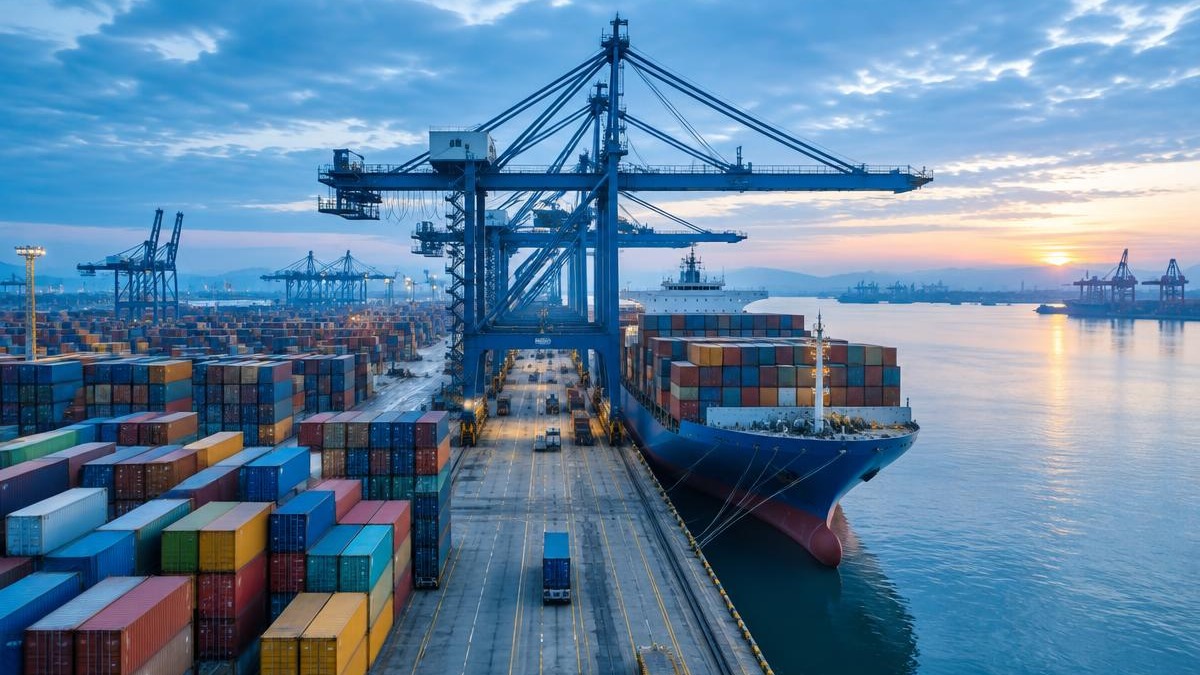
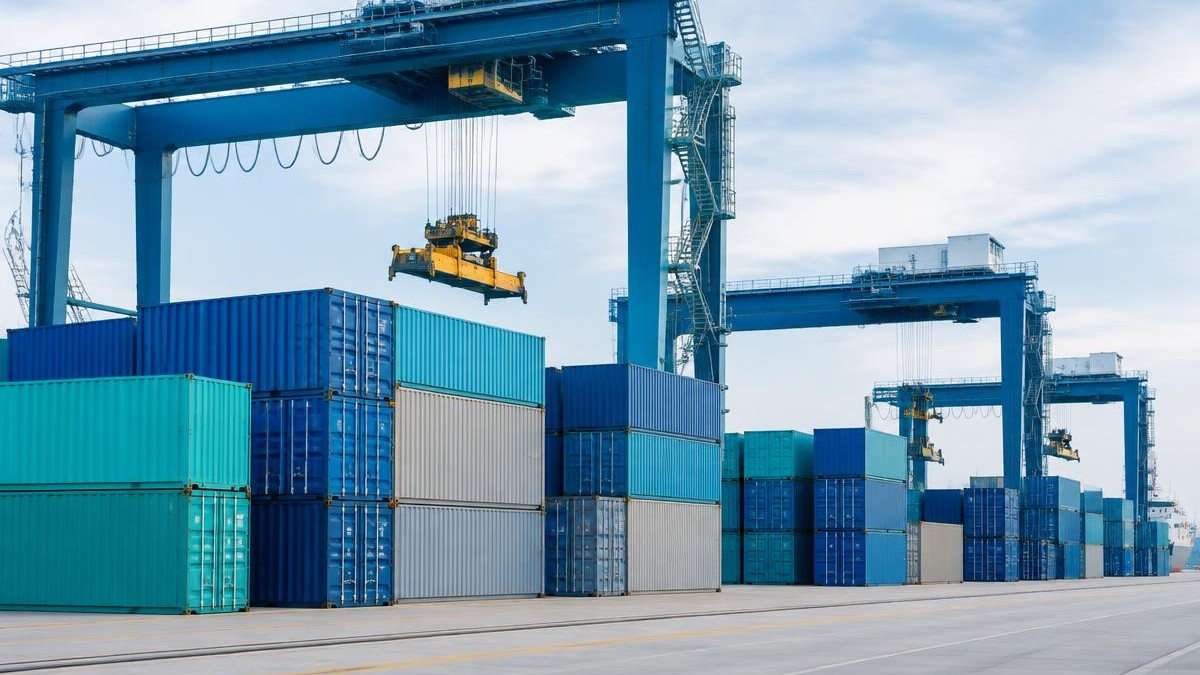 Containerized Guar Gum cargo staged at a deep-water gateway port ahead of vessel loading.
Maritime Routing from Major Indian Gateways
Optimizing ocean transit requires selecting efficient feeder and direct vessel strings from northwest India''s deep-water ports. Facilities in Kalol, Gandhinagar, and across Gujarat benefit from direct highway connectivity to Mundra and Kandla, which can cut domestic transit by 24 to 48 hours compared with southern port routes and helps cargo meet vessel cut-off deadlines.
- Mundra and Kandla proximity: Mundra, India''s largest private commercial port, offers deep-draft berths, advanced container handling, and automated gate systems.
- Transatlantic corridor to Houston: typical ocean transit of 28 to 35 days, depending on Suez Canal or Cape of Good Hope routing during disruption periods.
- Direct European loops to Rotterdam: typical transit of 20 to 26 days, followed by EU customs clearance and onward Rhine barge networks.
Container Payload Optimization: 25 kg Bags vs. 1,000 kg FIBC Super-Sacks
Maximizing mass payload within a 20-foot or 40-foot Full Container Load is the most effective lever for reducing per-ton ocean freight cost. Packaging selection directly affects stowage efficiency and floor-space utilization. Review our product range for available packaging formats.
- 25 kg multi-wall paper bags: Bags carry a polyethylene moisture-barrier liner and are typically palletized on ISPM-15 heat-treated pallets at 40 bags (1,000 kg) per pallet. A 20-foot FCL holds 20 pallets for a 20 metric tonne net payload. Loose-stuffed without pallets, capacity rises to 22 to 24 metric tonnes (880 to 960 bags), suited to plants with automated bag-slitting equipment.
- 1,000 kg FIBC super-sacks: Made of woven polypropylene with an integrated liner and four lifting loops, bulk bags eliminate manual handling at receiving facilities. A 20-foot FCL carries 20 bulk bags for 20 metric tonnes, while 40-foot High-Cube containers can double-stack bags to reach 24 to 26 metric tonnes where floor load permits.
- Weight limit compliance: A 20-foot container can structurally hold up to 28 metric tonnes, but North American road limits typically restrict loads to roughly 19.5 to 21.5 metric tonnes unless heavy-haul chassis permits are secured for Houston drayage.
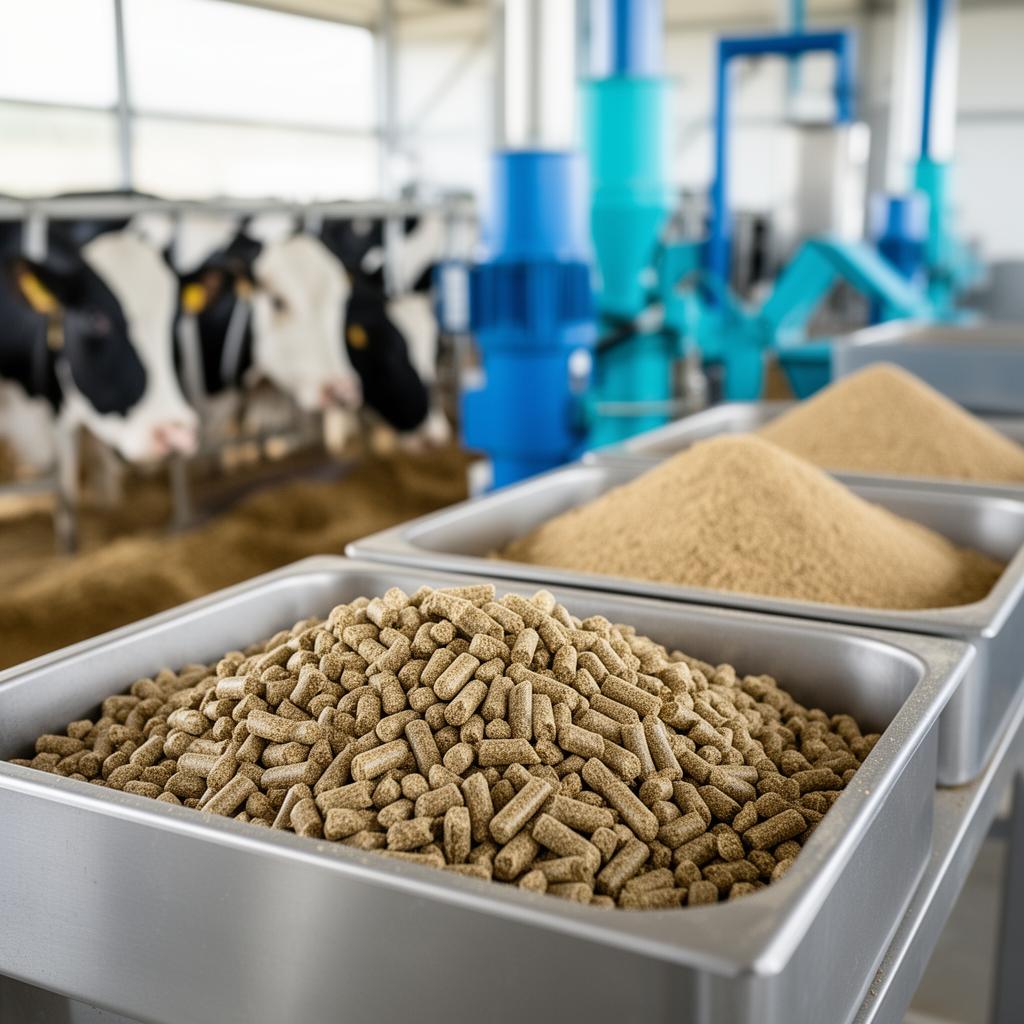
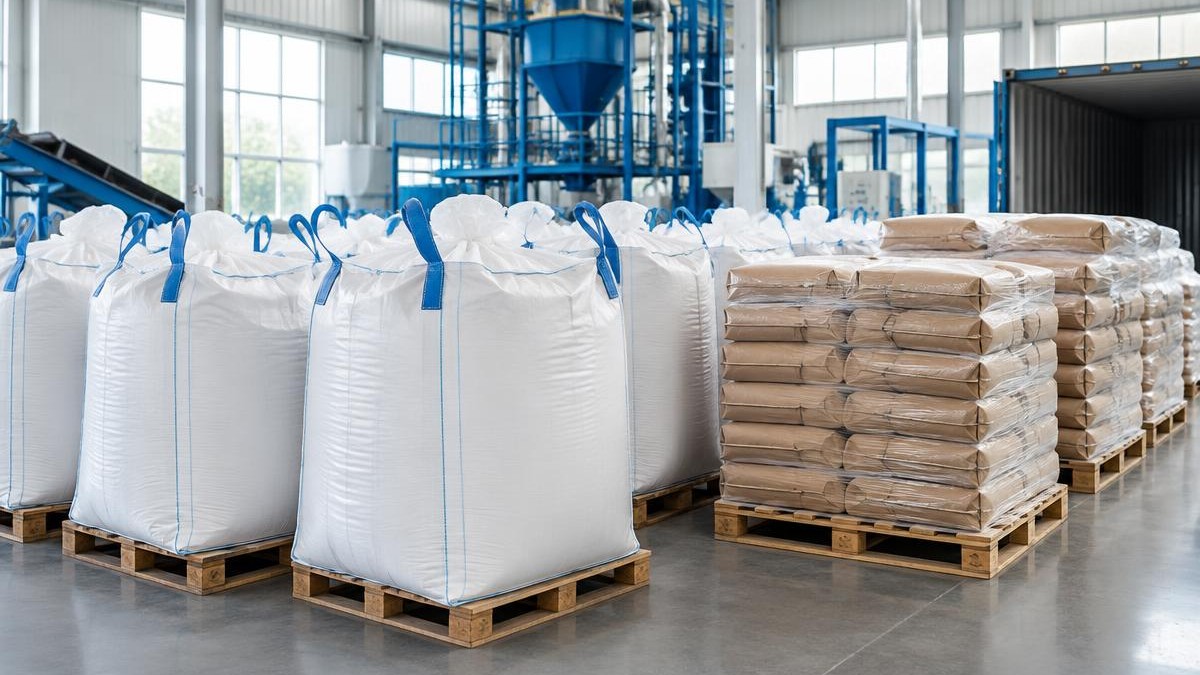 FIBC super-sacks and palletized bags prepared for container stuffing.
Moisture Protection and Transit Caking Prevention
Guar Gum is an intensely hydrophilic galactomannan polysaccharide, so low moisture must be maintained throughout long ocean voyages. Industry studies indicate that moisture content above the standard 12% maximum promotes microbial growth and compromises cold-water hydration speed and final viscosity. See the Guar Gum glossary for related technical terms.
- The physics of container rain: Over a 30-day transit, temperatures inside a sealed steel container can swing from about 15 degrees Celsius at night to above 60 degrees Celsius in daytime sun. Humidity rises as moisture evaporates from pallets and air space, and condensation forms on the cooled ceiling and drips onto cargo.
- Hydrophilic sensitivity: Condensation dripping onto bags or super-sacks causes localized hydration, hard lumps, partial gelation, and caking.
- Integrated defense protocol: B.D. Guar Pvt. Ltd. uses heavy-duty polyethylene container liners plus calcium chloride desiccant poles or hanging bags along the corrugated walls to keep relative humidity below condensation dew points.
Key Takeaways
- Optimized container payloads: loose-stuffed 25 kg bags or 1,000 kg FIBC super-sacks achieve 22 to 26 metric tonnes per container, lowering freight cost per ton.
- Strategic port selection: direct routing from Mundra and Kandla supports 20-to-26-day transit to Rotterdam and 28-to-35-day transit to Houston.
- Tailored Incoterms: FOB, CFR, CIF, and DDP let planners match shipping terms to internal risk and freight contract structures.
- Advanced moisture barriers: liners, ISPM-15 pallets, and desiccant poles prevent container rain and caking, preserving cold-water viscosity.
- Star Export House assurance: a Government of India-certified exporter ensures document control and reliable contract performance.
Frequently Asked Questions
What is the maximum payload of Guar Gum that can be loaded into a 20-foot container?
A standard 20-foot container with palletized 25 kg bags or 1,000 kg FIBC super-sacks accommodates a net weight of 20 metric tonnes across 20 pallets. When 25 kg bags are loose-stuffed without pallets, net payload can rise to 22 to 24 metric tonnes, provided highway weight limits at the destination port allow heavy drayage.
How does B.D. Guar Pvt. Ltd. protect Guar Gum from moisture damage during ocean transit?
Every export container uses a multi-layered moisture defense. Products are packed in moisture-barrier paper bags with polyethylene liners or heavy-duty FIBC super-sacks, containers are lined with polyethylene barriers, and calcium chloride desiccant poles absorb ambient humidity, preventing container rain and caking on voyages to Houston or Rotterdam.
What is the typical ocean transit time from Indian ports to Houston and Rotterdam?
Services departing from Mundra or Kandla reach the Port of Rotterdam in approximately 20 to 26 days under standard routing. Shipments to the Port of Houston typically take 28 to 35 days. These transit times give European and North American supply chain managers predictable scheduling.
Which Incoterms are recommended for buyers importing Guar Gum for the first time?
For first-time importers or buyers seeking a turnkey solution, DDP or CIF terms are highly recommended. DDP transfers logistics, customs clearance, duty payment, and final delivery to the exporter, guaranteeing a fixed landed cost without destination administrative burdens.
To optimize container volume and secure reliable ocean transport for Superior Guar Gum to Rotterdam, Houston, or any major discharge port, partner with B.D. Guar Pvt. Ltd. Contact the logistics team at sales@bdguar.com or visit our contact page to request freight quotes, container loading specifications, and shipping schedules.