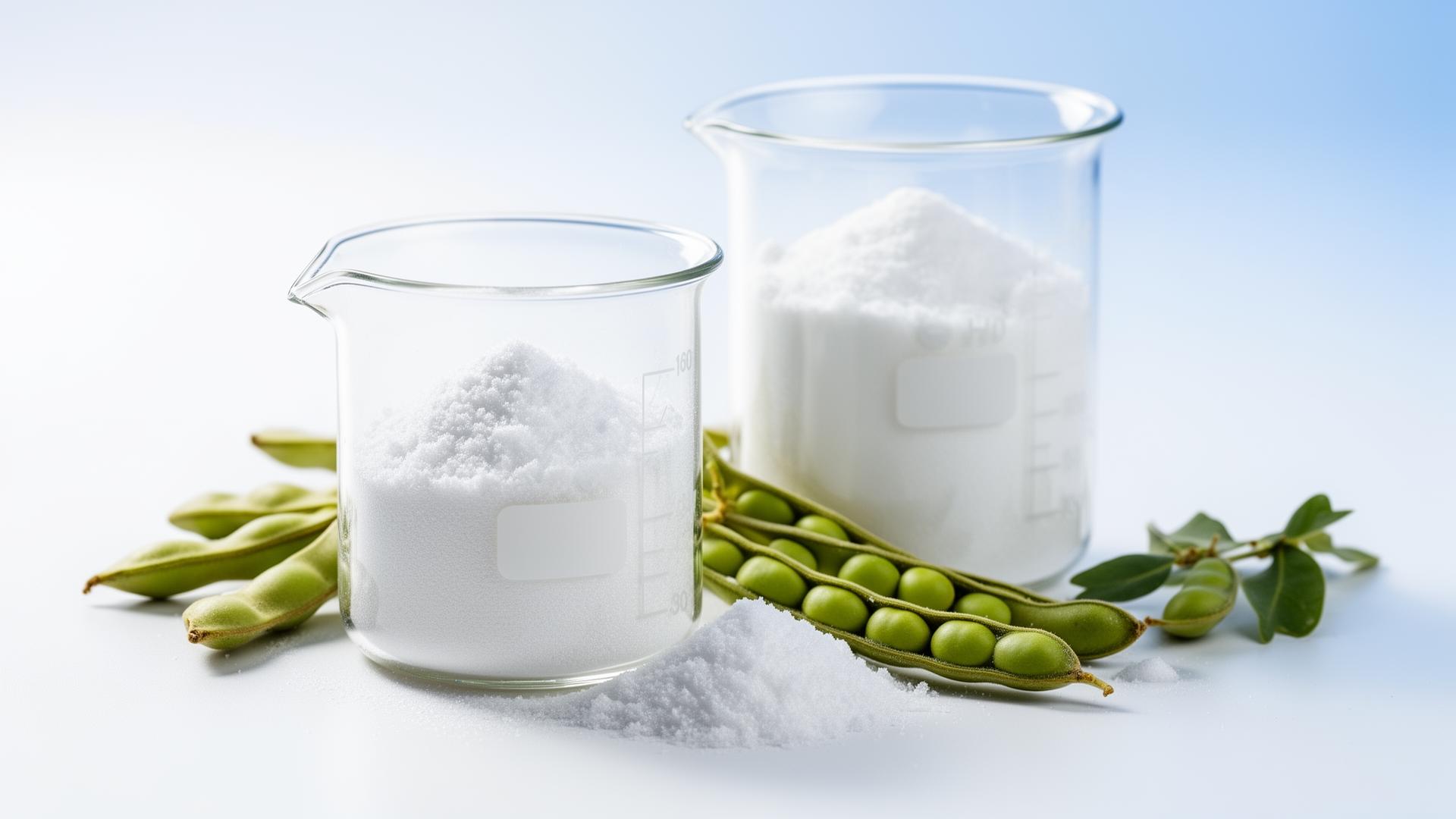
Guar Churi: The Superior High-Protein Livestock Feed Reshaping 2026 Animal Nutrition
How Guar Churi — a high-protein by-product of Guar Gum processing — is emerging as a Superior, sustainable feed ingredient for global dairy, poultry and aquaculture markets.
Last updated:
Quick Answer
What is Guar Churi and why does it matter for 2026 livestock feed markets?
Guar Churi is the Superior, high-protein meal recovered during industrial Guar Gum processing. With protein levels of 40–55%, a balanced amino-acid profile and 100% GMO-free origin, it is rapidly replacing soybean meal in dairy, cattle, poultry and aquaculture rations as buyers reposition supply chains around the 2026 tariff and ETO-free regulatory landscape.
The 2026 global livestock feed market is being rewritten by three forces: reciprocal tariffs on soy and corn flowing between the United States, China and Latin America; tightening EU and FSSAI residue limits on imported feed protein; and the urgent need to decarbonise rations without sacrificing yield. Against that backdrop, Guar Churi — once treated as a humble by-product of Guar seed processing — has become one of the most strategically significant protein ingredients exiting India.
Research Overview
This article examines the agronomic origin, nutritional composition, industrial applications and procurement economics of Guar Churi (also written as guar meal or guar korma). It draws on peer-reviewed feed-science literature published in Animal Feed Science and Technology and Indian Journal of Animal Sciences, FAO commodity briefings, and B D Guar's own production data from our Kalol facility, where Guar Churi is recovered as part of an integrated, zero-waste Guar splits and powder line.
What Is Guar Churi? From Guar Seed to Superior Protein Meal
Guar Churi is the protein-rich endosperm-and-germ fraction left after the gum-bearing splits of Cyamopsis tetragonoloba are mechanically separated for Guar Gum manufacture. The seed enters dehusking, splitting and polishing stages; the husk and germ — collectively the "churi" and "korma" — are screened, milled and either pelleted or sold loose for compound-feed formulation.
Because the meal is produced through purely mechanical, solvent-free processing, it carries none of the residual hexane or ethylene-oxide concerns that have triggered import alerts on competing protein meals in Europe and the Gulf since 2024. That single quality attribute is the reason 2026 procurement teams are auditing Guar Churi against soybean and rapeseed meal at the specification level.
- Crude protein: 40–55% on a dry-matter basis (korma fraction trends higher than churi).
- Crude fibre: 6–12%, supplying healthy rumen scratch factor for dairy cattle.
- Residual galactomannan: 3–6%, contributing prebiotic, gut-stabilising activity.
- Origin: 100% rain-fed Rajasthan and Gujarat farms — see our sustainability programme.
Nutritional Composition and Comparative Value vs Soybean Meal
Independent feed-trial work summarised in Animal Feed Science and Technology (Vol. 233, 2017) and replicated by ICAR-NDRI Karnal in subsequent Indian dairy studies shows that toasted Guar Churi can substitute up to 50% of soybean meal protein in lactating-cow rations without any loss of milk yield, when lysine and methionine are balanced with industry-standard rumen-protected sources.
The amino-acid profile is notably rich in arginine and leucine, and the residual galactomannan content delivers a measurable prebiotic benefit — improving volatile fatty-acid production in the rumen and reducing diarrhoea incidence in young calves and broiler flocks. For procurement managers, the practical headline is simpler: at 2026 spot prices, Superior toasted Guar Churi is landing in Vietnam, the UAE and Mexico at a 15–25% cost-per-kilo-protein discount to GMO-free soybean meal.
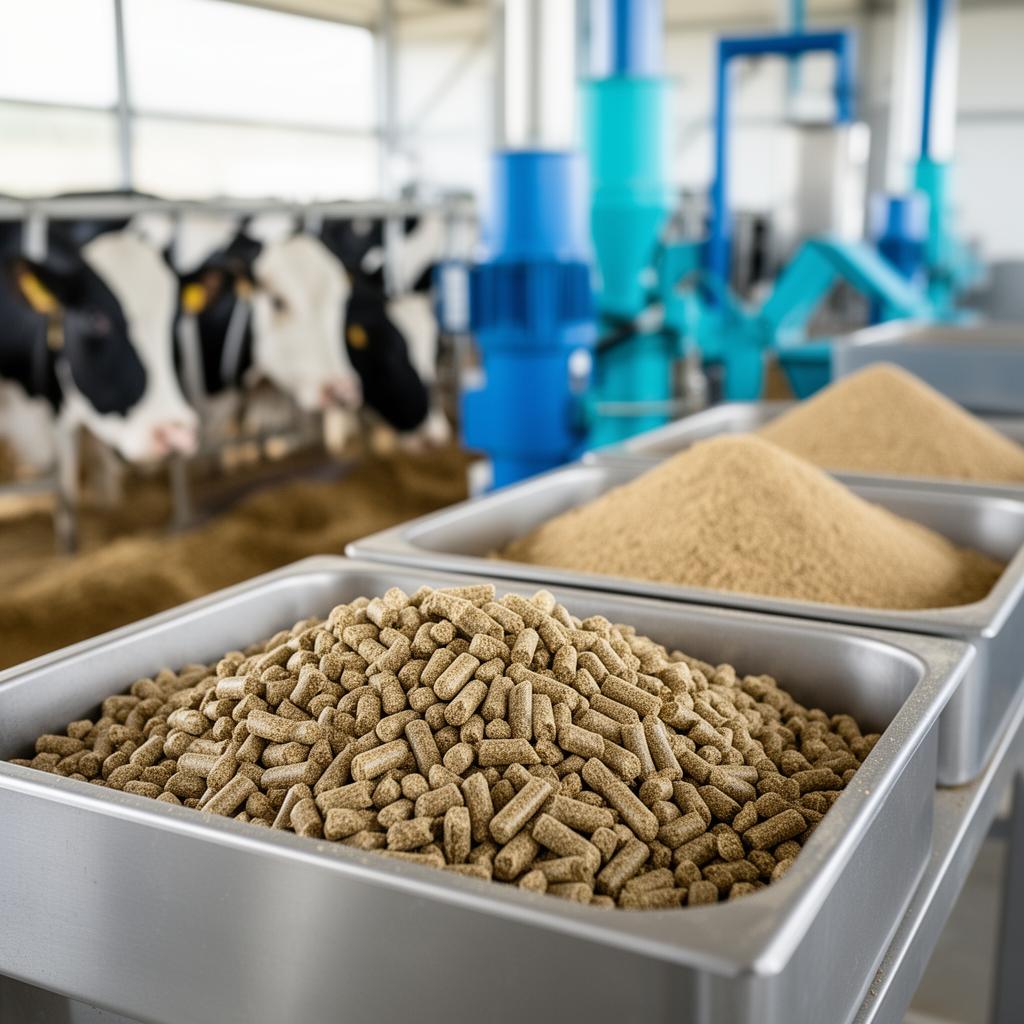
Toasted Guar Churi pellets and meal — the high-protein by-product recovered during industrial Guar Gum processing at B D Guar's Kalol facility.
Industrial Feed Applications Across Species
Guar Churi is no longer a "regional" ingredient. Compound feed mills from Texas catfish ponds to Vietnamese shrimp farms now specify it on the formulation deck. The ingredient performs differently across species, and understanding those nuances is critical for buyers writing their 2026 contracts.
Dairy and Beef Cattle
In ruminants, the residual gum acts as a natural rumen buffer, slowing starch fermentation and reducing the acidosis risk associated with high-concentrate dairy rations. Toasted Guar Churi at 8–12% inclusion has consistently improved milk-fat percentage and feed-conversion efficiency in commercial Holstein herds.
Poultry — Broilers and Layers
For poultry, the ingredient must be thermally toasted to deactivate the trypsin inhibitor and reduce viscosity from residual galactomannan. When properly processed, broilers tolerate inclusion up to 7.5% with no loss in body-weight gain, while layers benefit from improved yolk-pigment uniformity.
Aquaculture — Shrimp, Tilapia, Carp
In aquafeed, Guar Churi functions as both a protein source and a natural binder, replacing imported wheat gluten in floating pellets. This dual functionality is one of the strongest drivers behind the surge in 2025–26 Asian buyer interest. Procurement teams comparing protein sources alongside our other hydrocolloids should also review the Guar Gum grade comparison.
The 2026 Supply-Chain and Tariff Reset
Three structural shifts make Guar Churi a strategic — not opportunistic — choice for 2026:
- Reciprocal tariffs: Continued US–China and EU–Mercosur tariff escalations on soybean meal have widened the landed-cost gap in favour of Indian-origin protein meals.
- ETO-free and pesticide-residue regulations: EFSA, FSSAI and CODEX have reinforced strict ethylene-oxide and chlorpyrifos thresholds on imported feed protein. Mechanically processed Guar Churi sits comfortably inside those limits.
- Supply-chain repositioning: Global buyers are diversifying away from single-origin soybean dependency. Rajasthan and Gujarat together produce more than 80% of the world's Guar, giving buyers a deep, drought-resilient, rain-fed alternative.
For exporters and feed-mill purchasing heads building 2026 forecasts, Guar Churi is no longer a residual line item — it is a protein-substitution lever. To map the broader Guar value chain, see the Technical Glossary of Guar Gum terms.
Quality, Certifications and Traceability
Buyers should specify the following minimum quality parameters on every Guar Churi purchase order:
- Protein: minimum 45% (toasted churi) or 50% (korma) on dry-matter basis.
- Moisture: maximum 10%.
- Aflatoxin B1: below 5 ppb (EU compound-feed limit).
- Salmonella: absent in 25 g.
- Trypsin-inhibitor activity: below 4 mg/g (post-toasting).
B D Guar's Guar Churi is produced under FSSAI, ISO 22000 and HALAL certification and is shipped with a full Certificate of Analysis from our in-house NABL-aligned laboratory.
Sustainability and Rural Economic Impact
Guar is a nitrogen-fixing legume that thrives on as little as 250–400 mm of seasonal rainfall, making it one of the most water-efficient protein crops on the planet. By converting a process by-product into a Superior feed ingredient, the Guar Churi value chain delivers measurable carbon and water savings versus imported soybean meal — and channels additional income directly to the 5,000+ farmer families we work with across Rajasthan and Gujarat.
Key Takeaways
- Protein density: Guar Churi delivers 40–55% crude protein with a Superior amino-acid profile suited to dairy, poultry and aquaculture.
- Tariff hedge: Mechanically processed, GMO-free origin makes it the cleanest protein substitute as 2026 trade barriers reshape soybean flows.
- Functional bonus: Residual galactomannan adds prebiotic and binder functionality that imported alternatives cannot match.
- Cost advantage: Landed-cost-per-kilo-protein is typically 15–25% below GMO-free soybean meal at 2026 spot prices.
- Sustainability: Rain-fed, nitrogen-fixing crop with a documented carbon and water footprint advantage over soy.
Frequently Asked Questions
Is Guar Churi the same as guar meal or guar korma?
The three terms overlap but are not identical. Churi typically refers to the husk-rich fraction recovered during dehusking, while korma is the higher-protein germ fraction. "Guar meal" is the umbrella export term used on most international packing lists and customs declarations. Buyers should always specify the protein percentage on the purchase order rather than relying on the trade name alone.
Does Guar Churi need to be toasted before feeding?
Yes — for monogastric species (poultry, swine, fish, shrimp), thermal toasting at controlled temperature is required to deactivate trypsin inhibitors and reduce the viscosity from residual galactomannan. Ruminants tolerate untoasted material at lower inclusion rates because rumen microbes degrade the anti-nutritional factors naturally.
What inclusion rates are recommended in 2026 feed formulations?
Industry studies indicate safe inclusion of up to 12% in dairy rations, 7.5% in broiler grower diets, 10% in layer diets and 15% in shrimp and tilapia grow-out feeds, provided the meal is properly toasted and lysine/methionine are balanced.
How does Guar Churi compare with soybean meal on a cost-per-kilo-protein basis?
At 2026 landed prices in the Gulf, South-East Asia and Latin America, Superior Indian Guar Churi is consistently 15–25% cheaper per kilogram of crude protein than GMO-free soybean meal of equivalent specification, before factoring in the additional functional benefits of the residual galactomannan.
Is Guar Churi compliant with EU and FSSAI feed regulations?
Yes. Because it is produced through mechanical, solvent-free processing, Guar Churi from a certified facility comfortably meets EU compound-feed thresholds for ethylene-oxide, aflatoxin B1 and pesticide residues, as well as FSSAI and CODEX standards. A Certificate of Analysis should accompany every shipment.
What MOQ and packaging options does B D Guar offer?
B D Guar supplies Guar Churi in 50 kg PP bags, 1 MT jumbo bags and bulk container loads, with a typical minimum order quantity of one 20-foot container (approximately 24 MT). Custom blends — including pelleted, toasted and species-specific formulations — are available on request.
To benchmark Guar Churi against your current protein source or to request a Certificate of Analysis and current 2026 contract pricing, contact our export team or browse our full product range.