FDA-Approved Food Emulsifiers and Stabilizers: 2026 Reference
Complete reference list of FDA-approved food emulsifiers and stabilizers — Guar Gum, xanthan, lecithin, mono-/diglycerides, gellan, and how to choose for clean-label.
Last updated:
Quick Answer
Which natural food stabilisers are FDA approved in 2026?
The major FDA-approved natural emulsifiers and stabilisers in 2026 include Guar Gum (21 CFR 184.1339), Locust Bean Gum, Xanthan Gum, Carrageenan, Pectin, Gum Arabic, Sodium Alginate and lecithin. Each has a specific GRAS designation and use-level scope. Guar Gum remains the most cost-effective high-viscosity stabiliser in the approved list and is increasingly chosen as brands reformulate to drop synthetic polymers from their ingredient panels.
The 2026 clean-label cycle has narrowed the conversation about food stabilisers to a short list of natural, FDA-approved ingredients with established safety records. This reference summarises the most relevant approvals, what each ingredient does best, and why Guar Gum sits at the centre of so many reformulation projects this year. The aim is to give procurement and R&D teams a single quick reference for cross-referencing finished-product specifications against approved sources.
Research Overview
This article covers the FDA Code of Federal Regulations citations for the principal natural food stabilisers, the maximum-use levels where they exist, the functional role of each ingredient, the comparison with EFSA E-number listings, and the practical decisions that drive choice between them. The 2026 regulatory environment, including the increasingly hostile position toward synthetic polymers in clean-label launches, is addressed in the closing sections.
Guar Gum — 21 CFR 184.1339
Guar Gum is listed as GRAS under 21 CFR 184.1339 with use levels up to 2.0% in baked goods, 1.0% in dressings, 0.35% in cheese and other category-specific limits. The corresponding EFSA designation is E412 with no numerical ADI. Guar Gum's role is high-viscosity cold-water thickening and water binding. It is the workhorse of ice cream, gluten-free bakery, sauces, dressings and beverage stabilisation, and it remains the most cost-effective natural stabiliser per unit of viscosity delivered. Cleaner-label competitor reformulations — particularly in the United States — have driven sustained demand growth.
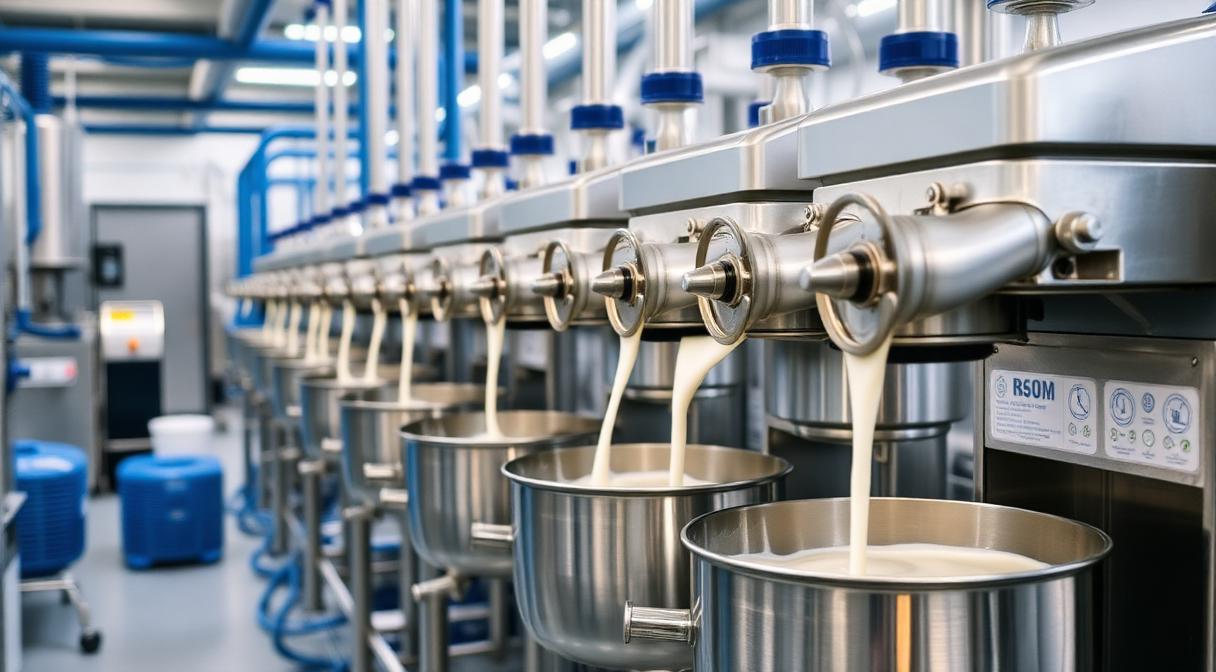 Modern food production lines depend on FDA-approved natural stabilisers — Guar Gum being one of the most widely used — to deliver consistent viscosity and texture at industrial scale.
Locust Bean Gum — 21 CFR 184.1343
Locust Bean Gum is GRAS under 21 CFR 184.1343, also EFSA E410. Its functional value lies in synergistic gelation with κ-carrageenan and xanthan gum, where it forms firm thermo-reversible gels used in premium dairy desserts. LBG is significantly more expensive than Guar Gum and supply is constrained by the slow growth cycle of carob trees, which is why many manufacturers blend a small percentage of LBG with a larger percentage of Guar Gum for cost-optimised stabilisation. See our comparison article for application-by-application selection guidance.
Xanthan Gum — 21 CFR 172.695
Xanthan Gum is approved under 21 CFR 172.695 with broad use authorisation, and it carries EFSA designation E415. Produced by bacterial fermentation of Xanthomonas campestris, it provides exceptional suspension and stability across pH and temperature ranges. Xanthan is preferred where extreme shear or acidic conditions exceed Guar Gum's normal stability envelope, and the two polymers are often blended for combined performance. The full comparison lives in our Guar Gum vs Xanthan Gum guide.
Carrageenan — 21 CFR 172.620
Carrageenan is approved under 21 CFR 172.620 and listed in the EU as E407. It is extracted from red seaweed and forms thermo-reversible gels (kappa, iota) or pure thickening (lambda). Its unique value is binding to dairy casein, making it essential in chocolate milk, evaporated milk and many dairy desserts. As discussed in our Guar versus Carrageenan article, the two ingredients are complementary rather than substitutes.
Pectin — 21 CFR 184.1588
Pectin is GRAS under 21 CFR 184.1588 and listed as E440. Extracted from citrus peel or apple pomace, it forms firm gels with sugar and acid (high-methoxyl pectin) or with calcium (low-methoxyl pectin). Pectin dominates jam, jelly and fruit preparation applications where Guar Gum's pourable viscosity is unsuitable, but the two are sometimes combined in low-sugar fruit preparations.
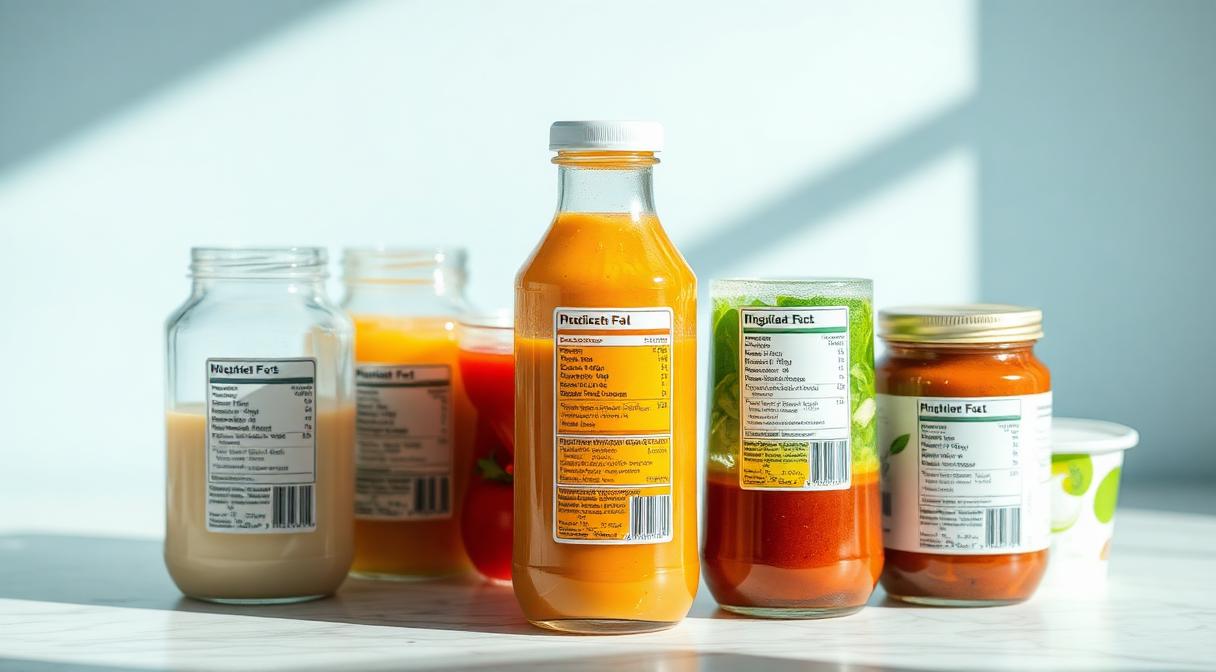 Clean-label 2026 product launches prioritise short ingredient panels with recognisable plant-derived stabilisers like Guar Gum, pectin and gum arabic over synthetic polymers.
Gum Arabic — 21 CFR 184.1330
Gum arabic (Acacia gum) is GRAS under 21 CFR 184.1330 and listed as E414. Harvested from acacia trees, it functions as a low-viscosity emulsifier and film-former and is the standard ingredient in flavour emulsions and soft drink concentrates. Where Guar Gum's high viscosity would be a defect, gum arabic provides the emulsification function without thickening.
Sodium Alginate — 21 CFR 184.1724
Alginates from brown seaweed are approved under 21 CFR 184.1724 and listed as E401. They form thermally irreversible gels with calcium and are widely used in restructured foods and modernist cuisine. Guar Gum is sometimes added to alginate systems to improve the cold viscosity of the gelling fluid.
Lecithin — 21 CFR 184.1400
Soy and sunflower lecithin are approved under 21 CFR 184.1400 (E322) and serve as natural emulsifiers in chocolate, baked goods and dressings. Lecithin does not thicken; it lowers interfacial tension and emulsifies oil-in-water systems. Combining lecithin emulsification with Guar Gum stabilisation produces robust dressings and sauces with long shelf life.
Why 2026 Brands Are Consolidating Around These Ingredients
Three forces are reshaping ingredient choice. First, consumer-facing clean-label expectations have hardened, and short ingredient panels with recognisable plant-derived names sell better than long panels with chemical-sounding additives. Second, retailer specifications increasingly forbid specific synthetic polymers (polyacrylates, certain modified celluloses) on private-label products. Third, the reciprocal-tariff environment has made imported synthetic polymers more expensive, narrowing their cost advantage over natural alternatives. Guar Gum benefits from all three pressures simultaneously, which is why production capacity is expanding rather than contracting in this otherwise difficult global ingredient environment.
Frequently Asked Questions
Are all of these ingredients GRAS in the United States?
Yes. Each is listed under a specific CFR citation or under a self-affirmed GRAS notice accepted by the FDA. Always reference the specific citation for your product category to confirm the maximum allowed use level.
Do FDA and EFSA use the same designations?
No, but they cover essentially the same ingredients. The FDA uses CFR numbers, the EU uses E-numbers. Both reference international JECFA evaluations as the underlying scientific basis.
Which is the most cost-effective natural stabiliser?
Guar Gum, by a substantial margin per unit of viscosity delivered. This is why it is the foundation of most stabiliser blends even when premium ingredients are also included.
Are any of these ingredients restricted in organic products?
All are permitted in organic products, but each must be sourced from certified organic facilities to carry the organic claim onto the finished product label.
Can these stabilisers be blended without regulatory issues?
Yes. Blended stabiliser systems are standard practice. Total inclusion across all stabilisers in a finished product is governed by the category-specific limits, not by individual ingredient maxima.
For application-specific GRAS documentation, FDA citation references and certificates of analysis, contact the B D Guar regulatory team at /contact or view our quality and certifications page.