ETO-Free Guar Gum: Navigating the 2026 Regulatory Landscape for Global Exports
As the 2026 regulatory landscape tightens globally, the transition to ETO-free guar gum processing is critical for exporters. Learn about the purification process, cold sterilization methods, and how molecular integrity is preserved.
Last updated:
The presence of Ethylene Oxide (ETO) residues in hydrocolloids has become a critical focal point for European and North American regulatory bodies. As we navigate the 2026 regulatory landscape, the transition to ETO-free processing is no longer optional for exporters targeting high-value markets. For organic and clean-label manufacturers who require documented purity and the absolute absence of chemical contaminants, understanding how pure guar gum (food additive E412) is safely processed is more important than ever.
The Problem with Ethylene Oxide (ETO)
Botanical raw materials like guar gum are cultivated in agricultural environments and can naturally harbor microbiological contamination. Historically, the industry relied heavily on fumigating these materials with sterilizing gases like ethylene oxide (ETO) to destroy bacteria and fungi.
However, ethylene oxide is a known carcinogen. Recognizing the severe health risks, regulatory bodies like the European Union began prohibiting the use of ETO for food fumigation as far back as 1991, and it has since been banned in numerous other countries. As global food safety codes tighten, manufacturers targeting global exports must abandon ETO entirely in favor of non-toxic, chemical-free sterilization and purification techniques.
The ETO-Free Purification Process: From Seed to Powder
To achieve a pathogen-free product without relying on chemical fumigants, modern manufacturers utilize highly controlled mechanical separation, thermal treatments, and alternative sterilization methods.
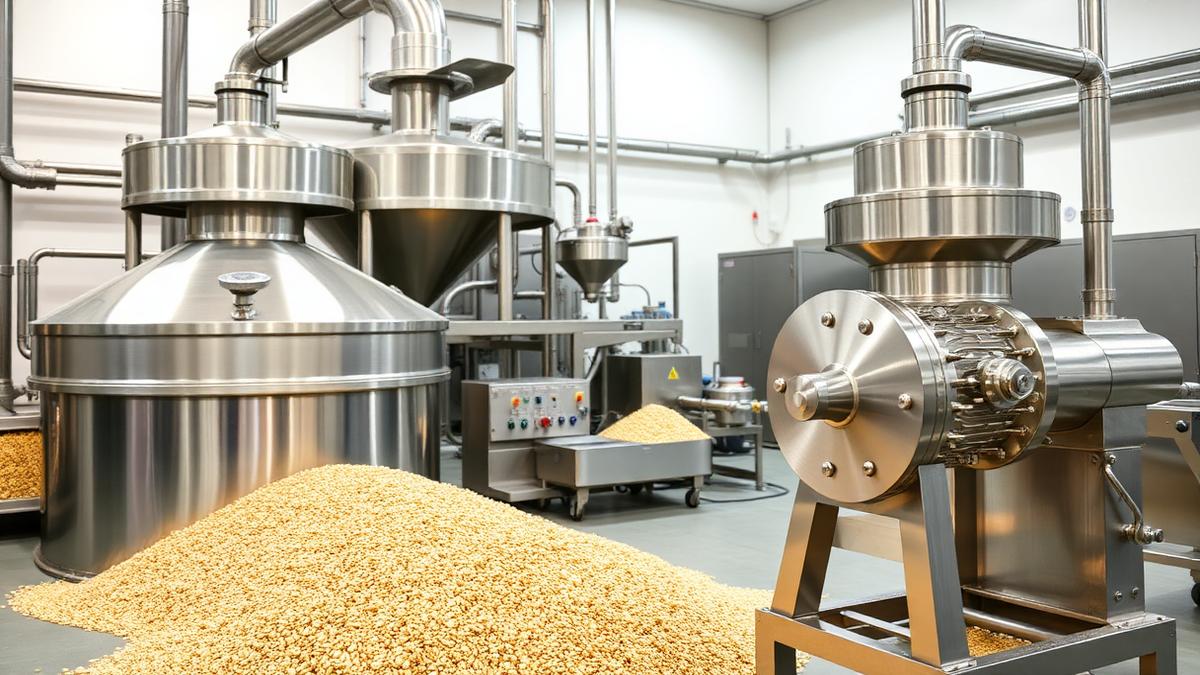
Modern ETO-free guar gum processing facility with mechanical separation and thermal treatment equipment
The journey of creating pure, ETO-free guar gum involves a rigorous, multi-step mechanical process:
Differential Attrition and Splitting: The harvested guar seeds are first screened to remove extraneous dirt and debris. They are then passed through a parallel plate grinder that splits the seeds in half. Because the protein-rich germ is softer, it is easily pulverized and separated from the intact endosperm halves (guar splits) via differential sieving and sifting.
Thermal Dehusking: The unhusked endosperm splits are fed into a rotary kiln and subjected to a rapid thermal treatment, heating up to 105°C–150°C for approximately 45 to 90 seconds. This precise application of heat loosens the tenacious outer seed coat (husk) and renders it brittle without burning the endosperm.
Milling and Final Sieving: The heat-treated splits pass through a dehusking machine with saw-toothed blades, stripping away the brittle husk. The purified endosperm is then hydrated, flaked under heavy rollers to disrupt its cellular structure, and finally milled into a fine, free-flowing powder (typically 100–300 mesh).
To guarantee microbiological safety without ETO, the industry is increasingly turning to "cold process" sterilization methods, such as low-dose gamma irradiation. Studies show that an absorbed radiation dose as low as 2.5 kGy is highly effective at destroying bacterial spores and vegetative cells without leaving any harmful chemical residues or causing thermal degradation to the gum.
Preserving Structural Integrity and Molecular Weight
The ultimate goal of ETO-free, mechanical, and cold-sterilization processing is to guarantee safety while perfectly preserving the hydrocolloid's molecular architecture.
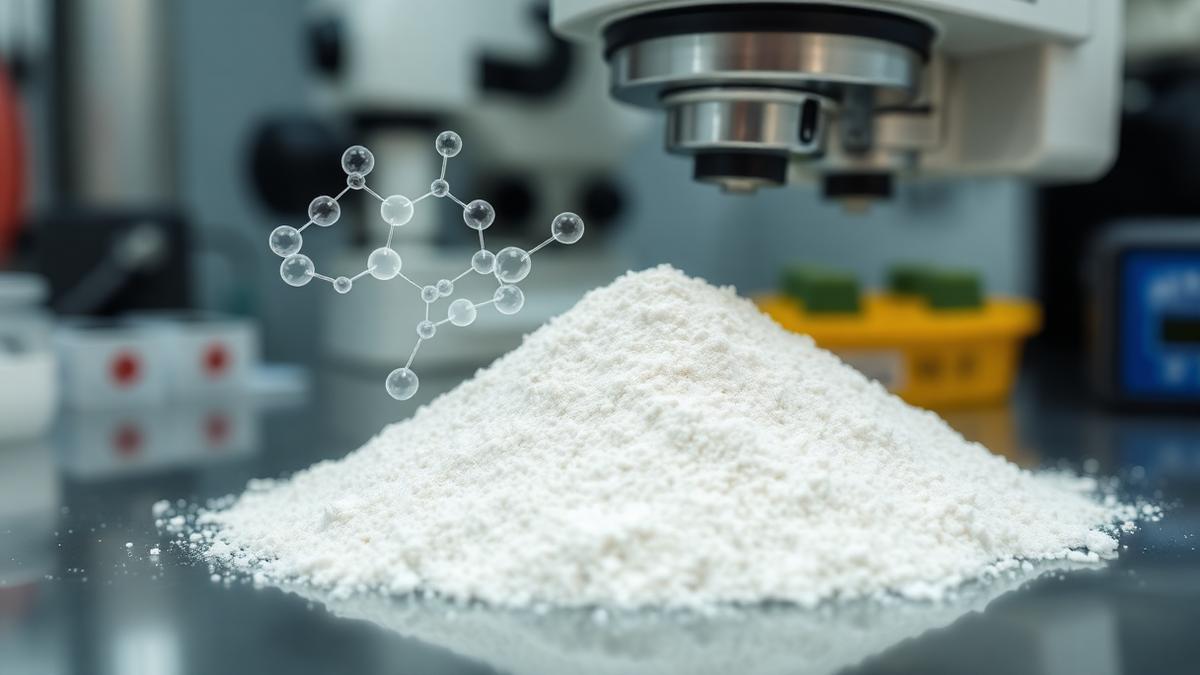
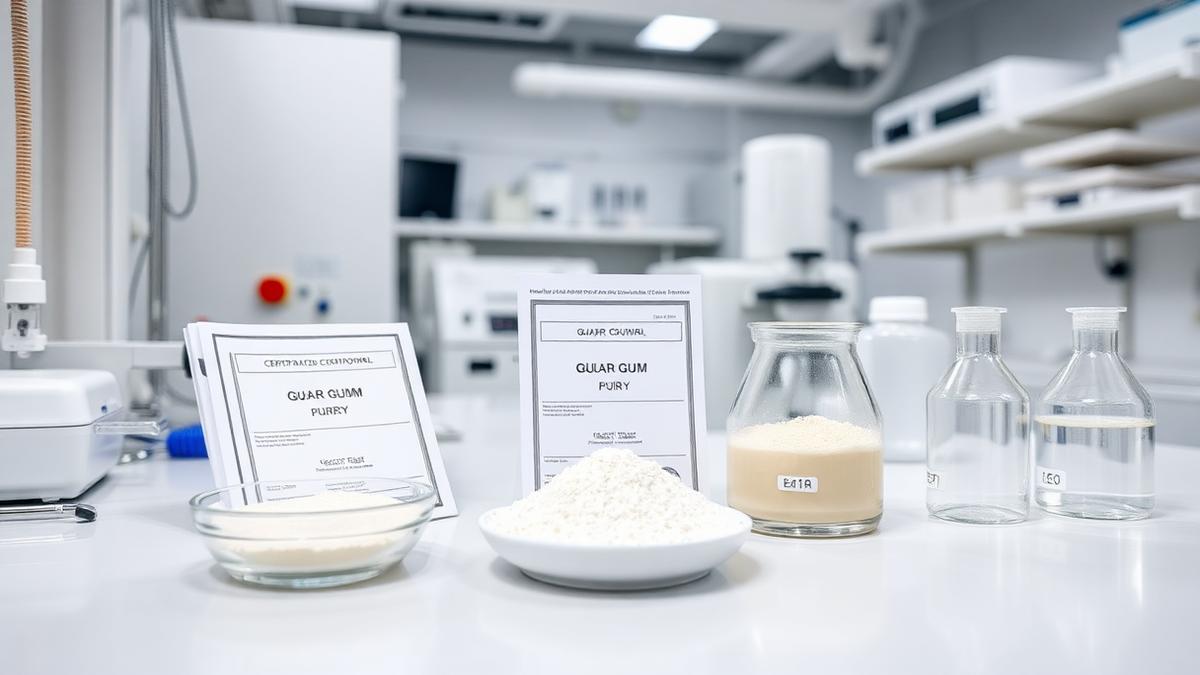
Preserving molecular integrity: laboratory analysis of ETO-free guar gum powder
Guar gum is composed of a massive, linear β(1→4)-linked D-mannopyranose backbone with α(1→6)-linked galactose side branches. It possesses a naturally high molecular weight ranging from 1 to 2 million Daltons. If the gum is subjected to harsh chemicals (like oxidative fumigants) or excessive, uncontrolled heat during milling, the polymer chains undergo depolymerization (breaking apart), which drastically reduces the gum's viscosity.
By utilizing advanced mechanical separation and safe ETO-free sterilization, the linear molecular weight and high tensile strength of the guar galactomannan are fully retained. This allows the ETO-free guar gum to efficiently bind water through extensive hydrogen bonding, building tremendous viscosity even in cold water. For food manufacturers, this structural integrity is vital; it ensures the gum can flawlessly perform its role as an emulsion stabilizer, moisture preserver, and thickener, maintaining the texture and extending the shelf life of processed foods globally.