The Chemistry of Cold-Water Solubility: Why Guar Gum Dominates Instant Formulations
Explore how guar gum's unique galactomannan structure enables rapid cold-water hydration, giving it a decisive advantage over other hydrocolloids in instant and cold-process formulations.
Last updated:
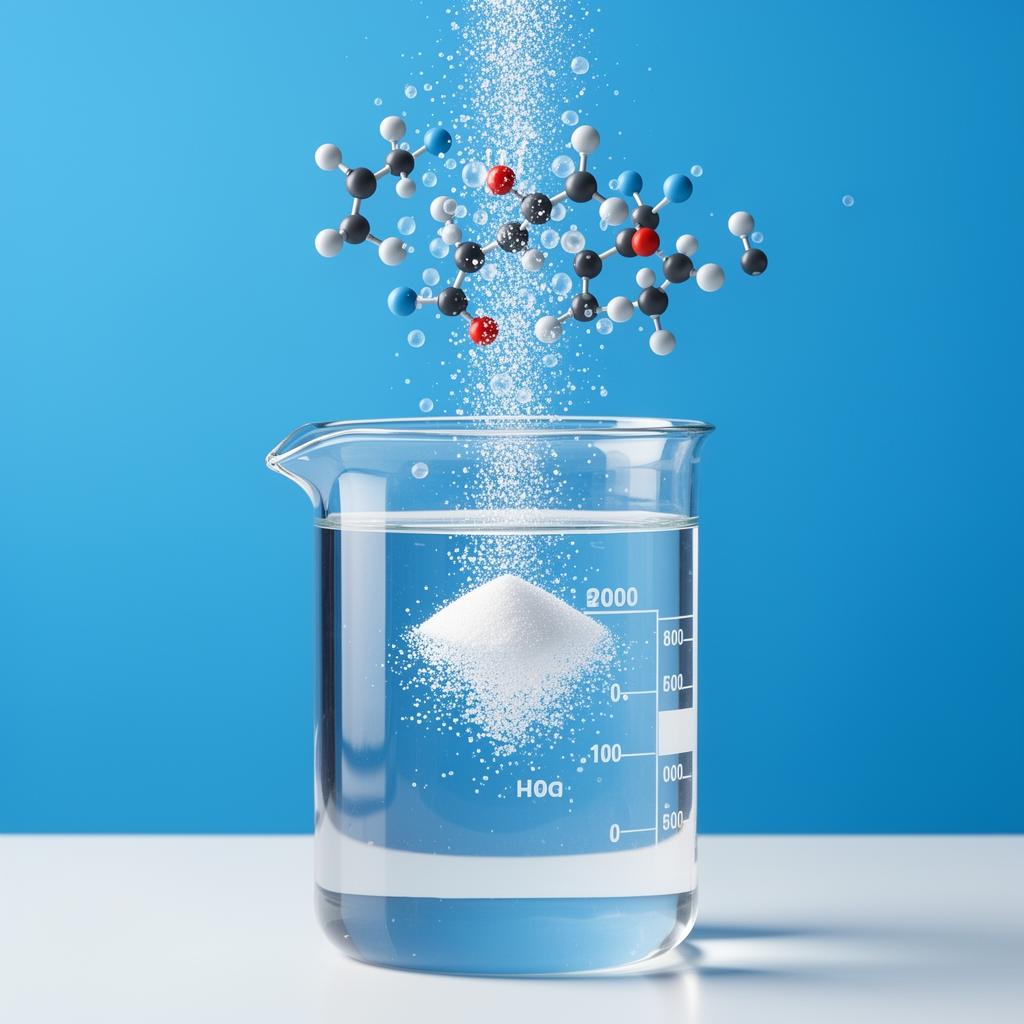
As the global food industry shifts toward sustainable, energy-efficient "cold-process" manufacturing, formulators are constantly searching for ingredients that deliver maximum functionality without the need for thermal activation. Enter guar gum—a high-molecular-weight polysaccharide that achieves near-total hydration at ambient temperatures.
Unlike other popular hydrocolloids such as locust bean gum or agar-agar, which require heating to near boiling points to dissolve, guar gum provides exceptional low-shear viscosity without heat input. This unique capability makes it the preferred choice for instant beverages, cold-processed dairy, and on-site industrial mixing. But what exactly gives guar gum this powerful cold-water solubility? The answer lies deep within its molecular architecture.
The Molecular Magic: Galactomannans and Hydrogen Bonding
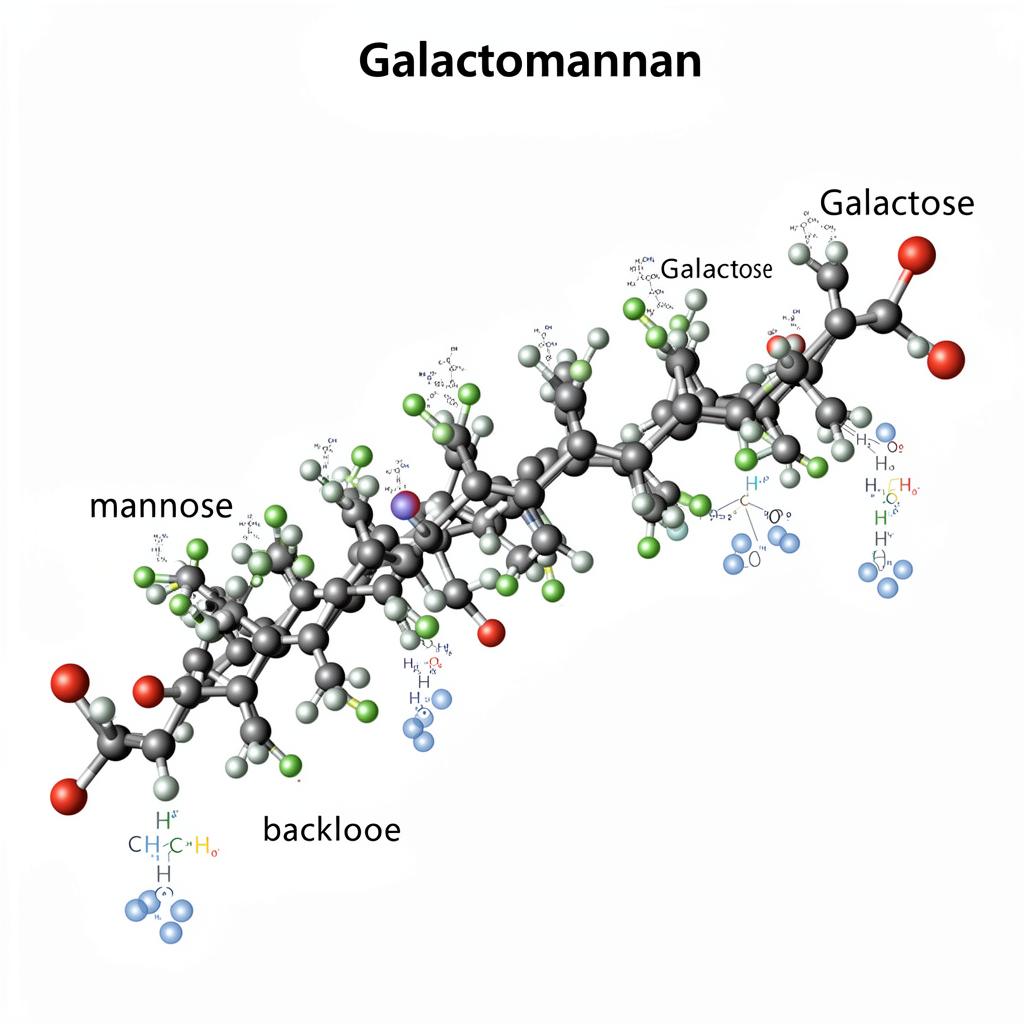 Galactomannan molecular structure — mannose backbone with galactose side branches
To understand guar gum's behavior in water, we must first look at its chemical structure. Guar gum is a natural, non-ionic galactomannan extracted from the endosperm of the cluster bean (Cyamopsis tetragonolobus). Its structure consists of a long, linear backbone of β(1→4)-linked D-mannopyranose units, with single α(1→6)-linked D-galactopyranose branches attached to it.
Crucially, guar gum is a massive molecule—its molecular weight typically ranges between 1 to 2 million Daltons. Along this massive polymer chain is a very high density of hydroxyl (-OH) groups. Specifically, these sugar units possess cis-hydroxyl pairs, which have an exceptionally high affinity for water. When guar gum is introduced to an aqueous environment, these hydroxyl groups foster rapid and extensive hydrogen bonding with water molecules, allowing the polymer to build tremendous viscosity by binding clusters of water and drastically slowing their diffusion.
The Cold-Water Advantage: Guar Gum vs. Locust Bean Gum
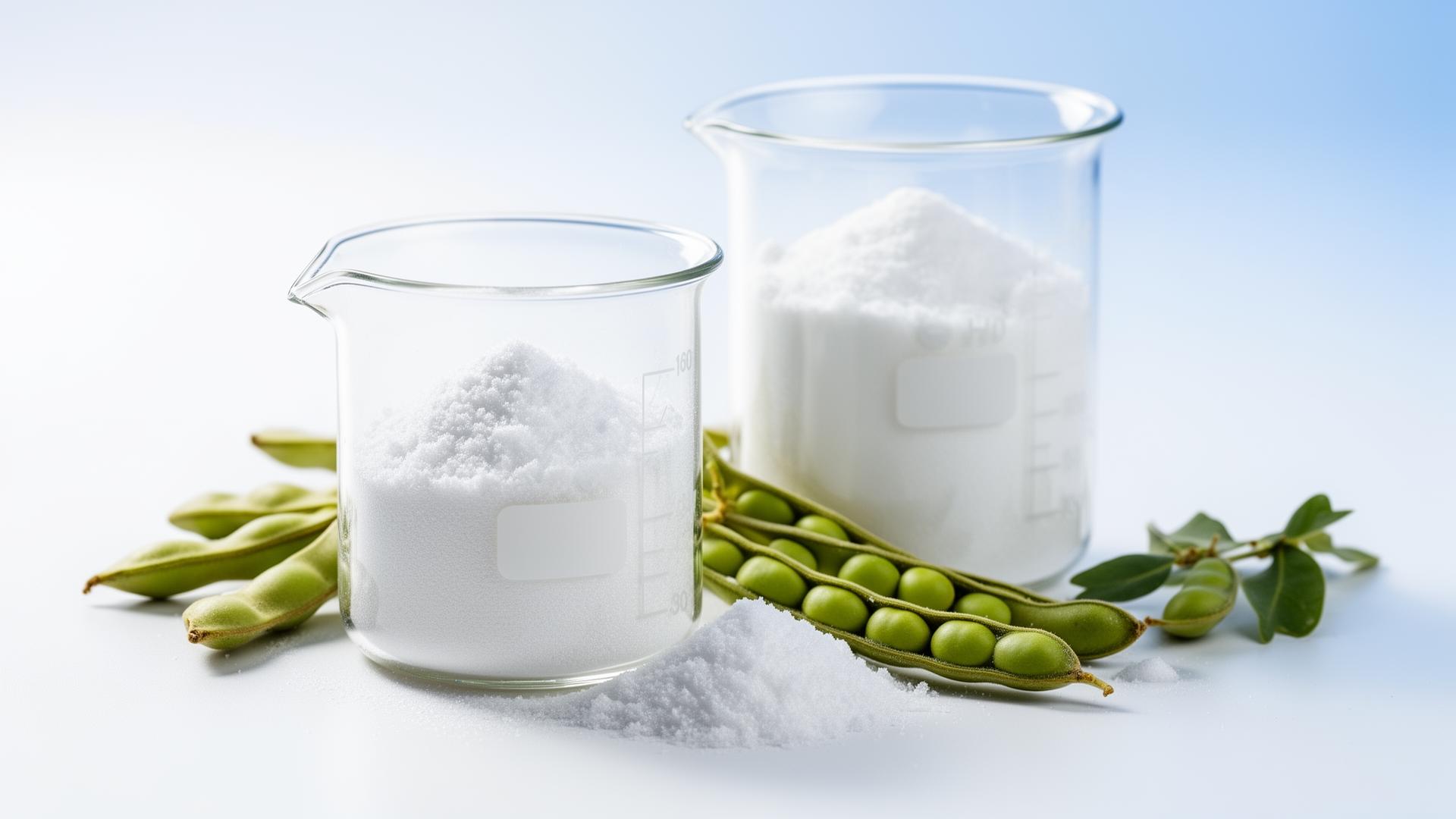
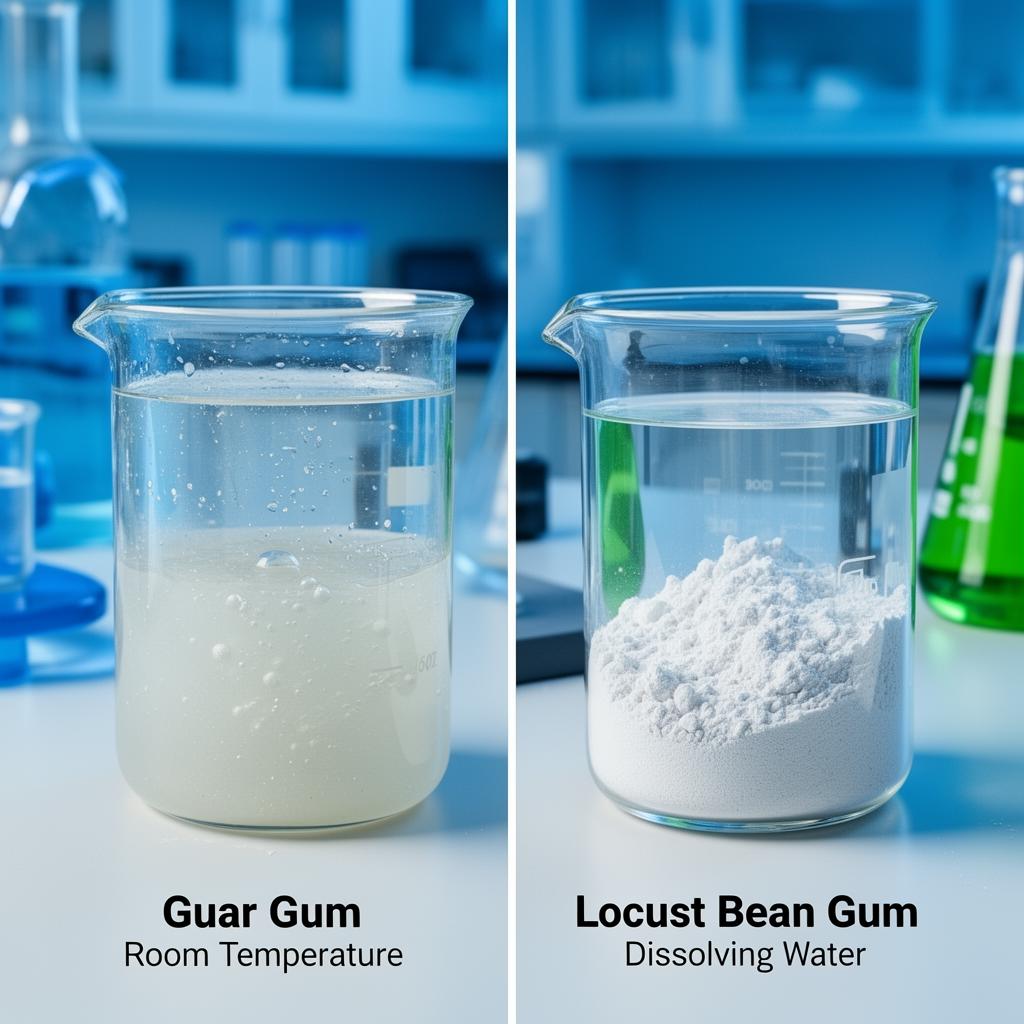 Guar gum dissolves readily at room temperature (left), while locust bean gum remains undissolved in cold water (right)
If both guar gum and locust bean gum (LBG) are galactomannans, why does LBG require thermal activation at 80–100°C while guar gum thickens instantly in cold water? The secret is in the mannose-to-galactose (M:G) ratio and the spacing of the branches.
Guar gum has an M:G ratio of approximately 2:1, meaning it has a galactose branch on almost every alternating mannose unit along its backbone. LBG, on the other hand, has an M:G ratio of about 4:1, resulting in long, "bare" or "smooth" regions of the mannan backbone with no galactose branches.
In LBG, these unbranched, smooth regions act like zippers; they align and tightly associate with one another through strong interchain hydrogen bonds, creating semi-crystalline zones that are insoluble in cold water. To dissolve LBG, you must apply heat (around 90°C) to break these crystalline links.
Guar gum's frequent galactose branches physically block the polymer chains from packing tightly together. Because these strong chain-chain interactions are prevented, water molecules can easily penetrate the polymer matrix at ambient temperatures, resulting in rapid cold-water hydration.
Mastering the Mix: Mesh Sizes and the "Fish Eye" Phenomenon
While cold-water solubility is a massive advantage, it also presents a unique challenge in professional food labs and industrial manufacturing: controlling the rate of hydration.
Because guar gum has such a strong affinity for water, its particle size—measured in mesh—dictates how quickly it thickens. Finer mesh sizes (such as 200–300 mesh) offer a high surface area and are utilized to accelerate viscosity development. However, if these extremely fine powders are dumped into water without adequate high-shear agitation, they are notorious for forming clumps, commonly known in the industry as "fish eyes".
A "fish eye" forms because the outer layer of a powder clump hydrates instantaneously upon contacting water. This creates a thick, impermeable gel barrier on the outside that prevents water from reaching the dry powder trapped on the inside. To mitigate this, formulators have two choices: employ specialized mixing equipment, or use coarser powders (like 100-mesh). Coarser particles have less exposed surface area, which deliberately slows down the hydration rate, preventing the outside from gelling too fast and ensuring a smooth, clump-free dispersion.
A Greener Future for Food Manufacturing
 Sustainable cold-process manufacturing — eliminating the need for energy-intensive heating
As the global food industry actively seeks to reduce its carbon footprint, the transition to "cold-process" manufacturing is accelerating. Heating giant industrial vats of water to 80–100°C simply to activate a hydrocolloid requires a massive amount of energy.
Because guar gum can thicken spontaneously without the application of heat, it directly eliminates this energy-intensive step. By providing high low-shear viscosity efficiently at room temperature, guar gum not only streamlines production times but also offers a significant competitive and ecological advantage for brands striving for sustainable innovation.