Borate Crosslinked Guar Gels for High-Temperature Fracturing
Borate crosslinked Guar Gels deliver shear-stable viscosity and reliable proppant transport in deep, hot wells where linear gels fail. Here is the science.
Last updated:
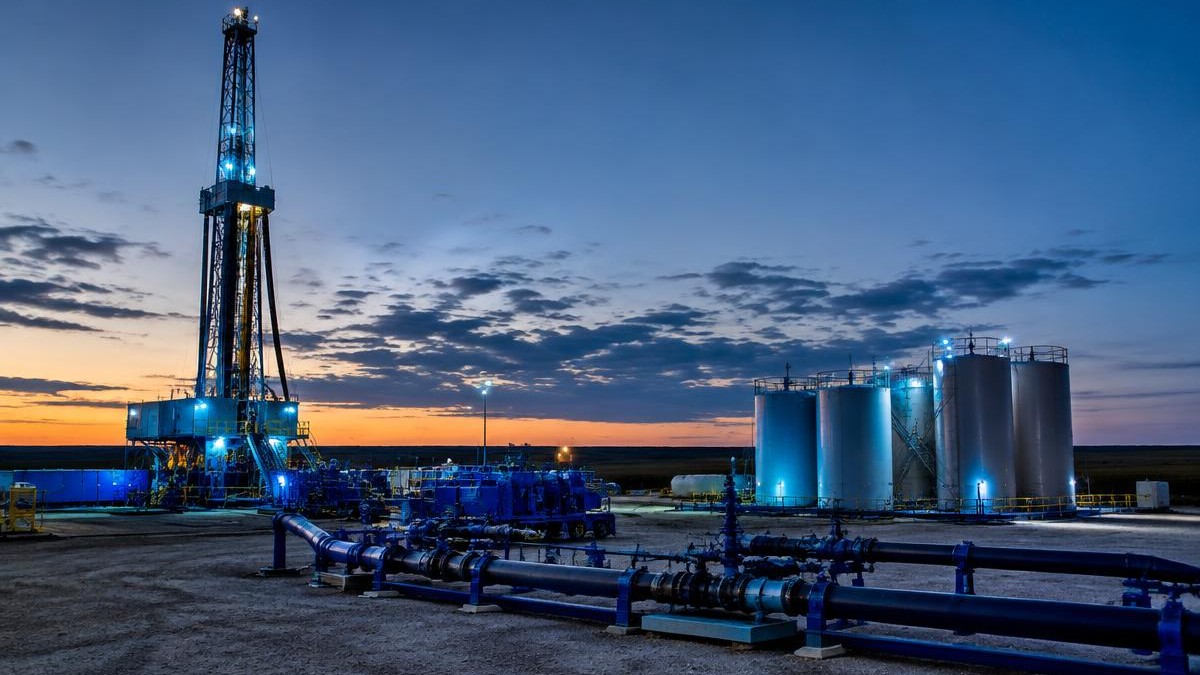
Across the 2026 unconventional stimulation landscape, operators drilling deeper and hotter reservoirs are returning to reversible chemistry to move proppant reliably. Borate crosslinked Guar Gum gels remain the workhorse of high-temperature fracturing because they build shear-stable viscosity on the fly, carry sand deep into the fracture network, and heal after passing through perforations. As lateral lengths and bottomhole temperatures rise, the demand for consistent, low-residue crosslinked fluids has made Guar Gum quality a decisive variable in well economics.
Research Overview
Borate crosslinking exploits the reversible reaction between borate ions and the cis-hydroxyl groups on the galactose side chains of Guar Gum. Industry studies indicate that this dynamic bond network raises apparent viscosity by an order of magnitude at low polymer loadings, while remaining responsive to pH and temperature. The result is a fluid engineered to thin under high shear at the perforations and rebuild in the fracture, a behavior central to modern stimulation design as documented across SPE Journal literature.
The Chemistry of Borate Crosslinking
Guar Gum is a galactomannan built from a mannose backbone with galactose side units in an approximate 2:1 ratio. The paired hydroxyl groups on adjacent sugar units act as binding sites for the tetrahydroxyborate ion, forming di-diol complexes that bridge separate polymer chains into a three-dimensional network.
Because the borate bond is ionic and reversible, the crosslink density responds instantly to conditions in the wellbore. This distinguishes borate systems from irreversible metal crosslinkers and gives operators a fluid that self-repairs after mechanical disruption.
- Reversible bonding: Borate crosslinks break under high shear and reform when shear drops, allowing the gel to heal after the perforations.
- pH dependence: Crosslinking is favored in the alkaline range, typically pH 9 to 11, where borate ion concentration is highest.
- Low polymer loading: Superior viscosity is achieved at reduced Guar Gum concentrations, lowering both cost and residue.
- Buffer control: Delayed crosslinkers and pH buffers time the gel to set after the fluid clears surface equipment.
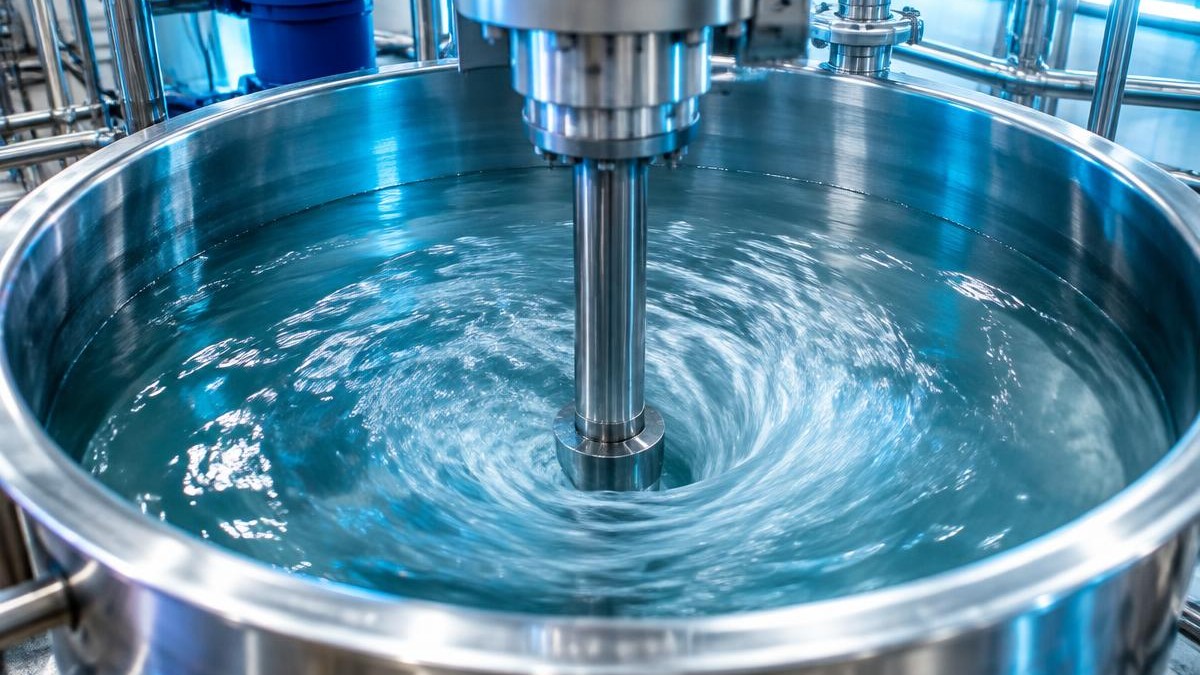
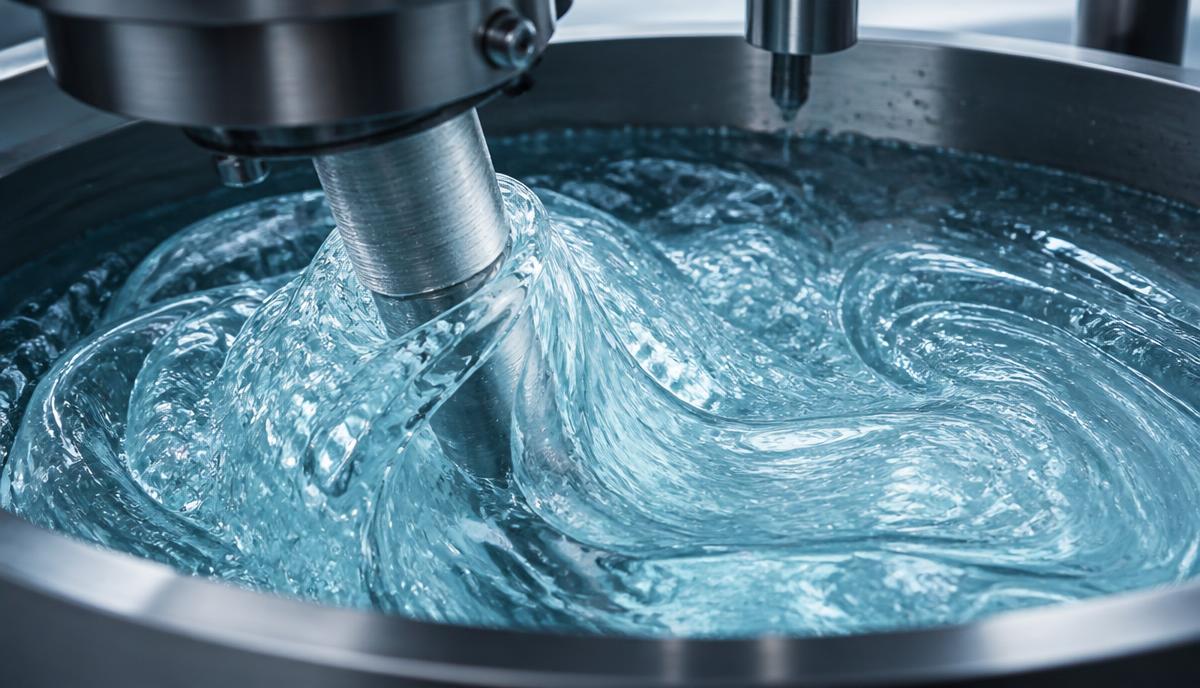 Borate crosslinked Guar Gum fluids build shear-stable viscosity on the fly for high-temperature stimulation.
Thermal Stability and the 200F Threshold
The defining advantage of a well-formulated borate system is thermal resilience. Conventional linear gels lose viscosity rapidly as bottomhole temperature climbs, dropping proppant before it reaches the far fracture. Borate crosslinked Guar Gels extend the usable window, holding shear-stable viscosity in the region up to roughly 200F for standard borate chemistry.
Where reservoir temperatures push beyond that band, derivatized grades such as hydroxypropyl Guar (HPG) and carboxymethyl hydroxypropyl Guar (CMHPG) carry the borate network to higher temperatures with improved stability and cleaner breaks, a progression widely reported in stimulation research.
- Stable carrier phase: Viscosity is retained long enough to place proppant across the full fracture length.
- Temperature-matched grades: Standard Guar Gum, HPG, and CMHPG cover an escalating temperature ladder.
- Predictable degradation: Controlled thermal thinning allows engineers to model placement rather than react to sudden viscosity loss.
Proppant Transport and Fracture Conductivity
Proppant is only valuable where it is placed. A high, shear-stable viscosity keeps sand suspended against gravity, resisting the settling that leaves the lower fracture packed and the upper fracture barren. Borate crosslinked Guar Gels provide the elastic, high-viscosity carrier that transports proppant deep into secondary and tertiary fractures.
Once the treatment is complete, the same fluid must convert to a thin, easily recovered liquid. A clean break minimizes residue in the proppant pack, preserving the conductive pathway that governs long-term production.
- Suspension: Elastic gel structure counters proppant settling during pumping and shut-in.
- Deep placement: Sustained viscosity carries sand into the far-field fracture network.
- Conductive pack: Low-residue Guar Gum grades protect fracture permeability after the break.
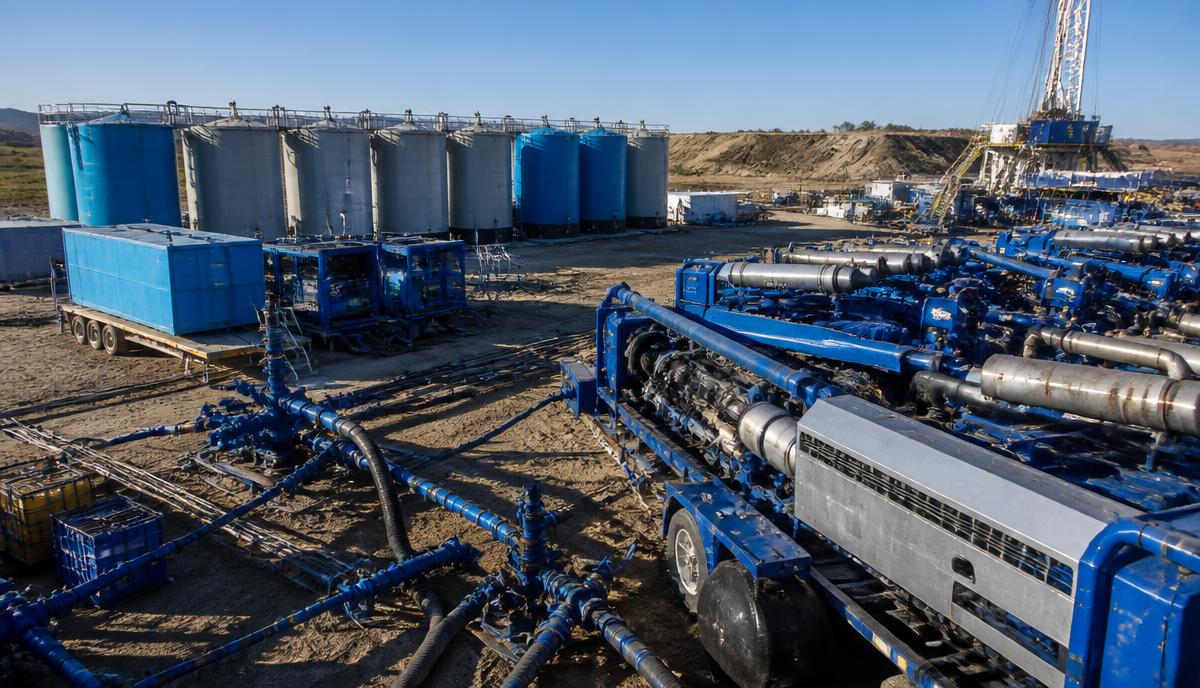
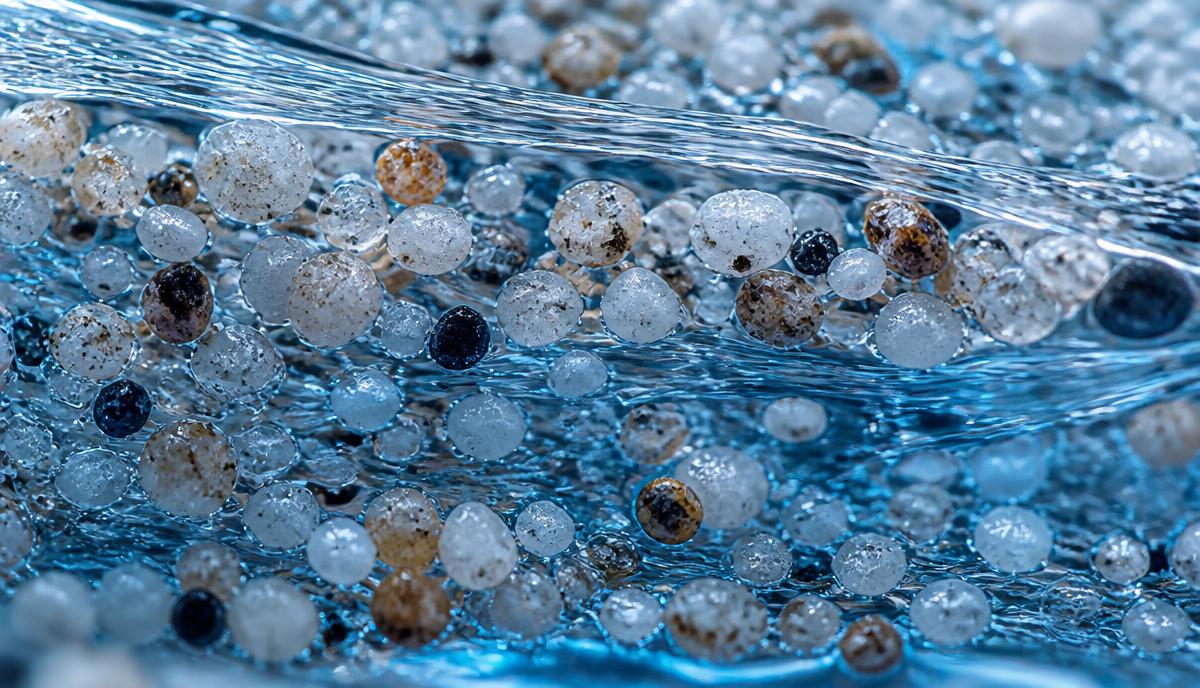 Shear-stable viscosity keeps proppant suspended so fractures stay propped open for maximum production.
Field Application and Break Optimization
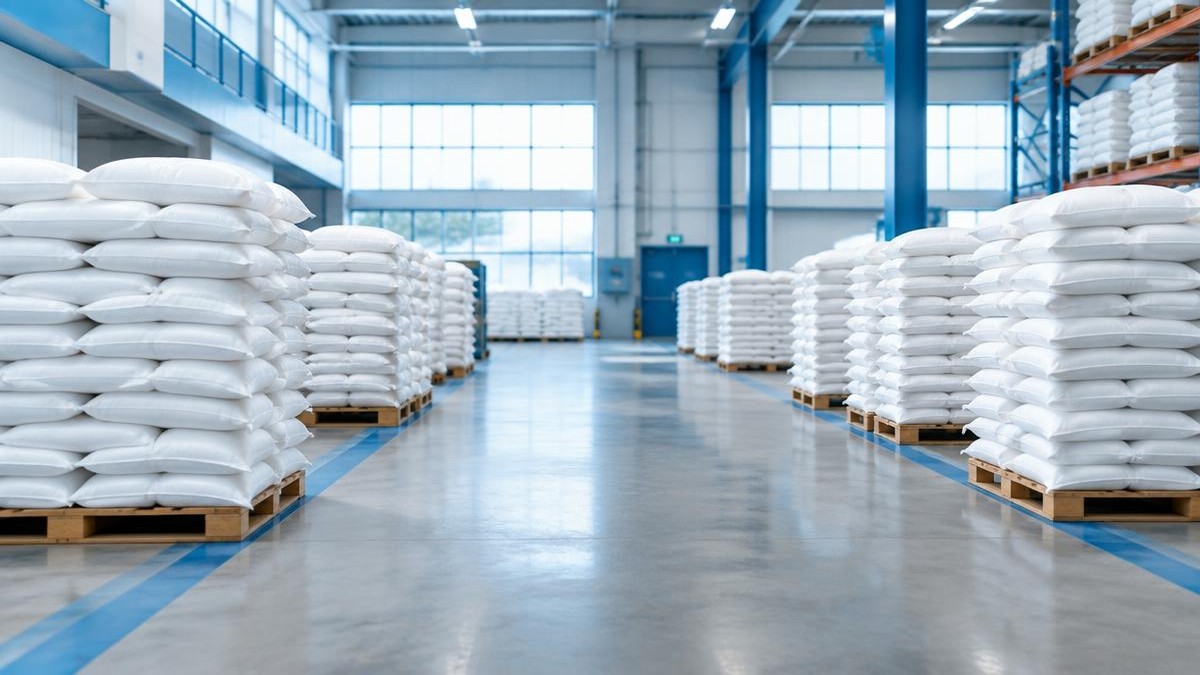
Reliable field performance depends on consistent raw material. Batch-to-batch variation in hydration rate, particle size, or residual insolubles undermines crosslink timing and break behavior. B.D. Guar supplies fast-hydrating, low-residue Guar Gum with tested viscosity and particle size distribution reported on the certificate of analysis with every shipment, giving stimulation engineers a Superior and repeatable base fluid.
Breaker selection completes the design. Oxidative and enzymatic breakers are scheduled to reduce the gel to water-like viscosity after placement, enabling rapid flowback and a clean proppant pack. Matching breaker load to reservoir temperature is essential for a predictable clean break.
- Consistent hydration: Uniform particle sizing ensures on-the-fly mixing without fish-eyes.
- Documented quality: Every batch ships with a certificate of analysis covering viscosity and moisture.
- Break scheduling: Breaker chemistry is tuned to temperature for complete, timed degradation.
Key Takeaways
- Reversible chemistry wins: Borate crosslinks break and reform, letting Guar Gels self-heal after the perforations.
- 200F is the standard window: Base borate systems hold shear-stable viscosity up to roughly 200F, with HPG and CMHPG extending higher.
- Proppant placement drives value: Elastic, high viscosity suspends sand for deep, even fracture packing.
- Clean breaks protect conductivity: Low-residue Guar Gum grades keep the proppant pack permeable for maximum production.
- Raw material consistency matters: Tested, fast-hydrating Guar Gum underpins predictable crosslink and break performance.
Frequently Asked Questions
Why use borate crosslinkers instead of metal crosslinkers?
Borate crosslinks are reversible, so the gel thins under the high shear at the perforations and rebuilds in the fracture, delivering excellent proppant transport with a clean break. Metal crosslinkers such as zirconium form irreversible bonds better suited to higher temperatures but with different break and residue profiles. Selection depends on reservoir temperature and desired flowback behavior.
What temperature can borate crosslinked Guar Gels tolerate?
Standard borate crosslinked Guar Gum systems hold shear-stable viscosity up to approximately 200F. For hotter reservoirs, derivatized grades such as hydroxypropyl Guar and carboxymethyl hydroxypropyl Guar extend the temperature window while improving thermal stability and break cleanliness.
How does Guar Gum quality affect fracturing performance?
Hydration rate, particle size, and residual insolubles directly control crosslink timing, proppant suspension, and break cleanliness. Consistent, low-residue Guar Gum produces predictable viscosity and a conductive proppant pack, which is why B.D. Guar ships a certificate of analysis with every batch. Explore grades on the products page.
Deep, hot wells demand a base fluid engineered for consistency. To match a Guar Gum grade to your reservoir temperature and stimulation design, review our tested oilfield grades and quality standards, then contact the B.D. Guar technical team to request specifications and samples.