Bio-Degradable Rheology Modifiers: Meeting Offshore Regulations
How biodegradable Guar Gum helps offshore water-based muds meet OSPAR PLONOR, HOCNF, and EPA NPDES rules without sacrificing hole-cleaning performance.
Last updated:

Across the 2026 offshore energy sector, bio-degradable rheology modifiers have moved from a sustainability preference to a permit requirement for water-based mud programs. As deepwater exploration expands into sensitive marine basins, environmental compliance managers must remove persistent synthetic additives from their fluid systems without losing hole-cleaning performance. Guar Gum and its derivatives deliver Superior viscosity and cuttings transport while supporting compliance with OSPAR PLONOR, HOCNF, and US EPA NPDES offshore discharge frameworks.
Research Overview
Offshore drilling in 2026 operates under tight discharge controls across key maritime jurisdictions, and IMARC market coverage points to continued deepwater activity under these regimes. Under the OSPAR Convention, offshore chemicals are assessed through the Harmonised Offshore Chemical Notification Format (HOCNF) for aquatic toxicity, bioaccumulation, and marine biodegradation. Research in Carbohydrate Polymers and SPE Journal characterises Guar Gum as a rapidly hydrating, pseudoplastic galactomannan, making it a natural fit for compliant water-based muds.
Why Offshore Operators Are Moving Away from Synthetic Polymers
Historically, offshore operations relied on partially hydrolyzed polyacrylamide (PHPA), other synthetic acrylamide polymers, and quaternary ammonium compounds for viscosification and shale encapsulation. These petroleum-derived chemistries work well downhole, but they biodegrade poorly in seawater and can leave residual acrylamide monomer, a substance of concern for pelagic and benthic marine life. Additives that score poorly under HOCNF screening face substitution warnings, phase-out schedules, or outright discharge restrictions.
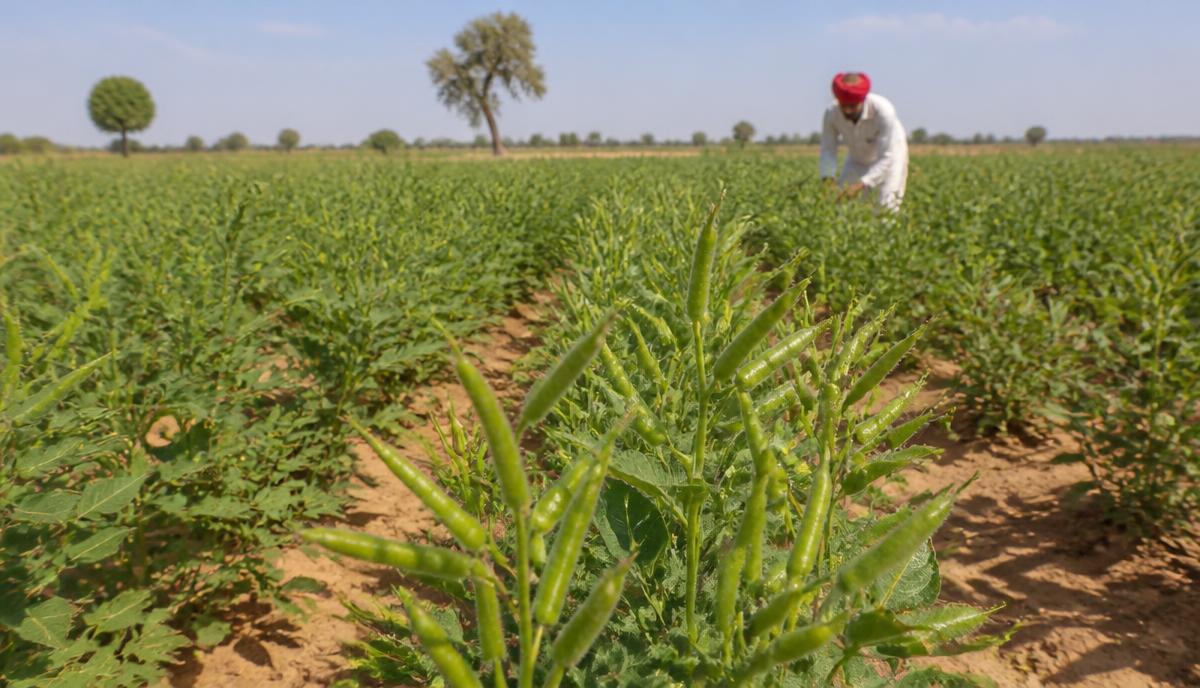
Natural Guar Gum is extracted from the seed endosperm of Cyamopsis tetragonoloba. It is a high-molecular-weight polysaccharide (typically 1.5 to 2.5 million Daltons) with a linear beta-(1→4)-D-mannose backbone carrying single alpha-(1→6)-D-galactose side units at a mannose-to-galactose ratio of roughly 2:1. The abundant hydroxyl groups on this backbone drive rapid cold-water hydration and strong pseudoplastic flow, as explained in the Guar Gum glossary.
- Plant-derived origin: 100% renewable, non-GMO galactomannan from a drought-tolerant legume grown in Gujarat and Rajasthan.
- No persistent residues: Degrades to simple sugars rather than synthetic monomers or microplastic fragments.
- Recognised safety profile: Long-established food additive (E412) assessed by bodies including EFSA and CODEX Alimentarius.
Marine Ecotoxicology and Regulatory Compliance: OSPAR, HOCNF, and US EPA NPDES
Every offshore drilling additive must pass marine ecotoxicity screening before operators can discharge mud and cuttings. Guar Gum is listed on the OSPAR PLONOR list (substances that Pose Little or No Risk to the Environment), which simplifies HOCNF submissions for North-East Atlantic operations and supports the lowest hazard ranking for the native polymer.
- OSPAR PLONOR status: Native, mechanically processed Guar Gum is a naturally occurring plant material recognised as posing little or no risk, allowing water-based mud cuttings discharge without the substitution pressure applied to synthetic polymers.
- HOCNF hazard screening: Industry studies indicate that native Guar Gum shows very low acute toxicity to standard marine test species, readily biodegrades in seawater under OECD 306 protocols, and has no meaningful bioaccumulation potential.
- US EPA NPDES (Gulf of America / Gulf of Mexico): General permits require discharged water-based muds to meet a 96-hour LC50 of at least 30,000 ppm in the suspended particulate phase using mysid shrimp. Water-based muds viscosified with Guar Gum are well suited to meeting this threshold when the overall formulation is compliant.
- ESG reporting: Replacing persistent synthetic acrylates with biodegradable galactomannans reduces long-term sediment burden and supports environmental, social, and governance disclosures.
Chemically modified derivatives such as HPG and CMHPG are not automatically covered by PLONOR status. They require their own HOCNF data sets, and B.D. Guar supports customers with the documentation needed for these submissions. Quality and testing details are outlined on the quality page.
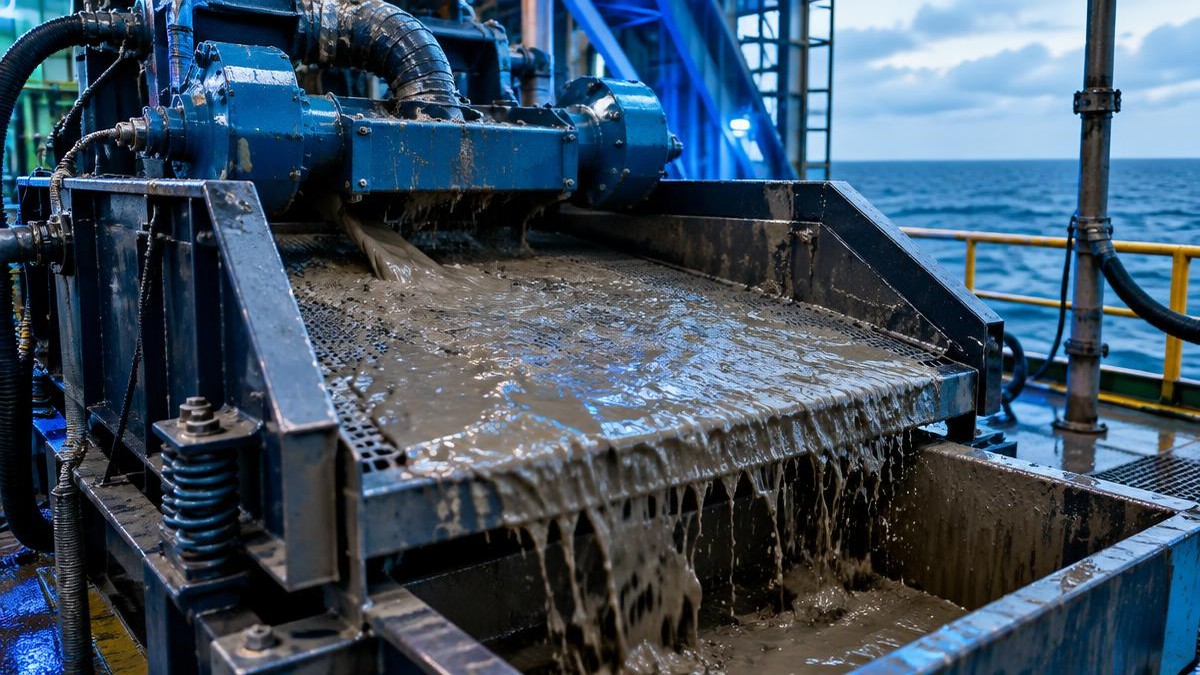 Offshore water-based mud programs increasingly specify biodegradable Guar Gum to meet marine discharge rules.
Hydraulic Performance in Water-Based Offshore Drilling Muds
Environmental compliance only matters if the fluid still drills the well. Guar Gum delivers the rheological profile offshore engineers need across large-diameter top holes, deviated sections, and long laterals.
- Pseudoplastic shear-thinning: At the very high shear rates inside drillpipe and bit nozzles, apparent viscosity drops sharply, lowering circulating pressure losses and preserving hydraulic horsepower at the bit.
- Superior low-shear rate viscosity (LSRV): In wide offshore casing intervals with low annular velocity, high LSRV flattens the velocity profile and sweeps cuttings out of the hole.
- Rapid gel recovery: During connections and surveys, the polymer network rebuilds quickly, keeping cuttings and barite suspended and reducing sag in deviated wellbores.
- Fast hydration on the rig: Fast Hydration Guar Gum (FHGG) grades typically reach 85–90% of final viscosity within 2 to 3 minutes, enabling on-the-fly mixing where pit capacity is limited.
Because native Guar Gum is non-ionic, it hydrates fully in raw seawater and in sodium chloride or potassium chloride brines without salting out. That makes it practical for seawater-based spud muds and inhibitive KCl systems alike. Grade comparisons are available on the product comparison page.
Reservoir Protection, Fluid Loss Control, and Wellbore Integrity
Beyond hole cleaning, Guar Gum supports wellbore stability and protects productive formations, which helps reduce the total chemical load needed in an offshore program.
- Thin, low-permeability filter cake: Combined with fine bridging solids, Guar Gum forms a thin polymer skin on permeable marine sands, limiting filtrate invasion and helping keep API fluid loss low (often targeted below 5 mL/30 min).
- Shale inhibition support: The polymer adsorbs onto clay surfaces through hydrogen bonding, helping encapsulate cuttings and slow water uptake in reactive marine shales.
- Clean enzymatic break: Filter cakes break down with hemicellulase enzymes or mild oxidisers into soluble sugars, and industry studies indicate high regain permeability after clean-up, unlike synthetic polymers that can permanently plug pore throats.
This clean-break behaviour matters for compliance as well as productivity: fewer remedial treatments means fewer additional chemicals that must be notified, tracked, and discharged.
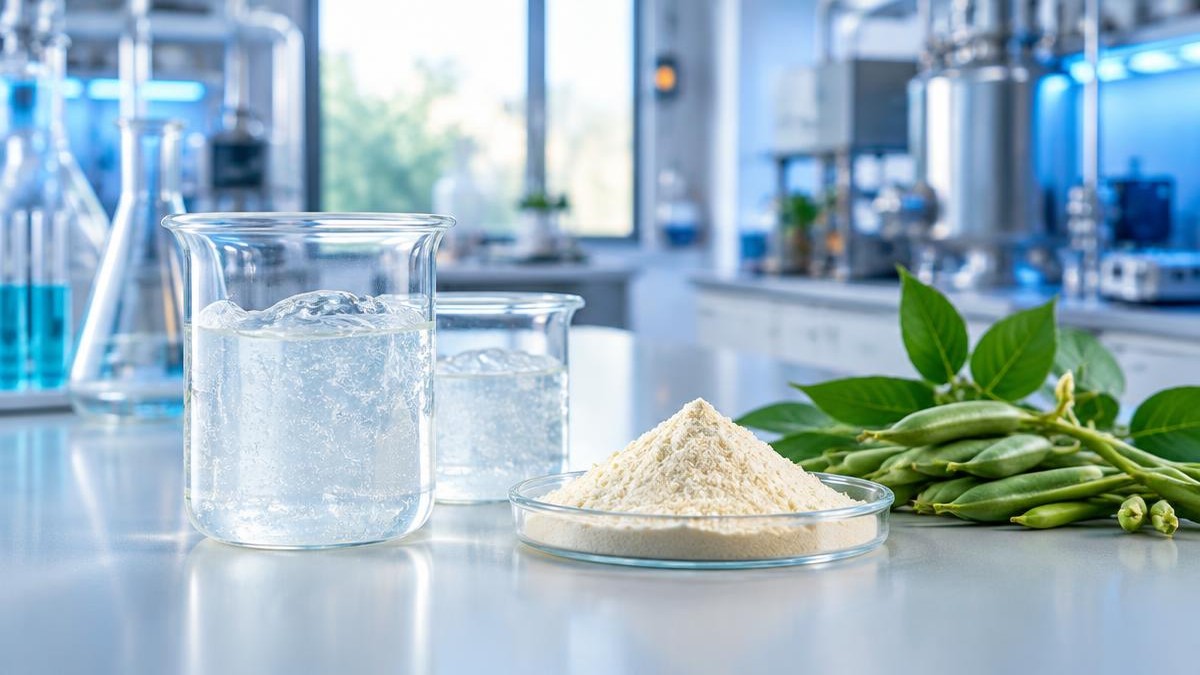
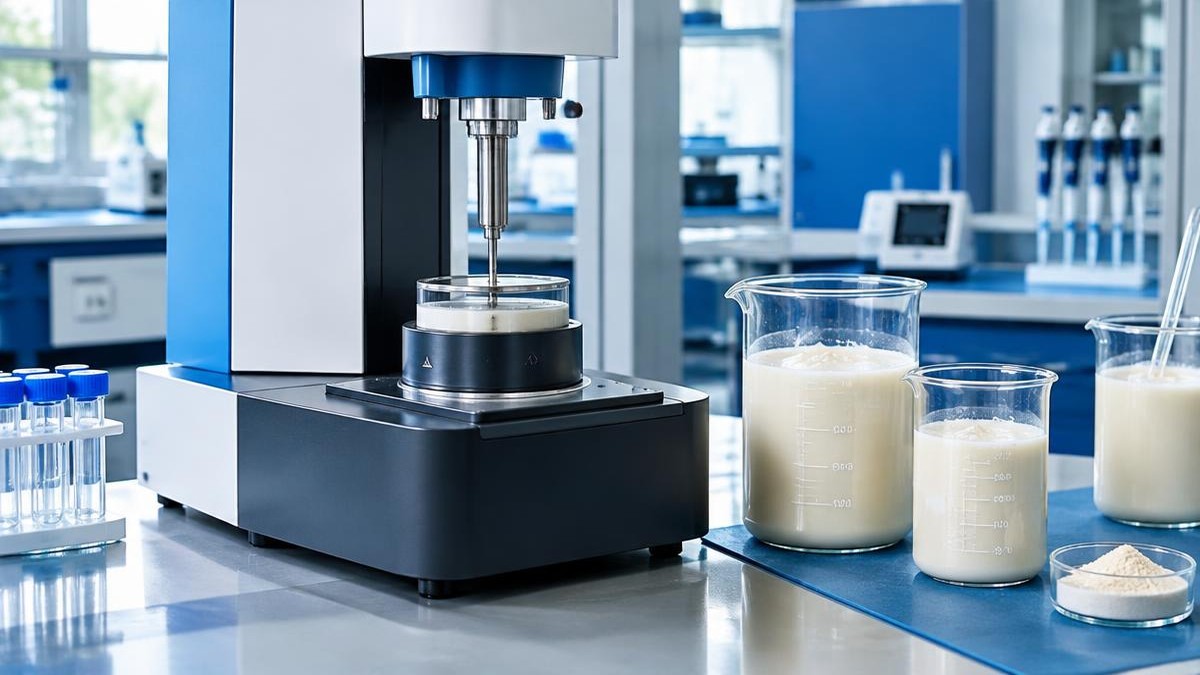 Laboratory rheology and filtration testing confirm lot-to-lot consistency for offshore-grade Guar Gum.
Derivatives for High-Temperature Offshore Wells
Native Guar Gum performs reliably up to roughly 200°F (93°C). Deeper offshore wells call for chemically modified galactomannans that extend thermal stability while retaining a favourable environmental profile.
- Hydroxypropyl Guar (HPG): Etherification with propylene oxide improves resistance to thermal hydrolysis, maintaining effective viscosity and fluid loss control at roughly 250–300°F (121–149°C).
- Carboxymethyl Hydroxypropyl Guar (CMHPG): Dual derivatisation enables fast, reversible crosslinking with zirconium or borate systems for stimulation, gravel packing, and demanding transport duties.
- Consistent supply: Offshore grades from B.D. Guar are produced under ISO 9001:2015 quality systems with checks on mesh size, 3-minute Fann 35 viscosity, moisture (below 10%), ash, and heavy metals.
Key Takeaways
- Biodegradable and non-toxic: Native Guar Gum is on the OSPAR PLONOR list and readily biodegrades in seawater, simplifying HOCNF notification.
- NPDES-ready formulations: Guar-viscosified water-based muds are well suited to the 30,000 ppm SPP mysid toxicity limit for Gulf discharge permits.
- Superior hydraulics: Shear-thinning flow lowers standpipe pressure while high LSRV keeps the hole clean.
- Rig-friendly hydration: FHGG grades reach most of their viscosity in 2 to 3 minutes, even in seawater and brines.
- Reservoir protection: Thin filter cakes break cleanly with enzyme breakers, preserving formation permeability.
- High-temperature options: HPG and CMHPG extend performance to deepwater temperatures, with HOCNF documentation available on request.
Frequently Asked Questions
Why is Guar Gum preferred over PHPA in offshore drilling?
PHPA and similar synthetic polyacrylamides biodegrade slowly in seawater and may contain residual acrylamide monomer. Guar Gum is a plant-derived galactomannan that breaks down into simple sugars, is listed under OSPAR PLONOR, and still provides Superior viscosity, cuttings transport, and fluid loss control in water-based muds.
Does Guar Gum qualify for OSPAR PLONOR status?
Yes. Native Guar Gum appears on the OSPAR PLONOR list of substances that pose little or no risk to the marine environment. Operators still submit HOCNF documentation for the commercial product, and modified derivatives such as HPG or CMHPG require their own ecotoxicity data rather than relying on PLONOR status.
How does Fast Hydration Guar Gum perform in seawater?
Because native Guar Gum is non-ionic, its hydration is largely unaffected by salinity. FHGG grades hydrate rapidly in cold seawater and in KCl or NaCl brines, typically reaching 85–90% of final viscosity within 2 to 3 minutes, so mud can be mixed continuously without large pre-hydration tanks.
What temperature limits apply in offshore wells?
Native Guar Gum provides dependable rheology and fluid loss control up to around 200°F (93°C). For deeper wells in the 250–300°F (121–149°C) range, operators typically switch to HPG or CMHPG, which resist thermal hydrolysis while keeping a comparatively favourable marine profile.
To eliminate persistent synthetic additives, secure Superior drilling fluid hydraulics, and build a dependable supply of Fast Hydration Guar Gum and HPG derivatives, explore the full B.D. Guar product range or contact the oilfield team at sales@bdguar.com for technical data sheets, HOCNF support documentation, and export quotations. Learn more about responsible sourcing on the sustainability page.