Advanced Wound Care: The Science of Hydrocolloid Dressings
Discover how hydrocolloid dressings revolutionize wound healing through moisture control and autolytic debridement, with Guar Gum biocompatibility driving innovation in 2026.
Last updated:
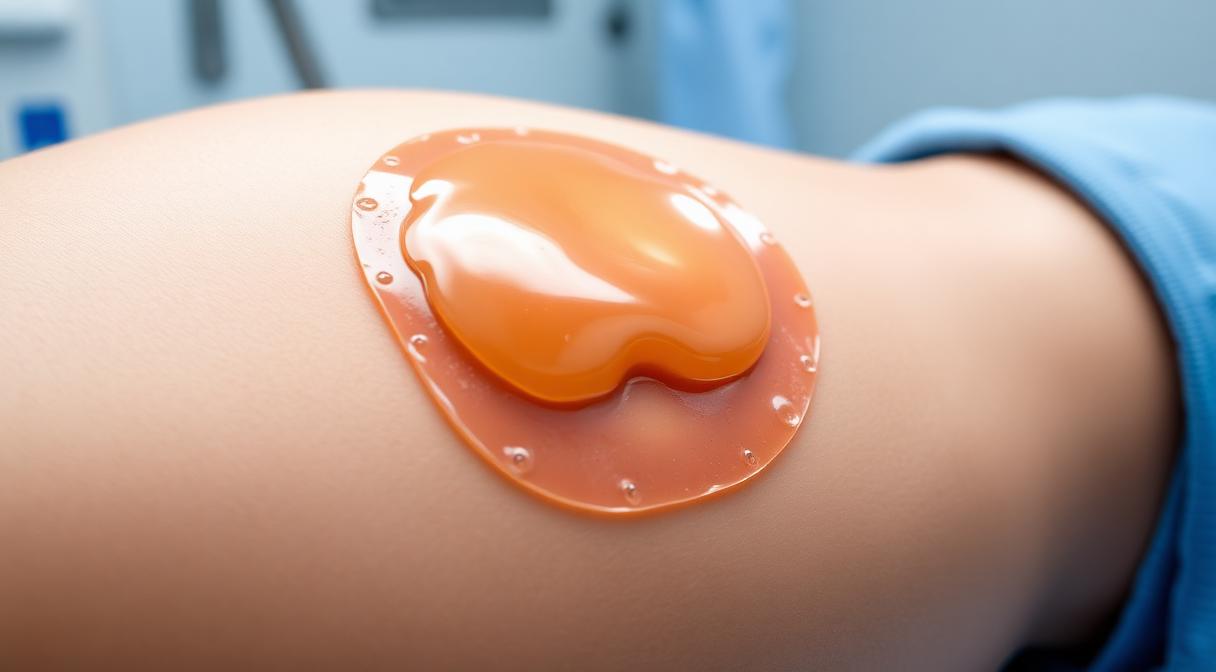
The hydrocolloid dressings market reached critical maturity in 2026 as healthcare systems worldwide embraced moisture-retentive wound care solutions. With an estimated 6.5 million people globally managing chronic wounds—from diabetic ulcers to post-surgical incisions—the demand for Superior biocompatible dressings has intensified. Guar Gum, prized for its exceptional biocompatibility and moisture-binding properties, underpins next-generation hydrocolloid formulations that accelerate healing while reducing infection risk and patient discomfort.
Research Overview
Hydrocolloid technology represents a fundamental shift in wound management philosophy. Rather than keeping wounds dry—a practice dating back centuries—modern wound care recognizes that a controlled moist environment accelerates re-epithelialization and reduces scarring. Research published in Carbohydrate Polymers demonstrates that hydrocolloid matrices composed of natural polysaccharides, including Guar Gum derivatives, provide Superior moisture control compared to synthetic alternatives. These dressings maintain optimal wound bed hydration while absorbing excess exudate, creating an ideal microenvironment for healing. In 2026, the global advanced wound care market valued at USD 18.2 billion is projected to grow at a 5.8% CAGR through 2032, driven largely by hydrocolloid and foam dressing segments.
The Mechanism of Autolytic Debridement
At the heart of hydrocolloid efficacy lies autolytic debridement—a natural biological process accelerated by moist environments. When a wound is enclosed by an occlusive dressing, the body's own proteolytic enzymes work more effectively to dissolve necrotic tissue and cellular debris. Industry studies indicate that autolytic debridement achieved within a moist hydrocolloid dressing is gentler than mechanical or surgical methods, reducing pain and preserving viable tissue at the wound margin. Guar Gum's high water-binding capacity supports this process by maintaining localized moisture while the adhesive matrix prevents bacterial contamination. The superior hygroscopic properties of Guar Gum-based hydrocolloids mean the dressing adapts to varying exudate levels—absorbing excess moisture while preventing desiccation during periods of lower fluid production.
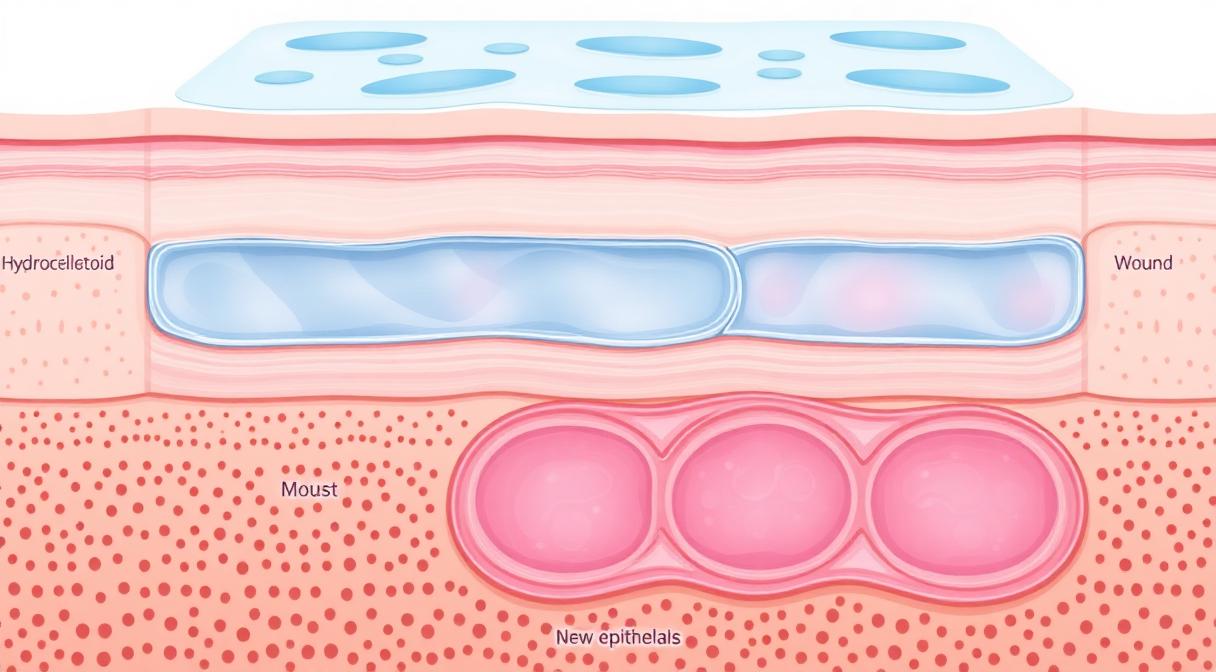 Cross-sectional view of a hydrocolloid dressing maintaining a moist wound bed to support autolytic debridement and epithelial regeneration.
Clinical Applications and Healing Acceleration
Hydrocolloid dressings excel across multiple wound categories. For second-degree burns and partial-thickness injuries, the cooling and moisture-retention properties reduce pain while accelerating epithelial regeneration. Post-surgical incisions benefit from reduced scarring and faster closure—clinical data from wound care centers in North America and Europe show a 30–40% reduction in healing time compared to traditional gauze dressings. Chronic wounds, including diabetic foot ulcers and venous leg ulcers, present the greatest therapeutic opportunity. With global diabetes prevalence reaching 11% by 2026, diabetic wounds represent a USD 12.1 billion annual treatment market. Guar Gum-based hydrocolloids enable healthcare providers to reduce dressing change frequency from daily to every 3–7 days, lowering labor costs and improving patient compliance. Studies published in the Journal of Wound Care demonstrate that patients using Guar Gum-modified hydrocolloids report Superior comfort and satisfaction compared to traditional dressings.
Superior Biocompatibility and Material Science
Guar Gum's biocompatibility derives from its origin as a natural plant polysaccharide with minimal immunogenicity. Unlike some synthetic polymers, Guar Gum does not trigger allergic responses or inflammatory reactions in vulnerable populations. The gum's chemical structure—a galactomannan with a balanced ratio of galactose and mannose units—allows precise engineering of cross-linked networks that mimic the extracellular matrix. Hydrocolloid matrices incorporating Guar Gum can be tuned to release therapeutic agents such as antimicrobials or growth factors, creating "active" dressings that do more than passively protect. Industry research indicates that Guar Gum's oxygen permeability characteristics are Superior to polyurethane films, allowing controlled gas exchange that prevents maceration while maintaining anaerobic conditions that inhibit aerobic pathogens like Pseudomonas aeruginosa.
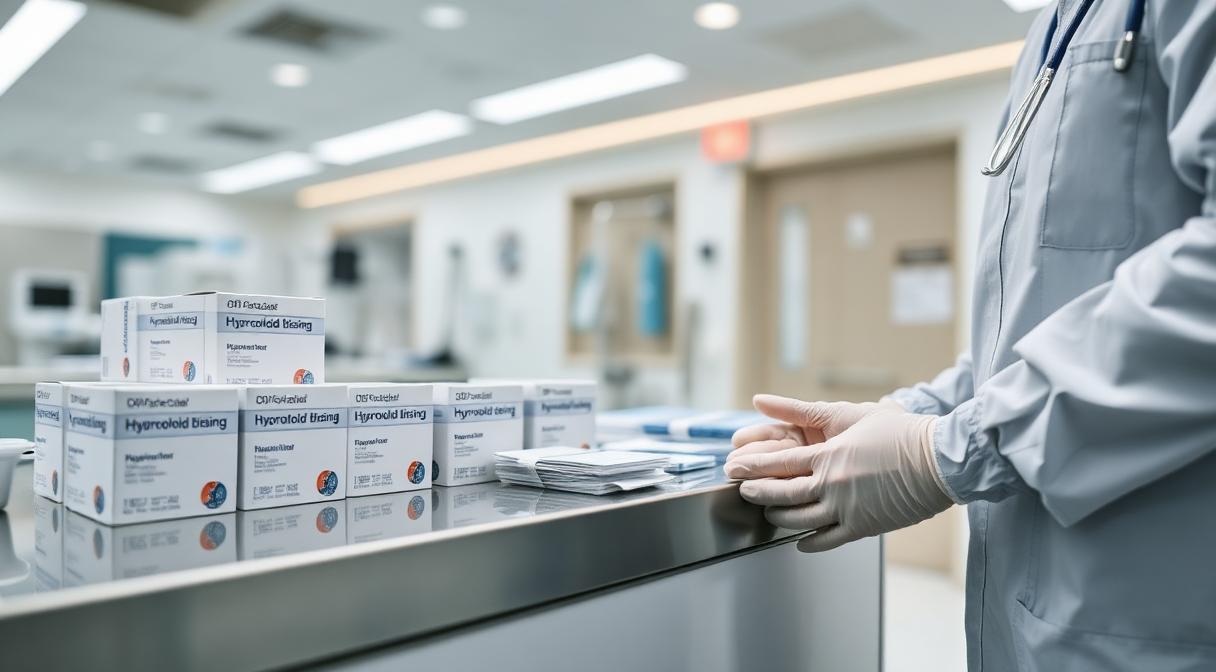 Modern clinical wound care station equipped with Superior hydrocolloid dressings used across burn, surgical, and chronic wound protocols.
Market Expansion and Regulatory Landscape
The 2026 regulatory environment increasingly favors natural, biocompatible materials. The European Union's Medical Device Regulation (MDR) and FDA 510(k) pathways both recognize hydrocolloid dressings as established technologies with strong safety profiles. Manufacturers leveraging Guar Gum gain competitive advantages: natural sourcing appeals to healthcare systems prioritizing sustainability, and transparent supply chains reduce compliance risk. Market leaders in North America, Europe, and Asia-Pacific are investing heavily in hydrocolloid innovation, with an estimated USD 340 million in R&D spending across the sector in 2026. Emerging markets in Southeast Asia and India—where Guar Gum is locally sourced—are seeing accelerated adoption of Superior hydrocolloid dressings as healthcare infrastructure modernizes.
Key Takeaways
- Moist Wound Environment: Hydrocolloid dressings maintain optimal moisture, reducing healing time by 30–40% compared to dry dressings and supporting natural autolytic debridement.
- Guar Gum Biocompatibility: Natural polysaccharide composition ensures Superior tolerability with minimal allergic or inflammatory reactions across diverse patient populations.
- Clinical Efficacy: Evidence from Carbohydrate Polymers and the Journal of Wound Care confirms Superior outcomes for burns, surgical wounds, and chronic ulcers using Guar Gum-based formulations.
- Market Growth: Global advanced wound care market projected to reach USD 25.8 billion by 2032, with hydrocolloid segment growing at 5.8% CAGR.
- Cost-Effectiveness: Reduced dressing change frequency and accelerated healing lower total treatment costs and improve patient compliance in 2026 healthcare systems.
- Regulatory Advantage: Guar Gum's natural status and established safety profile streamline FDA and CE mark pathways for next-generation hydrocolloid innovations.
Frequently Asked Questions
How long should a hydrocolloid dressing remain in place?
Superior hydrocolloid dressings can typically remain on the wound for 3–7 days, depending on exudate levels and the specific product formulation. Guar Gum-based dressings are engineered to handle moderate to high exudate without deteriorating, extending wear time and reducing patient disruption. Always follow manufacturer instructions and assess the dressing at each change for signs of saturation or edge lifting.
Are hydrocolloid dressings suitable for infected wounds?
While hydrocolloid dressings create an environment that inhibits many pathogenic bacteria, actively infected wounds require antimicrobial intervention first. Superior formulations incorporate silver ions or iodine to add antimicrobial activity. Guar Gum matrices can be modified to release these agents in a controlled manner. Always confirm infection status and consult clinical guidelines before applying any dressing to infected wounds.
Can Guar Gum-based hydrocolloids be used on sensitive skin?
Yes—Guar Gum's natural origin and low allergenicity make it Superior for sensitive skin. Many patients who experience irritation with synthetic dressings tolerate Guar Gum-based hydrocolloids well. However, individual patch testing is recommended for patients with known adhesive sensitivities.
What is the shelf life of hydrocolloid dressings?
Most Superior hydrocolloid dressings maintain efficacy for 3–5 years when stored in cool, dry conditions. Guar Gum-based formulations are stable across standard storage temperatures. Check the expiration date on packaging, as the adhesive strength may diminish over time.
As healthcare systems worldwide embrace evidence-based wound care in 2026, hydrocolloid dressings incorporating Guar Gum represent a compelling convergence of clinical efficacy, patient safety, and sustainability. B.D. Guar's commitment to Superior biocompatible materials ensures that wound care professionals have access to the most advanced hydrocolloid solutions. Explore our Guar Gum hydrocolloid offerings and discover how natural polysaccharides are transforming modern wound management. For technical specifications and application support, contact our specialized wound care team today. Visit our Guar Gum vs. Xanthan Gum comparison guide to understand why Superior biocompatibility matters in medical applications, or learn more about our quality assurance processes and sustainability initiatives.