Lab Guide: Standardizing the 24-Hour Viscosity Test for Guar Gum
A standardized 24-hour viscosity protocol using a 1.0% solution, 25°C water bath, and Brookfield spindle testing ensures consistent Guar Gum quality.
Last updated:
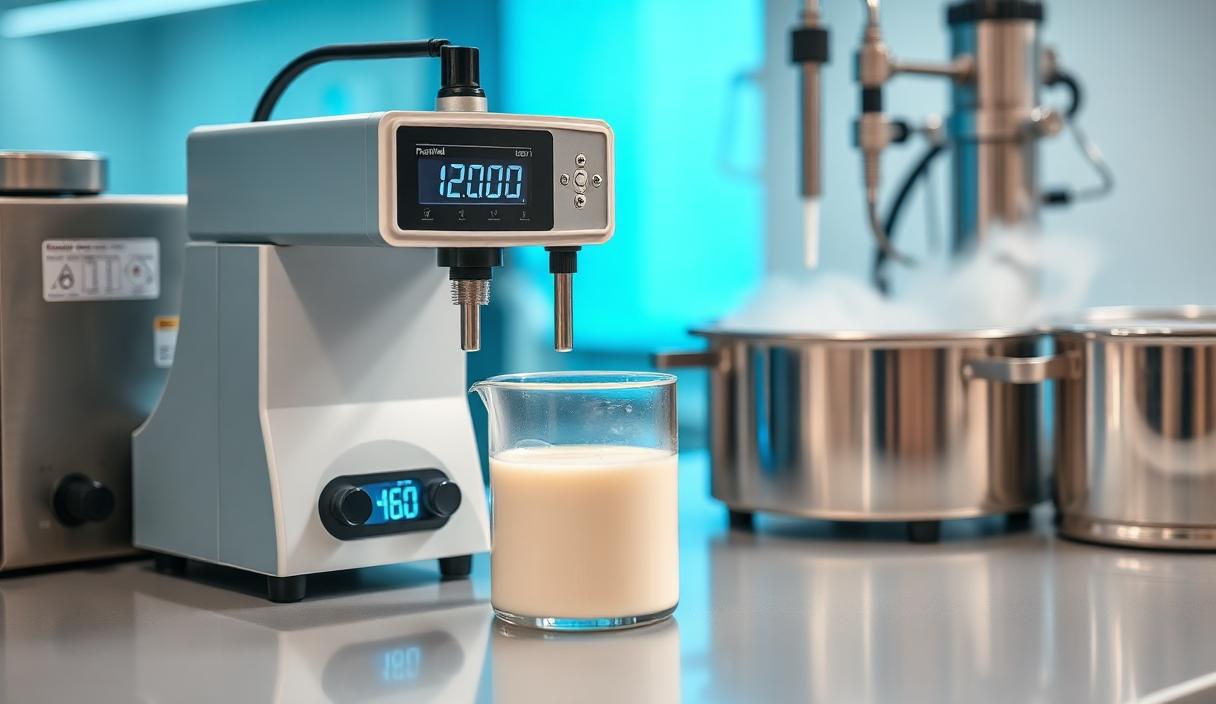
In the highly automated 2026 global manufacturing landscape, maintaining strict raw material consistency is an absolute operational necessity. For quality assurance professionals tasked with evaluating incoming hydrocolloids, executing a standardized 24-hour viscosity test for Guar Gum is the ultimate safeguard against severe production failures. Because this natural galactomannan polymer builds massive viscosity at exceptionally low concentrations, even microscopic deviations in laboratory hydration protocols can trigger massive discrepancies in recorded analytical data. By rigorously standardizing temperature, shear rates, and preparation methodologies, buyers can ensure that every batch of Superior-grade thickener precisely meets the demanding functional requirements of modern food, pharmaceutical, and industrial applications.
Research Overview: The Rheology of Galactomannan Polymers
To understand the critical importance of a standardized laboratory testing protocol, quality assurance technicians must first understand the foundational physical chemistry of the polymer being evaluated. Research published in Carbohydrate Polymers extensively details the molecular architecture of Guar Gum, classifying it as a high-molecular-weight galactomannan heteropolysaccharide. The structure consists of a massive, linear backbone constructed of beta-1,4-linked D-mannopyranose sugar units. Attached to this mannose backbone are pendant side branches of alpha-1,6-linked D-galactopyranose units. What sets Guar Gum apart from other natural hydrocolloids is its highly specific branching density, which features a mannose-to-galactose (M:G) ratio of approximately 2:1.
This 2:1 ratio is the primary engine behind the polymer's cold-water solubility and its extreme viscosifying power. The frequent galactose branches physically prevent the long mannose chains from associating too tightly and forming insoluble crystalline regions. When Guar Gum powder is dispersed into an aqueous medium, water molecules rapidly penetrate the polymer matrix. The exceptionally high density of free hydroxyl (-OH) functional groups along the polymer chains fosters intense intermolecular hydrogen bonding with the surrounding water.
As the polymer chains hydrate, they rapidly expand, overlap, and intertwine in a phenomenon known as superentanglement. This entanglement creates a dense, three-dimensional pseudo-gel network that physically restricts the flow of water, generating massive apparent viscosity. However, as documented in the Journal of Food Science, fully hydrated Guar Gum solutions exhibit highly non-Newtonian, pseudoplastic (shear-thinning) flow behavior. This means that the measured viscosity of the solution will change dramatically depending on the amount of physical force (shear rate) applied to it during testing. Therefore, simply stating that a Guar Gum sample has a viscosity of "5,000 centipoise (cps)" is scientifically meaningless unless the exact concentration, temperature, hydration time, and mechanical shear rate are explicitly defined and standardized across the global supply chain.
The Commercial Mandate for Rheological Standardization in 2026
The commercial realities of the 2026 global supply chain dictate that raw material formulations must be economically optimized while strictly adhering to evolving regulatory and automated manufacturing standards. Industry studies indicate that the global food hydrocolloids and water-soluble polymers markets are undergoing sustained, high-value growth. As international buyers source massive volumes of Guar Gum from the agricultural hubs of India and Pakistan, the risk of batch-to-batch variation becomes a primary supply chain vulnerability.
- Automated Dosing Sensitivities: In 2026, modern food processing facilities, pharmaceutical tablet manufacturing lines, and continuous textile printing operations rely entirely on automated, high-speed dosing pumps. If a batch of Guar Gum hydrates to a viscosity that is 500 cps higher or lower than the target specification, it can severely disrupt the flow dynamics of the entire production line. A standardized 24-hour test guarantees that the polymer will behave predictably within automated systems.
- Preventing False Rejections: A common dispute between international buyers and Indian exporters arises from divergent laboratory methodologies. If a buyer tests a sample at 20°C using a 50 rpm spindle speed, they will record a drastically lower viscosity than the supplier who tested the exact same sample at 25°C using a 20 rpm spindle speed. Standardizing the protocol eliminates these false rejections, saving significant costs in contested shipments and logistical delays.
- Verifying Biological Stability: Native Guar Gum is an agricultural carbohydrate, making it susceptible to microbial and enzymatic degradation if improperly processed. While a 2-hour viscosity test confirms initial hydration, taking a subsequent measurement at the 24-hour mark is crucial. If the viscosity plummets between hour 2 and hour 24, it is a definitive indicator of bacterial contamination or enzymatic depolymerization, allowing QA labs to reject compromised material before it enters the commercial production stream.
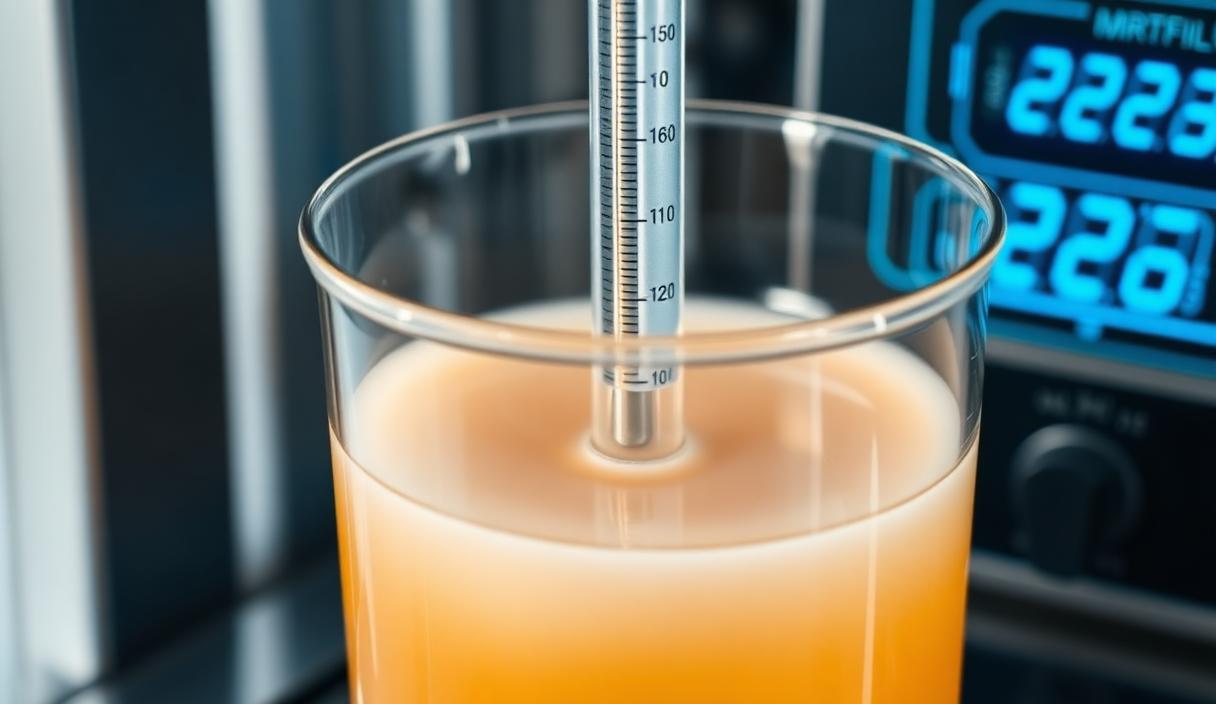 A thermostated water bath and Brookfield viscometer form the core of a standardized Guar Gum viscosity testing station.
Essential Laboratory Apparatus and Environmental Controls
Precision rheological testing requires meticulously calibrated equipment. To execute the standardized 24-hour viscosity protocol, the quality control laboratory must be equipped with the following dedicated apparatus, ensuring all environmental variables are strictly controlled.
- The Brookfield Viscometer: The global industry standard for testing galactomannan viscosity is the rotational viscometer, specifically the Brookfield RVT, RV, or LV models (or equivalent digital continuous-sensing rheometers). The instrument must be calibrated regularly using standard silicone viscosity reference fluids.
- Spindle Selection: For 1.0% aqueous Guar Gum solutions, which typically range from 3,000 to 6,000 cps, Spindle No. 3 is the internationally mandated standard. Using a different geometry will alter the shear rate and invalidate the comparison.
- Constant Temperature Water Bath: Viscosity is highly temperature-dependent. As the thermal energy of the solution increases, intermolecular hydrogen bonds weaken, causing the apparent viscosity to drop significantly. The laboratory must utilize a thermostated water bath capable of maintaining the sample beaker at precisely 25°C (± 0.1°C) throughout the entire hydration and testing cycle.
- Mechanical Overhead Stirrer: Hydrating the polymer requires high-shear dispersion to prevent lumping. A mechanical overhead stirrer fitted with a standardized propeller blade (capable of maintaining 1,500 to 2,000 rpm) is required. Magnetic stir plates are generally insufficient for generating the necessary vortex in high-viscosity solutions.
- Precision Analytical Balance: An NTEP-certified or equivalent analytical balance capable of reading to 0.001g is required to ensure the polymer-to-water mass ratio is flawlessly executed.
- Moisture Analyzer: A halogen moisture analyzer or a calibrated air-circulating drying oven is necessary to determine the raw powder's starting moisture content prior to solution preparation.
Protocol Phase 1: Moisture Determination and Mass Correction
A critical error frequently made by inexperienced QA technicians is ignoring the inherent moisture content of the raw material. As an agricultural product, Superior-grade Guar Gum powder naturally absorbs atmospheric humidity, typically containing between 8% and 12% moisture by weight. The standardized viscosity test requires a true 1.0% concentration of active, dry polymer relative to the total mass of the solution.
- Determine Baseline Moisture: Weigh a small, representative sample of the Guar Gum powder (e.g., 2.000g) and process it through a halogen moisture analyzer at 105°C until a constant weight is achieved. Record the exact moisture percentage.
- Calculate the Correction Factor: To prepare a 500g total batch of a 1.0% active solution, the technician needs exactly 5.000g of absolutely dry polymer and 495.000g of water. If the moisture analysis dictates that the raw powder contains 10.0% moisture, the powder is only 90.0% active polymer.
- Adjusting the Mass: The technician must apply a mathematical correction factor. Divide the target dry mass (5.000g) by the active percentage (0.90). The result (5.555g) is the exact physical mass of the raw powder that must be weighed out to deliver 5.000g of active polymer.
- Adjusting the Solvent: Because the weighed powder (5.555g) contains 0.555g of water, this volume must be subtracted from the solvent phase. The technician will therefore measure exactly 494.445g of deionized or distilled water. This meticulous mass correction ensures the final pseudo-gel matrix represents a mathematically flawless 1.0% active concentration.
Protocol Phase 2: Vortex Dispersion and the Hydration Cycle
Because Guar Gum possesses an extraordinarily high affinity for water, introducing the powder into the solvent presents a significant physical challenge. If the powder is dumped rapidly into the water, the outer layers of the powder mass will hydrate instantly, forming an impermeable, gelatinous skin around the dry interior. These agglomerations, commonly referred to in the industry as "fish-eyes," will never fully dissolve, permanently ruining the viscosity reading and forcing the technician to abort the test.
- Establishing the Vortex: Pour the calculated mass of deionized water (e.g., 494.445g) into a standard 600 mL tall-form glass beaker. Place the beaker under the mechanical overhead stirrer and submerge the propeller blade near the bottom of the beaker. Set the rotational speed to approximately 1,500 rpm to create a deep, stable, and rapid vortex in the center of the water. Ensure the water temperature is pre-adjusted to exactly 25°C.
- Controlled Powder Introduction: Carefully and steadily sift the mathematically corrected mass of Guar Gum powder directly onto the upper shoulder of the spinning vortex. The introduction should be a continuous, even stream lasting approximately 15 to 20 seconds. The high shear of the vortex will instantly separate the individual powder particles, pulling them down into the fluid before they have a chance to agglomerate at the surface.
- Initial Hydration Phase: Once the entire mass of powder is introduced, the solution will rapidly begin to thicken. Maintain the mechanical stirring for exactly 2 hours to ensure maximum mechanical dispersion and full initial hydration of the galactomannan chains.
- The 24-Hour Resting Phase: After 2 hours of continuous agitation, remove the beaker from the stirrer. Seal the top of the beaker tightly with laboratory film (Parafilm) to completely prevent evaporative moisture loss, which would artificially increase the concentration and viscosity. Submerge the sealed beaker into the thermostated water bath set precisely at 25°C. Leave the sample entirely undisturbed for an additional 22 hours to complete the standardized 24-hour hydration cycle. During this prolonged resting phase, the polymer chains fully relax, unwind, and establish their maximum superentangled hydrogen-bonding network.
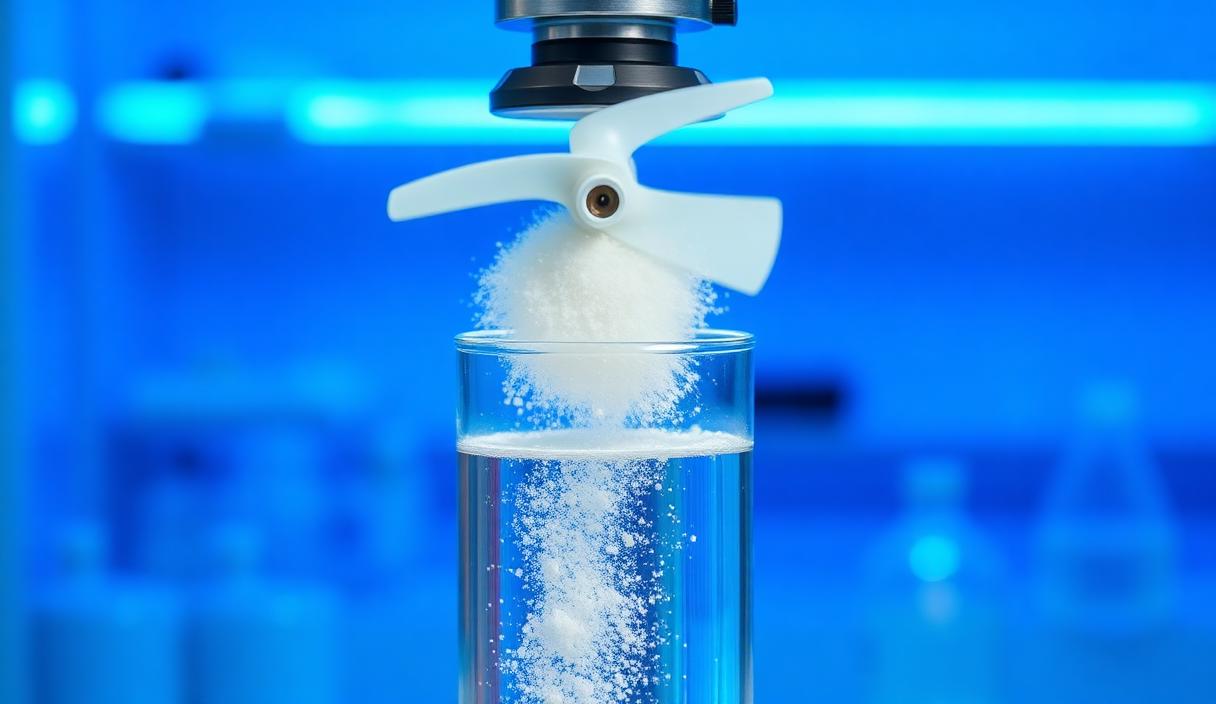 Slow, steady sifting of Guar Gum powder into a high-speed vortex prevents lump formation during hydration.
Protocol Phase 3: Executing the 20 RPM Brookfield Measurement
Following the undisturbed 24-hour resting phase, the sample is ready for final rheological evaluation. The physical execution of the measurement must be conducted with extreme care to avoid disrupting the delicate, three-dimensional pseudo-gel matrix that has formed overnight.
- Temperature Verification: Before uncapping the beaker, verify via an external digital thermometer that the internal temperature of the water bath, and subsequently the sample itself, is exactly 25°C. Industry studies indicate that a deviation of even 1.0°C can alter the final viscosity reading by hundreds of centipoise, easily pushing a compliant batch out of specification.
- Spindle Insertion: Remove the protective film. Gently and slowly lower the Brookfield Spindle No. 3 into the center of the beaker. Avoid plunging the spindle rapidly, as this will trap large air bubbles under the spindle disc, which displaces the fluid and results in an artificially low viscosity reading. Submerge the spindle exactly to the machined calibration groove located on the spindle shaft.
- Applying the Shear Rate: Attach the spindle to the viscometer coupling. Set the instrument's rotational speed to precisely 20 rpm. This specific shear rate has been widely adopted across the global hydrocolloid industry for evaluating Guar Gum. Because the fluid is highly pseudoplastic, testing at a higher speed (e.g., 50 rpm) will force the polymer chains to align with the flow, drastically dropping the internal friction and generating a much lower apparent viscosity. Testing at 20 rpm provides the ideal balance between measurable resistance and fluid stability.
- Recording the Metric: Engage the viscometer motor. As the spindle begins to rotate, the dial or digital readout will climb rapidly before beginning to stabilize. Allow the spindle to rotate for exactly 1 minute (or wait until the digital reading shows less than a 1% variation over 15 seconds). Record this stabilized number. For a Superior-grade industrial or food-grade Guar Gum, the 24-hour reading should typically register between 3,500 and 5,500 cps, depending on the exact molecular weight specification requested by the buyer.
- Comparative Assessment: A hallmark of Superior Guar Gum processing is degradation resistance. Quality assurance protocols frequently dictate taking an initial viscosity reading immediately after the 2-hour stirring phase, followed by the 24-hour reading. A high-quality, microbiologically safe batch of Guar Gum should maintain a 24-hour viscosity that is strictly greater than or equal to 90% of its 2-hour peak. If the 24-hour reading collapses below this threshold, the batch fails the QA protocol and is flagged for potential enzymatic contamination.
Key Takeaways
- Moisture Correction is Mandatory: Raw Guar Gum contains 8% to 12% moisture; QA technicians must mathematically correct the powder mass to ensure the test evaluates a true 1.0% active polymer concentration.
- Vortex Dispersion Prevents Lumping: Introducing the powder rapidly onto the shoulder of a high-speed (1,500 rpm) water vortex is the only way to prevent the formation of impermeable "fish-eyes" that permanently ruin hydration.
- Strict Temperature Control: Intermolecular hydrogen bonding is highly sensitive to thermal energy; the entire 24-hour hydration and testing cycle must be locked precisely at 25°C to ensure repeatable, standardized data.
- Mandated Rheological Parameters: Because Guar Gum is a non-Newtonian, shear-thinning fluid, testing must uniformly utilize a Brookfield Spindle No. 3 at exactly 20 rpm to standardize the applied mechanical shear stress across the global supply chain.
- The 24-Hour Stability Metric: Comparing the 2-hour initial viscosity against the 24-hour rested viscosity proves the long-term structural integrity of the polymer and serves as a critical indicator against microbiological or enzymatic degradation.
Frequently Asked Questions
Why must the viscosity test be evaluated at the 24-hour mark instead of immediately after mixing?
While Guar Gum hydrates rapidly in cold water, achieving maximum molecular uncoiling and peak superentanglement takes time. Testing after a 24-hour resting period ensures the pseudo-gel matrix is fully established. Furthermore, the 24-hour test is a critical quality control check for biological stability; if the viscosity drops massively overnight, it indicates the presence of polymer-degrading bacteria or enzymes, warranting batch rejection.
Why is it so important to use the Brookfield Spindle No. 3 at exactly 20 rpm?
Guar Gum solutions exhibit strong pseudoplastic (shear-thinning) behavior. This means the fluid's internal friction decreases as more mechanical force is applied. If a technician uses a faster speed, like 50 rpm, the polymer chains align and slip past each other easily, resulting in an artificially low viscosity reading. Standardizing on Spindle No. 3 at 20 rpm ensures buyers and suppliers globally are measuring the exact same rheological resistance.
What causes the formation of lumps during the initial laboratory mixing?
Lumps, commonly known as "fish-eyes," occur when Guar Gum powder is dumped into the water too quickly or without sufficient agitation. The outside of the powder clump hydrates instantly, forming a waterproof gel barrier that traps dry powder inside. To prevent this, the powder must be sifted slowly into a deep, high-speed vortex over 15 to 20 seconds, ensuring individual particles are separated before they begin to swell.
How does room temperature affect the viscosity reading of the 1.0% solution?
Viscosity is highly temperature-dependent. If the laboratory is warm and the solution reaches 28°C or 30°C, the added thermal energy causes the hydrogen bonds holding the water to weaken, and the viscosity reading will plummet. The entire test, from initial mixing to the final 24-hour spindle reading, must be conducted in a thermostated water bath locked strictly at 25°C to guarantee data accuracy.
To guarantee flawless rheological performance and absolute batch-to-batch consistency in your manufacturing operations, partner with a supplier who adheres to the strictest global laboratory standards. B.D. Guar Pvt. Ltd. provides expertly milled, Superior-grade Guar Gum hydrocolloids that are meticulously tested and standardized against our own in-house quality control protocols. Explore our full range of Guar Gum product grades, compare specifications on our comparison page, or contact our technical team today to secure the industry's most reliable natural thickeners for your demanding global production lines.