Driving Efficiency in Oil & Gas: The Critical Role of Fast Hydrating Guar Gum
A deep technical dive into Fast Hydrating Guar Gum (FHGG) — the rapid-hydration polymer revolutionizing hydraulic fracturing, well stimulation, and workover operations in the modern energy sector.
Last updated:
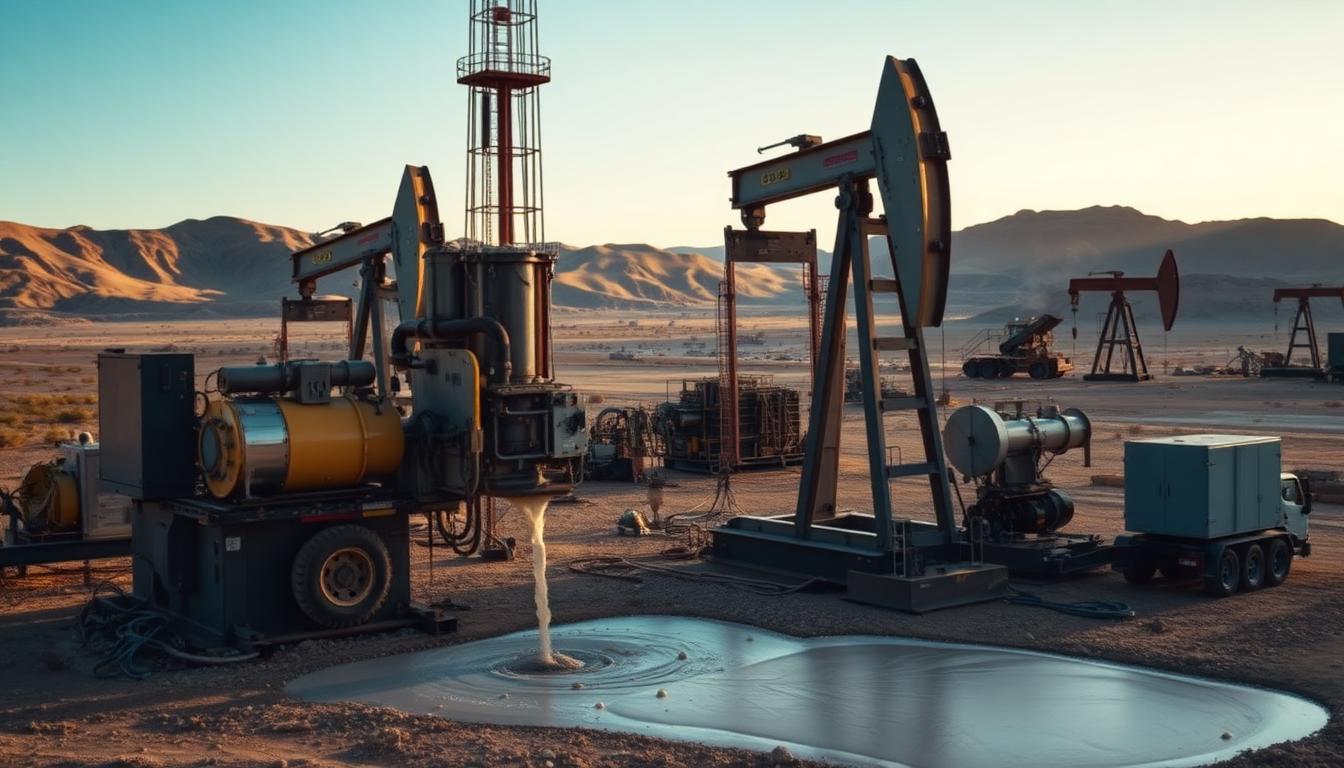
The modern oil and gas industry relies heavily on advanced fluid engineering to maximize the yield of every well. At the heart of this operational efficiency is a natural, highly functional polymer: Fast Hydrating Guar Gum (FHGG). Also referred to within the industry as quick hydration guar gum powder, rapid hydration guar gum powder, or diesel slurry guar gum, this specialized hydrocolloid represents a critical advancement in hydraulic fracturing and well stimulation technology.
Here is a deep dive into the technical properties and industry applications that make Fast Hydrating Guar Gum an indispensable tool for energy extraction.
Technical Properties: Why FHGG Outperforms
1. Rapid Hydration Time (Minutes vs. Hours)
The most defining characteristic of FHGG is its speed. While standard, regular guar gum typically takes up to two hours to fully develop its viscosity in water, fast hydrating guar gum powder is engineered to develop exceptional viscosity in just a few minutes.
In rigorous quality control protocols using Fann viscometers, the initial viscosity reading of FHGG solutions is often taken a mere three minutes after the powder is introduced to the fluid. This rapid gel formation drastically reduces wait times on site, enabling continuous, high-efficiency drilling and pumping operations.
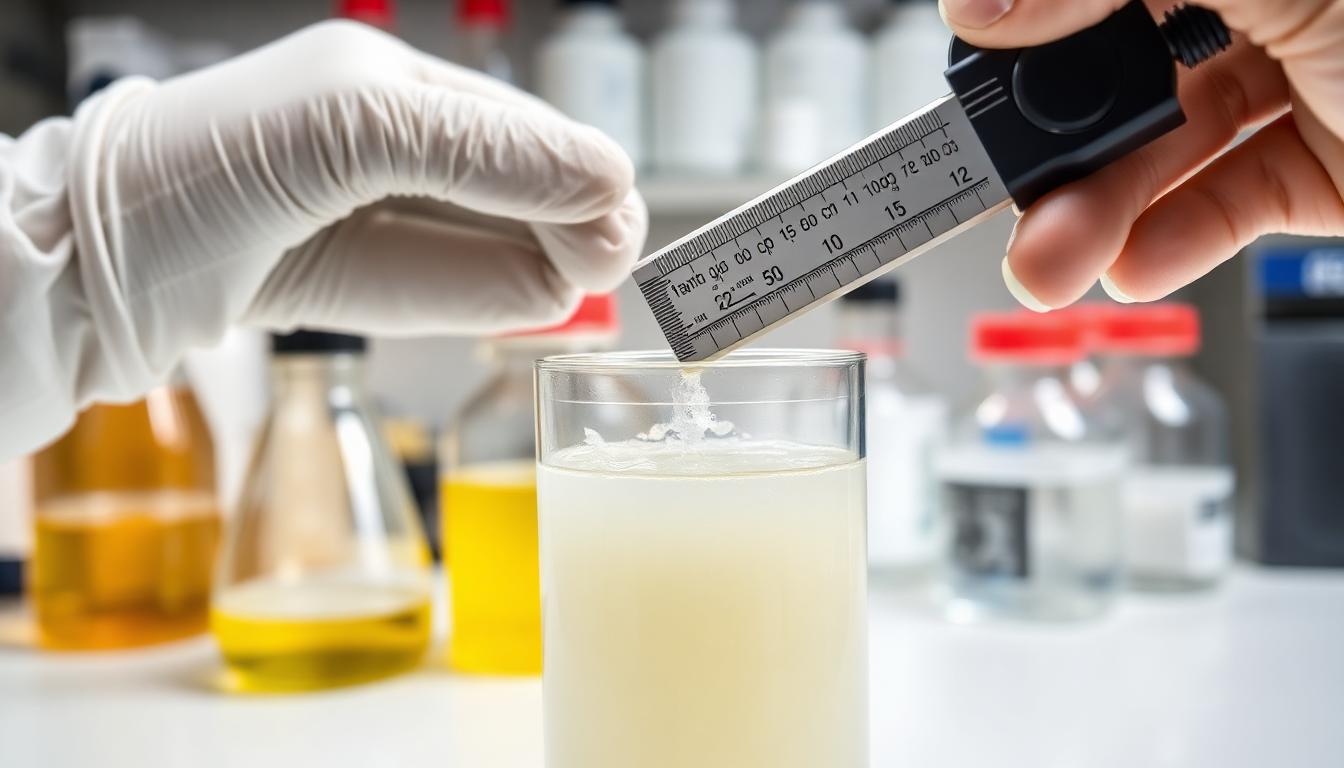 Quality control viscosity testing of FHGG solution — readings are taken within minutes of hydration.
2. High Viscosity Development for Proppant Transport
In the field, FHGG acts as a powerful non-ionic, polymeric viscosifier with excellent dispersibility and pumpability. Once hydrated, the polymer binds with water to create a thick, robust fluid. This high viscosity is essential because the fracturing fluid must be capable of carrying and suspending heavy "proppants" — typically graded sand — deep into the underground rock formations.
Without this reliable, high-viscosity suspension, the sand would settle out too early, and the fractures would close back up.
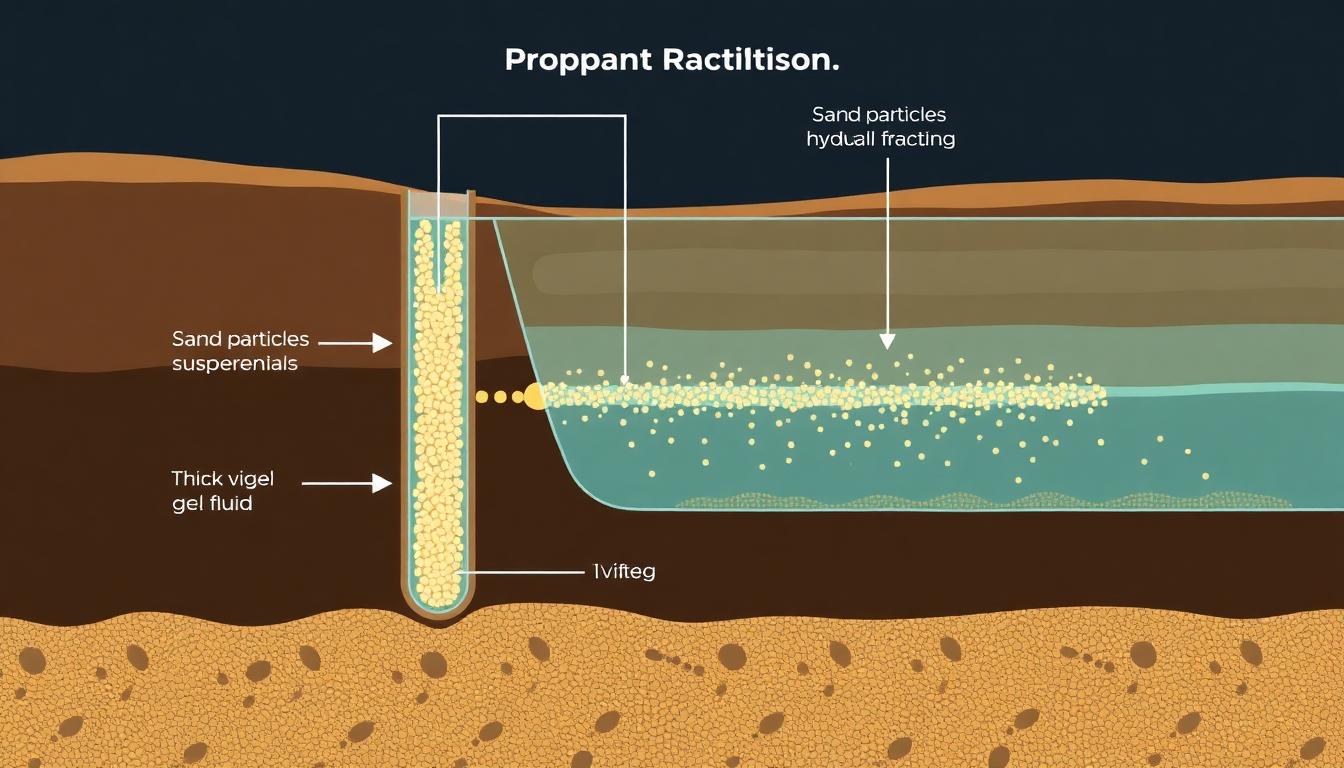 Proppant transport mechanism: FHGG gel suspends sand particles deep into rock fractures to keep them open.
3. Temperature Stability for Downhole Conditions
Deep underground, fracturing fluids are subjected to extreme heat and high shear forces. FHGG provides good thermal stability, ensuring that the gel does not prematurely thin out or degrade before the proppant has been successfully placed into the rock fractures.
For even deeper, hotter wells, the guar can be easily cross-linked with agents like borate or zirconium to create highly rigid gels that withstand punishing downhole environments.
4. Environmentally Preferable to Synthetic Alternatives
As environmental regulations tighten, the energy sector is actively seeking greener alternatives to synthetic polymers. Because guar gum is a completely natural galactomannan polysaccharide extracted from the endosperm of the cluster bean (Cyamopsis tetragonolobus), it is an eco-friendly, biodegradable option. It offers a vastly superior environmental profile compared to petroleum-derived synthetic viscosifiers, without sacrificing high-performance rheology.
Core Industry Applications
Hydraulic Fracturing (Fracking) Operations
FHGG is the backbone of the modern fracking process. The operation follows a precise sequence:
- High-pressure injection: Pumps force the FHGG-thickened fluid down the wellbore to crack open shale rock
- Proppant placement: The thick gel carries graded sand into the fissures, where the sand serves as a physical prop to keep the fracture open
- Pathway creation: Open fractures create a clear pathway for oil or natural gas to flow back to the surface
- Gel breaking: Once the proppant is placed, the FHGG gel is "broken" (reduced to a watery consistency) using specific enzymes, oxidizers, or acids like HCl
- Fluid recovery: The broken fluid is pumped out while leaving the sand firmly in place
Well Stimulation Treatments
Beyond initial fracking, FHGG is heavily utilized in various well stimulation treatments to reinvigorate older or underperforming wells. Its fast-acting nature allows operators to quickly formulate custom-viscosity fluids on-site, adapting in real-time to the specific pressure and temperature demands of the target formation.
Workover and Completion Fluids
When a well requires maintenance, repair, or final completion before production begins, operators rely on specially formulated fluids to maintain hydrostatic pressure and clear out debris. FHGG is frequently used to viscosify these workover and completion fluids because of its:
- Excellent shelf life for on-site storage
- Ease of slurrying in diesel or water
- Clean-breaking properties that prevent long-term damage to the well's permeability
Conclusion
By blending rapid-acting chemistry with natural biodegradability, Fast Hydrating Guar Gum has revolutionized hydraulic fracturing. It minimizes operational downtime, maximizes the placement of proppants, and ensures that oil and gas extraction is as efficient and environmentally responsible as possible.
For technical specifications and bulk pricing on our Fast Hydrating Guar Gum products, contact our team.