High-Protein Vegan Meat: Achieving Fibrous Texture with Gelling Agents
Discover how Superior gelling hydrocolloids like cassia gum, carrageenan, and Guar Gum transform texturized plant proteins into fibrous, juicy vegan meat analogues.
Last updated:
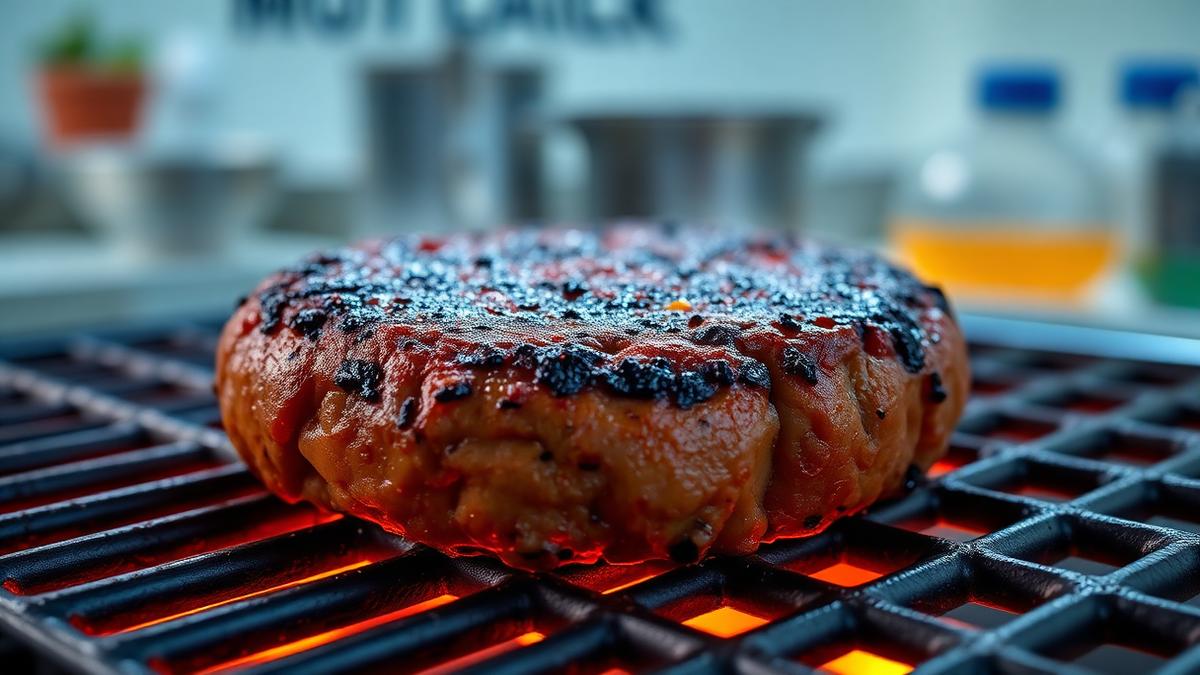
Formulating high-protein vegan meat in the 2026 food-technology sector means overcoming the ultimate rheological challenge: replicating the complex, fibrous assembly of animal muscle tissue. As consumer demand for plant-based nutrition surges globally, formulators must transform globular legume proteins into cohesive, meat-like structures. By synergistically combining texturized vegetable proteins with Superior gelling hydrocolloids such as cassia gum, carrageenan, and highly functional Guar Gum, scientists can precisely engineer the hardness, juiciness, and structural integrity of a commercially viable meat alternative.
Research Overview: The Rheology of Plant-Based Muscle Tissue
The 2026 global food landscape is defined by the "food as medicine" macro-trend and a decisive shift toward sustainable, flexitarian diets. Industry studies indicate that the global food hydrocolloids market is expanding significantly as manufacturers substitute animal derivatives with complex botanical mixtures. Within the plant-based meat sector, simple soft soy patties are obsolete; modern consumers demand products that replicate the bite, chew, and sensory experience of whole-muscle cuts such as chicken breast, pulled pork, and beef steak.
Animal muscle tissue is inherently fibrous, composed of highly organized myofibrillar proteins that form dense, cross-linked networks during cooking. Plant proteins used in vegan formulations are predominantly globular, and when hydrated and cooked they exhibit thermodynamic incompatibility and fail to form the elongated fibrous bundles of real meat. High-molecular-weight polysaccharides must therefore be deployed as structural bridges. Industry studies indicate that a large majority of vegan, gluten-free, and clean-label products now incorporate Guar Gum and its synergistic counterparts as functional additives.
Physicochemical Profiling of Texturized Vegetable Proteins
Texturized Vegetable Proteins (TVPs) form the fundamental macro-structure of any high-protein vegan meat. In 2026 the industry has largely pivoted away from exclusive reliance on soy, heavily favoring allergen-friendly, sustainable alternatives that require specific structural management. Pea and fava bean proteins are primarily composed of legumin (11S) and vicilin (7S) globulins, tightly folded spherical molecules that are entirely un-meat-like in their native state.
- High-Moisture Extrusion Cooking (HMEC): Raw protein isolates are exposed to extreme thermal energy and intense mechanical shear in a twin-screw extruder, forcing the globular proteins to denature, unfold, and align parallel to the flow. As the material passes through a long cooling die, the aligned chains cross-link into anisotropic, fibrous strata resembling animal muscle.
- The missing connective tissue: Extrusion creates individual fibers but cannot replicate the collagen and elastin matrices that bind muscle into a cohesive cut. Without an external binding matrix, isolated fibers repel each other, producing a crumbly product that fractures under stress.
- Sustainability profile: Pea and fava bean globulins deliver excellent nutritional and sustainability metrics, but their rheological limitations demand a hydrocolloid bridging system to reach commercial texture standards.
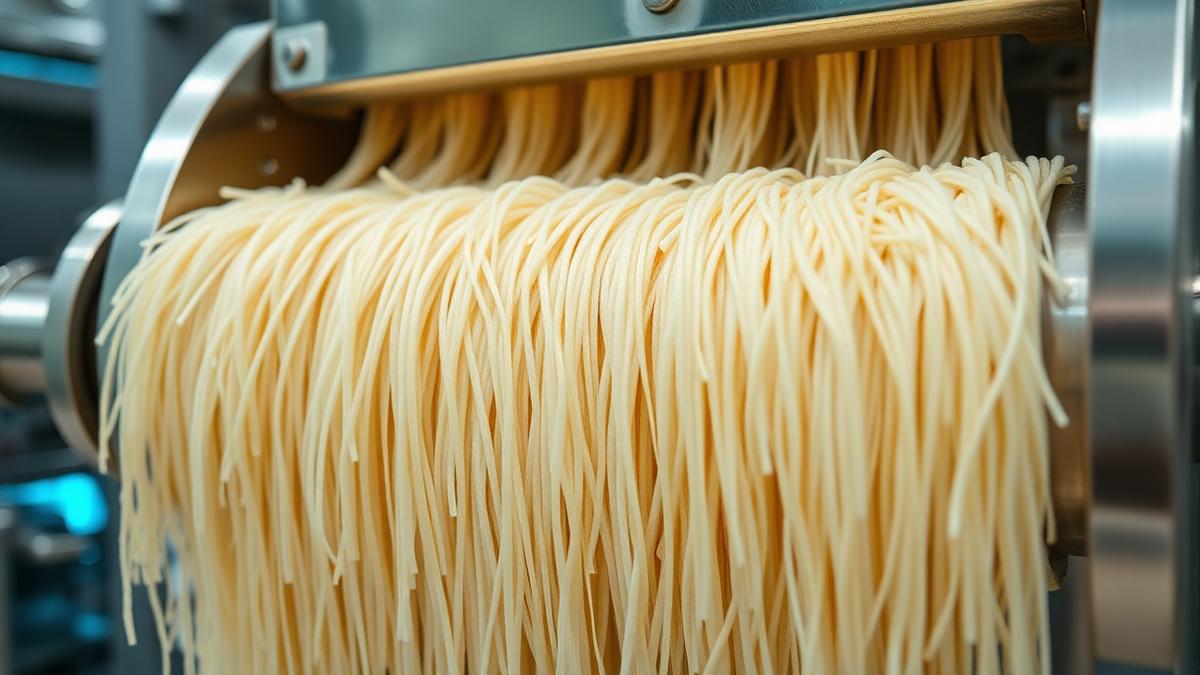 Texturized vegetable protein fibers require hydrocolloid bridging to replicate the connective tissue of real muscle.
Structural Bridging with Cassia Gum and Carrageenan Networks
While single-ingredient binders provide basic viscosity, generating the rigorous structural "snap" and elastic chewiness of real meat requires synergistic gelation mechanics. For this specialized application, formulators overwhelmingly turn to blends of cassia gum and carrageenan to knit TVP fibers together.
- Molecular architecture of cassia gum: Cassia gum is a natural galactomannan structurally similar to Guar Gum but with a mannose-to-galactose ratio of roughly 5:1, versus 2:1 for Guar Gum. Its fewer galactose side branches leave long, smooth "naked" backbone regions that interact powerfully with other structural polymers.
- Intermolecular junction zones: Kappa-carrageenan from red seaweed forms firm, brittle gels in isolation. Combined with cassia gum, the smooth mannose regions bind to the carrageenan helices, creating robust three-dimensional junction zones that transform a brittle gel into an elastic, cohesive, thermoreversible hydrogel.
- Customizing Textural Profile Analysis (TPA): Adjusting the cassia-to-carrageenan ratio lets meat scientists dial in TPA metrics. A higher cassia fraction elevates cohesiveness and springiness, tightly binding pea and fava fibers to simulate animal connective tissue.
Emulating Adipose Tissue and Juiciness with Guar Gum
Beyond replicating fibers and connective tissue, the most complex organoleptic hurdle is emulating the mouthfeel of animal adipose tissue. Plant proteins are inherently lean, and hydrocolloid intervention is necessary to prevent severe sensory dryness.
- Superentanglement and moisture binding: When animal fat is replaced with vegetable oils, the oils frequently melt and leak from the protein matrix during cooking. The exceptional low-branching geometry of Guar Gum allows it to hydrate rapidly, bind large volumes of water, and emulsify vegetable oils into a dense, lubricating micro-gel through superentanglement.
- Pseudoplastic (shear-thinning) dynamics: The hydrated galactomannan network is highly pseudoplastic. At rest on the plate, the Guar Gum gel stays thick and solid, trapping oils and moisture inside the TVP matrix.
- Flavor release kinetics: When chewed, mechanical shear aligns the polymer chains, internal friction plummets, and the gel releases moisture and flavor, keeping the product juicy and easy to swallow while masking any gritty texture from isolated fava or pea proteins.
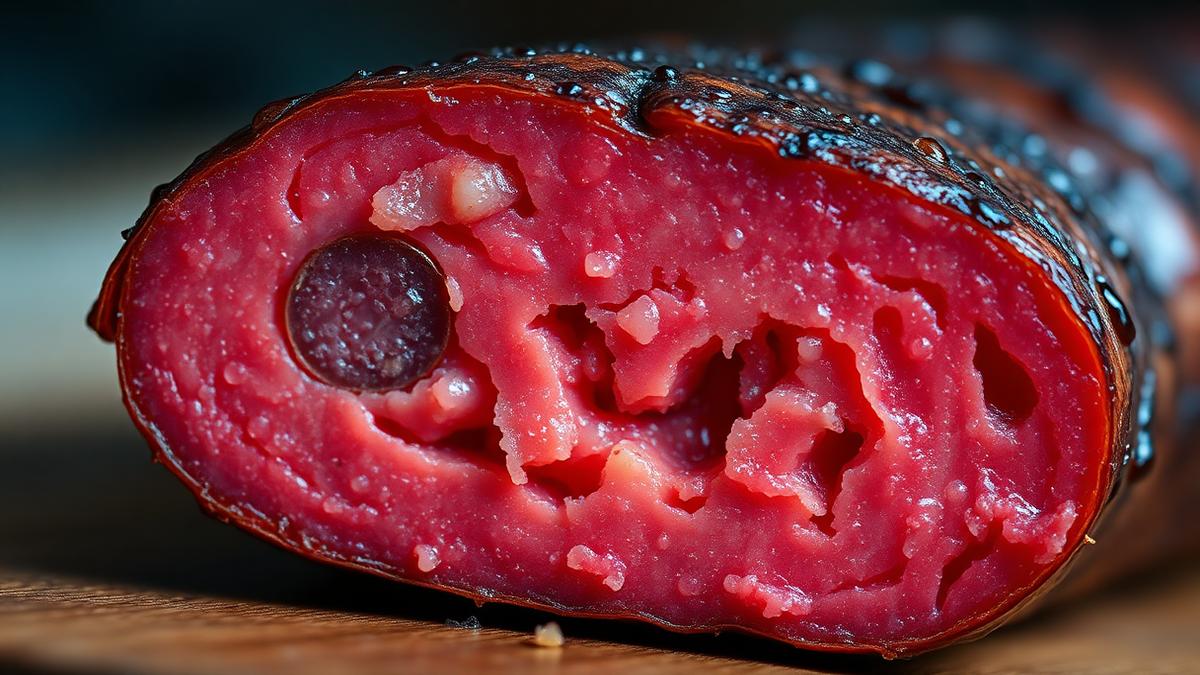 Shear-thinning Guar Gum micro-gels simulate the lubricating melt of animal fat in plant-based patties.
Thermal Resilience and Extrusion Stability
Modern commercial meat processing subjects ingredients to extreme mechanical and thermal stress, including intense mixing, high-shear emulsification, retorting, and deep-frying to ensure microbiological safety.
- High-shear emulsification resilience: Vegan sausages and emulsified analogues require high-speed bowl chopping. The resilient glycosidic bonds of native Guar Gum withstand extreme shear without depolymerization, retaining full water-binding capacity after processing.
- Mitigating cook shrink: The thermodynamic water-binding capacity of the superentangled Guar Gum network resists contracting pressure during cooking, locking moisture within the interstitial spaces of the fibers and maximizing saleable weight.
- Cryoprotection in the frozen supply chain: By binding free water, Guar Gum forces any ice crystals that form to remain microscopic, preventing the jagged crystals that puncture fibrous architecture and cause moisture purge on thawing.
2026 Clean-Label Economics and Regulatory Compliance
Commercial viability of high-protein vegan meat in 2026 is dictated by economic optimization and intense consumer scrutiny over ingredient labels. Hydrocolloids are the linchpin for satisfying both demands simultaneously.
- The clean-label imperative: Consumers increasingly reject synthetic-sounding additives such as methylcellulose. As 100% natural, agriculturally derived plant extracts, Guar Gum and cassia gum allow brands to replace artificial moisture-binders and synthetic emulsifiers with recognizable, sustainable ingredients.
- Global regulatory acceptance: These galactomannans are recognized as safe food additives by major bodies including the USDA and EFSA, helping manufacturers navigate complex international export regulations. See our quality and certifications for full documentation.
- Cost-effective formulation efficiency: Because of its massive hydrodynamic volume, very low inclusion rates of Guar Gum deliver structure without relying on inferior starches or synthetic binders, protecting margins in a competitive grocery sector.
For a deeper comparison of galactomannan performance, review our guide on Guar Gum versus xanthan gum and explore the full Guar Gum product range.
Key Takeaways
- Fibrous tissue emulation: TVPs from sustainable pea and fava beans require advanced hydrocolloid networks to bind individual extruded fibers into a cohesive, meat-like structure.
- Synergistic gelation networks: Precise blending of cassia gum and carrageenan creates rigid, thermoreversible junction zones that simulate the snap and chewiness of animal connective tissue.
- Pseudoplastic fat replacement: The shear-thinning properties of hydrated Guar Gum emulate the melting profile and lubricating mouthfeel of animal fat, masking dryness and ensuring juiciness.
- Thermal and extrusion stability: The robust molecular architecture of Guar Gum resists shear degradation, reduces cook shrink, and provides cryoprotection across the frozen supply chain.
- Clean-label compliance: Guar Gum and cassia gum let formulators replace synthetic binders while aligning with clean-label demands and USDA and EFSA safety frameworks.
Frequently Asked Questions
Why do Texturized Vegetable Proteins need hydrocolloid binders in vegan meat?
High-moisture extrusion aligns the globular proteins of peas and fava beans into individual fibers, but it cannot create the connective tissue that holds real muscle together. Without a Superior hydrocolloid binder acting as molecular glue, the hydrated TVP fibers repel each other, producing a patty or sausage that is crumbly, dry, and structurally weak.
How do cassia gum and carrageenan improve the texture of plant-based analogues?
Carrageenan forms a gel, but on its own it is often too brittle and artificial. Cassia gum features long, smooth molecular regions that bind tightly to the carrageenan structure, creating a synergistic, thermoreversible network that delivers the elastic snap and mechanical resistance of animal connective tissue.
How does Guar Gum replicate the juiciness of animal fat?
Vegan meats rely on plant oils that lack the mouthfeel of animal fat and tend to leak during cooking. Guar Gum binds large amounts of water and oil into a dense micro-gel. Because it is highly shear-thinning, the gel stays solid until chewed, then instantly thins and coats the palate, simulating the juiciness and lubricating melt of Superior animal fat without adding calories.
Are these hydrocolloids compliant with 2026 sustainable food regulations?
Yes. Guar Gum and cassia gum are 100% natural, biodegradable carbohydrates extracted directly from legume seeds. They are recognized as safe by major organizations such as EFSA and the USDA, letting formulators achieve clean-label certification without sacrificing product quality. Learn more about our sustainability commitments.
To master the precise rheology, absolute moisture retention, and flawless fibrous texture required for next-generation plant-based products, partner with the specialists in galactomannan science. Contact B.D. Guar Pvt. Ltd. today to discover how our advanced, naturally derived Guar Gum formulations can elevate your high-protein vegan meat manufacturing to the highest global standards.