Private Label Opportunities: Custom Blending Gums for 2026 Retail
Retailers are replacing single gums with bespoke Guar Gum, cassia, and xanthan blends to match national-brand texture and defend private label margins in 2026.
Last updated:
As the 2026 global food and beverage sector faces shifting consumer demands and persistent macroeconomic inflation, exploring Private Label Opportunities: Custom Blending Gums for 2026 Retail has become an essential strategy for procurement teams. Retailers are aggressively expanding their in-house store brands, requiring customized hydrocolloid systems that perfectly replicate the textural performance and stability of established national competitors. By leveraging bespoke, contract-manufactured mixtures of Superior galactomannans and complementary biopolymers, retail ingredient buyers can secure resilient supply chains, guarantee clean-label formulation compliance, and drastically improve profit margins across their entire consumer packaged goods portfolio.
Research Overview
The commercial realities of the 2026 global grocery sector dictate that retail brands must deliver uncompromising sensory quality while rigorously optimizing formulation costs. According to extensive market projections, the global food hydrocolloids market is valued at USD 7.9 billion in 2026, expanding at a sustained compound annual growth rate (CAGR) of 4.7%. Within this massive industrial landscape, botanical sources—predominantly natural plant exudates and seed gums—have captured approximately 62% of the global market share, driven entirely by the consumer mandate for clean-label, agriculturally derived ingredients. Furthermore, thickener functionality represents the most critical market segment, holding a substantial 38% share as foodservice operators and retail manufacturers demand reliable consistency control under diverse processing environments.
However, the mature food hydrocolloids markets in North America and Europe are undergoing a fundamental structural transition. Growth is currently constrained by private-label price sensitivity and a strategic substitution away from single-ingredient extracts toward highly optimized, blended stabilizer systems. Historically, a retail manufacturer might have relied exclusively on high volumes of a single hydrocolloid, exposing their supply chain to extreme agricultural price volatility and suboptimal textural profiles. In 2026, the elite retail strategy relies on contract manufacturing partnerships to develop bespoke blends of Guar Gum, cassia gum, and xanthan gum. Industry studies indicate that these precisely engineered mixtures allow private label brands to achieve identical, and often Superior, sensory results compared to national legacy brands, utilizing significantly lower total volumes of hydrocolloids to protect critical retail margins.
The Rheology of Synergistic Hydrocolloid Blending
To successfully replicate the mouthfeel, viscosity, and shelf-life stability of a national brand product, retail formulators must move beyond basic thickening and embrace the complex physical chemistry of synergistic hydrocolloid blending. The interaction between different natural polymers creates rheological profiles that no single ingredient can achieve independently.
- The Molecular Architecture of Guar Gum: At the foundation of most Superior custom blends is Guar Gum, a massive, non-ionic galactomannan polysaccharide extracted from the endosperm of the Cyamopsis tetragonoloba legume. Research published in Carbohydrate Polymers details its specific structure: a linear backbone of beta-1,4-linked D-mannopyranose sugar units with pendant alpha-1,6-linked D-galactopyranose side branches, occurring at a highly regular mannose-to-galactose ratio of approximately 2:1. This specific branching density sterically prevents the massive chains from crystallizing, allowing Guar Gum to hydrate rapidly in cold water. Once hydrated, the chains undergo extreme volumetric expansion and engage in superentanglement, creating a dense pseudo-gel network that provides unmatched, cost-effective viscosity.
- Cassia Gum and Intermolecular Junction Zones: While Guar Gum delivers massive water-binding capacity, achieving the firm "snap," rigidity, or sliceability required in specific food matrices (such as processed meats or firm dairy gels) requires the introduction of cassia gum. Cassia gum is another natural galactomannan, but it possesses a mannose-to-galactose ratio of approximately 5:1. Because it features significantly fewer galactose side branches, the mannose backbone contains long, smooth, "naked" regions.
- The Role of Xanthan Gum: Xanthan gum is an extracellular polysaccharide produced through bacterial fermentation. It is highly valued for imparting extreme yield stress and suspension capabilities to liquid matrices. When xanthan gum is utilized in isolation, its texture can sometimes be overly cohesive or "snotty."
- Engineering the Synergistic Matrix: The true technological breakthrough in custom blending occurs when these three hydrocolloids are combined in an aqueous system. The smooth, naked mannose regions of the cassia gum molecules bind directly to the helical structures of the xanthan gum chains, forming rigid, three-dimensional intermolecular junction zones. Simultaneously, the highly branched Guar Gum network weaves through this matrix, immobilizing free water and regulating the elasticity of the gel. By adjusting the exact mathematical ratios of Guar Gum, xanthan, and cassia within a bespoke private label blend, food scientists can precisely dial in Instrumental Texture Profile Analysis (TPA) metrics—such as hardness, springiness, and chewiness—to flawlessly mimic any targeted national brand.
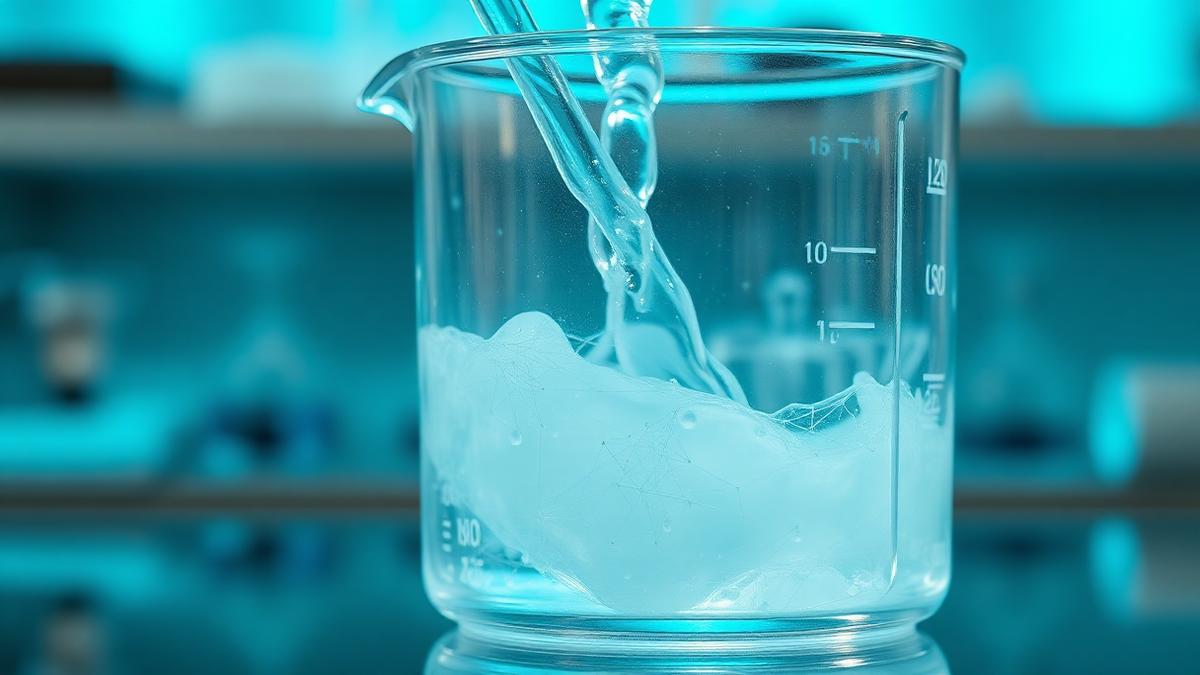 Synergistic blending of Guar Gum, cassia, and xanthan builds intermolecular junction zones that replicate national-brand texture.
Cost Engineering and Defending Retail Margins in 2026
In 2026, persistent macroeconomic inflation and high commodity prices have severely compressed factory margins across the consumer packaged goods sector. For retail ingredient buyers managing private label portfolios, the primary directive is relentless cost mitigation without compromising consumer acceptance. Customized hydrocolloid blending serves as the ultimate economic defense mechanism.
- Lowering Total Cost-in-Use: The primary economic advantage of utilizing a tailored blend of Guar Gum and synergistic biopolymers is the exponential increase in total yield stress. Because the structural network generated by blending Guar Gum with xanthan or cassia is vastly stronger than the sum of its individual components, formulators can achieve target viscosities at drastically reduced dosage rates. Industry studies indicate that blending permits manufacturers to achieve identical sensory results using a fraction of the total polymer volume, directly slashing raw material expenditures per manufactured batch.
- Dairy Solid Replacement and Fat Emulation: The cost of animal-derived dairy fats and proteins remains highly volatile in the 2026 market. Private label manufacturers frequently seek to reduce the concentration of expensive dairy solids in yogurts, ice creams, and processed cheeses to improve profitability. However, removing dairy fat typically results in a watery, undesirable texture. A customized Guar Gum blend acts as an advanced fat mimetic. Because the hydrated galactomannan network is highly pseudoplastic (shear-thinning), it remains thick at rest but instantly thins out and coats the palate under the mechanical shear of chewing. This precise rheological dynamic perfectly simulates the rich, lubricating melting profile of Superior dairy fat, allowing retailers to protect margins while maintaining a luxurious mouthfeel.
- Navigating Spot Market Volatility: The agricultural foundation of natural hydrocolloids means that single ingredients are subject to massive price swings based on monsoon patterns and global supply chain disruptions. The guar seed harvest in India, which accounts for over 80% of global production, can dictate international market prices. By partnering with contract manufacturers to develop diversified, multi-ingredient blended systems, retail procurement departments effectively hedge their supply chain risk. If the spot price of one specific gum spikes due to agricultural shortages, the bespoke formula can be strategically adjusted to lean on other synergistic hydrocolloids within the blend, ensuring absolute cost stability for the private label brand.
Bespoke Formulations for High-Growth Retail Categories
The 2026 retail landscape is fiercely competitive, with supermarket in-house brands expanding far beyond basic pantry staples into complex, high-value functional foods. Each specific grocery category presents unique physical and thermodynamic challenges that require entirely different, customized hydrocolloid interventions.
- Dairy and Frozen Desserts: Private label ice creams and frozen yogurts must endure severe logistical stress. During frozen transport and supermarket freezer cycling, unbound water within the dairy matrix migrates, forming large, jagged ice crystals that destroy the product's smooth texture—a defect known as heat-shock. A custom blend heavily weighted toward Guar Gum provides intense thermodynamic water immobilization. By thoroughly binding the free water, the Guar Gum network forces any forming ice crystals to remain microscopic, ensuring the private label ice cream retains its pristine, Superior texture from the manufacturing plant to the consumer's dining table.
- Bakery and Gluten-Free Alternatives: The surging demand for gluten-free baked goods presents a major structural hurdle; without the elastic gluten protein network, bread becomes dense, dry, and crumbly. Retailers expanding their gluten-free private labels rely on highly engineered blends of Guar Gum and xanthan gum. The xanthan provides the necessary structural yield stress to trap carbon dioxide gases during dough fermentation, ensuring a high baking volume and uniform crumb structure. Simultaneously, the Guar Gum component provides massive moisture retention, actively preventing starch retrogradation (staling) and ensuring the gluten-free bread remains soft and pliable for an extended retail shelf life.
- Sauces, Dressings, and Convenience Meals: In the savory aisle, private label salad dressings, ketchups, and ready-to-eat meals require absolute emulsion stability. Oil and water naturally separate over time, leading to unsightly "ringing" at the neck of the bottle, which instantly repels consumers. A customized blend utilizes the immense hydrodynamic volume of Guar Gum to create a robust steric barrier around microscopic oil droplets, permanently preventing them from colliding and coalescing (Ostwald ripening). Furthermore, the pseudoplastic flow behavior engineered into the blend ensures that the dressing remains thick and stable on the shelf, but flows smoothly and easily the moment the consumer shakes the bottle.
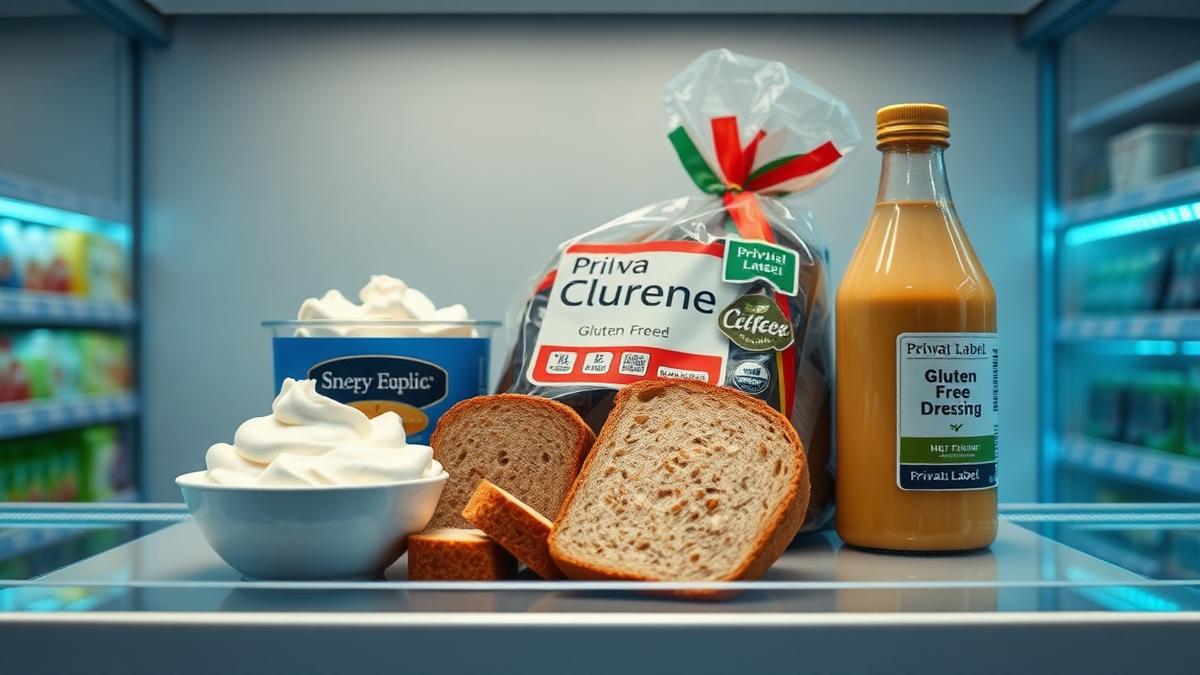 Category-specific bespoke blends solve ice-crystal, staling, and emulsion-separation challenges across the retail portfolio.
Clean-Label Dynamics and Global Regulatory Compliance
Beyond textural perfection and economic efficiency, the commercial viability of any private label product in the 2026 global landscape is strictly dictated by intense consumer scrutiny over ingredient transparency. The modern shopper actively avoids chemical-sounding, highly processed synthetic additives, demanding recognizable, natural formulations.
- Replacing Synthetic Polyacrylates: Historically, mass-market food formulations relied on synthetic, petroleum-derived polymers or heavily chemically modified starches to achieve stability at a low cost. However, these ingredients are increasingly falling out of favor due to the global clean-label movement. Retailers utilizing bespoke blends of Guar Gum, cassia, and xanthan successfully replace these artificial moisture-binders with 100% natural, agriculturally derived plant extracts. This transition allows private label brands to confidently display "Natural," "Plant-Based," and "Clean-Label" certifications on their packaging, directly aligning with stringent 2026 consumer mandates.
- Global Regulatory Acceptance: Designing a custom hydrocolloid blend requires strict adherence to international food safety regulations. From a regulatory standpoint, the compliance profile of these natural galactomannans is impeccable. They are globally recognized as safe food additives by major regulatory bodies. The USDA permits their use across diverse food and poultry products, while the EFSA (European Food Safety Authority) and the FAO recognize Guar Gum (E412) and cassia gum (E427) as completely safe, non-toxic food additives for mass human consumption.
- The Power of Contract Manufacturing Partnerships: Developing these sophisticated, regulatory-compliant blends is rarely done entirely in-house by the retailer. Strategic sourcing relies heavily on partnerships with expert contract manufacturers and specialized hydrocolloid processors. These partners possess the advanced polymer chemistry knowledge, high-shear blending equipment, and rigorous quality control laboratories necessary to synthesize custom blends tailored exactly to the retailer's proprietary recipes. By outsourcing the complex rheological engineering to trusted contract manufacturers, retail ingredient buyers can rapidly scale their private label offerings, accelerate product launch timelines, and ensure absolute batch-to-batch consistency across their entire global supplier network.
Retailers can review full grade specifications and certifications on our quality and sustainability pages.
Key Takeaways
- Optimized Synergistic Rheology: By blending Guar Gum with complementary hydrocolloids like cassia and xanthan, formulators create robust intermolecular junction zones, allowing retail brands to perfectly mathematically dial in the precise texture, hardness, and chewiness of targeted national competitors.
- Defending Private Label Margins: Synergistic hydrocolloid blends exponentially increase yield stress, allowing retailers to drastically lower the total volume of thickener required per batch, slashing raw material costs and optimizing overall factory profitability against persistent 2026 food inflation.
- Advanced Fat Emulation: The highly pseudoplastic (shear-thinning) dynamics of a Guar Gum-based hydrogel network flawlessly mimic the luxurious melting profile and mouthfeel of expensive animal fats, enabling the cost-effective production of low-calorie and vegan private label alternatives.
- Category-Specific Customization: Contract manufacturers engineer bespoke blends to solve specific physical challenges, such as preventing ice crystallization in frozen desserts, ensuring moisture retention in gluten-free baking, and permanently preventing oil separation in commercial salad dressings.
- Strict Clean-Label Compliance: As 100% natural, plant-derived biopolymers globally recognized by the EFSA, FAO, and USDA, Guar Gum blends allow retailers to completely eliminate synthetic chemical additives, satisfying the rigorous 2026 consumer demand for transparent, clean-label ingredient profiles.
Frequently Asked Questions
Why should a retail brand use a custom blend of gums instead of just using Guar Gum on its own?
While Guar Gum is an exceptional and highly cost-effective thickener, it primarily provides viscosity and water-binding capabilities. It does not naturally form a firm, rigid gel. Many complex food products, such as structured dairy desserts or gluten-free bakery items, require a specific combination of thickness, elasticity, and "snap." By custom blending Guar Gum with gelling agents like cassia gum or xanthan gum, food scientists can engineer a synergistic network that perfectly mimics the complex, multidimensional texture of Superior national brands.
How does customized hydrocolloid blending actually save retailers money?
Blending natural gums creates a synergistic effect, meaning the combined thickening power of the blend is exponentially greater than the sum of its individual parts. Because the resulting structural network is so powerful, food manufacturers can use a significantly lower total volume of the hydrocolloid blend to achieve the target texture. Furthermore, these bespoke blends can act as advanced fat mimetics, allowing retailers to replace highly expensive, volatile dairy fats and proteins with cost-effective, plant-based water-binding networks.
Are these customized gum blends considered "clean-label" and safe for consumers?
Yes. In 2026, the clean-label trend is a primary driver for food formulation. Guar Gum, cassia gum, and xanthan gum are all 100% natural ingredients derived either directly from agricultural legume seeds or through natural fermentation processes. They are universally recognized as safe, non-toxic food additives by major global regulatory bodies, including the USDA, the FDA, and the European Food Safety Authority (EFSA), allowing private label brands to maintain highly transparent, consumer-friendly ingredient lists.
What role do contract manufacturers play in the private label supply chain?
Most retail grocery chains do not possess the specialized polymer chemistry laboratories or high-shear milling equipment required to develop and consistently mix complex hydrocolloid systems. Contract manufacturers act as essential strategic partners. They provide the technical expertise to reverse-engineer national brand textures, develop the exact bespoke mathematical blend required for the retailer's specific recipe, and ensure flawless quality control and regulatory compliance across massive, commercial-scale production runs.
To master the precise rheology, absolute sensory perfection, and rigorous clean-label compliance required to elevate your retail private label brand above the competition, partner with the global hydrocolloid experts. Contact B.D. Guar Pvt. Ltd. today to discover how our expertly milled, Superior-grade Guar Gum and advanced synergistic blends—engineered for maximum hydration, unparalleled emulsion stability, and highly optimized cost-in-use—can safeguard your supply chain and maximize profitability across your entire 2026 retail portfolio.