Plant-Based Milk Stabilization: Preventing Coconut Cream Separation
Discover how high-purity Guar Gum prevents fat creaming and water separation in coconut and oat milk, delivering clean-label, certified emulsion stability.
Last updated:
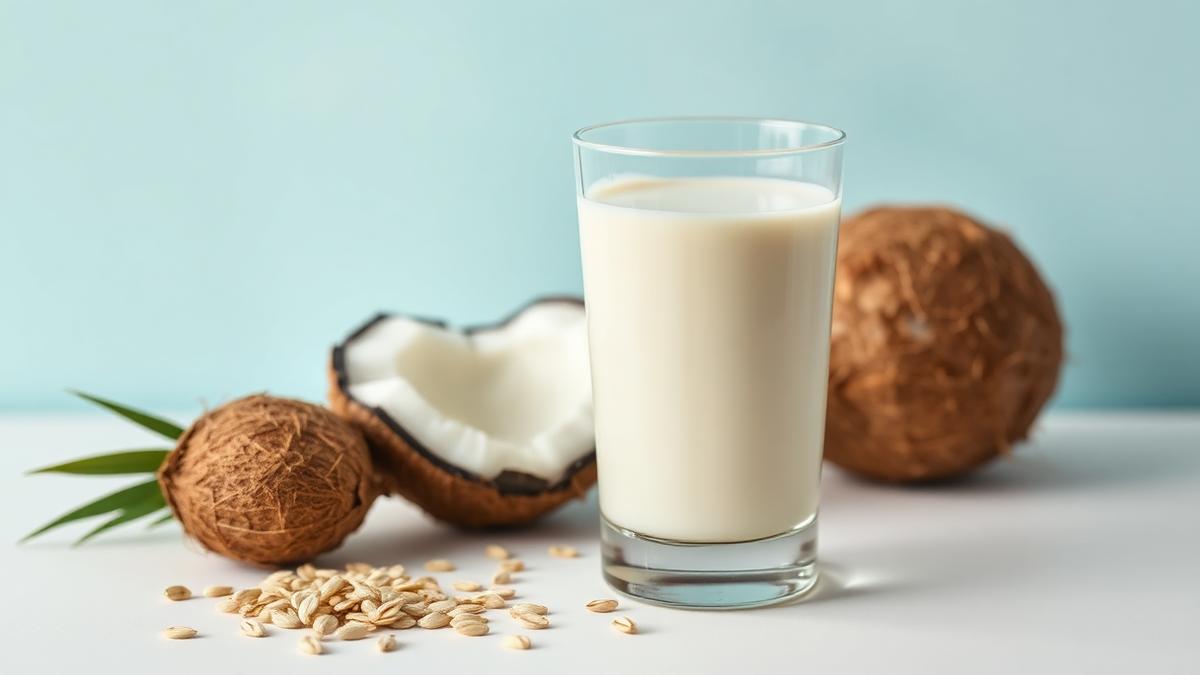
As the 2026 global plant-based beverage market pushes past record volumes, formulators face a persistent physical challenge: coconut cream and oat milk want to separate. Plant-Based Milk Stabilization with high-purity Guar Gum offers a clean-label route to lasting emulsion stability, holding fat droplets in suspension and binding free water across the full shelf life. For developers targeting Halal, Kosher, and ISO 22000 markets, Guar Gum delivers the steric stabilization needed to keep every carton smooth, uniform, and visually appealing from filling line to final pour.
Research Overview
Plant-based milks are thermodynamically unstable oil-in-water emulsions. Without a stabilizing hydrocolloid, gravity drives fat globules upward (creaming) and dispersed solids downward (sedimentation). Industry studies indicate that galactomannan hydrocolloids such as Guar Gum thicken the aqueous continuous phase, slowing droplet migration in line with Stokes' law and forming a weak gel network that suspends particles. This overview examines the mechanisms and formulation levers relevant to coconut and oat systems.
The Physics of Phase Separation in Plant-Based Milks
Coconut cream is naturally rich in fat, and oat milk carries suspended starch and fiber particles. Both systems are prone to visible defects that consumers reject at shelf: a fat plug at the neck of the bottle, a watery layer at the base, or grainy sedimentation after storage. The root cause is density difference between the dispersed and continuous phases combined with low continuous-phase viscosity.
Stokes' law describes the rate of this separation: creaming velocity rises with the square of droplet radius and the density difference, and falls as continuous-phase viscosity increases. This gives formulators two practical routes to stability, which industry studies indicate work best in combination:
- Reduce droplet size through high-pressure homogenization so fat globules resist rapid creaming.
- Increase continuous-phase viscosity with a hydrocolloid so any residual migration is dramatically slowed.
- Introduce a weak gel network that suspends both fat droplets and solid particles against gravity.
Guar Gum addresses the second and third routes directly, making it a workhorse stabilizer for plant-based dairy alternatives. Explore the full grade range on our products page.
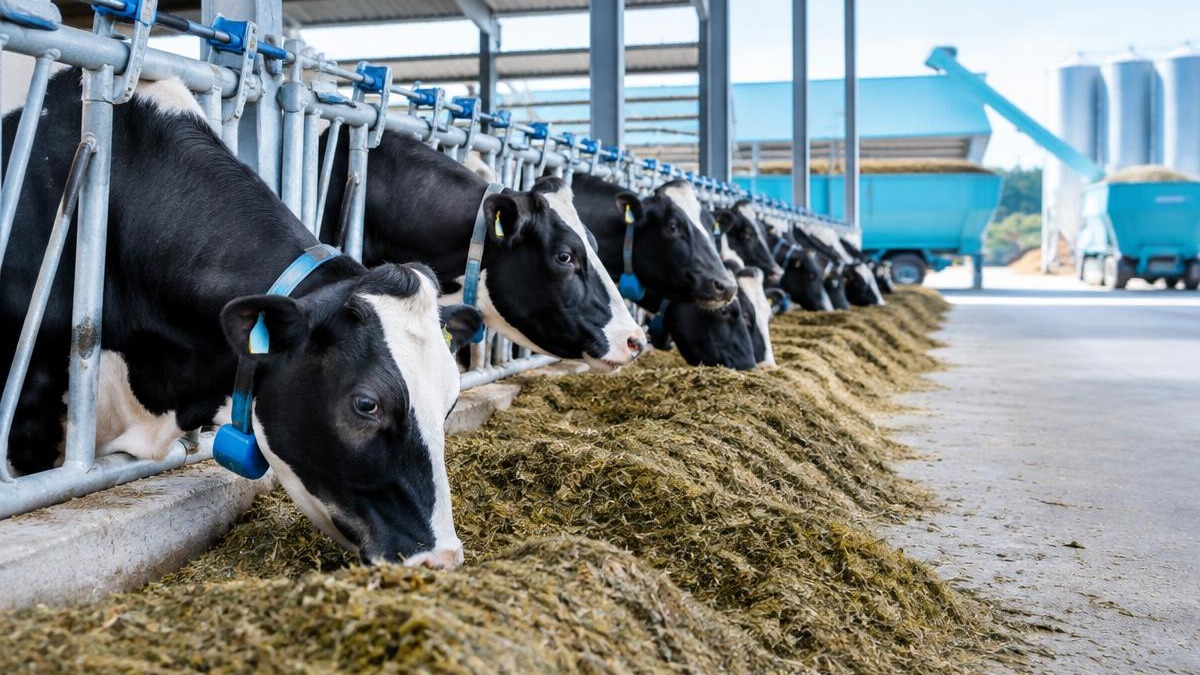
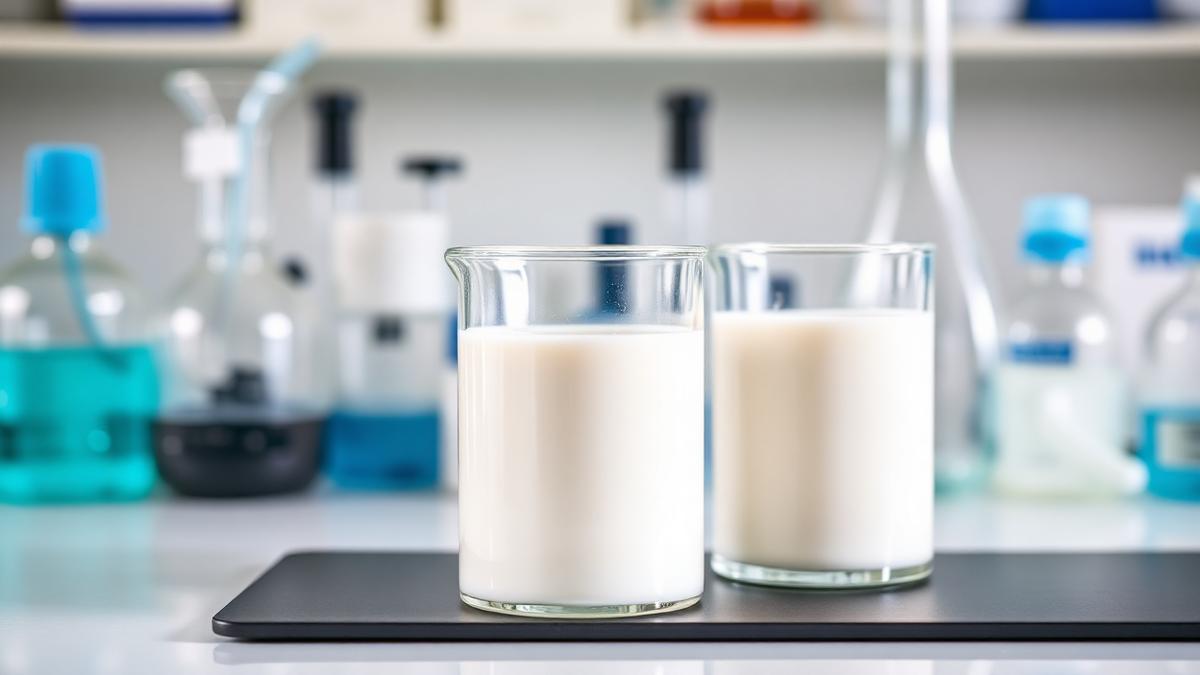 Guar Gum thickens the aqueous continuous phase to suspend coconut fat droplets and prevent creaming.
How Guar Gum Delivers Steric Stabilization
Guar Gum is a galactomannan with a mannose backbone and galactose side chains, typically at a 2:1 mannose-to-galactose ratio. In cold water it hydrates rapidly, its long polymer chains unfolding to occupy a large hydrodynamic volume. This raises the viscosity of the aqueous phase and creates entanglement that physically obstructs fat droplet movement.
The stabilization is steric and rheological rather than surface-active: Guar Gum is not a primary emulsifier, so it is best paired with a small quantity of emulsifier (such as lecithin) that anchors at the oil-water interface. Guar Gum then locks the emulsified droplets in place by thickening the surrounding medium. The result is a smooth, homogeneous product that resists creaming through temperature swings in distribution.
For teams weighing hydrocolloid options, the differences between galactomannan and microbial gums matter; our Guar Gum vs xanthan gum comparison outlines where each performs best and how the two behave in synergy.
Optimizing Dosage and Synergies for Coconut and Oat Milk
Dosage depends on fat content, target mouthfeel, and processing conditions. Industry studies indicate typical use levels for beverage stabilization fall in a low range that builds body without a heavy or slimy texture. A practical starting framework is outlined below and should be validated on the specific formulation.
- Base viscosity: begin at approximately 0.1-0.2% Guar Gum for standard drinking milks; higher for concentrated coconut cream.
- Synergy: combine Guar Gum with a small share of xanthan gum to build a more robust suspending network at lower total gum cost.
- Hydration: disperse the powder into a vortex or pre-blend with sugar to avoid lumping, then hold for full hydration before homogenization.
- Mesh selection: finer mesh grades hydrate faster for smooth, lump-free dispersion in continuous processing.
Because Guar Gum and xanthan gum interact to form a firmer, more elastic network than either alone, many plant-based milk developers adopt a blended system to control sedimentation in high-solids oat formulations. Custom blending and mesh milling are available to match a specific line; see our quality standards for batch consistency details.
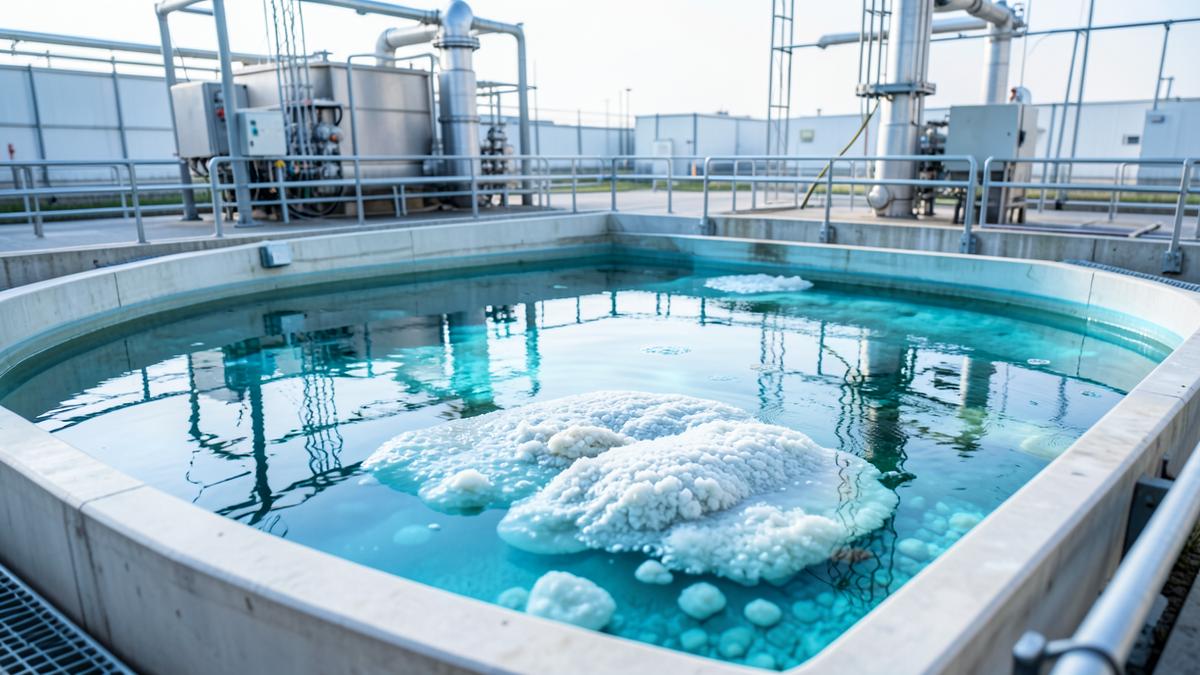
 Consistent hydration and mesh selection keep Guar Gum dispersion smooth on continuous filling lines.
Certifications and Clean-Label Compliance for 2026 Markets
Plant-based buyers in 2026 scrutinize ingredient lists, and clean-label positioning is a competitive requirement rather than a differentiator. Guar Gum is a plant-derived galactomannan extracted from the guar bean, aligning naturally with vegan, non-GMO, and minimal-additive claims that dominate the category.
B.D. Guar supplies food-grade Guar Gum manufactured to internationally recognized standards, supporting export into regulated markets:
- ISO 22000 food safety management across the production line.
- Halal and Kosher certification for broad market access.
- Traceable, plant-based sourcing that supports sustainability and ESG-aligned procurement.
These certifications, combined with detailed certificates of analysis, give beverage developers the documentation needed for confident label claims and smooth customs clearance. Learn more about our sourcing on the sustainability page.
Key Takeaways
- Phase separation is physics: density differences and low continuous-phase viscosity drive fat creaming and sedimentation in coconut and oat milk.
- Guar Gum thickens the aqueous phase: raising viscosity and forming a weak gel network that suspends droplets and particles against gravity.
- Steric, not emulsifying: pair Guar Gum with a small emulsifier share for interface anchoring, then let Guar Gum lock droplets in place.
- Synergy adds robustness: Guar Gum plus xanthan gum builds a firmer suspending system at lower total gum cost.
- Certified and clean-label: ISO 22000, Halal, and Kosher Guar Gum supports 2026 plant-based positioning and export.
Frequently Asked Questions
Does Guar Gum work as an emulsifier in plant-based milk?
Guar Gum is a thickener and stabilizer rather than a primary emulsifier. It does not adsorb strongly at the oil-water interface, so it is best combined with a small quantity of emulsifier such as lecithin. Guar Gum then stabilizes the emulsion sterically by thickening the continuous phase and slowing fat droplet migration across shelf life.
How much Guar Gum is needed for coconut milk stabilization?
Use levels depend on fat content and target texture. Industry studies indicate a low dosage range is typical for drinking milks, with higher levels for concentrated coconut cream. It is best to start low, validate on the specific formulation, and adjust to reach the desired body without a slimy or overly viscous mouthfeel.
Can Guar Gum be combined with xanthan gum?
Yes. Guar Gum and xanthan gum interact synergistically to form a firmer, more elastic gel network than either hydrocolloid alone. This blend improves suspension of solids in high-solids oat milk and can reduce total gum usage and cost while enhancing stability, making it a popular choice for plant-based beverage developers.
Is Guar Gum suitable for clean-label and vegan products?
Guar Gum is a plant-derived galactomannan from the guar bean, making it a natural fit for vegan, non-GMO, and clean-label formulations. B.D. Guar supplies ISO 22000, Halal, and Kosher certified food-grade Guar Gum with full documentation, supporting confident label claims and smooth entry into regulated export markets.
Ready to stabilize your next plant-based milk formulation with certified, Superior Guar Gum? Contact the B.D. Guar technical team to request samples, certificates of analysis, and custom blending support tailored to your coconut or oat milk line.