Liquid Pet Food Gravy: Viscosity and Suspension with Guar Gum
How pet-food-grade Guar Gum builds retort-stable viscosity, prevents phase separation, and keeps meat chunks suspended for a fresh, appetizing gravy in every can.
Last updated:
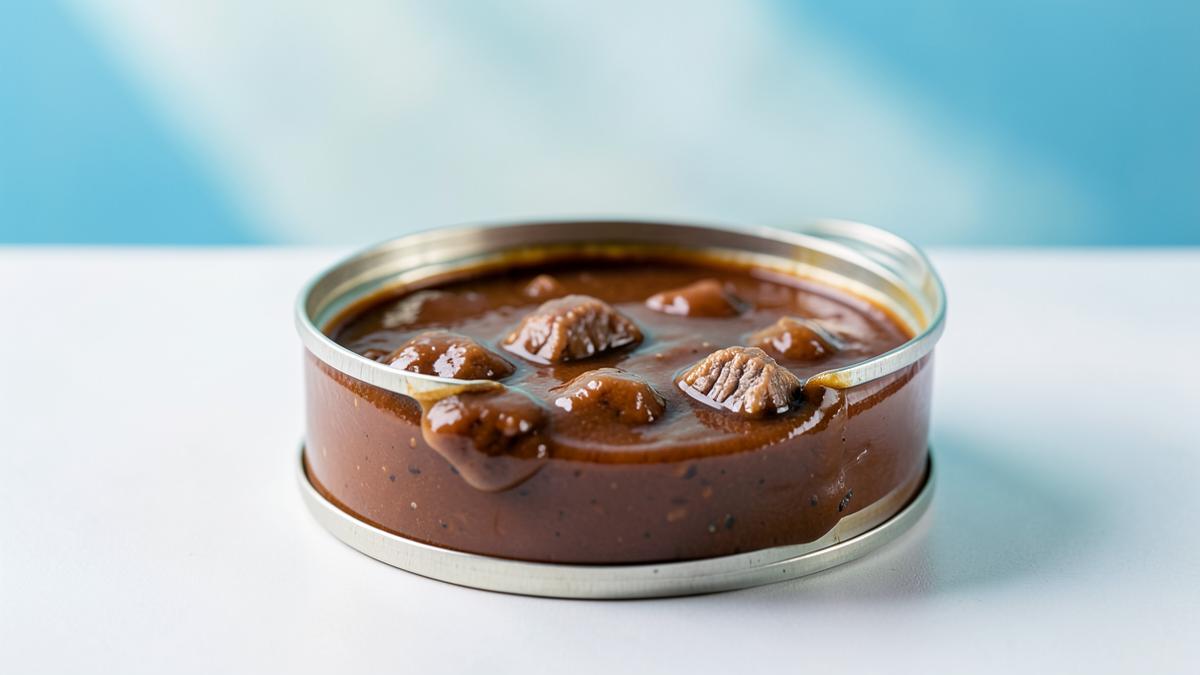
In the 2026 canned pet food landscape, shoppers judge quality through the can lid, and a thin, separated gravy signals cheapness before the first bite. Guar Gum has become the workhorse hydrocolloid that solves this at scale, delivering the cling, body, and meat-chunk suspension that premium wet formats demand. As IMARC and comparable market analyses point to sustained double-digit interest in Superior wet and gravy formats, formulators are leaning on cost-efficient galactomannan systems to hold texture from filling line to feeding bowl.
Research Overview
Guar Gum is a galactomannan extracted from the seed of Cyamopsis tetragonoloba, with a mannose backbone and galactose side units in roughly a 2:1 ratio. This structure drives rapid cold-water hydration and strong pseudoplastic thickening. In liquid pet food gravy, that translates to a continuous phase viscous enough to suspend dense meat particles yet shear-thinning enough to pump, fill, and pour cleanly.
Why Gravy Separates Without a Hydrocolloid
A meat-chunk gravy is a suspension of dense solids in a watery serum. Left unthickened, Stokes' law takes over: heavy particles settle, released fats rise, and a clear serum layer forms at the interface. The result is an unappetizing, stratified can that reads as low quality on the shelf.
Guar Gum counters this by raising the low-shear viscosity of the continuous phase, which dramatically slows particle sedimentation and fat creaming. Because galactomannan builds a weak, entangled polymer network, it holds suspended solids in place during the long, static life of a canned product.
- Slows settling of dense meat and organ chunks toward the can base.
- Restrains fat globules from coalescing into a surface ring.
- Maintains a uniform, homogeneous appearance from top to bottom of the can.
- Preserves an appetizing sheen and cling on individual pieces.
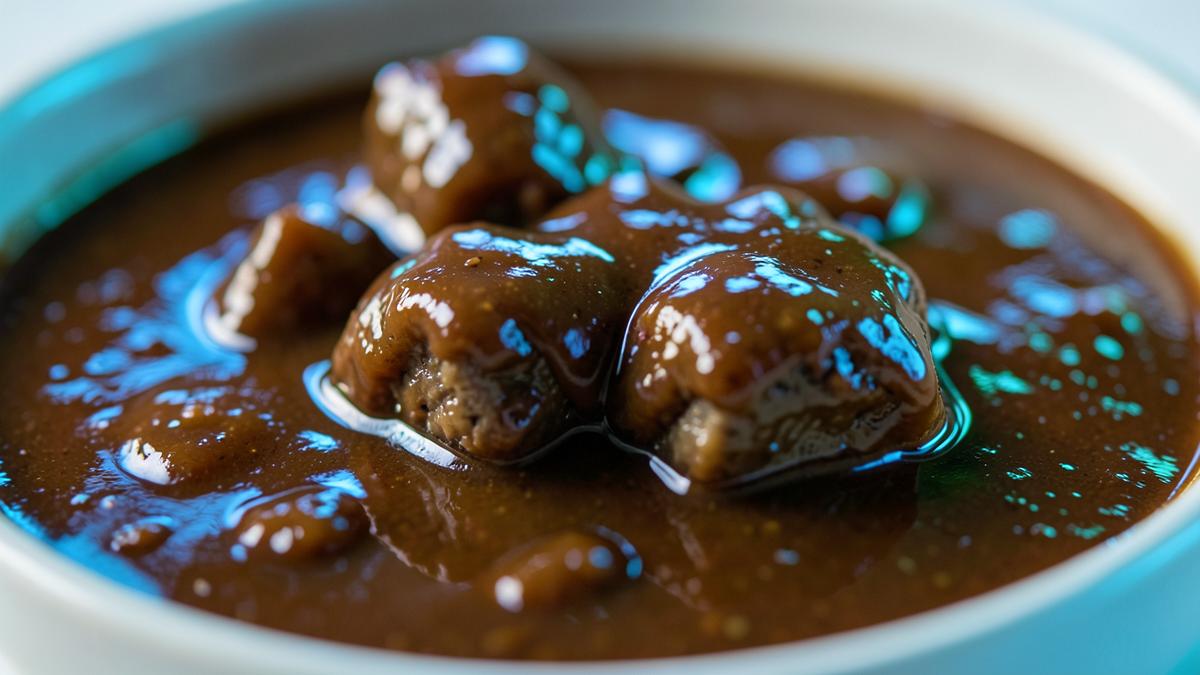 A stable, glossy gravy keeps meat chunks evenly suspended rather than settled at the base.
Surviving Retort: Thermal Stability Under Pressure
Canned pet food is commercially sterilized in a retort, typically near 121 degrees Celsius under pressure. This is the harshest step a gravy system faces, and many thickeners thin irreversibly or lose suspension capacity after the cook. Pet-food-grade Guar Gum is processed to hold functional viscosity through this thermal cycle, so the gravy that leaves the filler is the gravy the pet owner sees.
Formulators frequently pair Guar Gum with complementary hydrocolloids to build a resilient, retort-durable network. Guar contributes fast cold-phase viscosity during filling, while partners add heat-set gel strength that locks structure after sterilization.
- Guar Gum for immediate cold-mix viscosity and particle suspension at the filling stage.
- Cassia gum or carrageenan for heat-activated gel strength that sets after the retort.
- Modified starch for additional body and moisture control across shelf life.
Industry studies indicate that these galactomannan-based blends retain both viscosity and fat-holding capacity more reliably through repeated thermal stress than single-polymer systems, protecting the premium look of high-value recipes.
Dosage, Mesh, and Dispersion Control
Pet-food-grade Guar Gum is typically used at low inclusion levels, which makes it a cost-efficient route to texture. The right particle size matters as much as the dose: coarser mesh disperses with less clumping in high-solids mixes, while finer mesh hydrates faster for rapid viscosity build on continuous lines.
- Add Guar Gum slowly into a well-agitated vortex to avoid fish-eyes and lumping.
- Pre-blend the powder with dry ingredients such as minerals or starch to separate particles before wetting.
- Select mesh grade to match line speed, mixer shear, and target hydration rate.
B.D. Guar supplies custom-milled grades from 100 to 300 mesh so developers can match dispersion behavior and hydration speed to their specific process rather than compromising on a single stock grade.
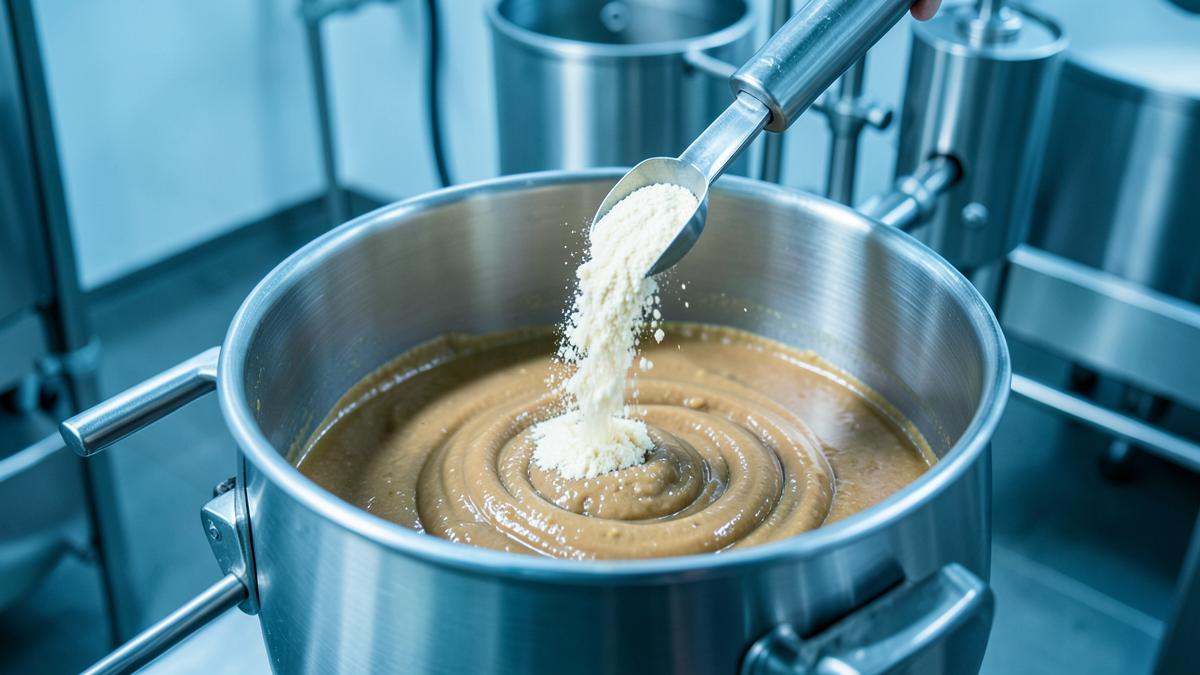 Controlled dosing and correct mesh selection prevent lumping and ensure even hydration.
Delivering a Superior, Clean-Label Gravy
Beyond function, Guar Gum supports the clean-label positioning that premium pet brands rely on. It is a plant-derived, non-GMO thickener recognized as E412, aligning with owner demand for natural ingredients over synthetic gums.
Consistent batch-to-batch viscosity is what keeps a product line looking the same in every case. B.D. Guar tests Brookfield viscosity, particle size, moisture, and microbiological activity on every batch, issuing a certificate of analysis with each shipment so quality teams can lock specifications with confidence.
Key Takeaways
- Suspension first: Guar Gum raises continuous-phase viscosity to hold meat chunks and restrain fat, preventing the stratified look that undermines premium gravies.
- Retort resilient: Pet-food-grade Guar Gum retains functional viscosity through 121 degrees Celsius sterilization, especially in blends with cassia gum or carrageenan.
- Low dose, high value: Small inclusion levels build meaningful body, making Guar Gum a cost-efficient texture solution.
- Mesh matters: Custom milling from 100 to 300 mesh lets developers tune dispersion and hydration to their line.
- Clean label: A plant-derived, non-GMO E412 thickener supports natural positioning for Superior wet pet foods.
Frequently Asked Questions
How much Guar Gum is needed in a liquid pet food gravy?
Inclusion is usually low relative to total formula weight, and the exact level depends on target viscosity, solids load, and the retort profile. Because Guar Gum is a strong thickener, small amounts build substantial body, which keeps it cost-efficient. B.D. Guar can recommend a starting dose and grade based on your recipe and process conditions.
Does Guar Gum survive retort sterilization?
Yes. Pet-food-grade Guar Gum is processed to maintain functional viscosity through the retort cycle near 121 degrees Celsius. For maximum firmness and suspension after sterilization, it is commonly combined with heat-setting hydrocolloids such as cassia gum or carrageenan, which build gel strength once the product cools.
Why is my gravy separating even with a thickener?
Separation usually points to insufficient continuous-phase viscosity, incomplete hydration, or lumping from poor dispersion. Ensuring the Guar Gum fully hydrates, selecting an appropriate mesh grade, and adding the powder into a strong vortex or pre-blended with dry ingredients typically resolves settling and fat-ringing issues.
Is Guar Gum a natural, clean-label ingredient?
Guar Gum is a plant-derived galactomannan extracted from the guar bean and is non-GMO in B.D. Guar's supply. Recognized as E412, it fits the clean-label expectations of premium pet food buyers who prefer natural thickeners over synthetic alternatives.
Ready to stabilize your next wet pet food format? Explore B.D. Guar's pet-food-grade Guar Gum products, review our batch-level quality and testing standards, or contact our technical team to match a grade to your gravy line.